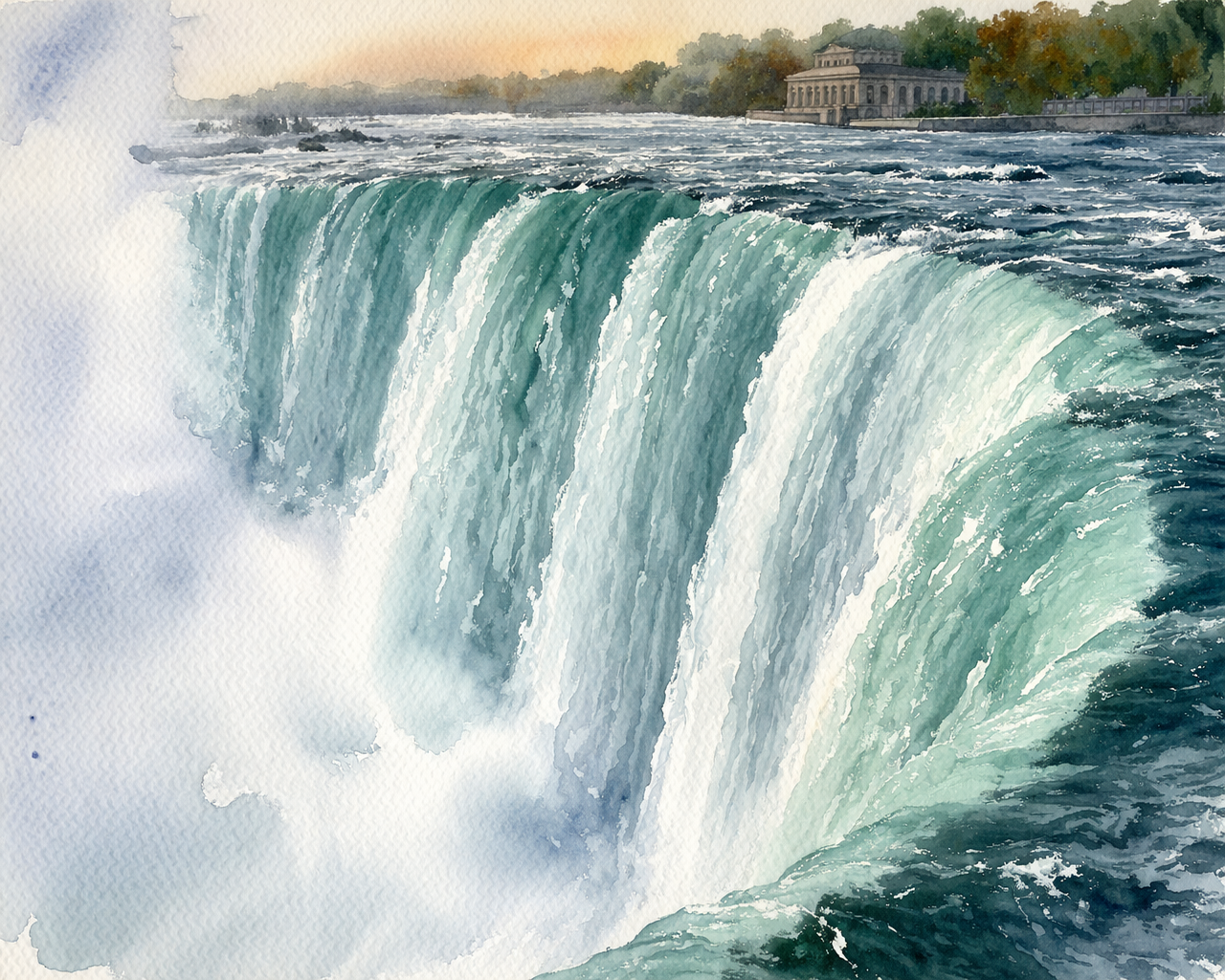
The Thunderous Embrace of White Waters
Critique
1. Introduction This watercolor painting captures the immense power and scale of a world-renowned waterfall. The composition focuses on the dramatic curve of the falling water, emphasizing the monumental force of nature against a tranquil architectural backdrop. The work is defined by its fluid execution and a sophisticated approach to representing moving water and mist. 2. Description The central focus of the piece is the vast curtain of cascading water, rendered in varying shades of turquoise, emerald, and brilliant white. A dense cloud of mist rises from the base on the left, partially obscuring the lower reaches of the falls. In the upper right background, a stately stone building and a line of autumnal trees sit quietly above the turbulent upper river. 3. Analysis The artist utilizes a wet-on-wet watercolor technique to effectively convey the transparency and velocity of the rushing falls. Vertical brushstrokes simulate the downward pull of gravity, while horizontal ripples in the foreground and upper river provide structural contrast. The limited palette, centered on cool aquatic tones and warm earth colors in the background, creates a balanced and harmonious visual experience. 4. Interpretation and Evaluation This work successfully translates the awe-inspiring experience of witnessing a massive waterfall into a refined and painterly format. Technical skill is evident in the artist's ability to maintain the white of the paper for the brightest areas of the spray and mist. The painting elevates a well-known natural landmark through a highly personal and expressive use of the watercolor medium. 5. Conclusion A detailed examination shows how the initial impression of overwhelming movement is supported by precise observations of water patterns and architectural form. The painting offers an immersive and skillfully executed study of natural energy and atmospheric light. It stands as a compelling testament to the enduring allure of the sublime in the natural landscape.
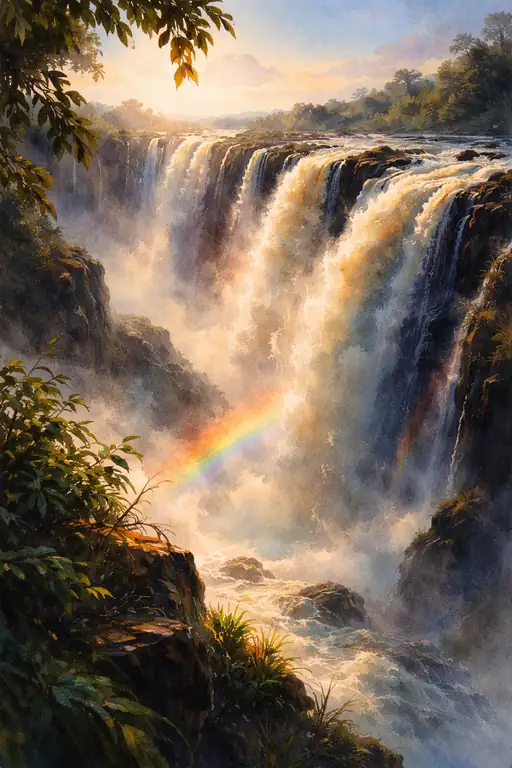 The Rainbow's Arch: Nature's Ethereal Waterfall
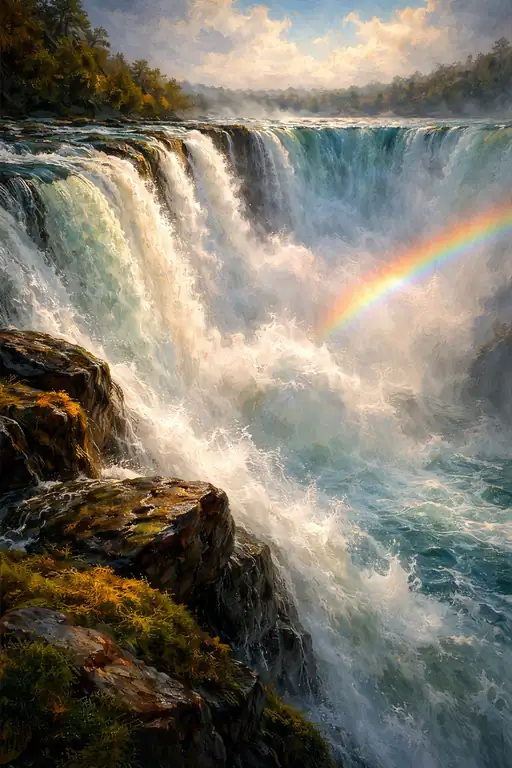 Prism of Power
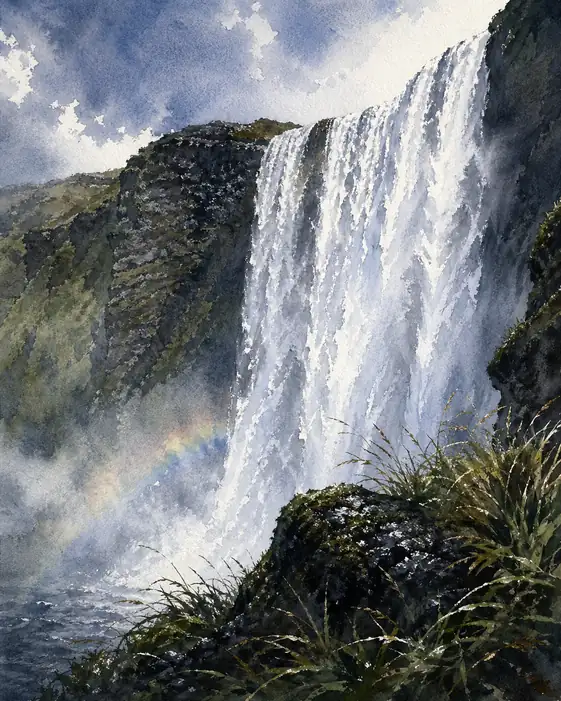 The Rainbow’s Silent Promise
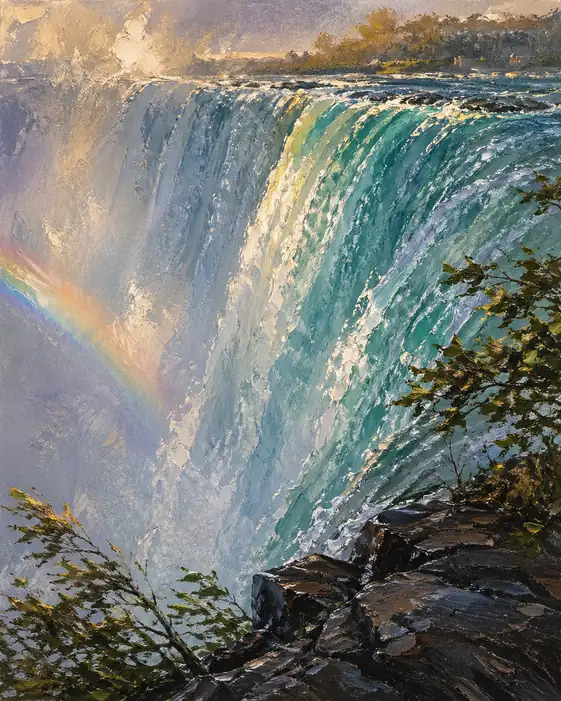 The Torrent's Radiant Promise
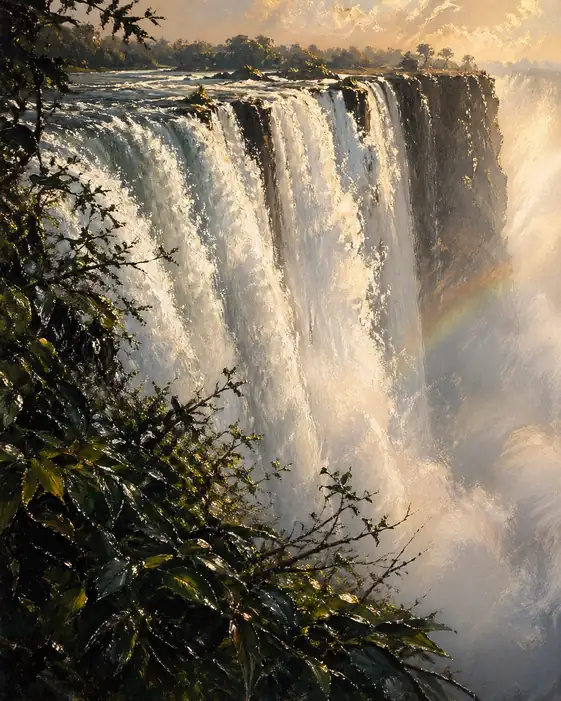 The Prism of the Thundering Veil
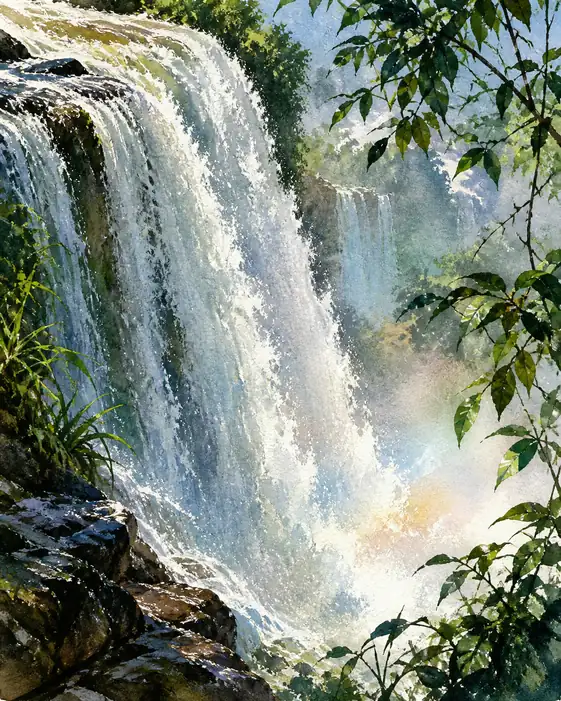 The Rainbow's Fragile Grace
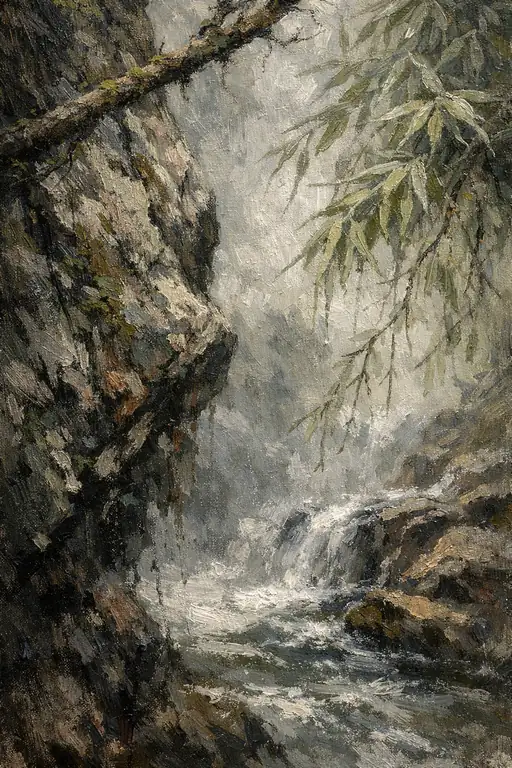 Roar of the Pristine Cascade
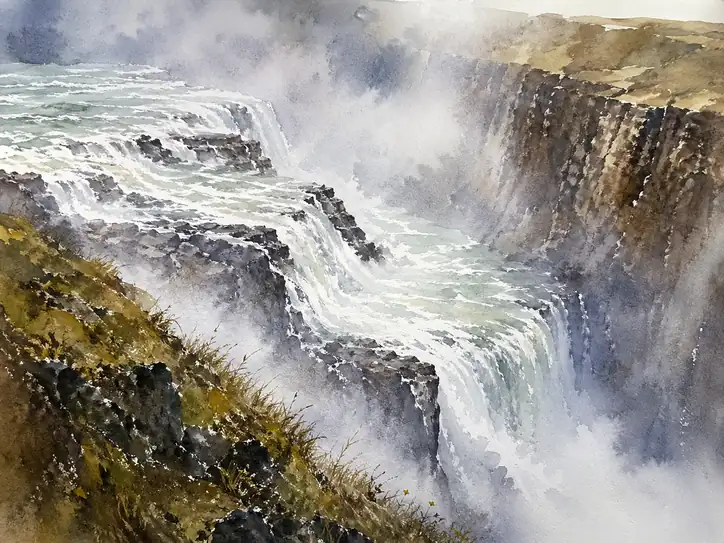 Roar of the Untamed Wild
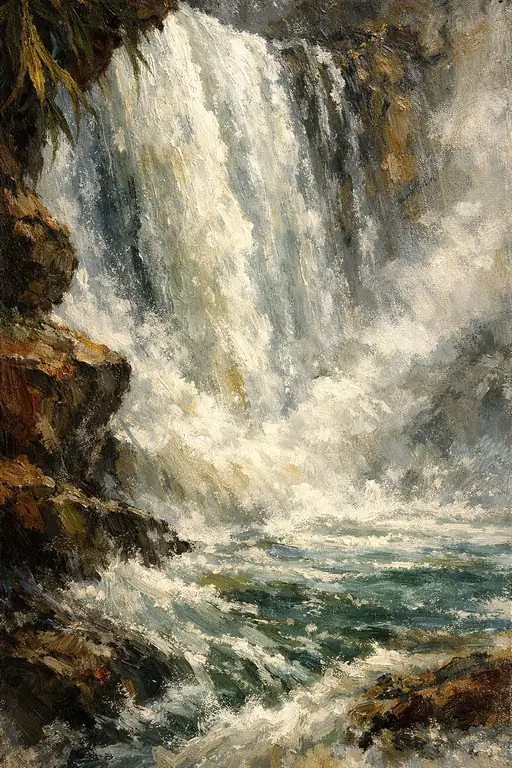 Thunderous Majesty of the Cascade
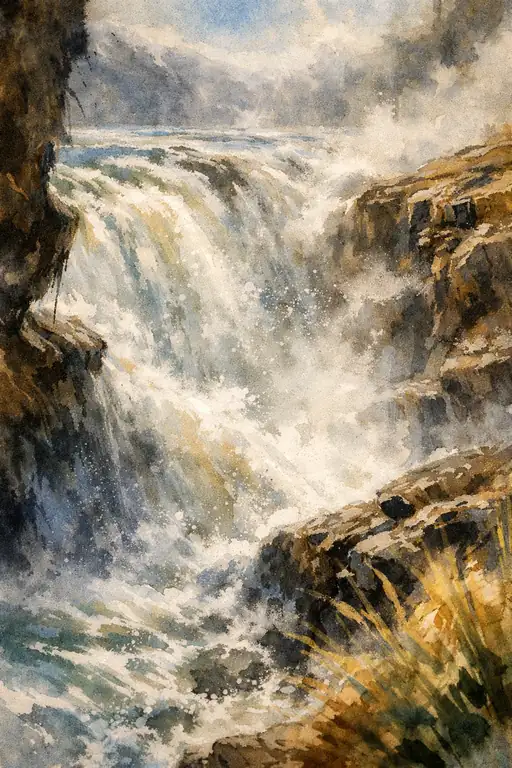 Roar of the Untamed Flow