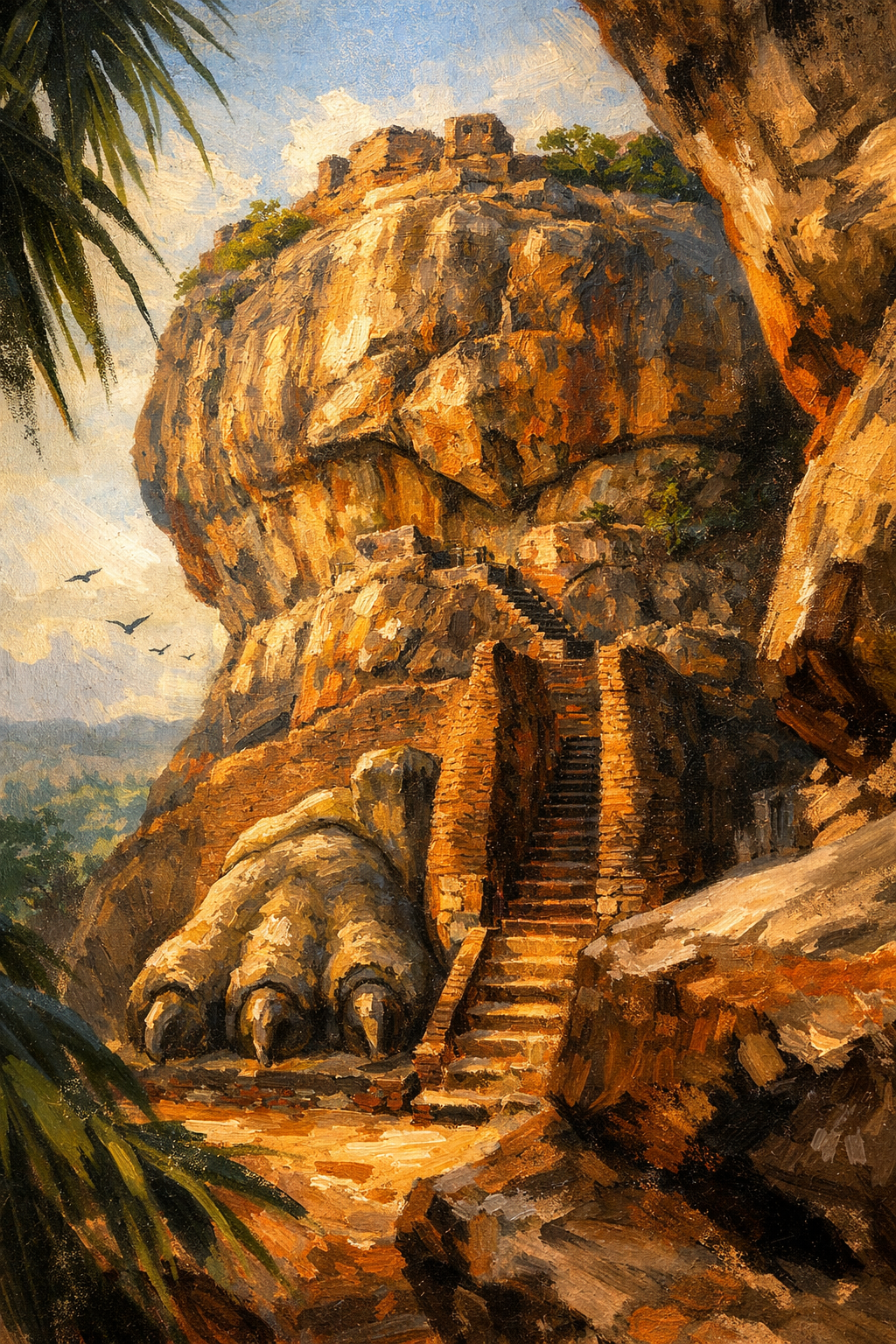
Whispers of the Lion Rock\n
Critique
1. Introduction This oil painting captures the breathtaking majesty of a massive rock fortress, clearly inspired by the ancient site of Sigiriya. The work portrays a towering geological formation that dominates the landscape, featuring weathered stone surfaces and architectural ruins perched high above the ground. Through its rich, textured brushwork and dramatic play of light, the painting explores the relationship between the raw power of nature and the ambitious constructive efforts of ancient civilizations. The scene is imbued with a timeless quality, inviting the viewer to contemplate a world where myth and history intersect. 2. Description The central focus is the colossal golden rock, its rugged surface illuminated by the warm, low-angled light of a setting sun. At the base of the rock stands a monumental sculpture of a lion's paw, intricately carved from the living stone, marking a grand entrance to the ascent. A steep, narrow brick staircase winds its way upward, disappearing into the jagged crevices of the fortress walls. In the soft, pale sky to the left, several birds can be seen circling in the distance, providing a sense of scale to the immense heights of the rock. Lush greenery clings to the crevices and crown of the monument, adding touches of verdant life. 3. Analysis The artist uses a warm color palette dominated by ambers, ochres, and deep siennas to emphasize the heat and age of the sun-drenched stone. The composition relies on strong vertical and diagonal lines, with the ascending staircase creating a powerful visual path that leads the viewer’s eye from the bottom of the canvas toward the peak. Thick, impasto-like brushstrokes are used to define the craggy texture of the rock, while thinner, more fluid strokes capture the distant landscape and the airy quality of the sky. This contrast between the heavy material of the foreground and the ethereal atmosphere behind it enhances the sense of isolation and grandeur. 4. Interpretation and Evaluation The work conveys a profound sense of awe and reverence for the historical legacy it represents. The inclusion of the lion’s paw sculpture serves as a symbolic anchor, hinting at the power and status once held by the inhabitants of this fortress. Technically, the rendering of light is highly effective, as the long shadows cast by the rocky outcroppings create a rhythmic pattern that defines the complex geometry of the stone. The composition is expertly balanced, and the artist’s ability to evoke a sense of immense scale while maintaining attention to the specific textures of brick and weathered rock is commendable. 5. Conclusion In conclusion, this painting is a masterful tribute to the enduring spirit of ancient architecture and the sublime beauty of the natural world. By blending realistic observation with a dramatic, painterly style, the work elevates a specific geographical location into a universal symbol of human aspiration and natural strength. The initial impression of a monolithic structure is ultimately enriched by the detailed storytelling found in its carvings and pathways. It is a compelling visual narrative that celebrates the grandeur of the past through the evocative power of color and texture.
Same Subcategory
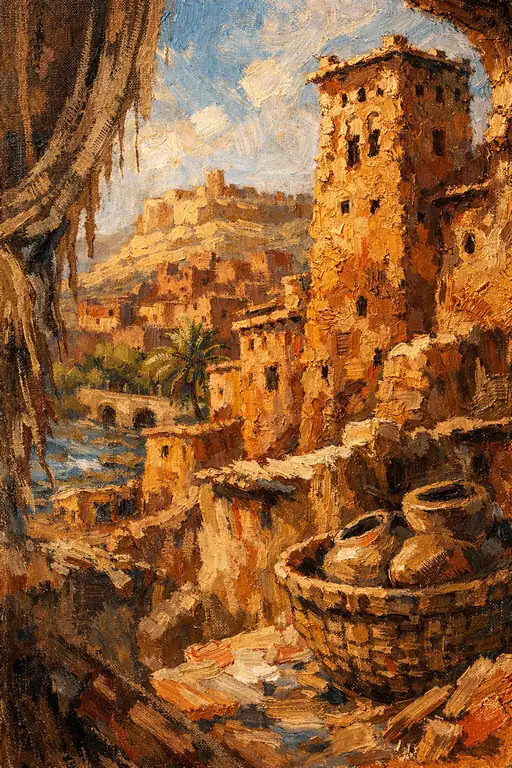 Timeless Sands, Silent Stone
Similar Artworks
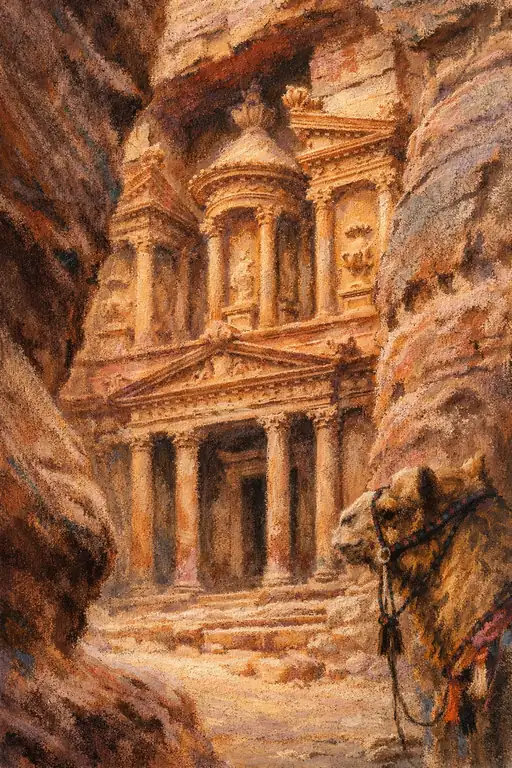 Rose-Red Revelation
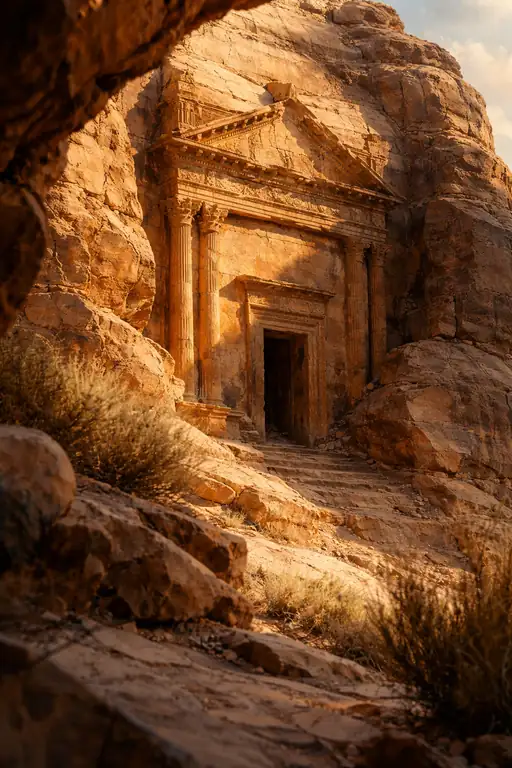 Golden Glory of the Forgotten
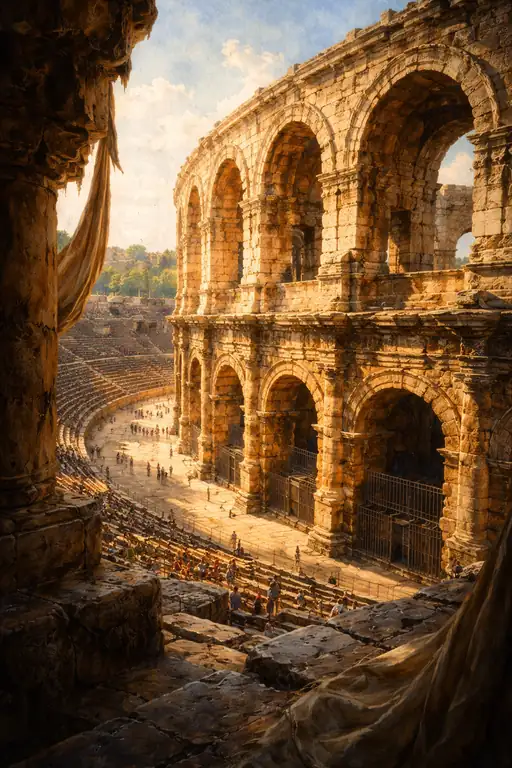 A Glimpse Through Time's Window
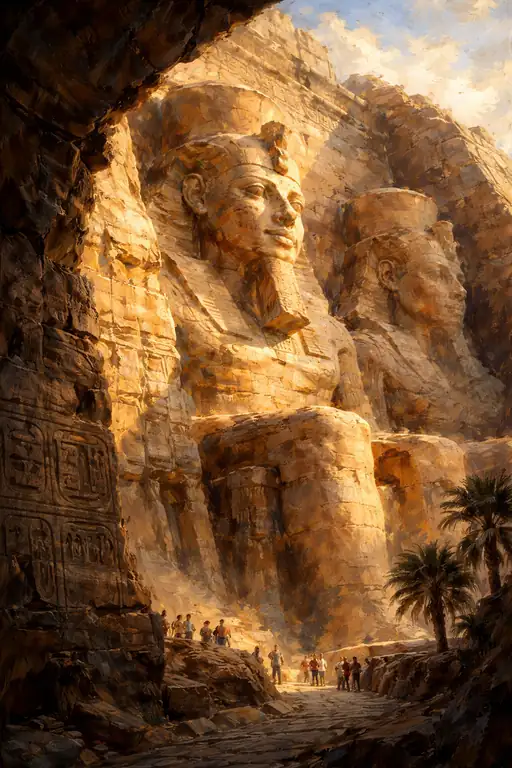 Colossal Majesty Bathed in Golden Hues
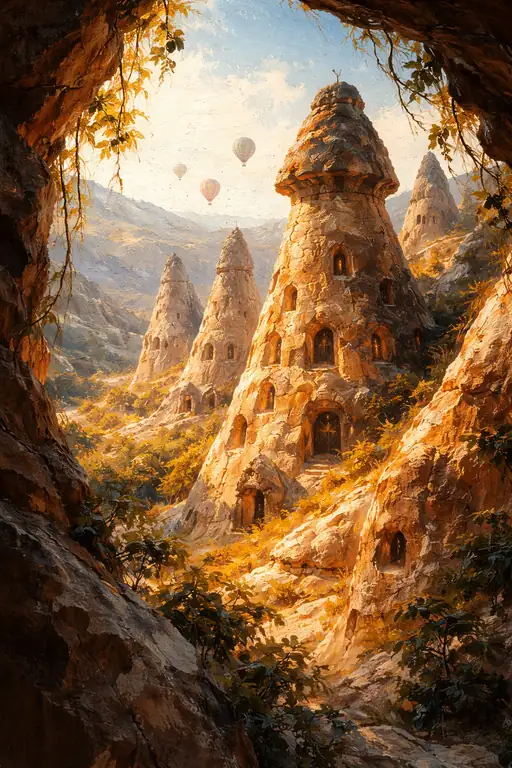 Gaze Upon the Golden Chimneys
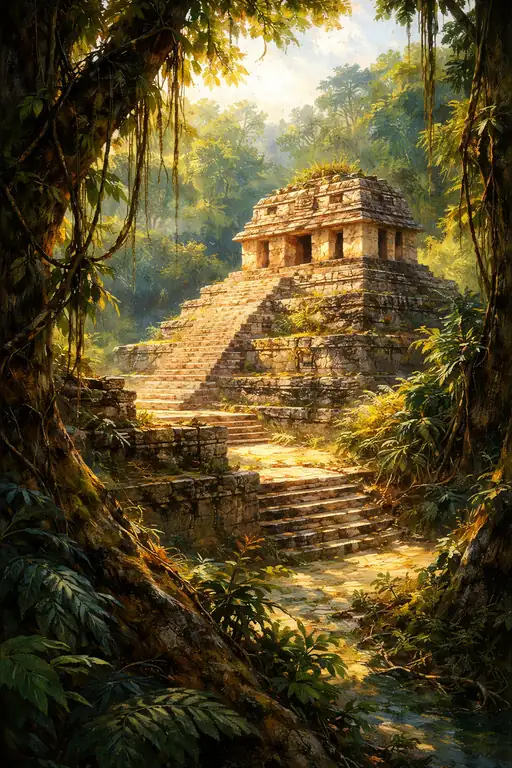 Sunlight Through the Canopy: The Temple's Awakening
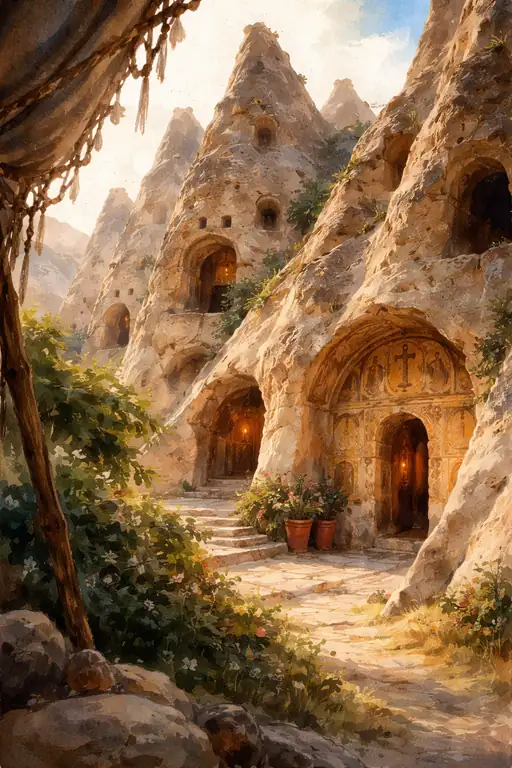 Velvet Shadows and Shimmer
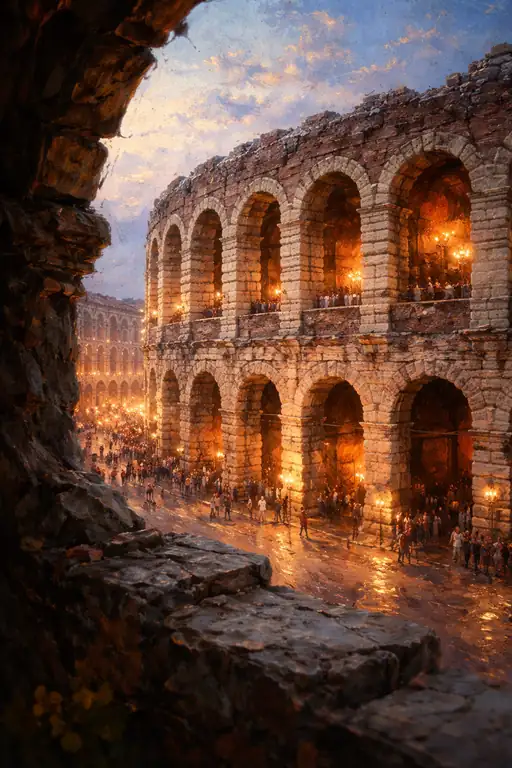 Gathering Under the Twilight Arches
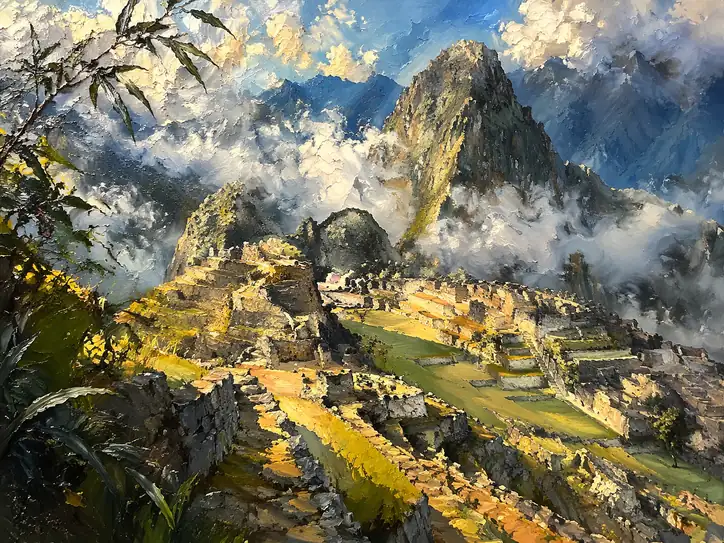 Echoes of the Ancients
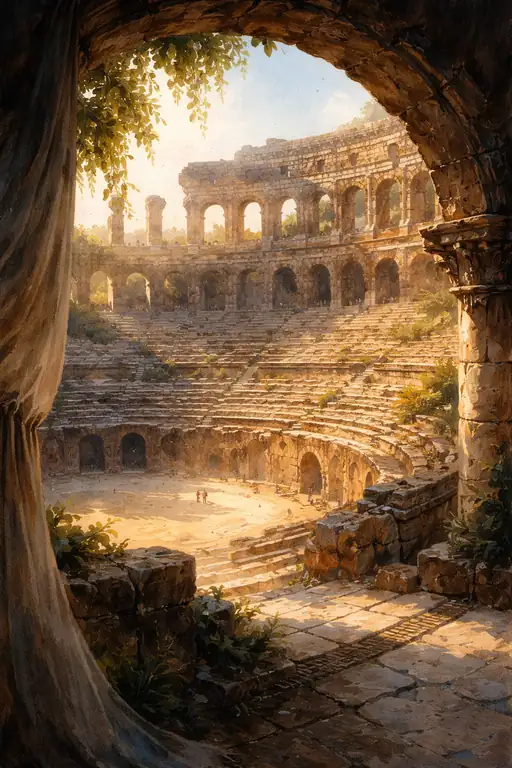 A Glimpse of Past Glories