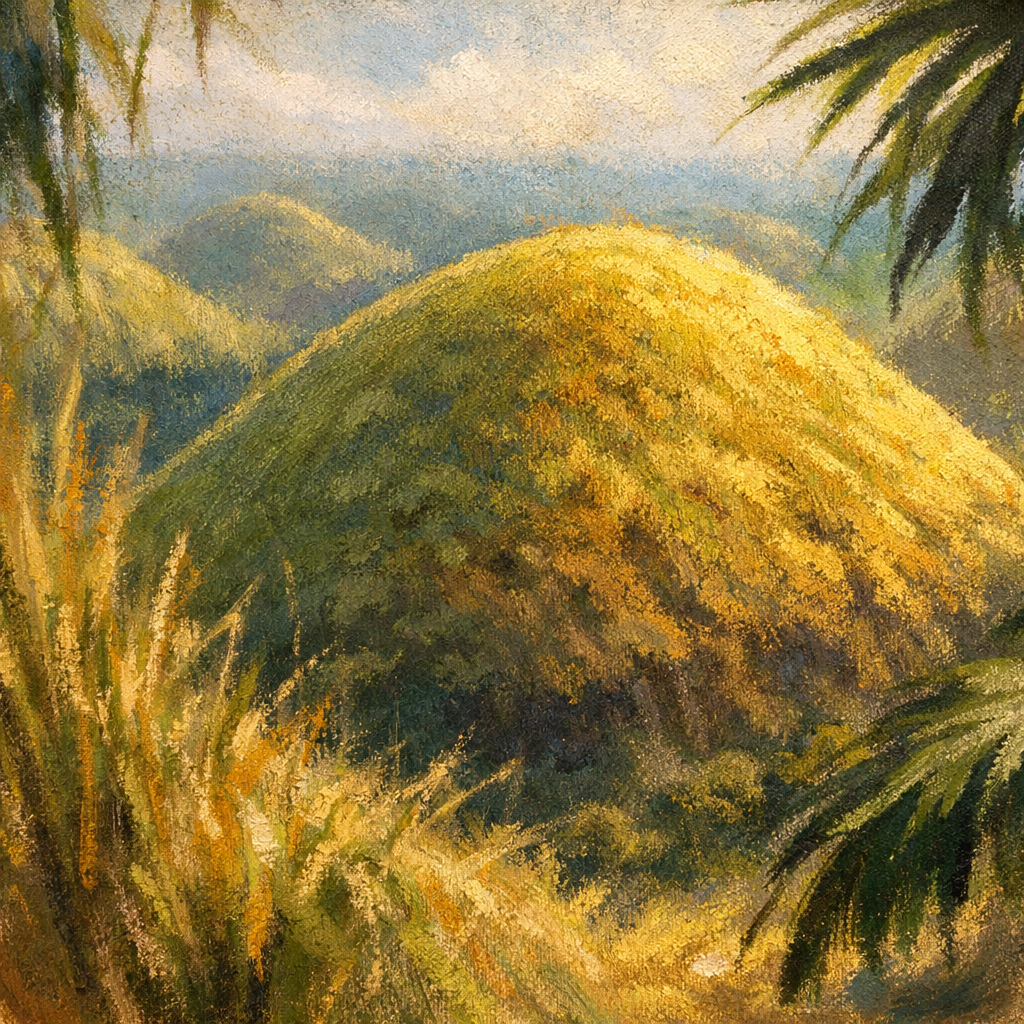
Golden Waves of the Earth
Critique
1. Introduction This oil painting focuses on the Chocolate Hills, a unique geological formation known for its rhythmic rolling hills that turn a golden brown during the dry season. The artist captures the sequence of these conical mounds with a powerful texture and vibrant color palette that radiates sunlight. The energy permeating the canvas reflects the vitality of a tropical environment and the silent, ancient pulse of the earth, instilling a sense of wonder for the natural world in the viewer. 2. Description At the center of the square composition, a large conical hill rises with a soft curve, its surface shimmering in a brilliant gold under the afternoon sun. The foreground features tall, sun-bleached grasses and deep green palm fronds, adding a tactile, wild quality to the scene. In the background, successive layers of similarly shaped hills stretch toward the horizon, gradually fading into the atmospheric haze of a pale blue sky. The scattered white clouds above provide a complementary cool contrast to the warm tones of the landscape below. 3. Analysis The color palette relies on a vivid progression from brilliant yellows to earthy ochres and deep greens, effectively modeling the three-dimensional form of the hills. The brushwork is highly textured and layered; the thick application of paint physically reconstructs the fibrous feel of the dried grass and the dense materiality of the soil. Sharp, rapid strokes define the foreground vegetation, creating a rhythmic contrast with the smooth, rolling geometry of the hills, which helps establish a dynamic compositional tension. 4. Interpretation and Evaluation This artwork elevates the symbolic nature of its unique subject matter through a sophisticated interpretation of light and space. Technically, the artist excels in using aerial perspective to create a convincing sense of depth as the hills recede into the distance. By choosing to focus on a rich array of mid-tones rather than stark contrasts, the work successfully visualizes the perceived heat and humidity of the tropical atmosphere. The painting reflects a deep insight into nature, treating the geological forms as living, breathing entities. 5. Conclusion A celebration of terrestrial upheaval and solar abundance, the painting evokes a primal emotional response to the purity of the landscape. While initially captivated by the luminous gold hill at the center, the viewer's attention soon drifts toward the wind-swept grasses in the foreground and the endless disappearance of the hills into the horizon. Ultimately, the work succeeds as a powerful yet nuanced masterpiece that reconstructs a miraculous natural phenomenon through a modern sensible eye for color and light.
Same Subcategory
 A Peak Touched by the Sky
 Eternal Walls of Verona
Similar Artworks
 Golden Path of the Sleeping Giants
 Echoes of the Earth's Deep Slumber
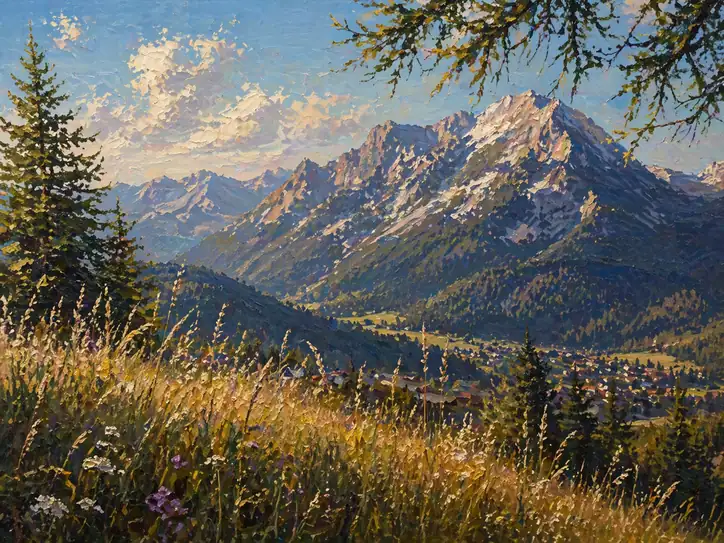 Mountain Vista
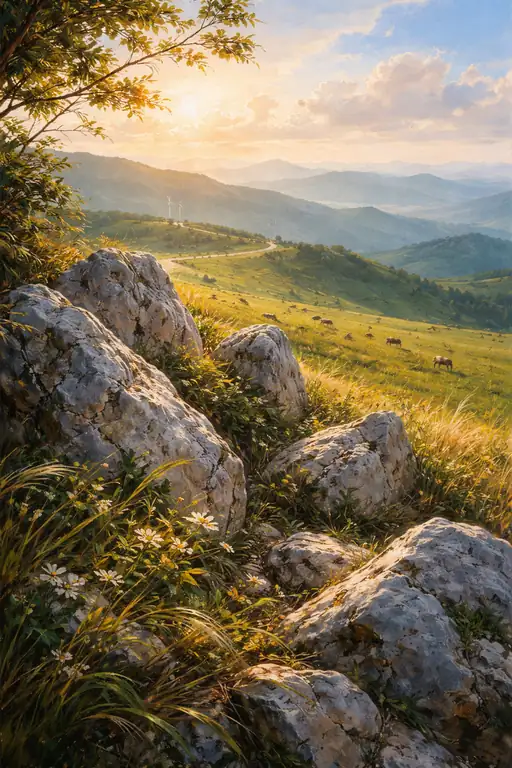 Whispers of Earth in the Golden Light
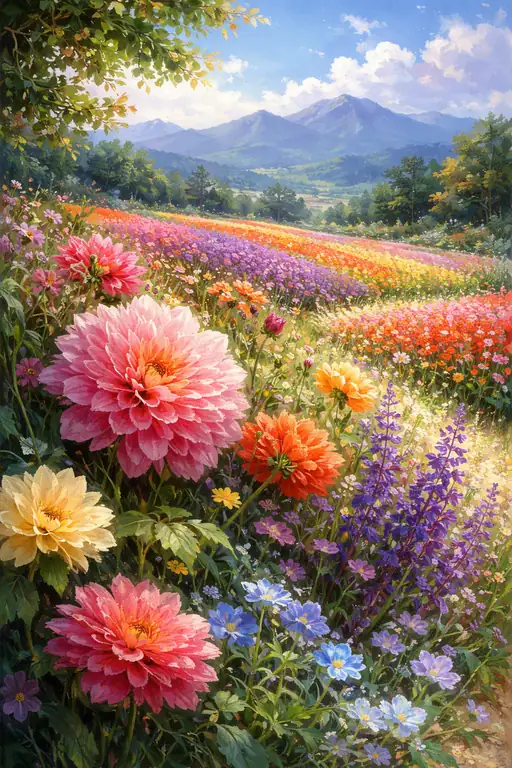 Summer's Endless Bloom Beneath the Peaks
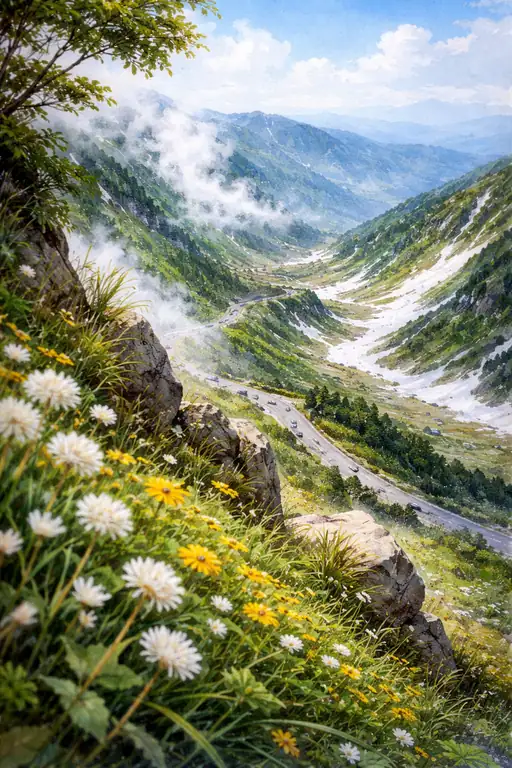 Whispering Heights
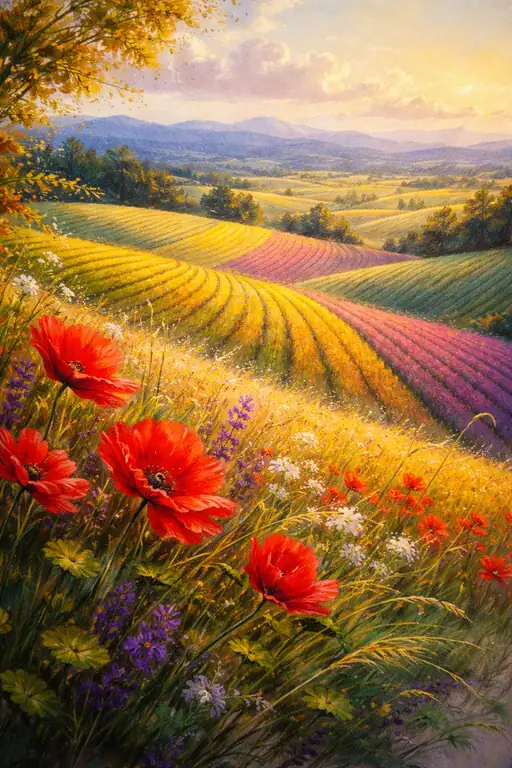 Whispering Breezes Over Lavender
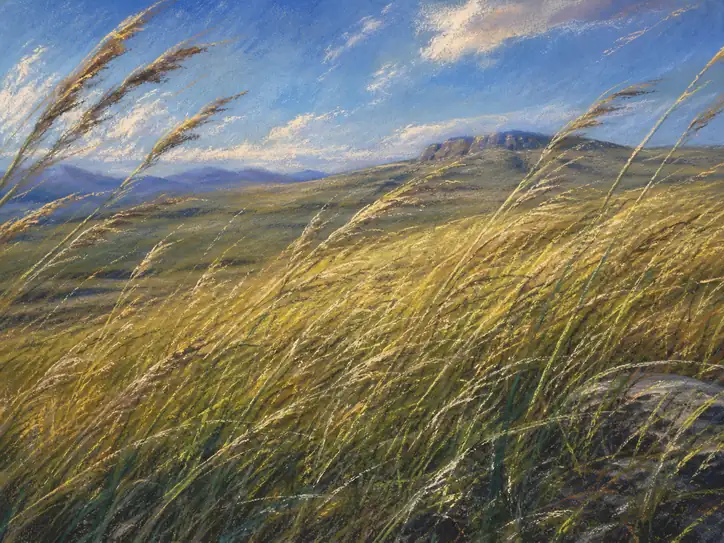 The Breath of the Boundless Plains
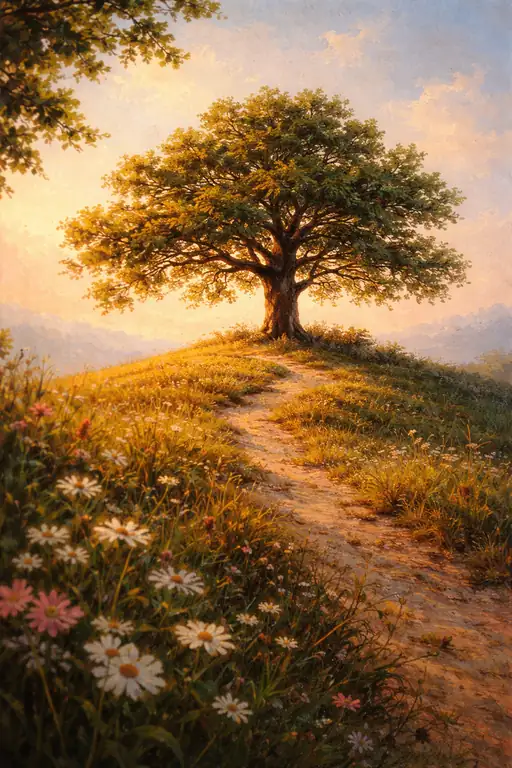 The Golden Sentinel
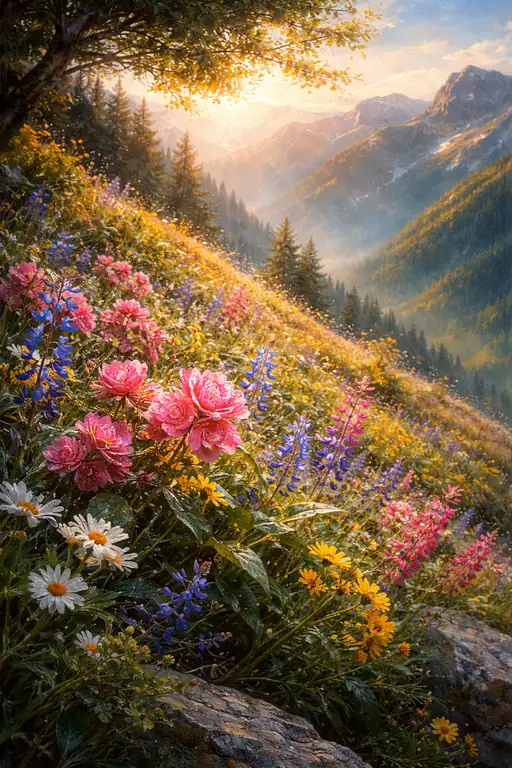 Awakening Radiance of the High Wilderness