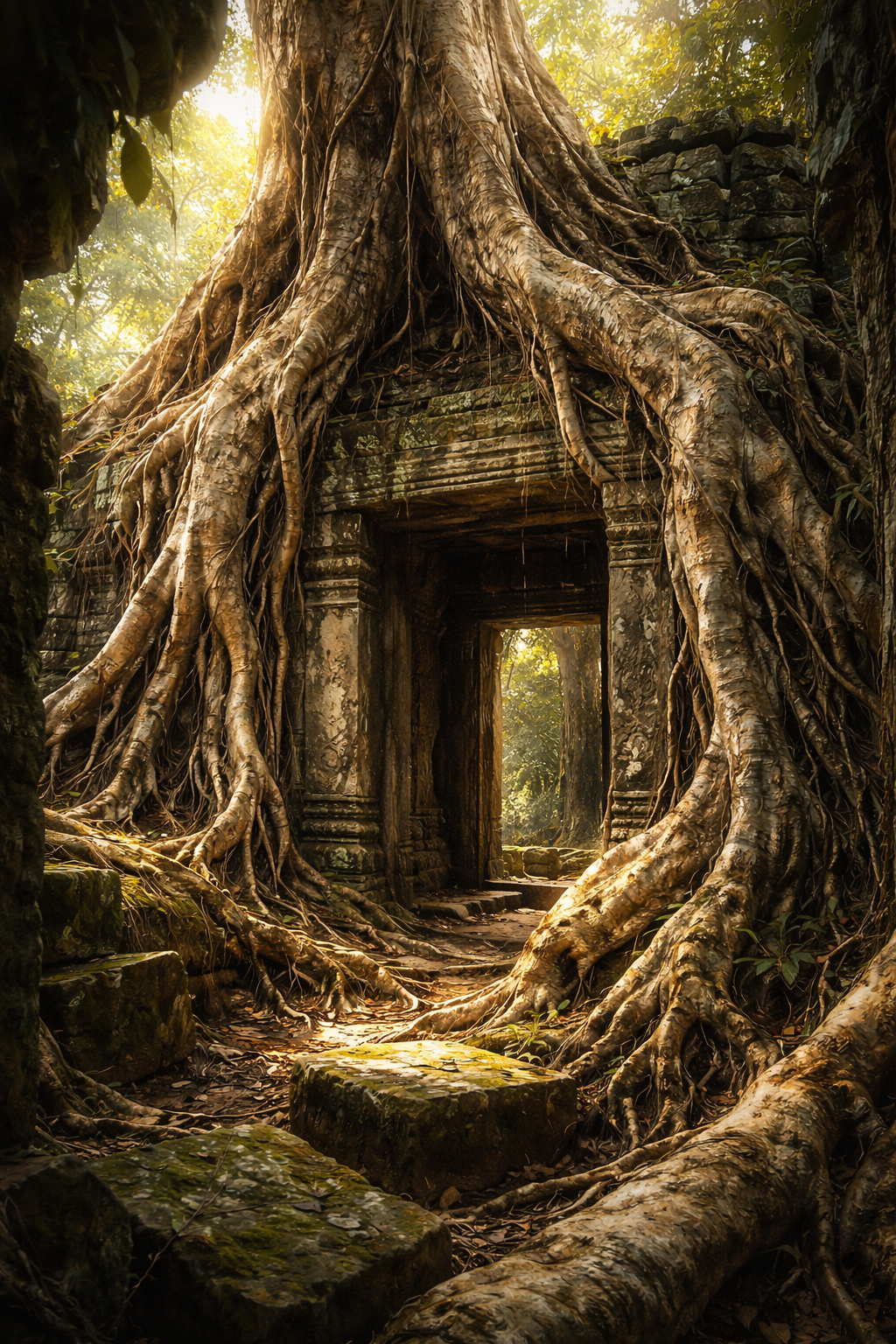
Nature's Embrace on Forgotten Architecture
Critique
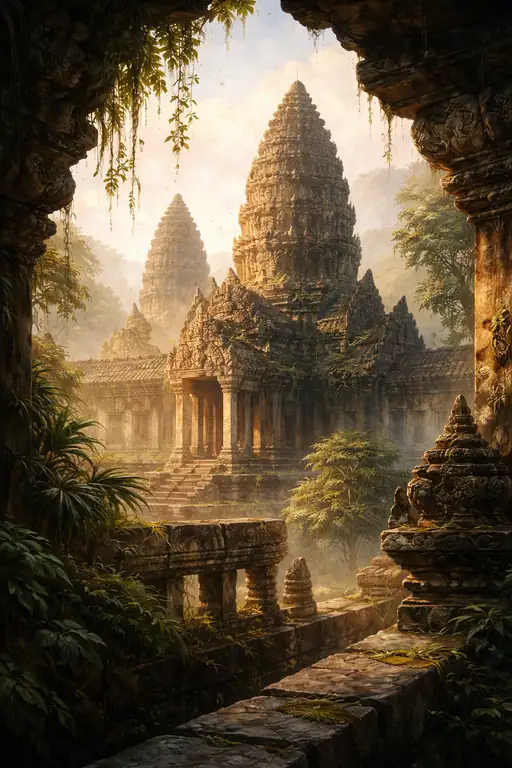
1. Introduction This evocative painting presents a powerful image of nature’s endurance, depicting ancient stone ruins gradually being reclaimed by a massive, sprawling tree. The composition focuses on a weathered stone doorway, which serves as a frame for both the intricate root systems and the sun-drenched forest beyond. 2. Description The artwork features immense, light-colored roots that flow like liquid over the carved grey stones of a forgotten temple. In the foreground, moss-covered blocks are partially submerged in the forest floor, while the central archway leads the viewer’s eye toward a second illuminated portal in the distance. Dappled sunlight filters through the dense canopy above, casting sharp highlights on the textured bark and ancient masonry. 3. Analysis The artist employs a sophisticated use of vertical lines and organic curves to create a sense of overwhelming scale and natural power. The contrast between the cold, static geometry of the architecture and the warm, dynamic growth of the tree roots provides a compelling visual tension. The depth of field is handled expertly, with the background forest appearing soft and luminous, which enhances the three-dimensional quality of the ruins. 4. Interpretation and Evaluation This work can be interpreted as a meditation on the passage of time and the inevitable cycle of decay and rebirth. The technical execution of textures—from the rough, flaking stone to the smooth, sinuous roots—is exceptional and demonstrates a mastery of light behavior. The overall atmosphere is one of profound silence and sacredness, successfully capturing the sublime beauty found in the intersection of human history and the natural world. 5. Conclusion Ultimately, the painting is a testament to the artist's ability to render complex natural forms with both precision and poetic sensitivity. What begins as a study of archaeological ruins concludes as a moving tribute to the unstoppable force of the living world.
Same Subcategory
 Breath of the Ancient Stones
 Where Nature Reclaims the Sacred Arches
Similar Artworks
 Whispers of an Overgrown Kingdom
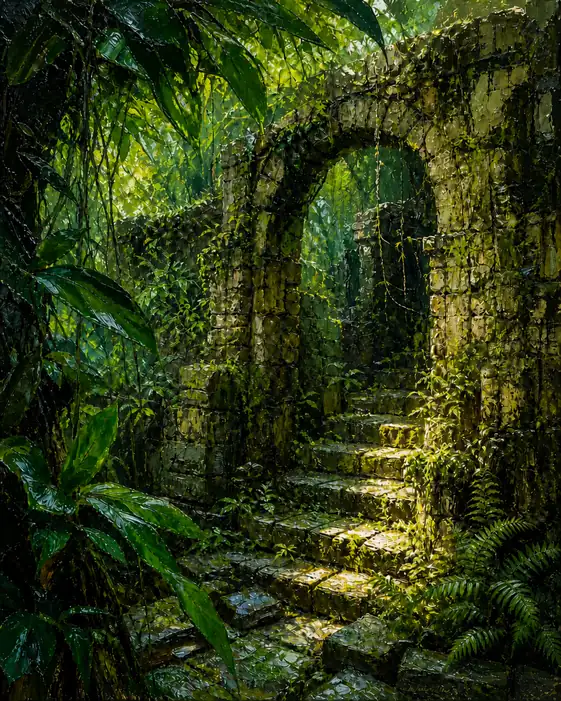 Threshold of the Emerald Silence
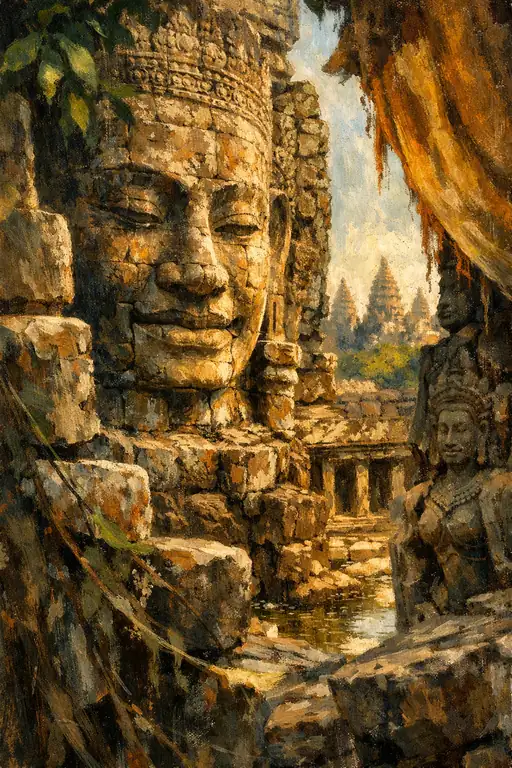 The Smiling Stone of Time
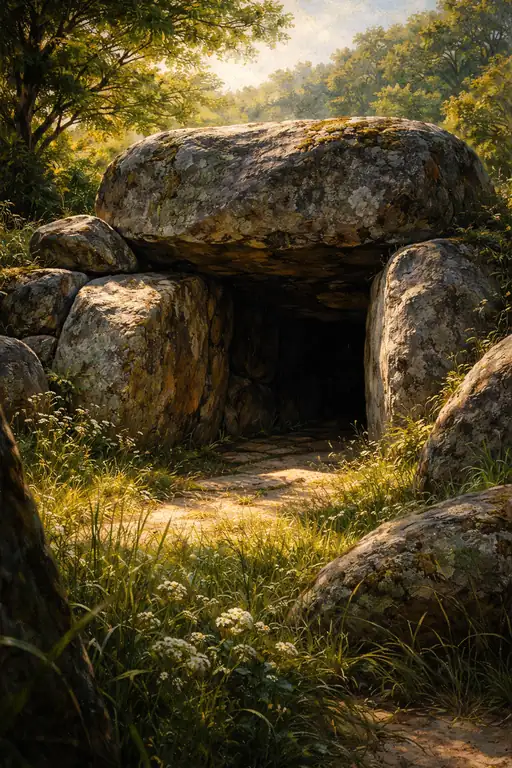 Echoes in the Mossy Stones
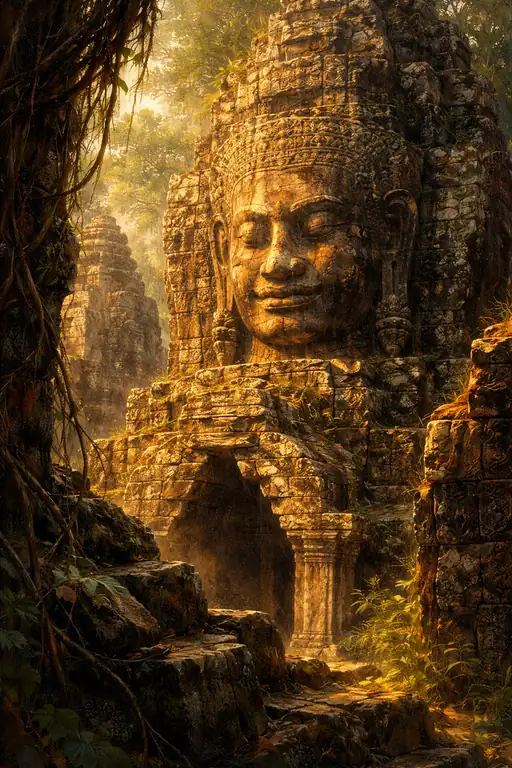 The Silent Smile of Ancient Stone
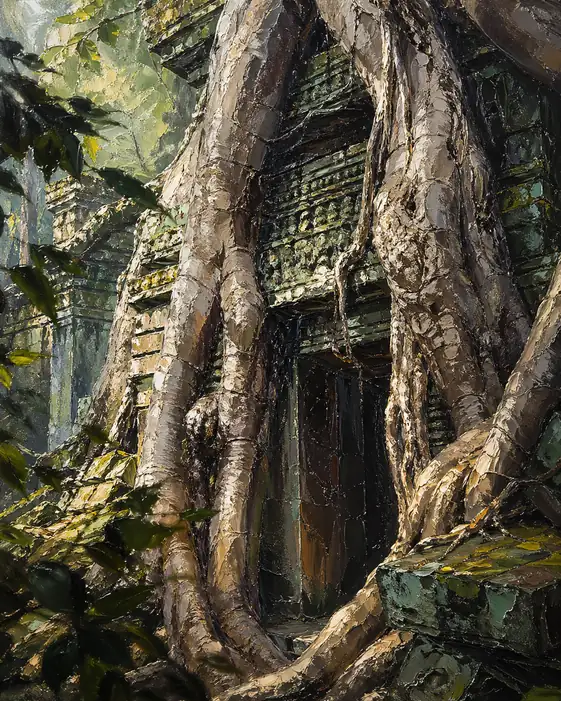 Eternal Embrace of the Jungle Root
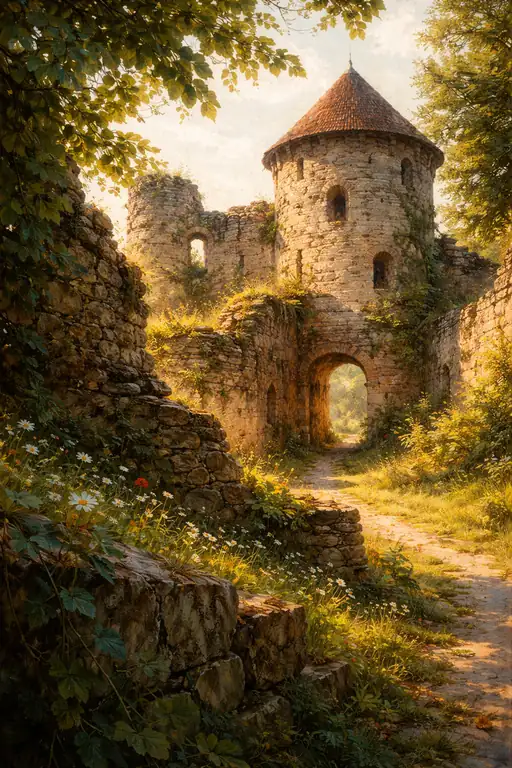 Nature's Embrace of the Ruined Tower
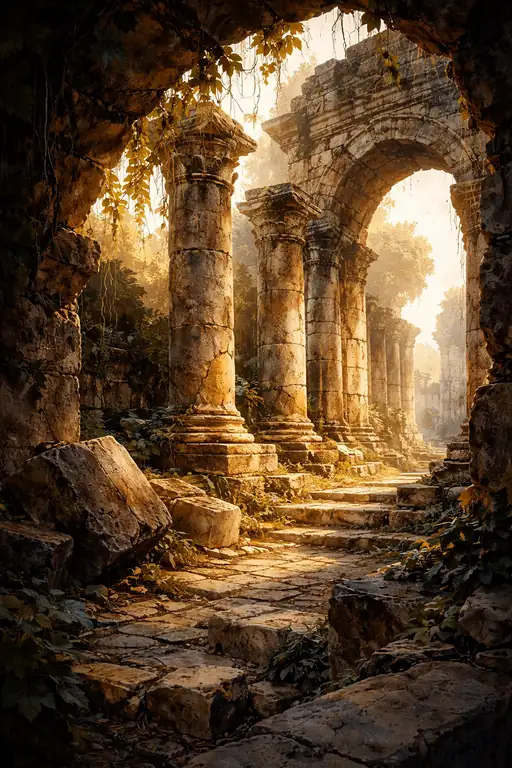 Nature's Reclamation: Echoes of Antiquity
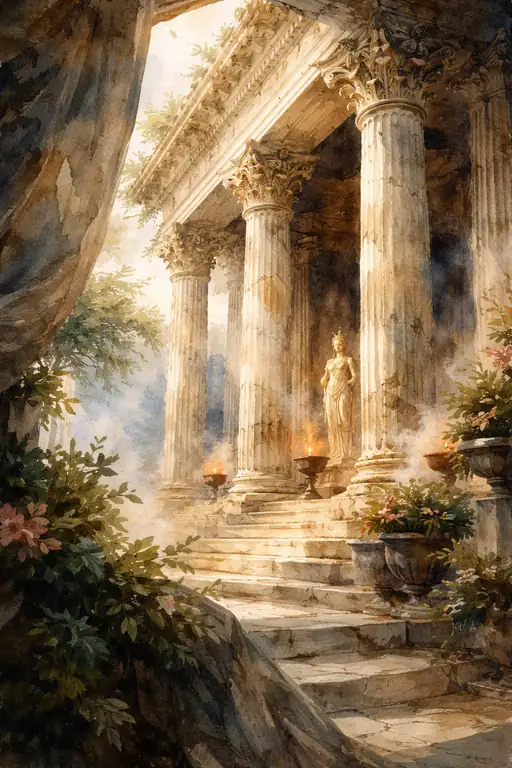 The Golden Shrine of Antiquity
 Breath of the Forgotten Sanctuary