Sweet Temptation: Strawberry Cake on a Plate
Critique
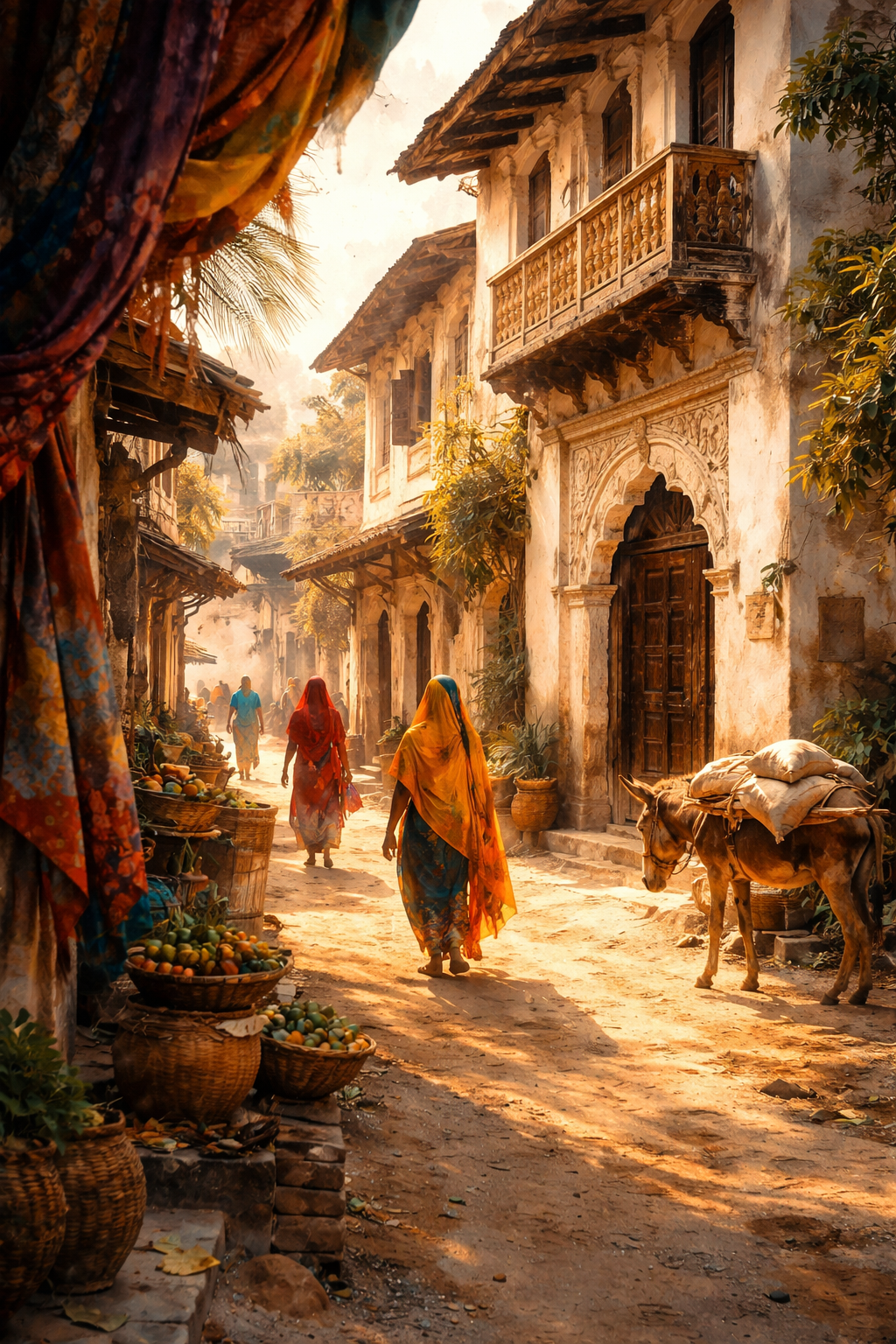
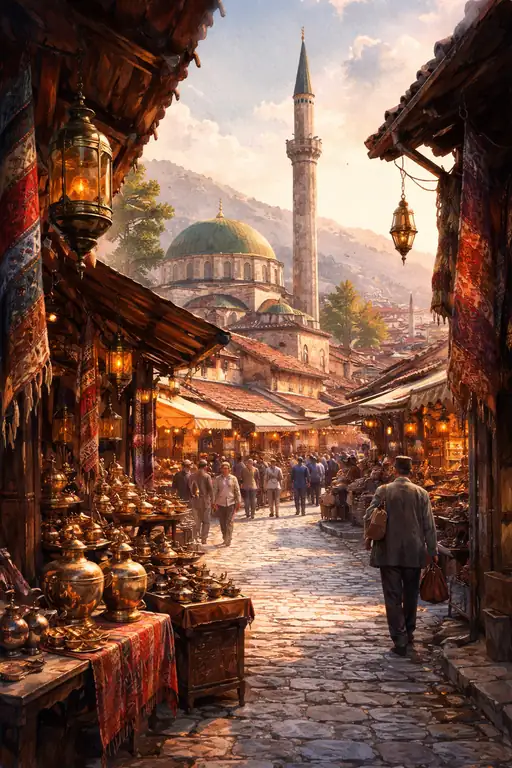
1. Introduction This oil painting presents a vivid and bustling street scene, likely set in an old South Asian town, characterized by its ornate architecture and vibrant daily life. The work captures a transient moment in time, where sunlight filters through a dusty atmosphere, illuminating the colorful garments of market-goers and the humble presence of working animals. Through its warm palette and busy composition, the artist invites the viewer into a sensory-rich environment that feels steeped in tradition and community. 2. Description The vertical composition features a narrow, sunlit street lined with whitewashed buildings that boast intricate wood-carved balconies and arched doorways. In the foreground on the left, colorful draped fabrics and baskets overflowing with small green fruits frame the view. A donkey-laden with heavy sacks stands on the right, while several women dressed in brilliant orange, red, and blue saris walk away from the viewer toward the hazy depth of the path. The light originates from the upper left, casting long, dramatic shadows and creating a glowing effect on the dusty ground and the textured walls. 3. Analysis The artist employs a palette dominated by warm tones—yellows, ambers, and terracotta—which are periodically interrupted by the saturated reds and teals of the saris. The lighting is particularly effective in establishing a sense of place and time, suggesting the intense heat of a late afternoon sun. A single-point perspective draws the eye down the street, while the foreground elements on the left create a framing device that enhances the overall depth. The brushwork varies from the precise rendering of the architectural details to more suggestive, loose strokes on the ground and distant figures. 4. Interpretation and Evaluation This piece successfully evokes the atmosphere of a traditional marketplace through its careful balance of detail and environment. The juxtaposition of the weathered, permanent architecture with the movement of the people and the donkey suggests a harmony between history and the pulsating energy of the present. The painting evaluates the beauty found in everyday chores and the dignity of labor, presented without sentimentality but with a keen eye for visual harmony. Technically, the rendering of light and the complex textures of fabric and stone demonstrate a high level of proficiency. 5. Conclusion What initially appears to be a chaotic street scene is revealed upon closer inspection to be a carefully orchestrated study of light, color, and cultural heritage. The interplay of sun and shadow gives the work a cinematic quality, transforming a mundane path into a stage for human narrative. It serves as a powerful reminder of the richness inherent in traditional lifestyles and the enduring charm of ancient urban spaces. Overall, the work achieves a remarkable sensory impact, making the heat and the dust of the setting almost palpable to the observer.
Same Subcategory
Similar Artworks
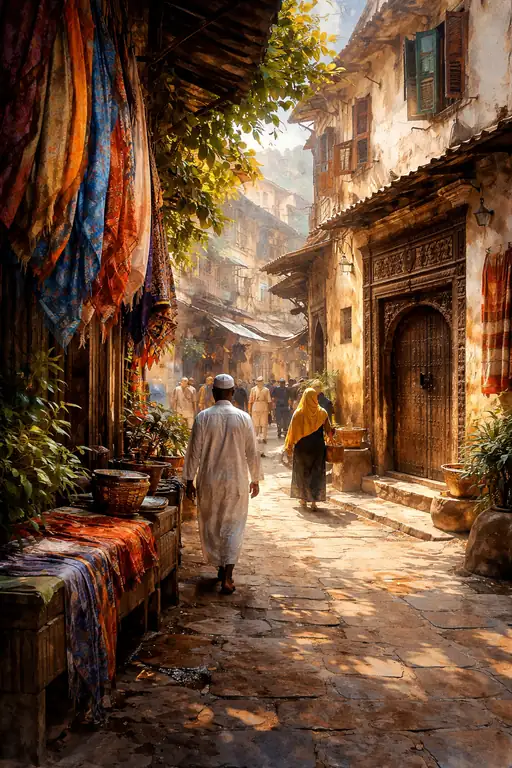 The Vibrant Bazaar: Sunlight in the Old Town Street
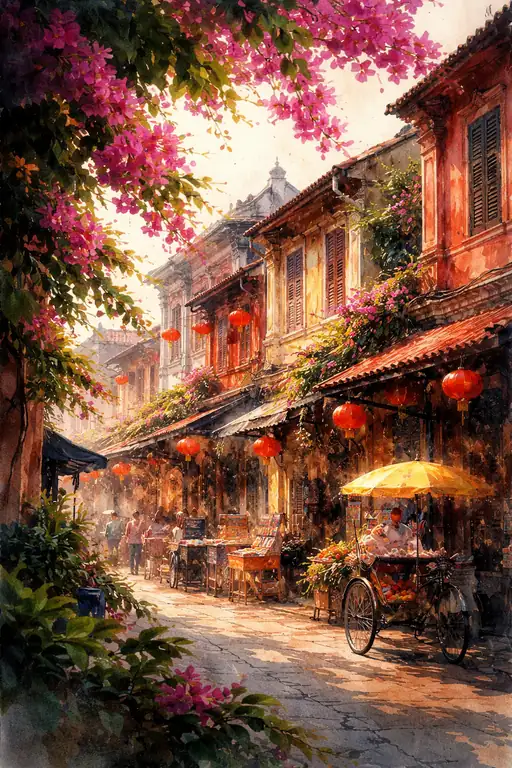 Nostalgia Blooming on Lantern Street
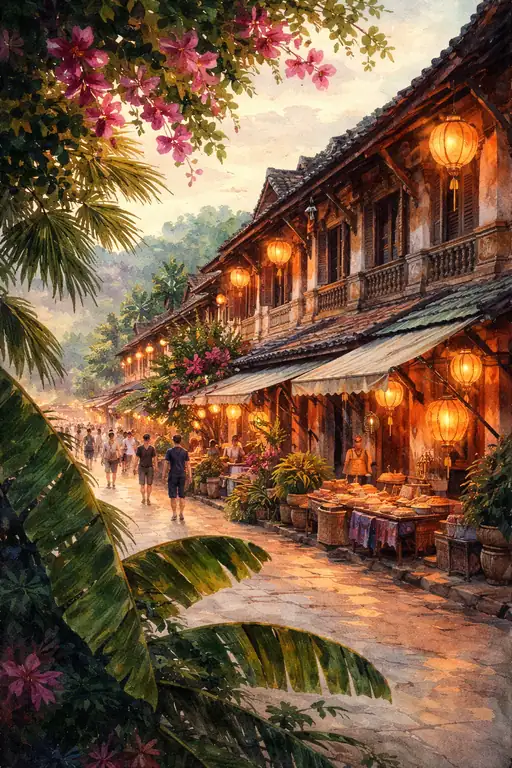 Tropical Twilight Echoes
 Echoes of Ochre and Crimson
 Golden Echoes of the French Quarter
 Dusk Awakens the Lantern's Memory
 Whispers of the Past: Sunlit Steps in the Old Town
 Golden Era Recalled
 Heartbeat of the Ancient Bazaar
 Autumn Leaves and Cobblestone Memories