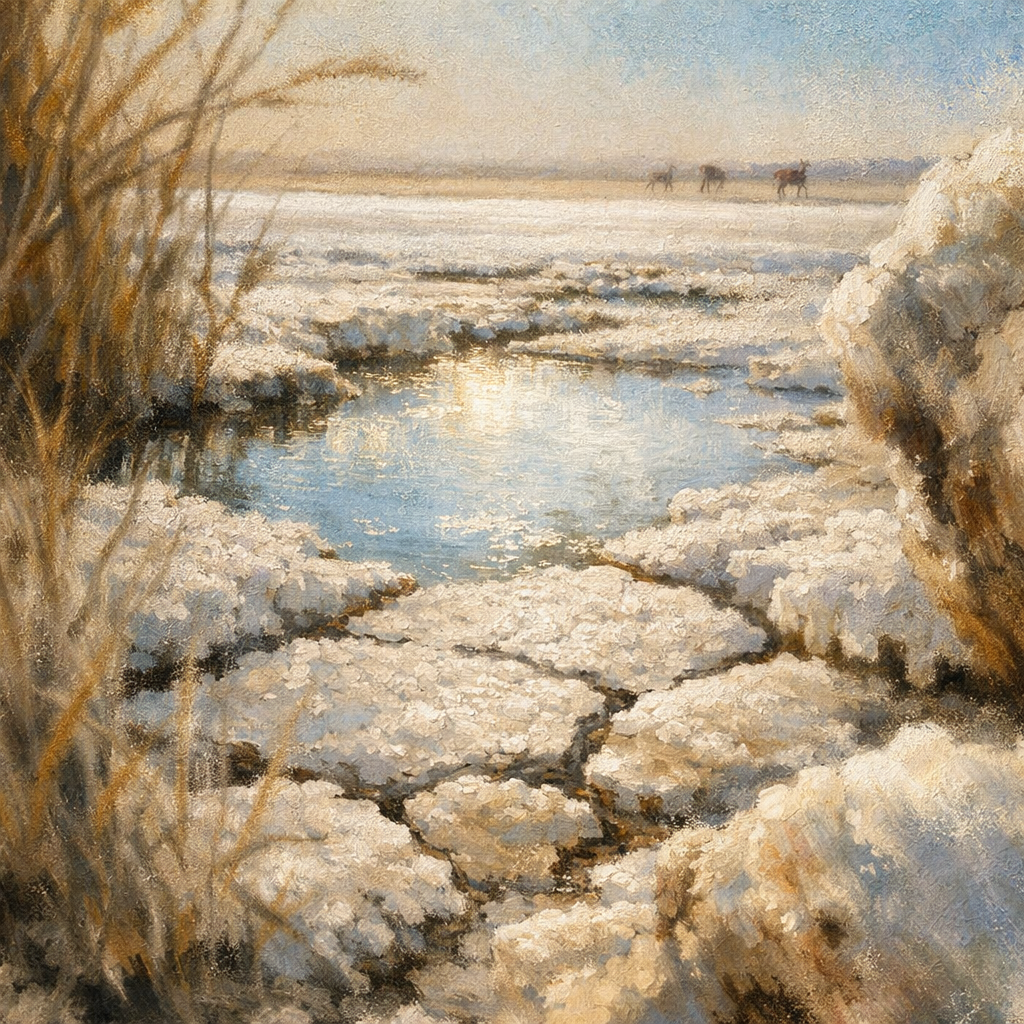
The Thawing Ice: A Late Winter Reflection
Critique
1. Introduction This impressionistic oil painting captures the quiet, transformative period of a late-winter thaw. The scene focuses on a small, shimmering pool of water emerging from beneath a fragmented layer of snow and ice, reflecting the low, pale sun. In the distance, a few small figures of deer or elk graze on the snowy plains, providing a sense of scale and life to the otherwise frozen wilderness. The artist utilizes a heavy, textured brushwork to emphasize the physical presence of the melting snow, creating a work that vibrates with the subtle energy of seasonal change. 2. Description In the foreground, large, irregular chunks of white snow and ice are separated by deep, dark cracks, through which the sodden earth is visible. On the left, tall, brittle stalks of dried grass and reeds rise vertically into the frame, their golden-brown hues contrasting with the cool whites. The center of the canvas features a shallow pool of translucent blue water that catches a bright, focal reflection of the sun, casting a soft glow on the surrounding ice. The background is a vast, flat expanse of white that meets a pale blue and cream-colored sky at a hazy horizon line, where three small animals are silhouetted against the morning light. 3. Analysis The painting’s composition is built on a series of receding horizontal planes that guide the eye from the intricate textures of the foreground to the minimalistic distant horizon. One can observe an effective use of color temperature, as the warm ochres of the grass and the yellow-white sun reflection balance the cool, cerulean tones of the water and the shadowed edges of the snow. The artist employs a high-key palette and thick, impasto application, particularly in the snowy areas, which gives the painting a tactile, sculptural quality. Lighting is treated carefully, with the low-angle sun creating long, soft shadows that define the uneven surface of the thawing land. 4. Interpretation and Evaluation This work can be interpreted as a meditation on the cyclical nature of time and the quiet persistence of life through the harshest seasons. The breaking ice symbolizes a transition and the inevitable return of vitality to the landscape. The execution demonstrates a sophisticated understanding of light and atmosphere, particularly in the way the sunlight is diffused across the snowy expanse. By choosing a somewhat abstract and focused subject—a simple puddle and cracked ice—the artist elevates a mundane natural occurrence into a moment of profound beauty and renewal. The inclusion of the distant animals reminds the viewer that life continues even in this seemingly barren environment. 5. Conclusion In summary, the painting is a evocative and well-crafted study of the late winter landscape, rich in texture and atmospheric depth. The initial impression of a cold, desolate scene gradually gives way to a feeling of warmth and anticipation as the details of the thaw and the presence of wildlife are noticed. Every element, from the brittle reeds to the shimmering reflection, contributes to a cohesive narrative of survival and emerging life. It is a work that captures the delicate balance between the departing winter and the approaching promise of spring. Ultimately, the piece invites the observer to find beauty and hope in the quietest corners of the natural world.
Same Subcategory
Similar Artworks
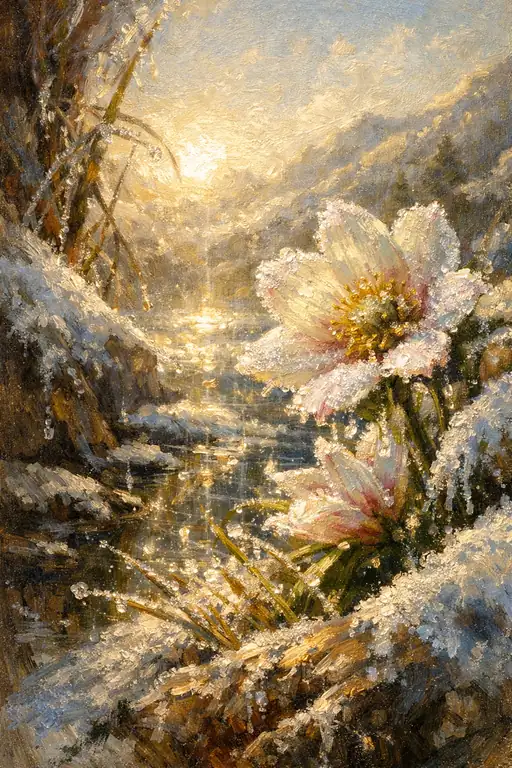 Resilience in the Winter's Embrace
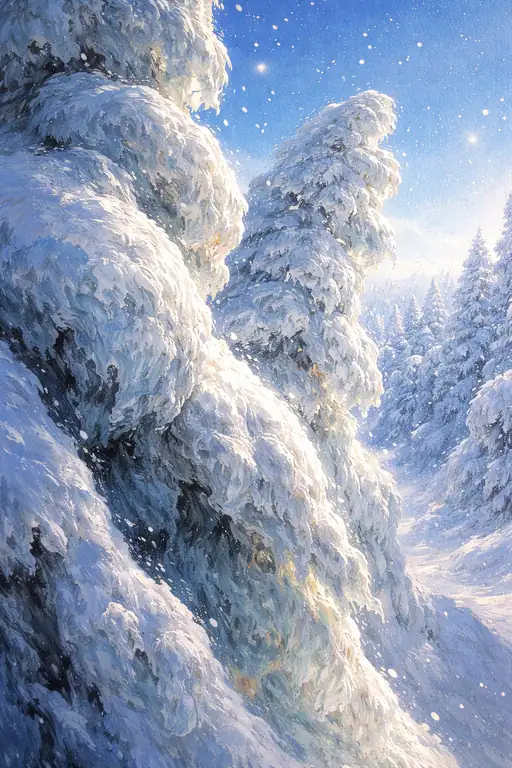 Silent Guardians of the Frost
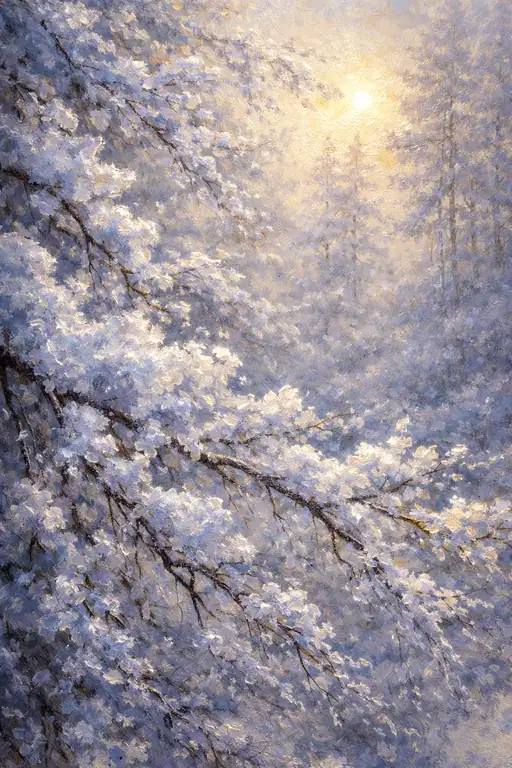 Golden Glow in the Frosty Woods
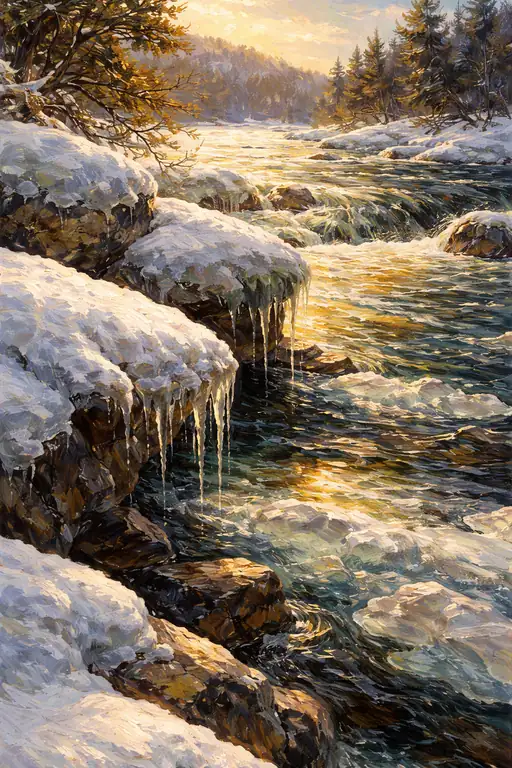 Winter's Golden Pulse
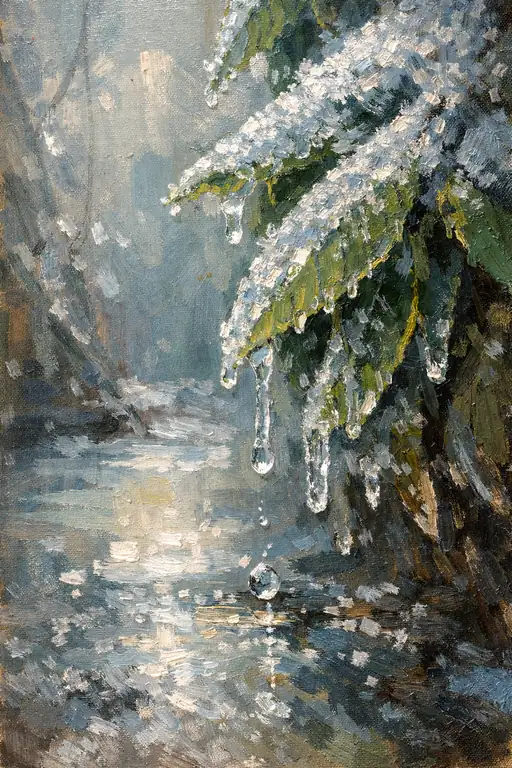 The Winter's Tear Before Spring
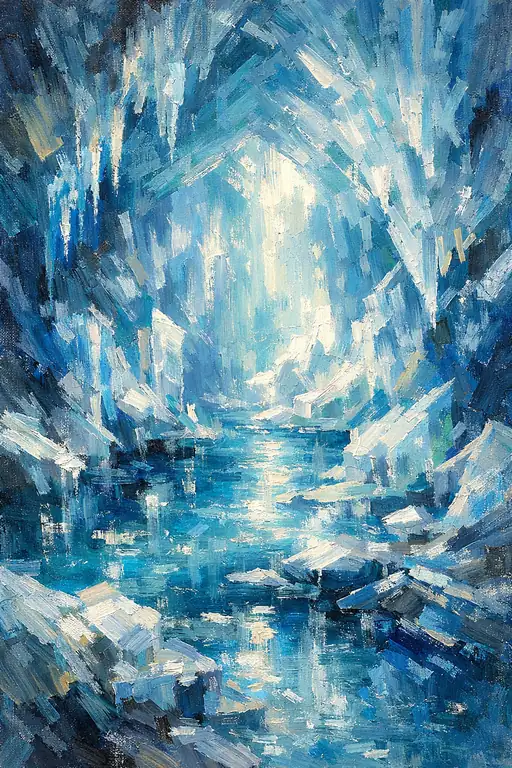 Echoes in the Ice Cavern
 Silent Steps in the Morning Frost
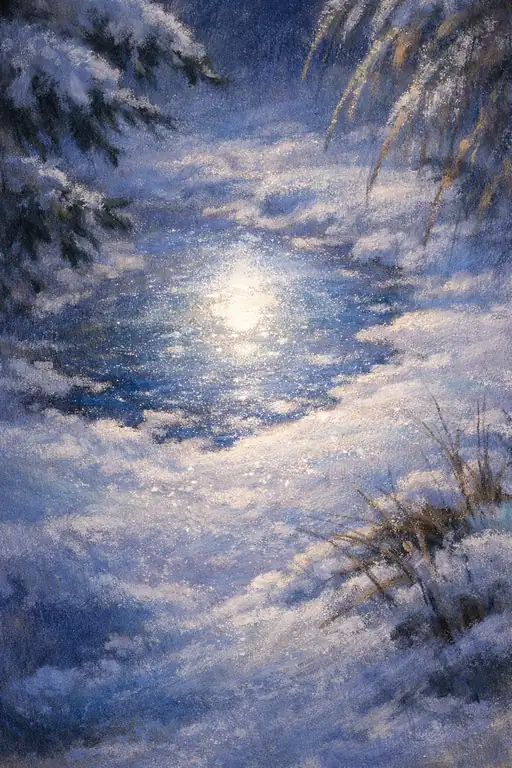 Mirror of the Frosty Silence
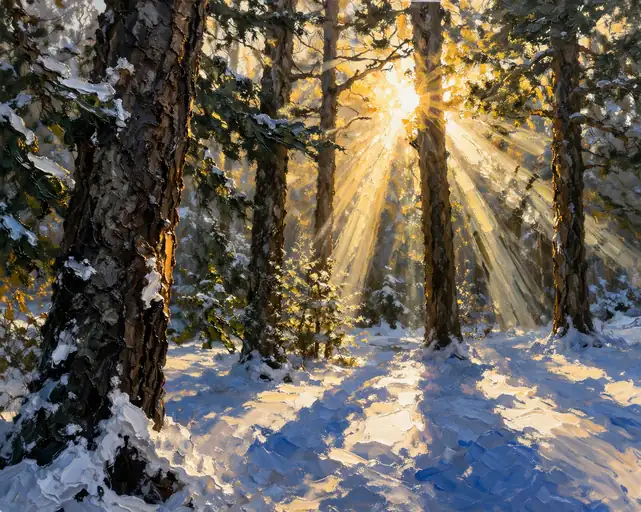 Golden Silence of the Winter Pines
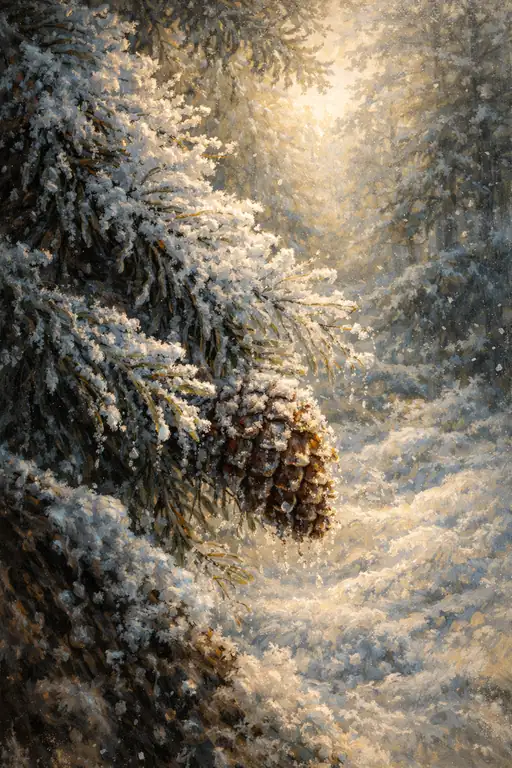 Frozen Whispers of the Winter Sun