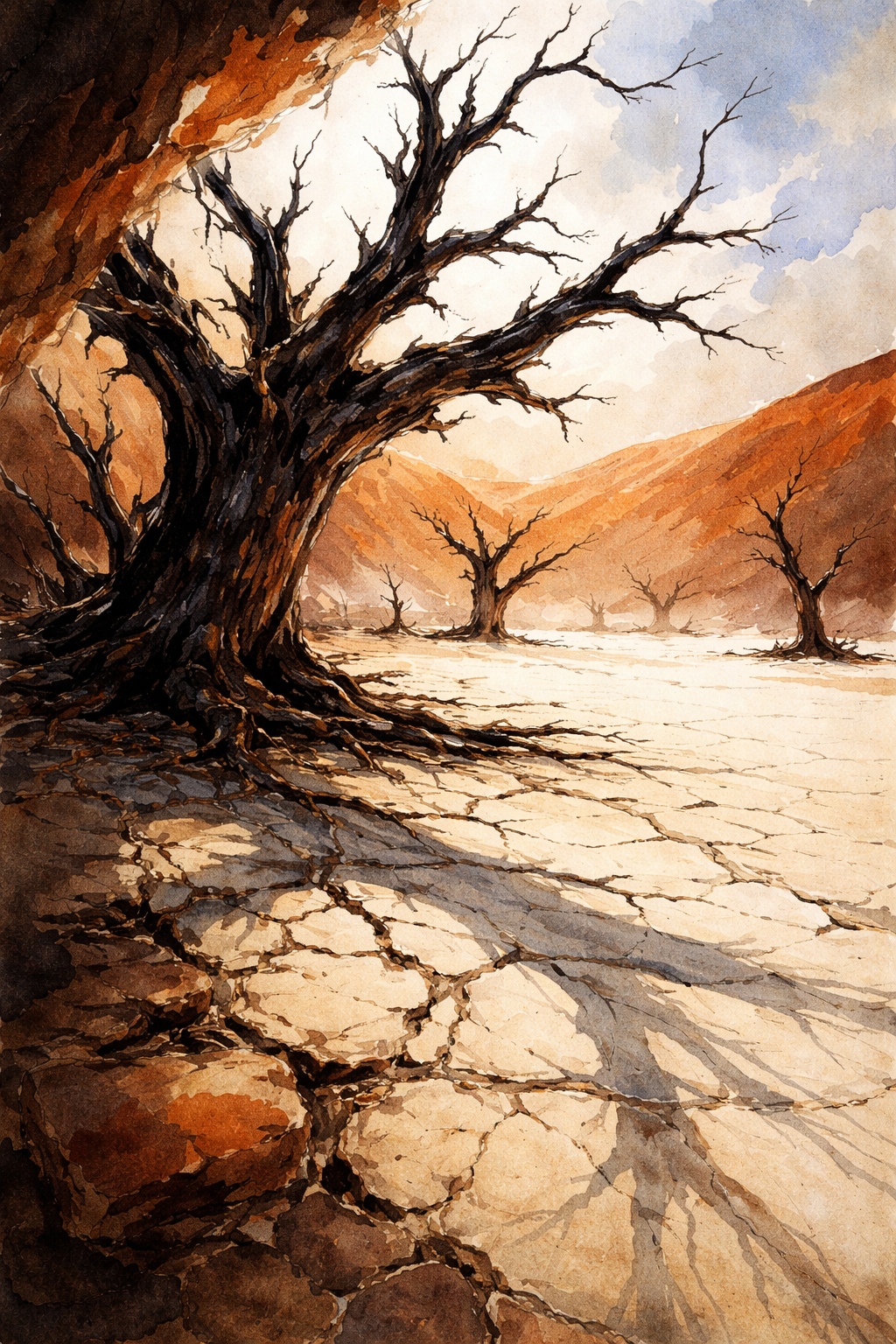
The Skeletal Remains: Shadows in Deadvlei
Critique
1. Introduction This dramatic watercolor and ink illustration presents a stark, haunting view of an arid desert landscape dominated by the skeletal forms of dead trees. The work captures a landscape that feels frozen in a state of eternal dehydration, where the elements have stripped away all life, leaving only the rugged structural remains. Through the use of bold outlines and vibrant, earthy washes, the artist creates a powerful sense of desolation and atmospheric tension. The composition effectively utilizes the stark contrasts of the desert sun to highlight the geometric beauty of the parched environment. 2. Description In the foreground, a large, gnarled tree with twisted, leafless branches leans from the left, its roots clawing into a surface of dry, cracked earth. The dark, ink-like shadows of the tree stretch long and thin across the geometric patterns of the parched ground toward the bottom right. Middle ground features several smaller, similarly dead trees scattered across a white, salty plain that meets the base of towering, reddish-orange dunes or rock formations. The sky above is a pale, clouded wash of blue and grey, providing a cool contrast to the intense, fiery tones of the landscape below. The entire piece is rendered with a mix of precise line work and fluid, bleeding watercolor washes. 3. Analysis The artwork’s composition is dynamic, employing a series of strong diagonal lines formed by the leaning trees and their elongated shadows to create a sense of recession and depth. One can observe a masterful use of negative space in the white desert floor, which emphasizes the intricate web of cracks and the dark silhouettes of the central subjects. The color palette is restricted to warm terracotta, burnt sienna, and deep blacks, balanced by the cool sky tones, creating a high-contrast visual experience. The artist’s technique involves layering transparent washes over structured ink drawing, allowing for both the sharp definition of the cracks and the soft, atmospheric blending of the distant hills. 4. Interpretation and Evaluation This work can be interpreted as a poignant reflection on the passage of time and the indomitable power of a harsh environment. The dead trees stand as monuments to a lost ecosystem, their enduring forms suggesting a strange, skeletal nobility in spite of their lack of leaves. The technical execution is highly successful, particularly in the way the artist manages the bleeding edges of the watercolor to simulate heat and dust without obscuring the critical details of the landscape. By choosing an ink-heavy style, the artist imbues the scene with a graphic, almost narrative quality that suggests an ancient, wordless story of survival and eventual silence. 5. Conclusion In summary, the painting is an evocative and visually arresting study of a hostile yet undeniably beautiful landscape. The initial impression of a barren, lifeless world eventually gives way to an appreciation for the complex textures and rhythmic patterns created by the desert’s selective forces. Every element, from the jagged cracks in the clay to the soft gradients of the sky, contributes to a unified atmosphere of profound solitude. It is a work that manages to find a unique, haunting elegance in the remains of the natural world. Ultimately, this piece highlights the enduring sculptural beauty that emerges when life has departed, leaving only the essential bones of the earth.
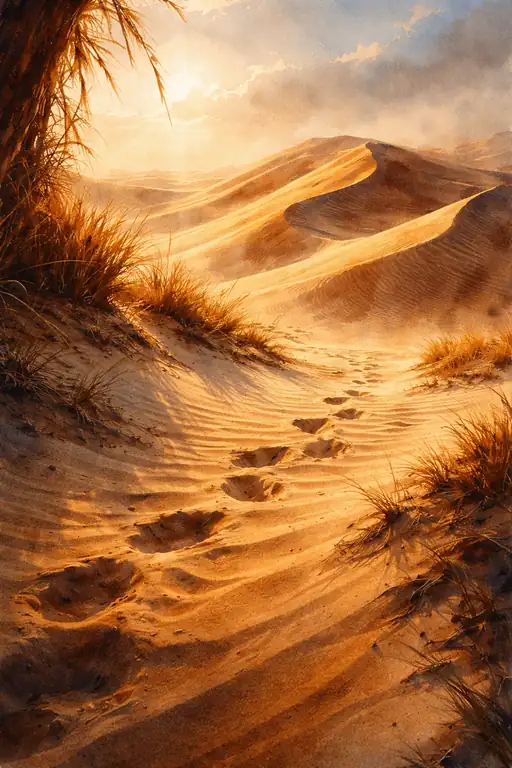 Footsteps in the Golden Sand
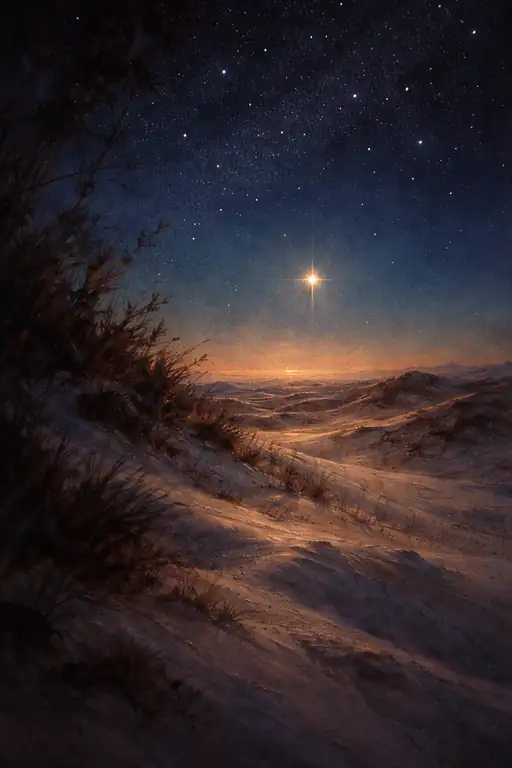 A Solitary Star Over the Frozen Sands
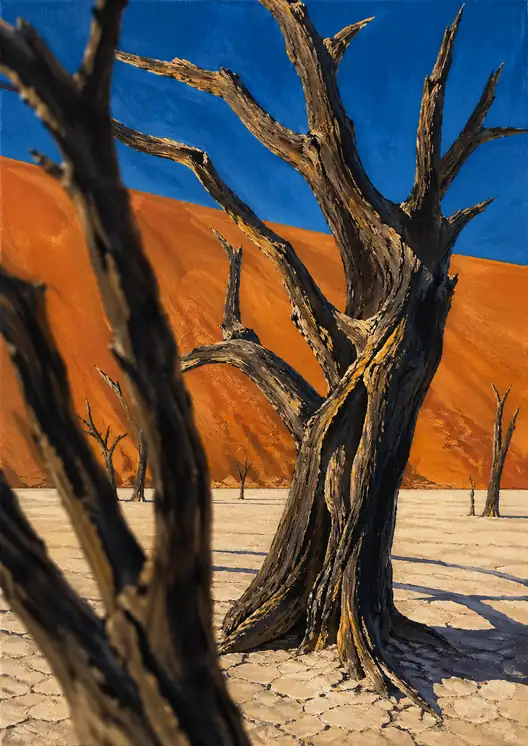 The Silent Sentinel of Time
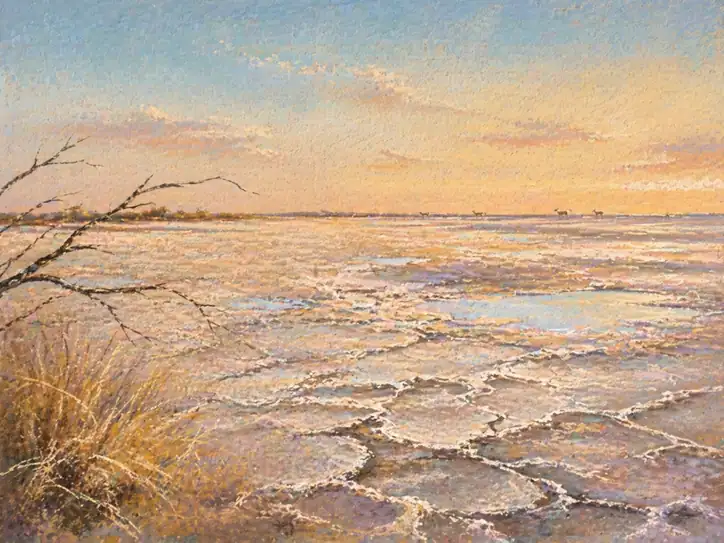 The Glass Solitude of Twilight
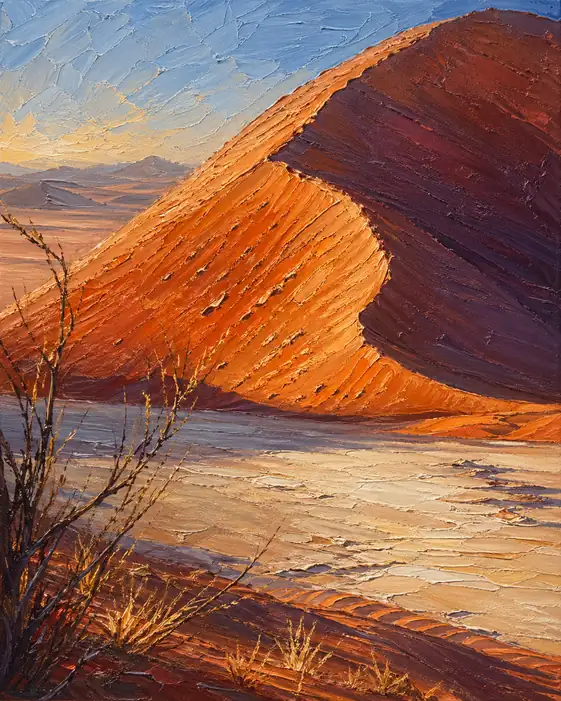 The Sculpture of Scorching Sands
 Gilded Oasis
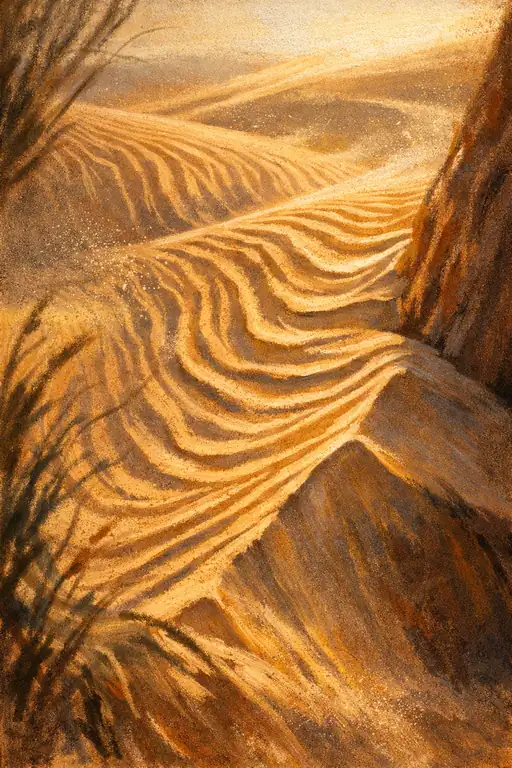 Dunes of the Sleeping Gold
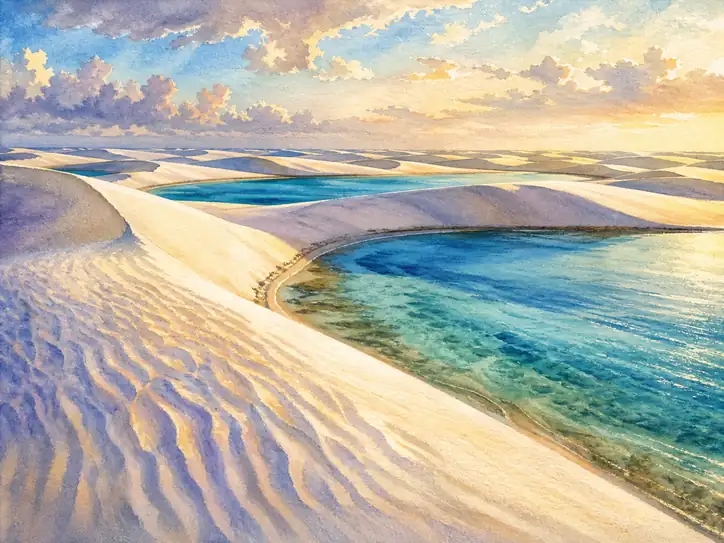 The Ethereal Sands of Lençóis
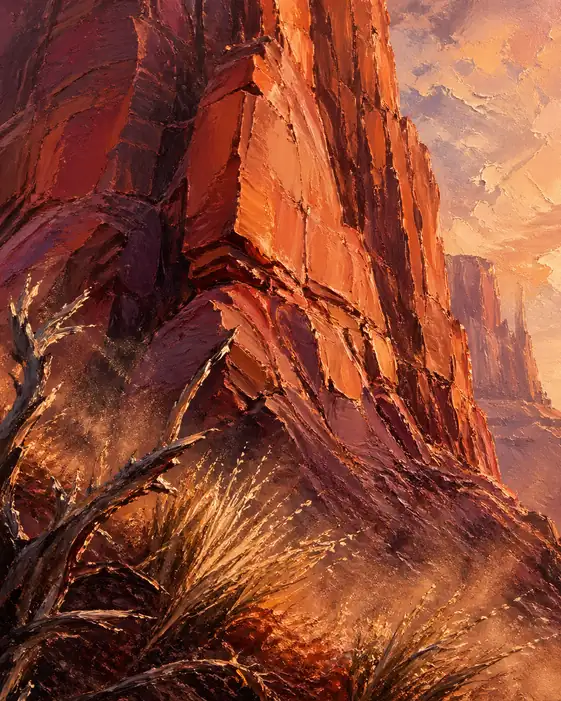 The Weight of Thousand Sunsets
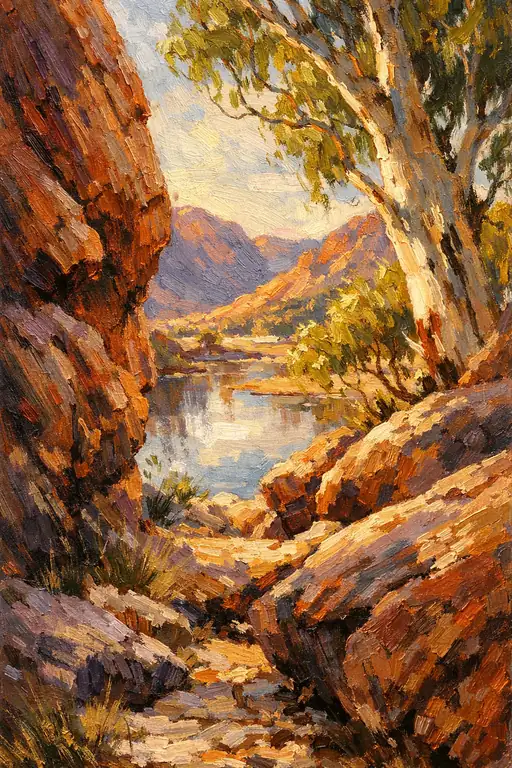 Echoes of the Ochre Canyon