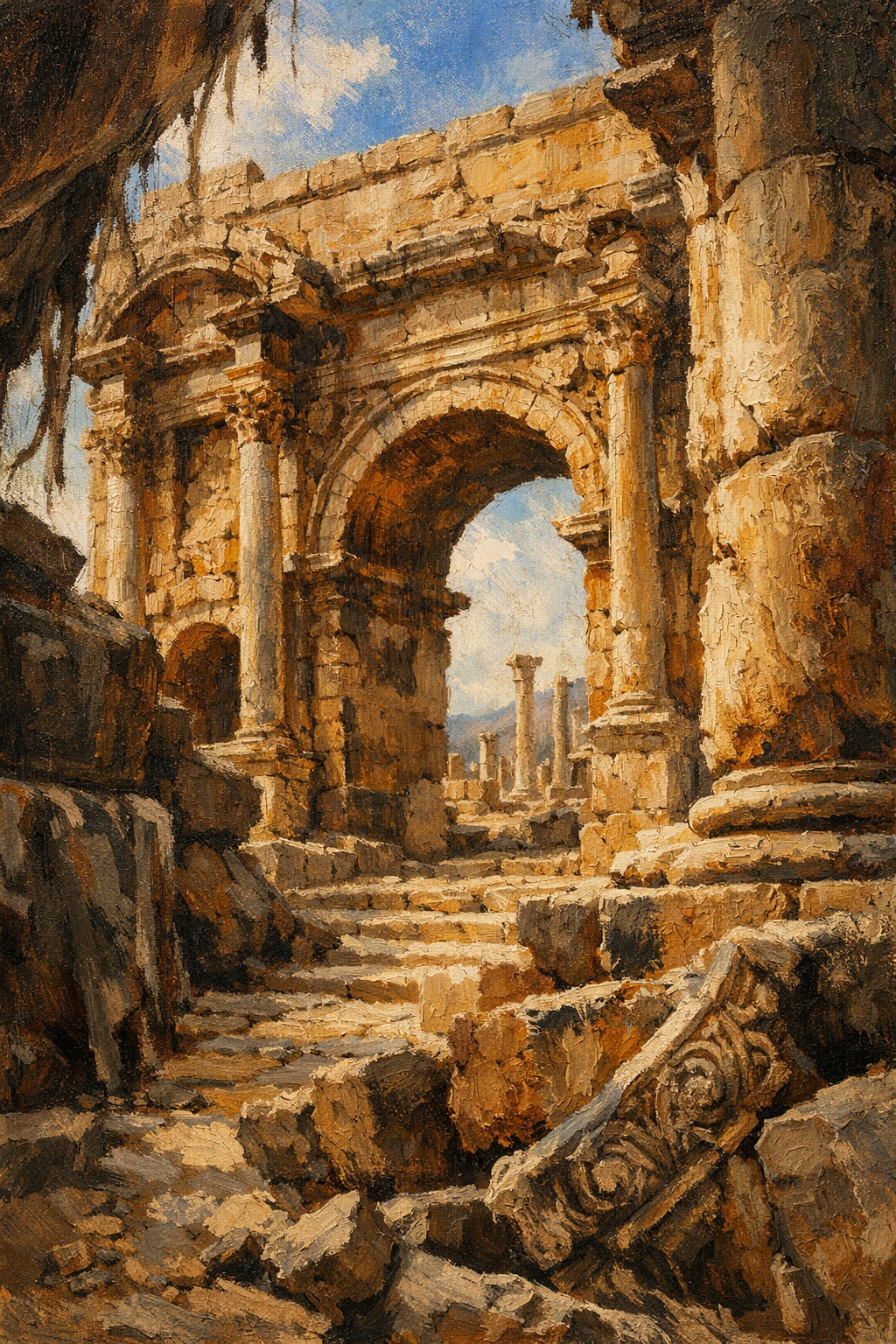
Echoes in the Stones of Time
Critique
1. Introduction This vertical oil painting depicts the majestic ruins of a classical Roman-style triumphal arch standing amidst a field of weathered masonry. The composition is centered on the monumental stone structure, which serves as a gateway to further architectural remains in the distance. Bathed in the stark light of a clear day, the scene captures the enduring grandeur of ancient civilization and the quiet, inevitable process of decay that follows the passage of centuries. 2. Description The main archway is flanked by weathered Corinthian columns and topped with a heavy, multi-layered entablature. In the foreground, large, fractured blocks of stone and a broken pedestal with intricate relief carvings lie scattered across the uneven ground. Through the arch, several more solitary columns and distant hills are visible under a bright blue sky, while heavy shadows on the left frame the scene and provide a sense of enclosed space within the ruins. 3. Analysis Technical mastery is shown through the use of a high-contrast lighting scheme that highlights the rough, craggy textures of the stone surfaces. The artist employs a heavy impasto technique, using thick, rhythmic brushstrokes to convey the physical presence and weight of the ancient blocks. The perspective is structured to draw the viewer’s eye through the central opening, creating a sense of invitation into the historical depth of the site. 4. Interpretation and Evaluation The painting explores the theme of "Vanitas," reflecting on the transient nature of human achievement compared to the slow, steady progress of time. The rugged beauty of the crumbling stone and the interplay of light and shadow evoke a sense of nostalgic longing for a lost era. Evaluation of the work reveals a sophisticated handling of tonal values and a remarkable ability to transform static architectural forms into a dynamic exploration of materiality. 5. Conclusion A profound balance is maintained between the monumental scale of the architecture and the delicate details of its disintegration. The initial view of a historical site develops into a deeper meditation on the permanence of spirit versus the impermanence of matter. Ultimately, the work stands as a powerful visual narrative that honors the legacy of antiquity while acknowledging the formidable power of time and the natural environment.
Same Subcategory
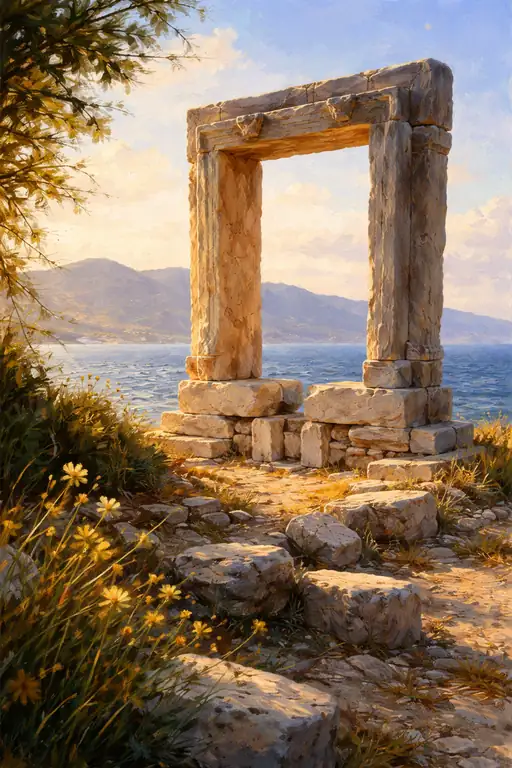 Eternal Silence of the Great Portara
Similar Artworks
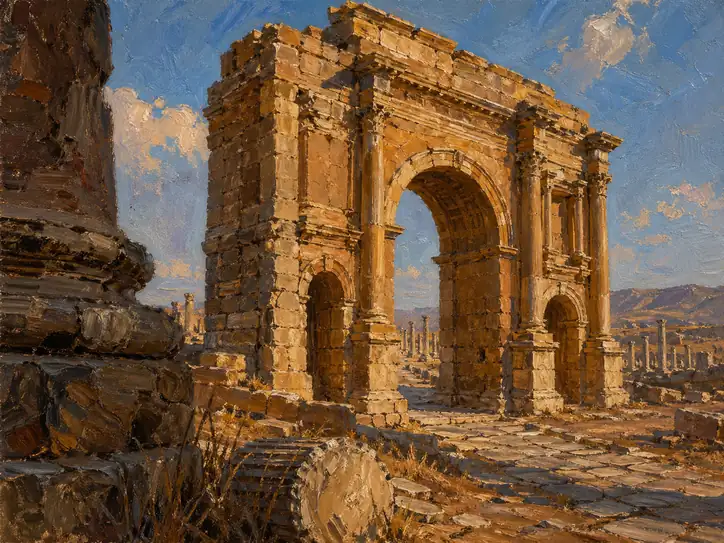 Sovereign of Silence: The Triumphal Arch of the Forgotten Sands
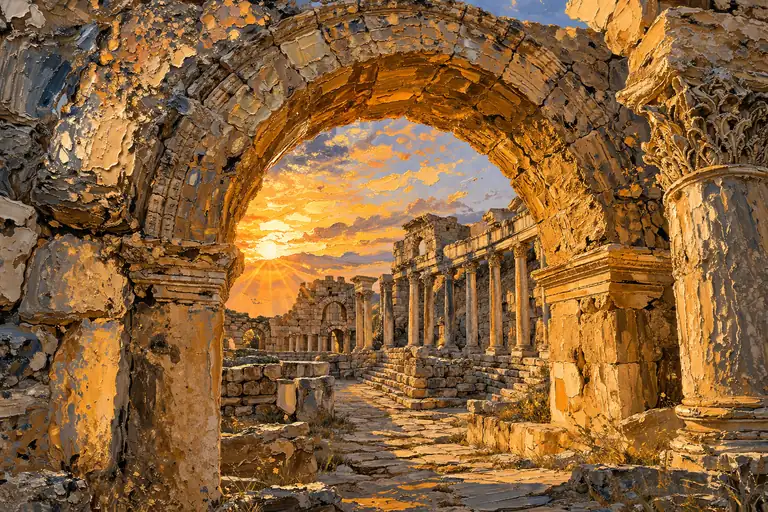 Eternal Sun Through Ancient Arches
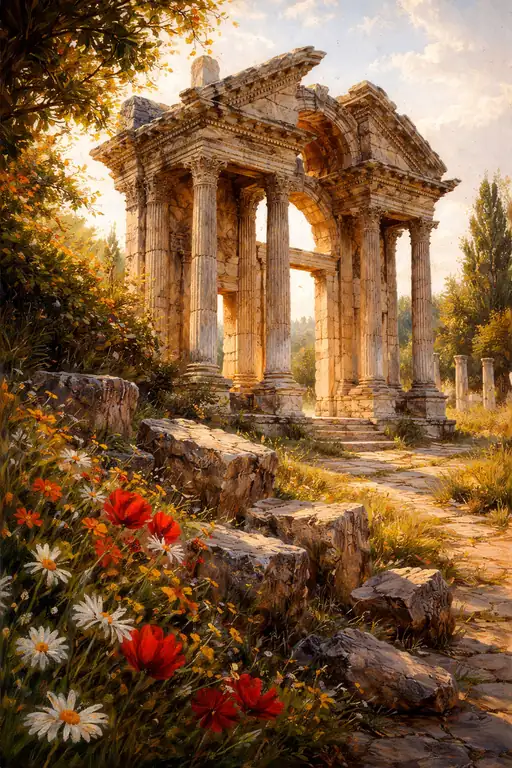 Timeless Pillars Among the Poppies
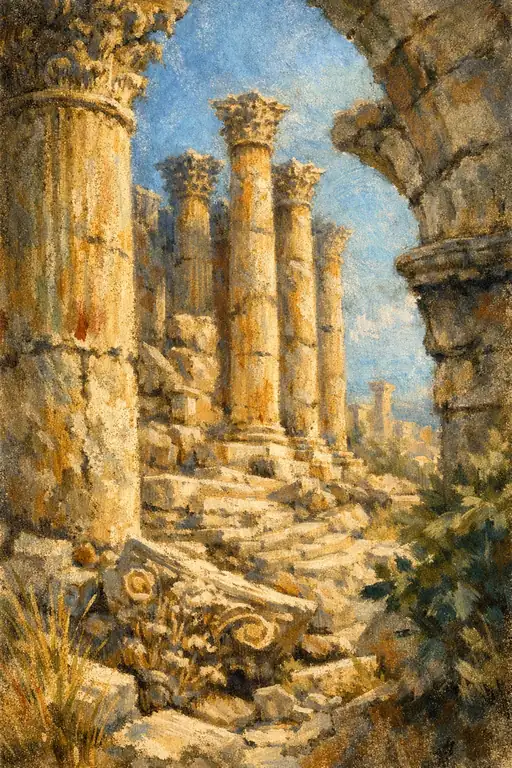 Timeless Grandeur: Weathered Corinthian Columns
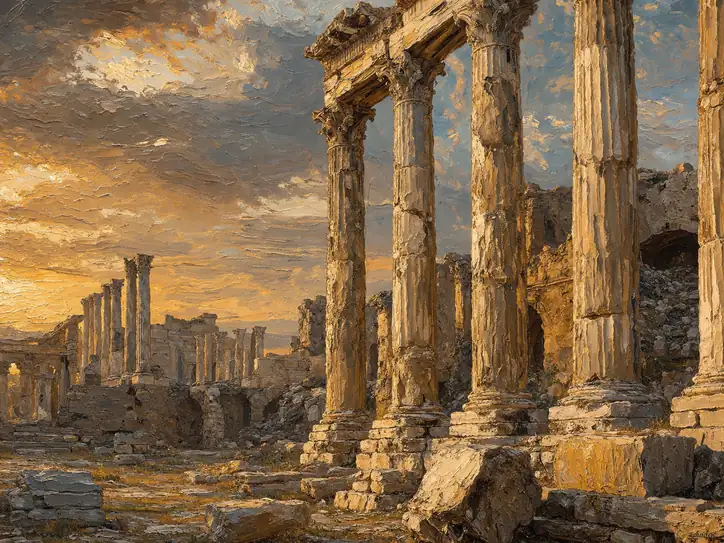 Echoes of the Golden Columns
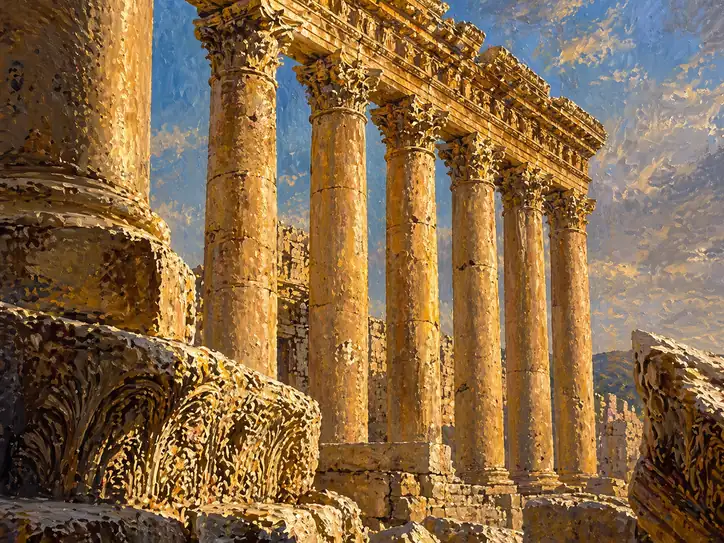 The Enduring Pillars of Time
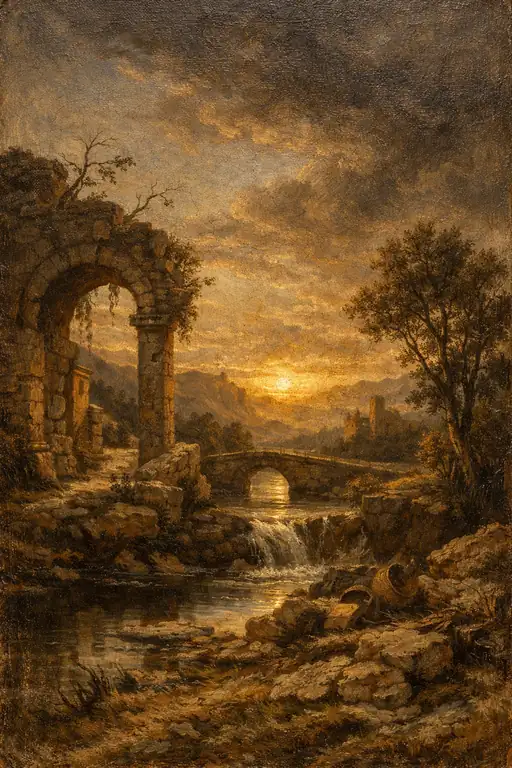 A Ruined Arch at Sunset
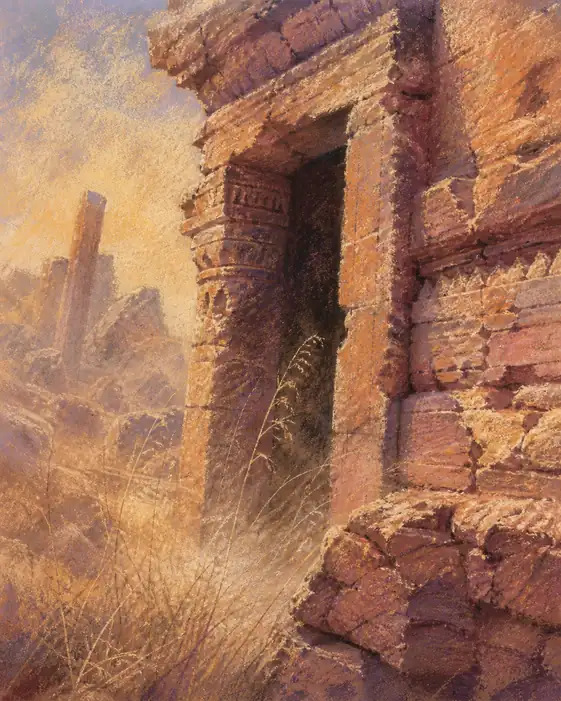 Whispers from the Ancient Threshold
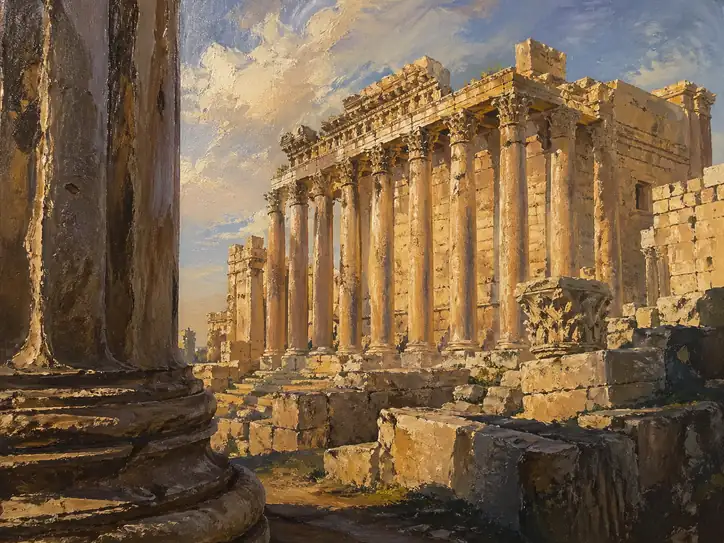 The Golden Echo of Antiquity
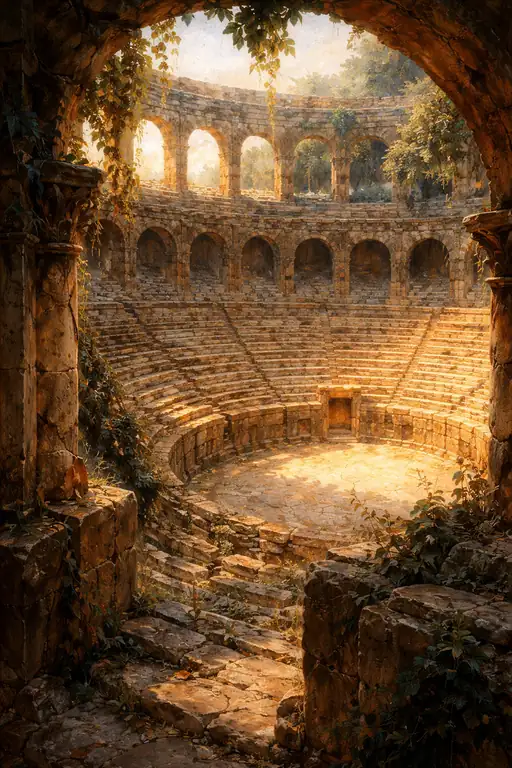 Whispers of the Ancient Arena