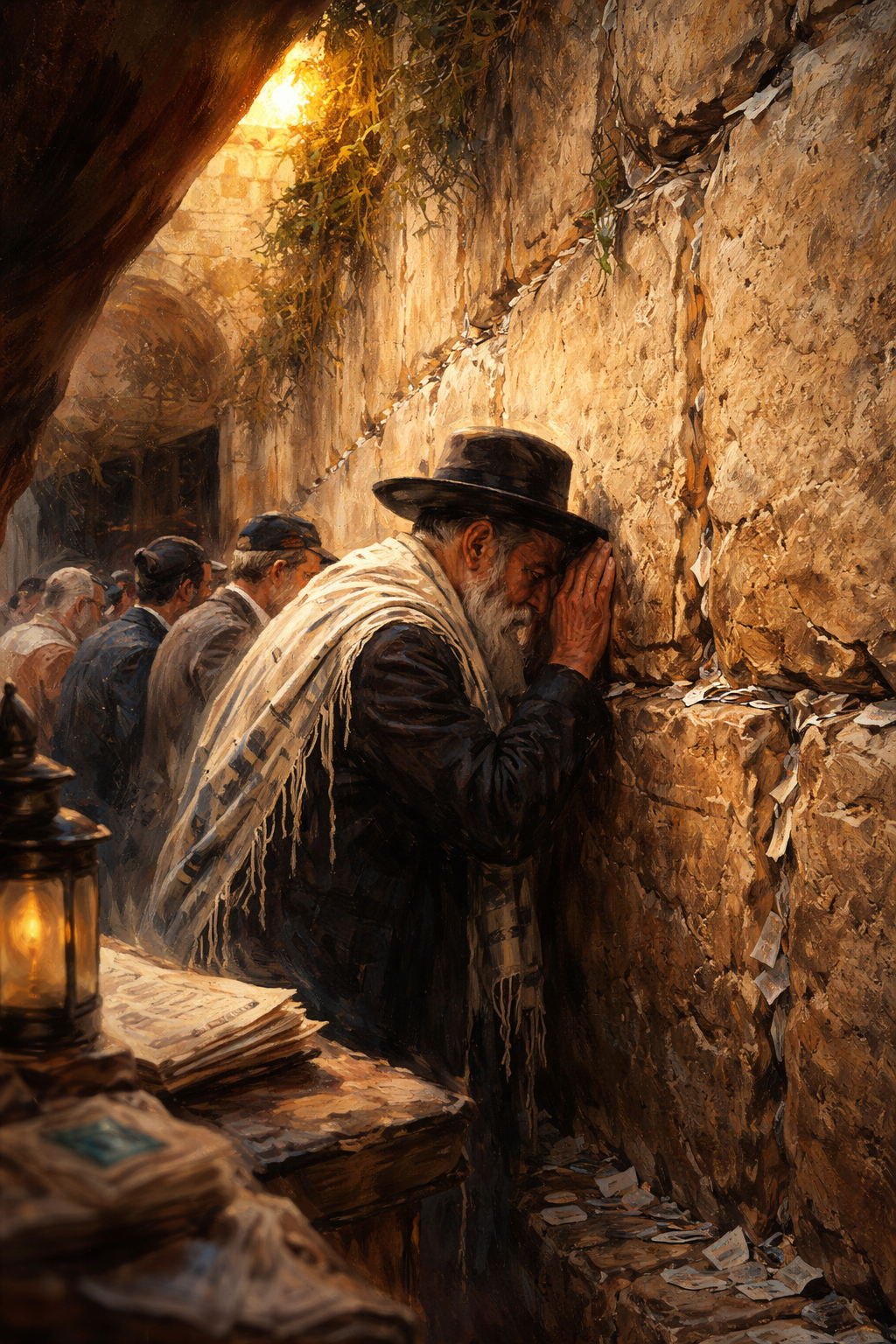
Echoes of Faith
Critique
1. Introduction This oil painting presents a solemn and spiritually charged scene at the Western Wall, a site of profound historical and religious significance. The composition focuses on the act of prayer, capturing a moment of deep personal connection between the individual and the sacred architecture. The work utilizes a classical painterly style to evoke a sense of timelessness and reverence, reflecting the weight of centuries of tradition embodied in this specific location. 2. Description The central figure is an elderly man with a prominent white beard, dressed in a traditional black hat and a white prayer shawl with black stripes. He is depicted in profile, pressing his hands and forehead firmly against the large, weathered blocks of the stone wall. Small slips of paper are visible within the crevices of the stones, representing the prayers of many individuals. In the blurred background, other men are seen engaged in similar acts of devotion, while a warm lantern light illuminates papers in the lower-left foreground. 3. Analysis The artist employs a dramatic use of light and shadow, with a golden glow originating from above and filtering through sparse greenery to bathe the stones in warmth. This light contrasts sharply with the deep shadows of the foreground and the man's dark clothing, creating a strong three-dimensional effect. The brushwork is textured and expressive, particularly in the rendering of the rugged stone surfaces and the folds of the prayer shawl. The diagonal arrangement of the wall provides a sense of depth and leads the viewer's eye toward the focal point of the man's intense interaction with the stone. 4. Interpretation and Evaluation This work successfully conveys the intensity of religious devotion through its sensitive portrayal of human gesture and atmospheric lighting. The physical pressure of the man against the wall serves as a powerful metaphor for the desire to connect with the divine through tangible remnants of history. Technically, the painting demonstrates high proficiency in capturing light and texture, effectively using a warm palette to evoke a spiritual aura. The contrast between the solitary focus of the protagonist and the presence of other figures emphasizes both the personal and communal nature of the experience. 5. Conclusion The painting offers more than a mere documentary record; it captures the intangible essence of faith within a specific cultural context. While the initial impression is one of visual warmth and traditional technique, closer inspection reveals a profound narrative of endurance and spiritual longing. Ultimately, the composition stands as a masterful study of light and human emotion, reaffirming the enduring power of sacred spaces to inspire artistic and personal reflection.
Same Subcategory
 Echoes of the Divine in the Maple's Light
 The Silent Smile of Ancient Stone
Similar Artworks
 In the Stained Light
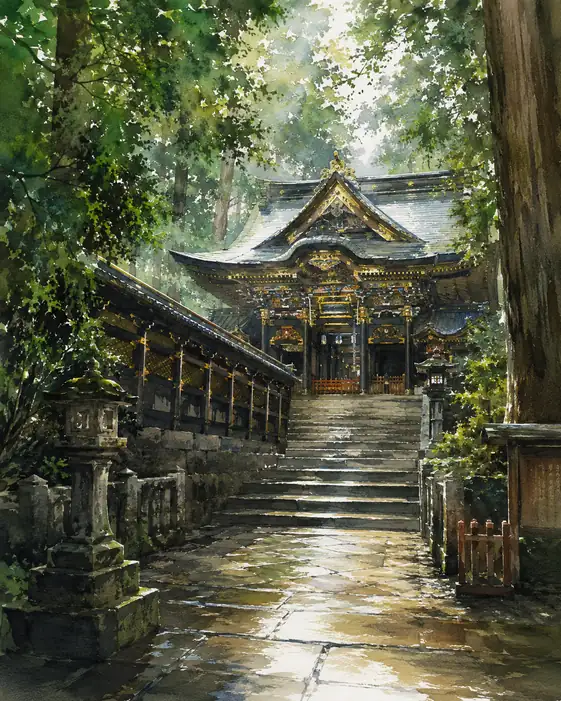 Gold Dwells in the Forest's Silence
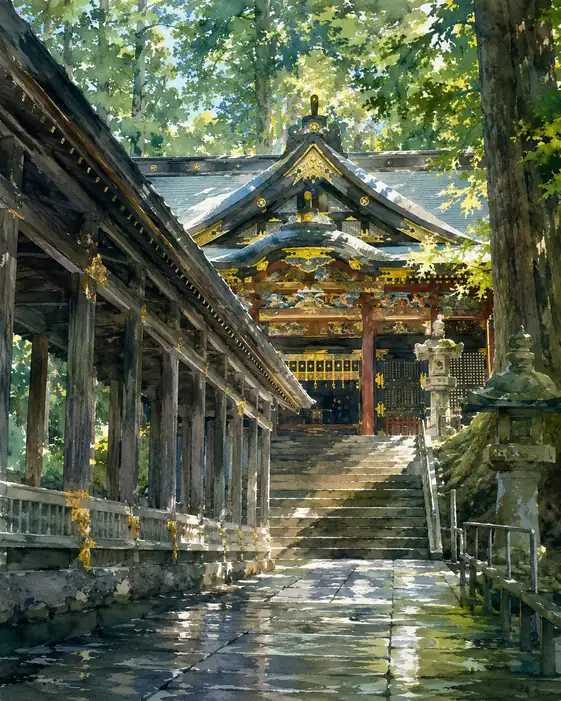 Sunbreaks Toward the Gilded Sanctuary
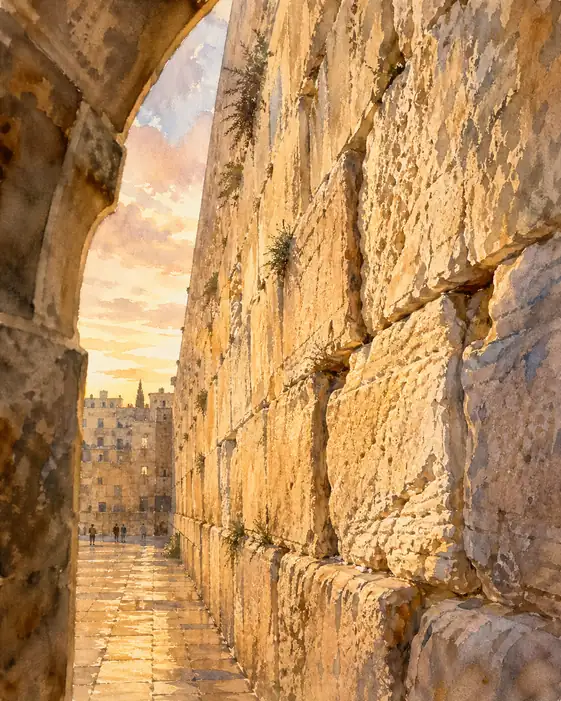 Wall of Souls: A Golden Prayer Through the Arch of Time
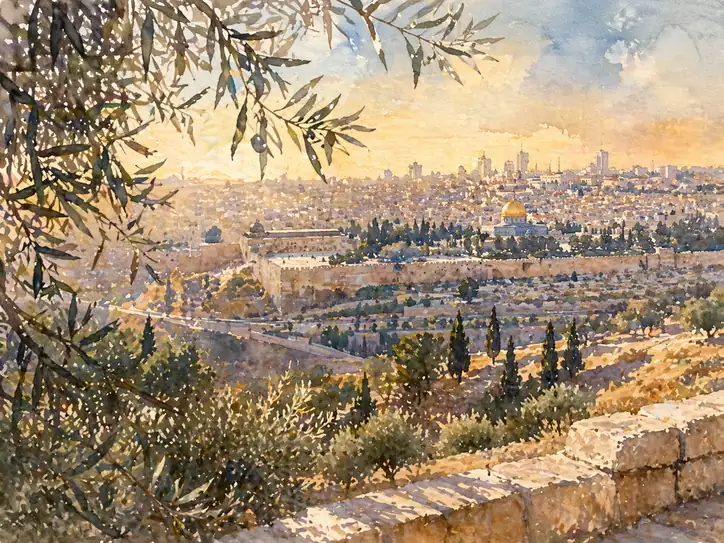 Jerusalem's Golden Radiance
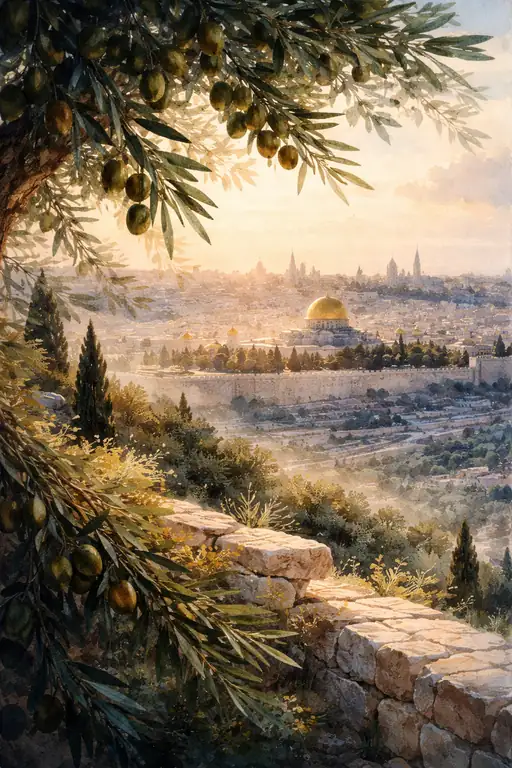 Golden Peace Under the Olive Branch
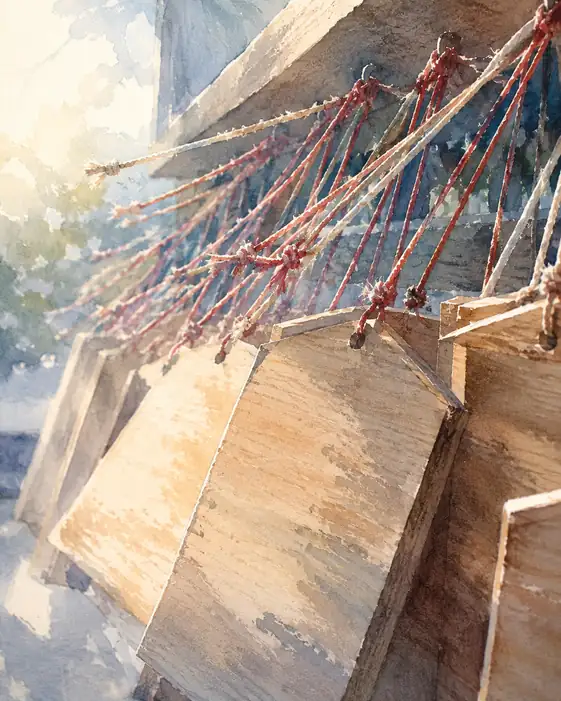 Where Silent Wishes Hang
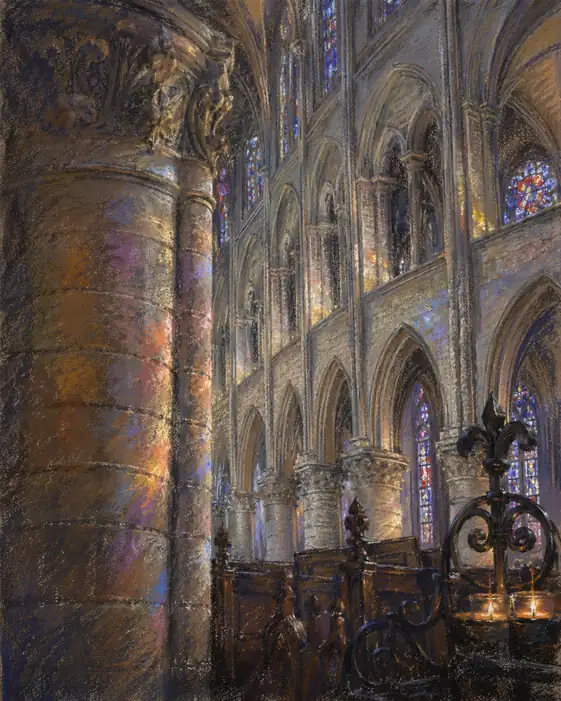 The Flame of Silent Prayer
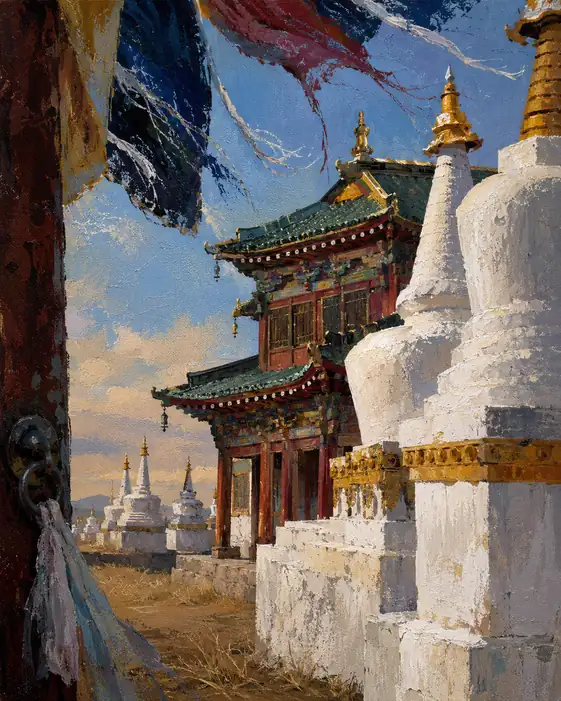 Prayers Carried by the Wind
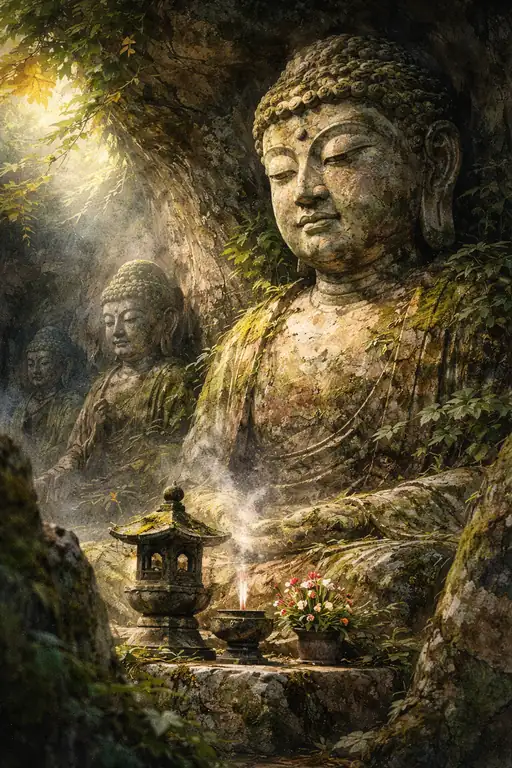 Eternal Stillness: The Sunlit Path of the Stone Buddha