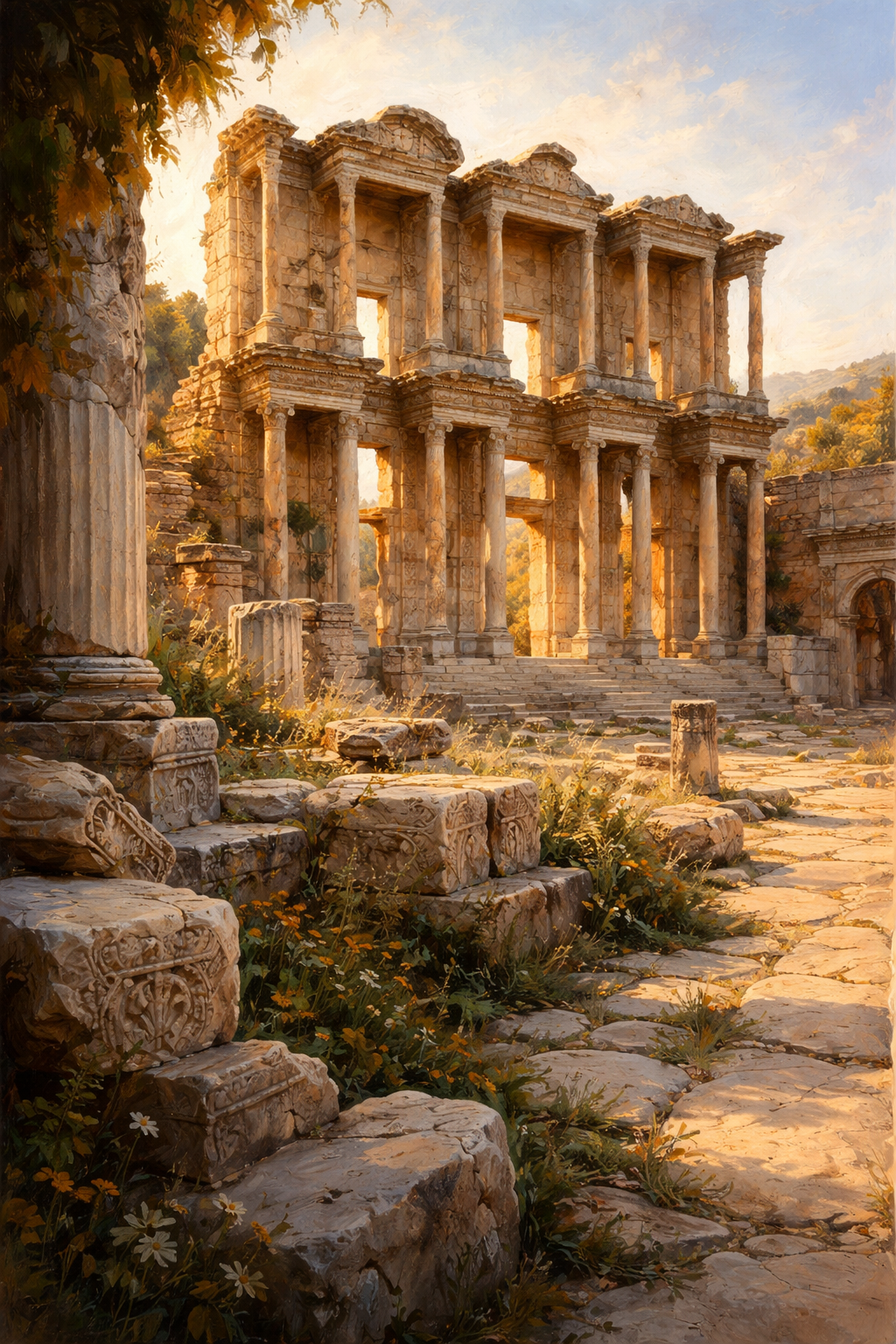
Golden Echoes of the Ages
Critique
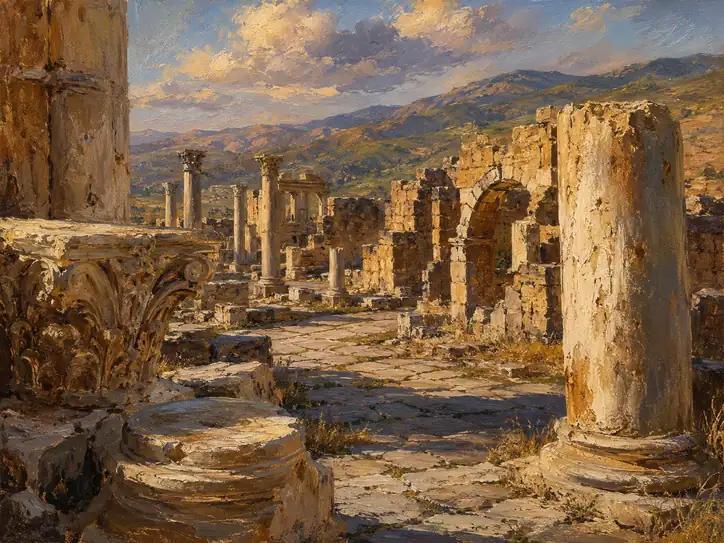
1. Introduction This oil painting captures the sun-drenched ruins of an ancient monumental structure, reminiscent of a classical library or temple facade. The artist employs a warm, golden color palette to emphasize the enduring beauty and historical weight of the site. Through a skilled combination of architectural detail and impressionistic lighting, the work invites a contemplative appreciation of the passage of time. 2. Description The central focus is a two-story columned facade with intricate carvings, standing against a backdrop of distant hills and a pale, sky. In the foreground, fragmented stone blocks and partially buried columns are scattered among small wildflowers and greenery, leading the eye along a paved ancient road. To the far left, a large, fluted column fragment frames the scene, providing a sense of scale and immediate proximity to the ruins. 3. Analysis The painting relies heavily on the use of light to define form and evoke mood, with long shadows stretching across the stony ground. The warm tones of the sun-lit stone contrast beautifully with the cool, dark shadows found within the architectural recesses. Bold brushstrokes are used for the vegetation and weathered stone surfaces, while more controlled lines define the rhythmic appearance of the classical columns and their capitals. 4. Interpretation and Evaluation The artist successfully conveys a romanticized vision of antiquity, where the grandeur of the past is harmoniously reclaimed by nature. The play of light suggests a specific moment, perhaps late afternoon, which enhances the nostalgic and serene qualities of the scene. The technical execution shows a high degree of proficiency in rendering architectural perspective and capturing the subtle textures of aged marble under direct sunlight. 5. Conclusion By juxtaposing the orderly geometry of the ancient facade with the untamed growth of the foreground plants, the artwork explores the dialogue between human ambition and the cycles of nature. The piece moves beyond a simple archaeological record to become a poetic meditation on history and transience. Initial awe at the scale of the ruins is gradually replaced by a deeper understanding of the artist's ability to imbue inanimate stone with a sense of living memory.
Same Subcategory
 Timeless Pillars of the Mountain Sanctuary
 Whispers of the Golden Stone
Similar Artworks
 The Eternal Glow of Forgotten Wisdom
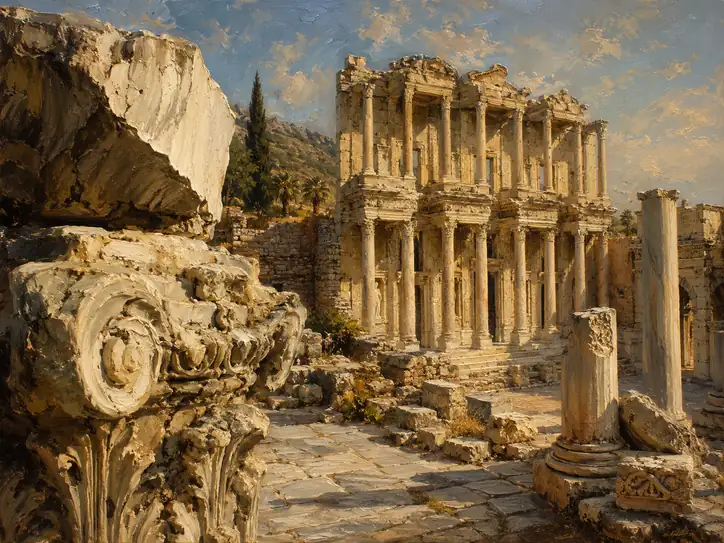 Where the Ancient Sun Still Remembers
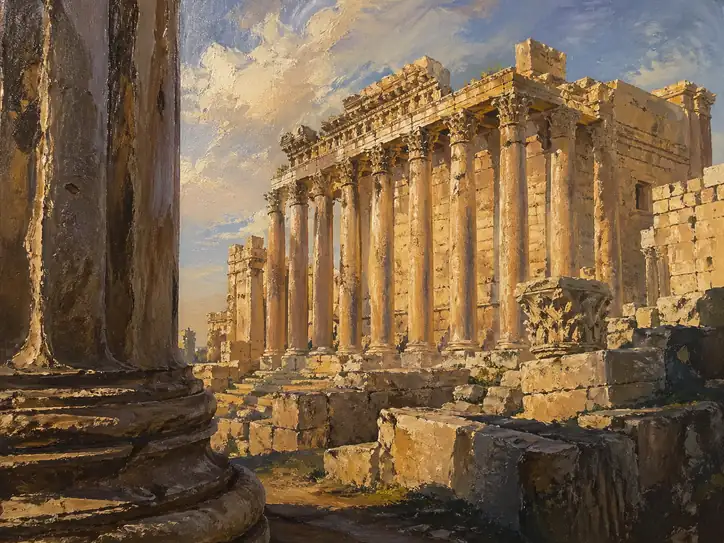 The Golden Echo of Antiquity
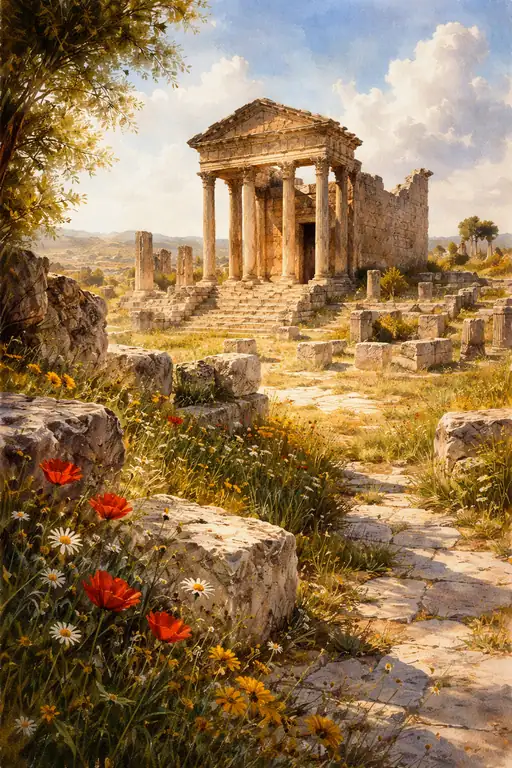 Where Time Sleeps Among the Ruins
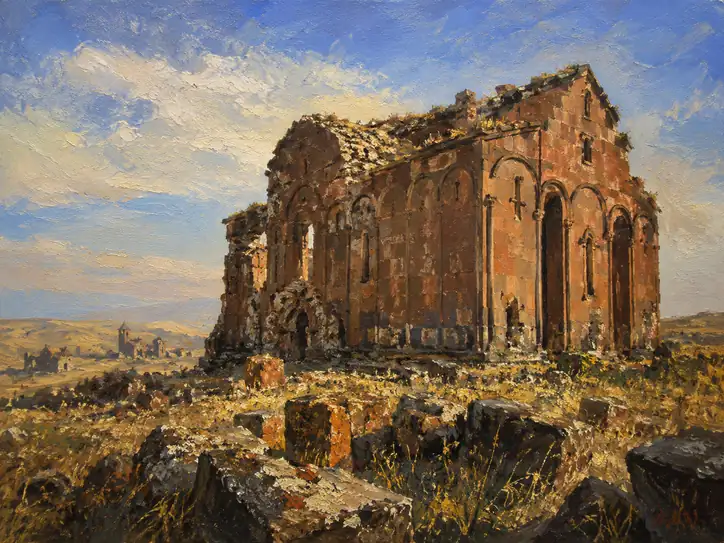 Where the Stone Remembers
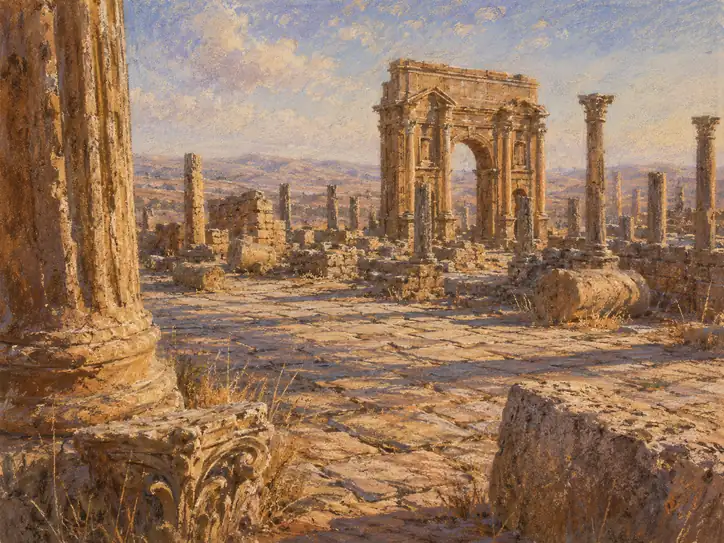 The Silent Dignity of Time
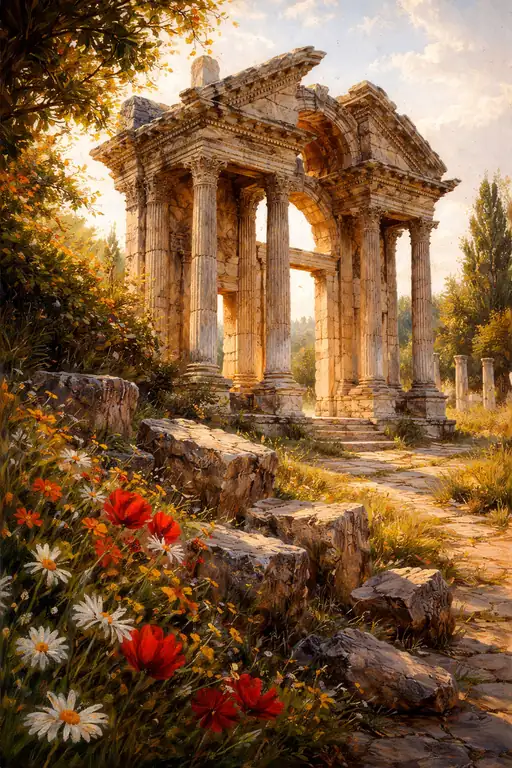 Timeless Pillars Among the Poppies
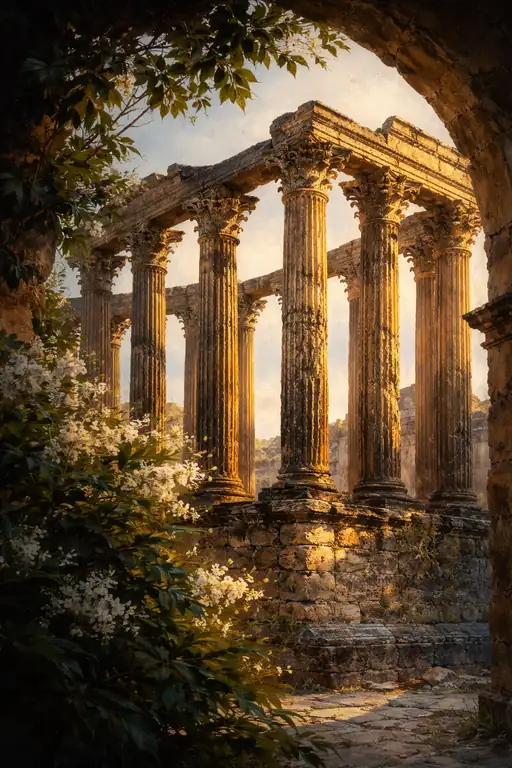 Echoes of Antiquity
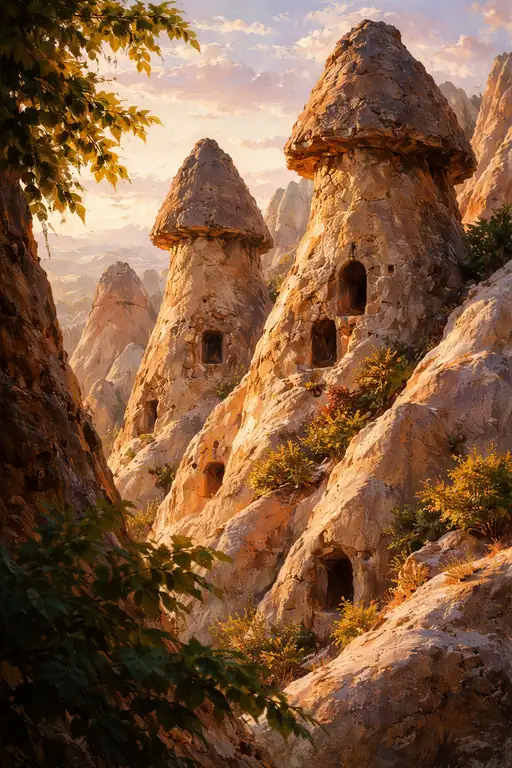 The Dwellings of Stone and Time
 Where Glory Rests in Gold