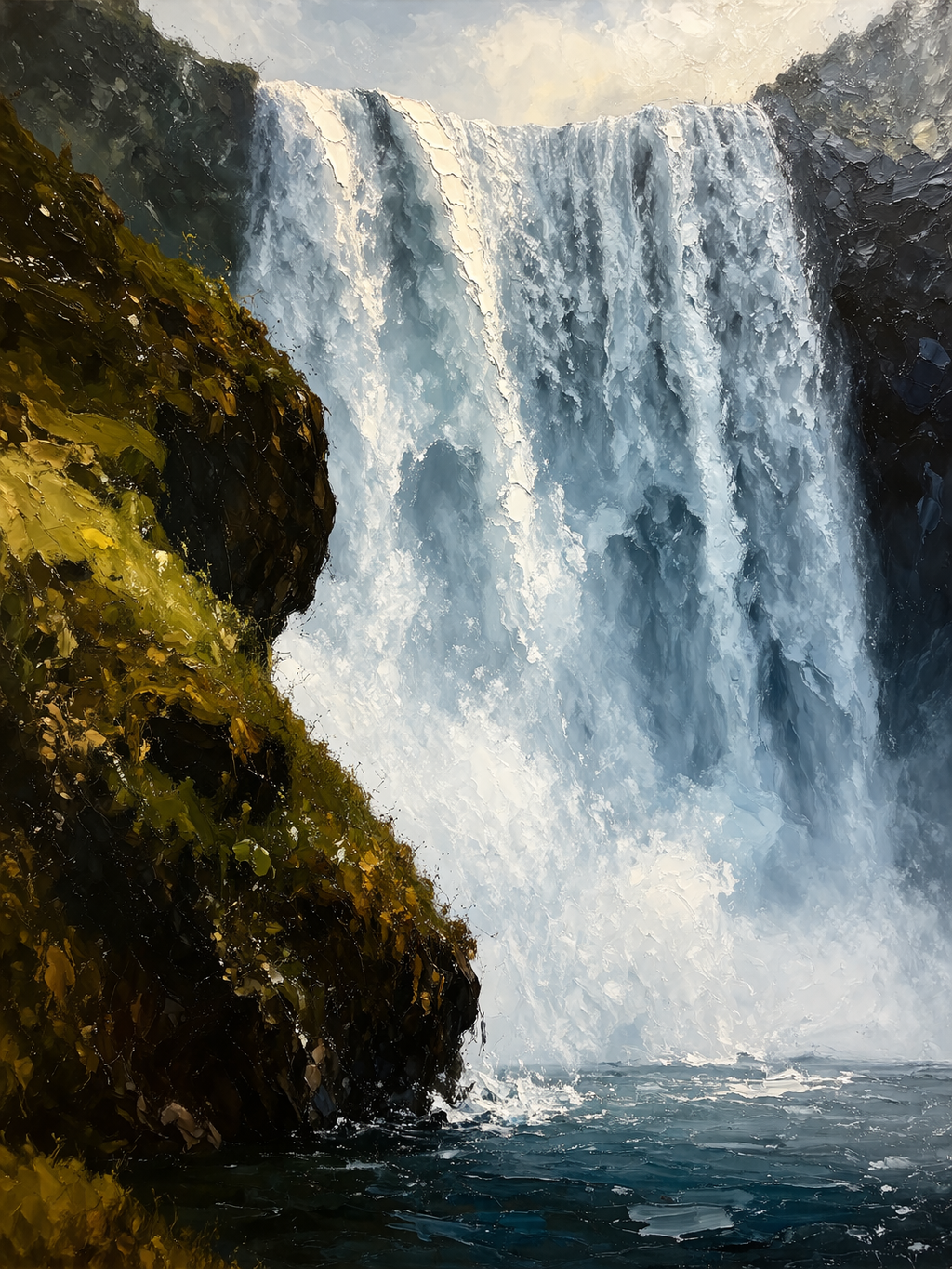
The Thunderous Cascade
Critique
1. Introduction This dynamic oil painting captures the raw power of a massive waterfall as it cascades down a rugged cliff face into a turbulent pool below. The artist utilizes a bold impasto technique, applying thick layers of paint to convey the physical energy and movement of the water. The composition is characterized by its dramatic verticality and strong textural contrasts. 2. Description The scene is dominated by a broad curtain of falling water, rendered in shades of brilliant white, cerulean, and soft gray. To the left, a steep rock formation covered in mossy greens and deep ochres leans into the frame, providing a solid counterpoint to the fluid waterfall. The water crashes into a dark blue basin at the bottom, creating a sense of mist and foam that blurs the transition between the two elements. 3. Analysis The primary visual interest lies in the expressive brushwork and palette knife application, which give the painting a sculptural quality. Light appears to catch the ridges of the thick paint, mimicking the glint of sunlight on rushing water. The color palette is naturalistic, focusing on the cool tones of the waterfall and the warm, earthy greens of the cliff, with the high-key whites of the spray providing a central focal point. 4. Interpretation and Evaluation This work successfully translates the sensory experience of a waterfall—its thunderous sound and immense scale—into a visual medium through its moisture-heavy texture. The technical skill in balancing such vigorous application with a clear sense of form and light is impressive. The painting avoids mere representation, instead offering an evocative and powerful interpretation of the landscape that emphasizes the materiality of both the subject and the medium. 5. Conclusion What initially seems like an exercise in pure texture reveals a sophisticated understanding of atmospheric light and natural form upon closer inspection. This piece captures the evanescent beauty of moving water with remarkable permanence and weight. It remains a compelling example of how painterly techniques can elevate a classic landscape subject into a more visceral and modern artistic expression.
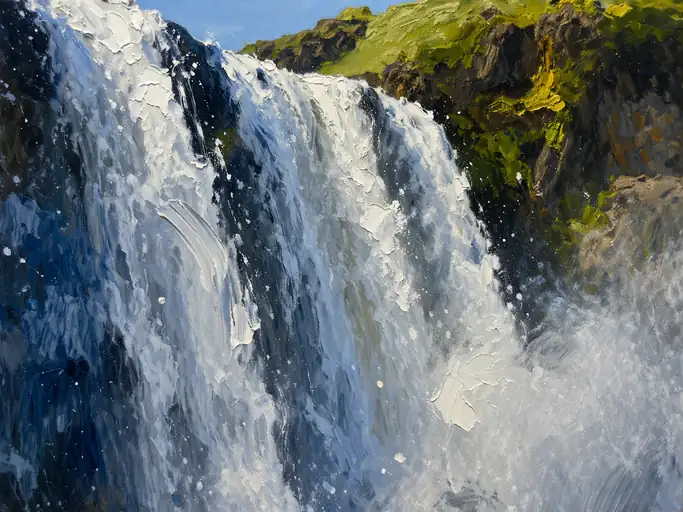 Echoes of the Primal Torrent
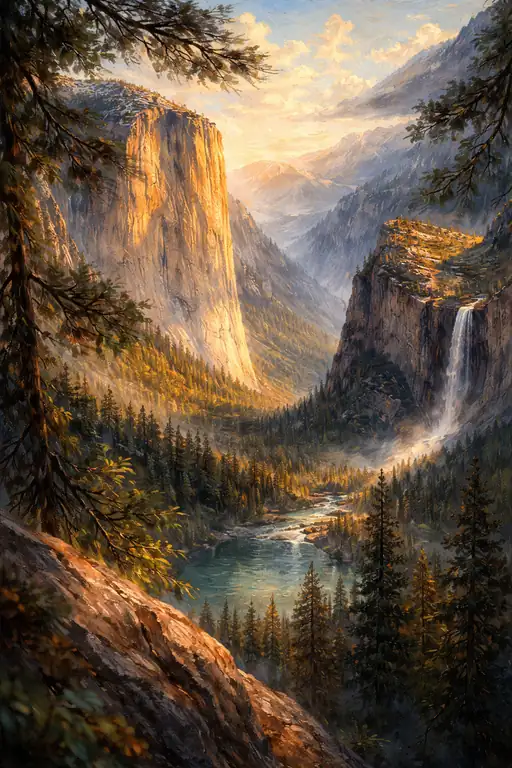 Golden Hour Plunge
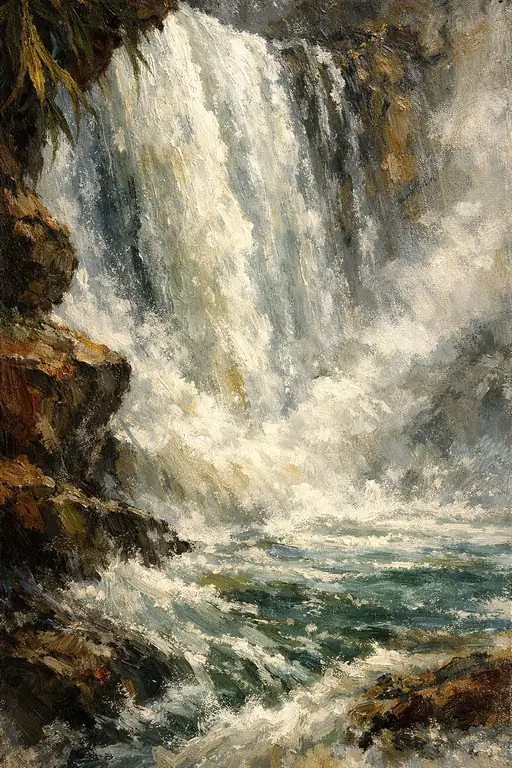 Thunderous Majesty of the Cascade
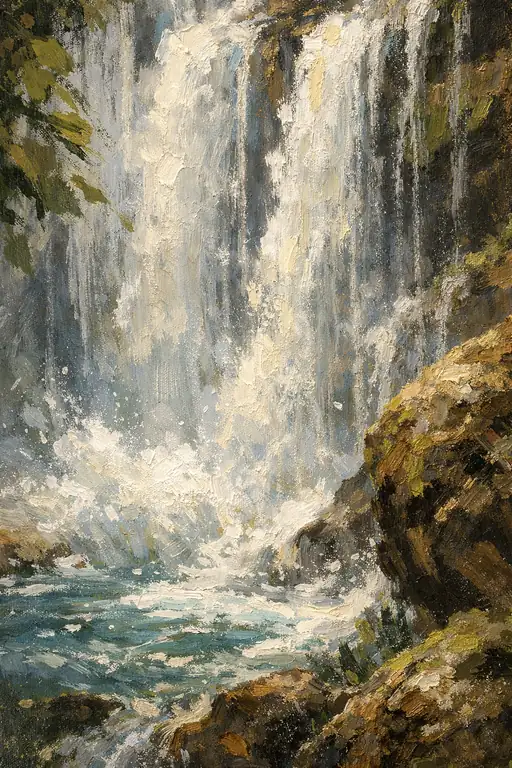 Untamed Power of the Hidden Cascade
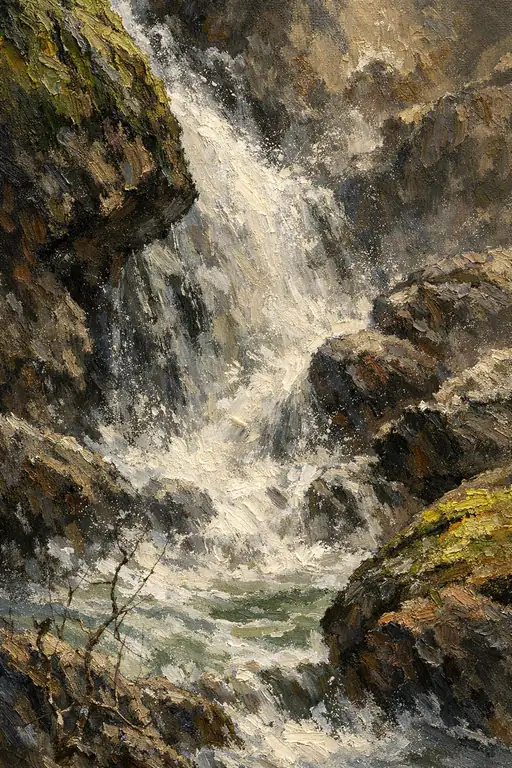 Roar of the Untamed Depths
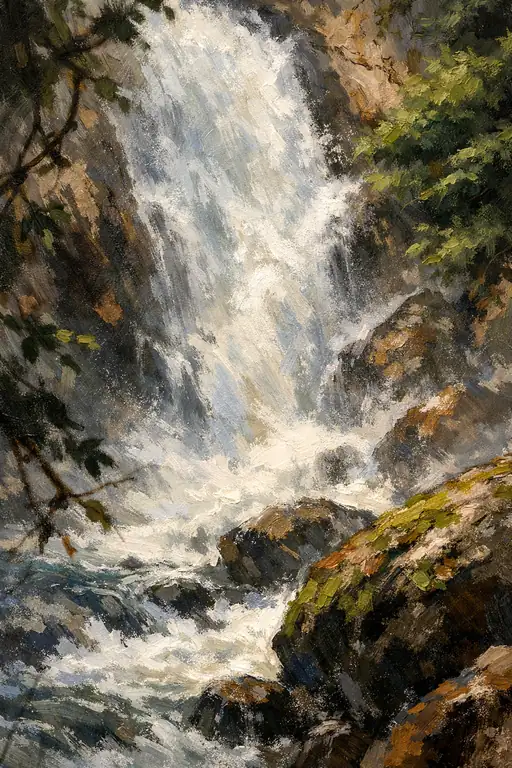 Crashing White Energy
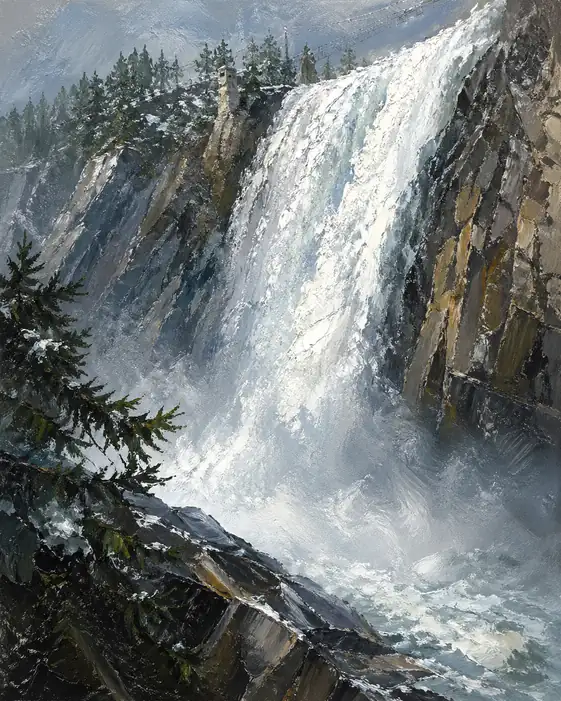 The Roar of Eternity
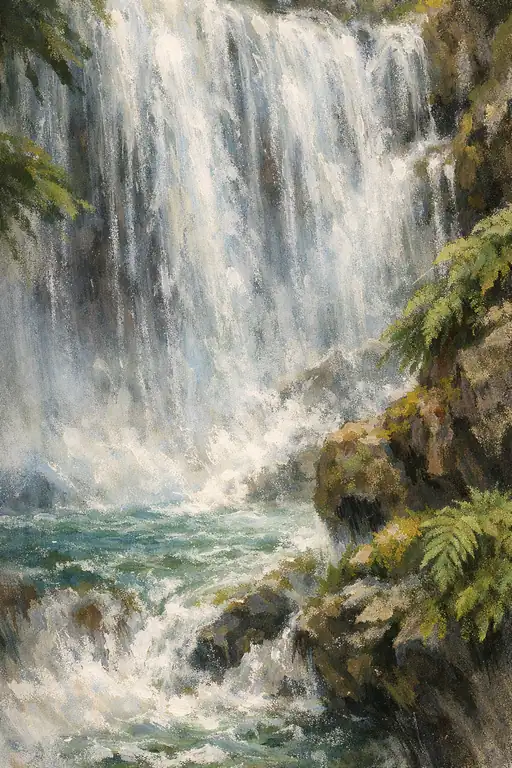 Veil of the Emerald Force
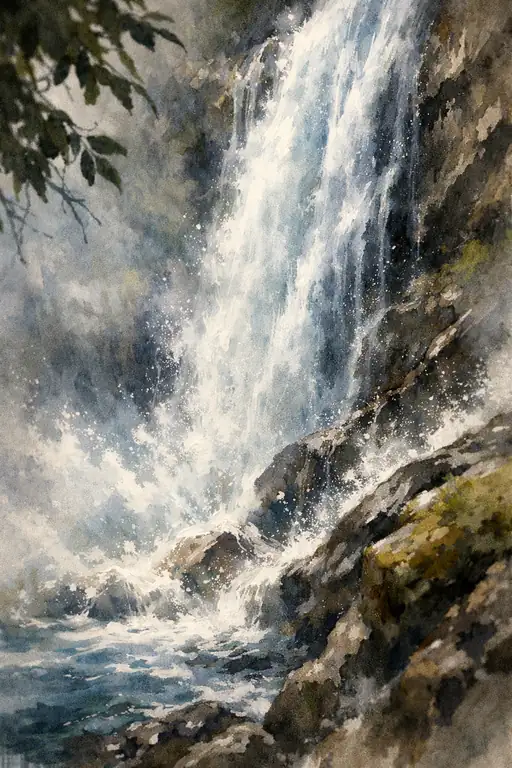 Symphony of the Silver Cascade
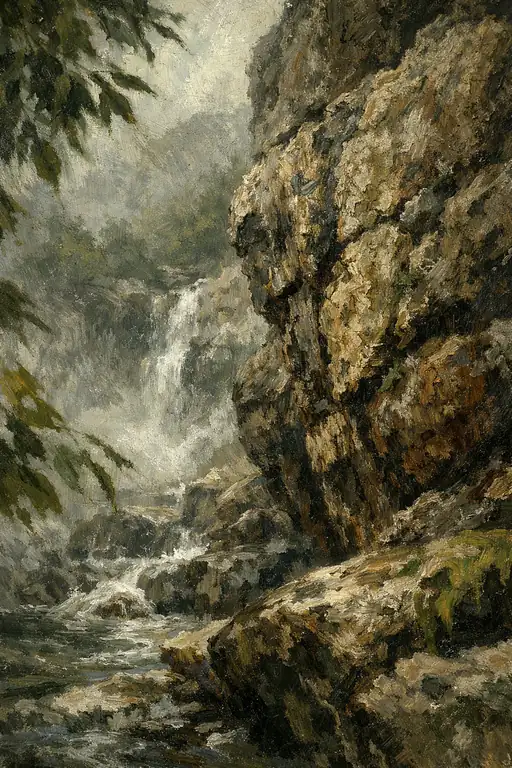 Roar of the Mist
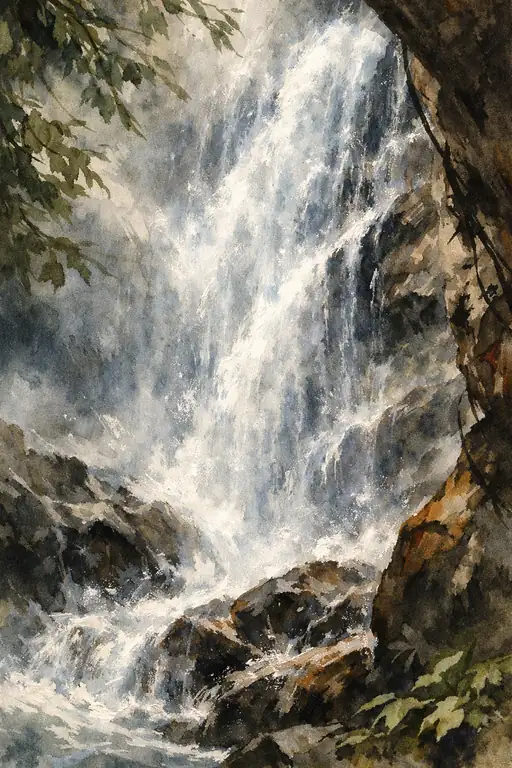 Whispers of the White Mist