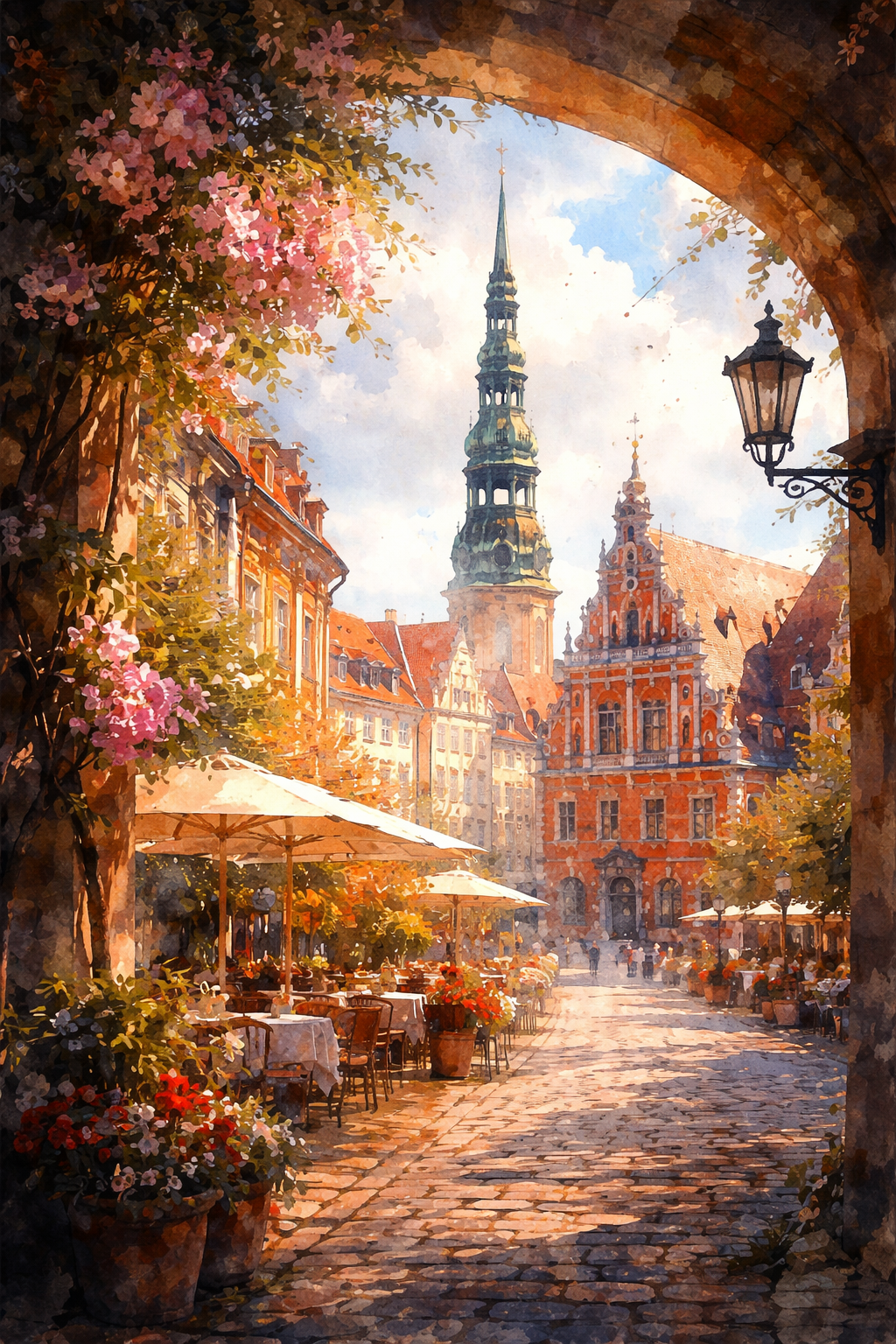
Afternoon at the Square
Critique
1. Introduction This watercolor painting depicts a picturesque European old town scene, captured through the framing of a stone archway. The composition centers on a bustling square filled with outdoor cafes, historic architecture, and a prominent church spire rising into a bright, soft sky. The artwork invites the viewer into a sun-drenched moment that balances the grandeur of urban history with the intimacy of daily leisure. 2. Description In the foreground, a cobblestone path leads the eye into the square, framed by an arch adorned with climbing pink blossoms. On the left, a cafe is set with neatly arranged tables under large white umbrellas, surrounded by vibrant flower pots. The midground features a red-brick building with intricate Dutch-style gables, while a tall, multi-tiered green spire dominates the background. Soft sunlight illuminates the facades, casting gentle shadows across the pavestones where small figures of people are seen walking. 3. Analysis The artist employs a warm, golden color palette that effectively communicates the atmosphere of a late afternoon. The use of a framing device—the archway—creates a strong sense of depth and perspective, drawing the viewer’s gaze toward the central architectural landmarks. Broad, textured brushstrokes in the buildings and sky contrast with the delicate, dappled touches used for the flowers and foliage. Light is handled with great sensitivity, functioning as both a decorative element and a structural tool to define form within the square. 4. Interpretation and Evaluation This work excels in its ability to evoke a sense of nostalgia and tranquility through traditional medium techniques. The juxtaposition of the permanent, towering spire with the ephemeral beauty of the blooming flowers suggests a harmonious dialogue between the past and the present. Technically, the artist demonstrates a high level of skill in managing complex architectural details while maintaining a soft, painterly feel. The composition is exceptionally well-balanced, utilizing both vertical and circular elements to maintain visual interest throughout the entire frame. 5. Conclusion Ultimately, the painting serves as a celebration of European heritage and the quiet joys of urban life. The initial impression of a simple postcard scene deepens into an appreciation for the artist's sophisticated control over light and atmosphere. The work successfully captures the timeless essence of a historic city, leaving the viewer with a feeling of warmth and architectural wonder. It is a refined example of contemporary representational painting that honors the classic watercolor tradition.
Same Subcategory
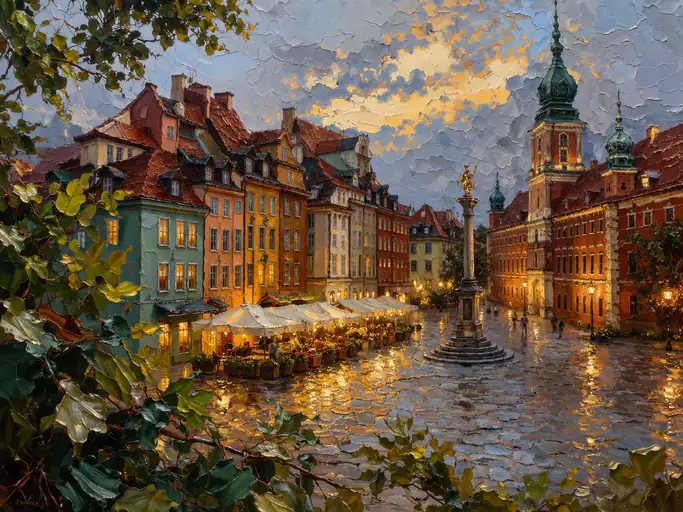 Twilight Reflections: The City's Golden Glow
 Echoes of the Plaza: A Festival of Light and Stone
Similar Artworks
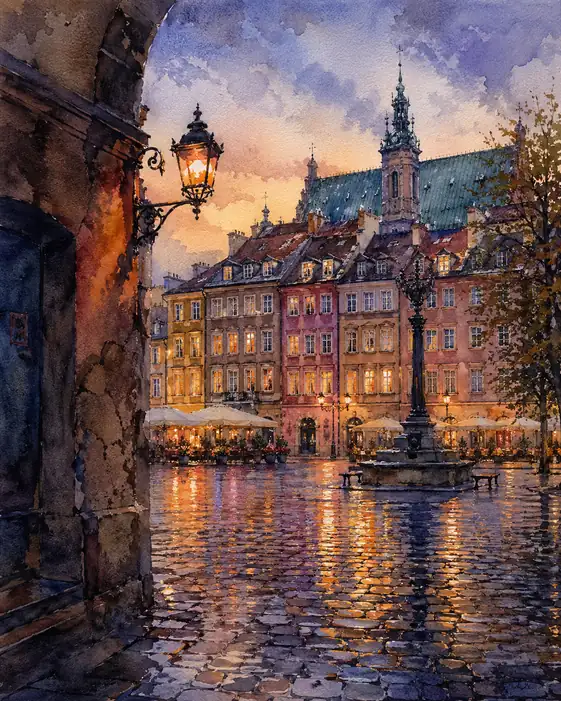 Raindrops and Nostalgic Reflections
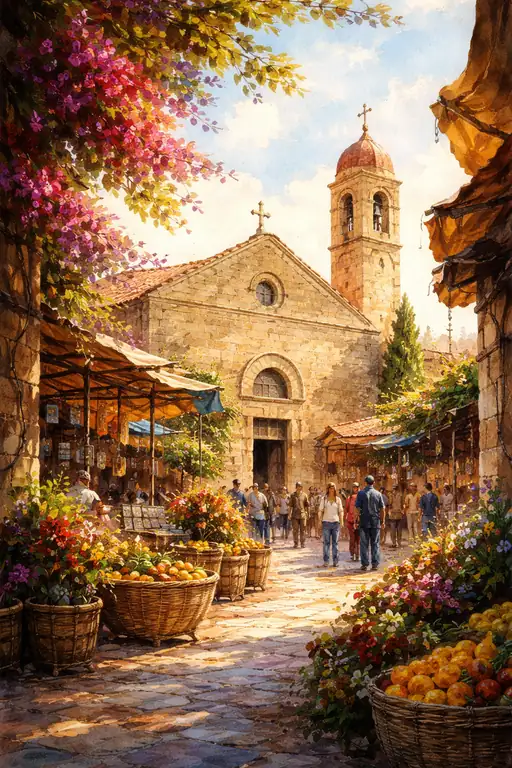 Bustling Marketplace Beside an Old Stone Church
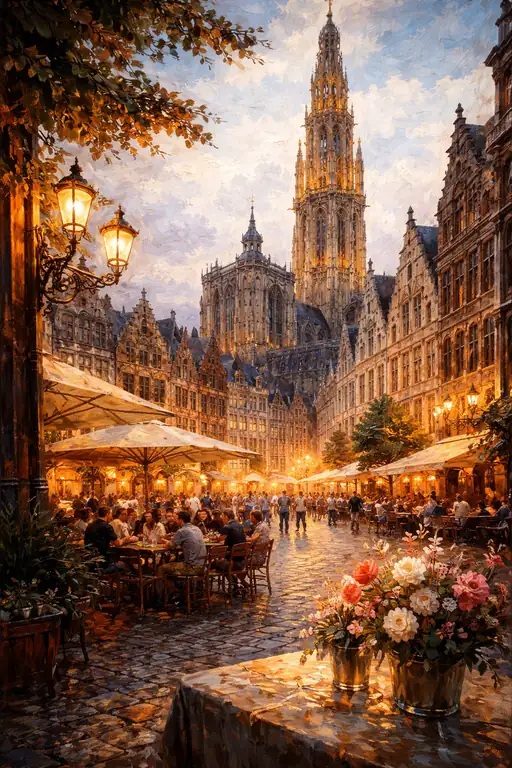 Golden Hour at the Antwerp Square
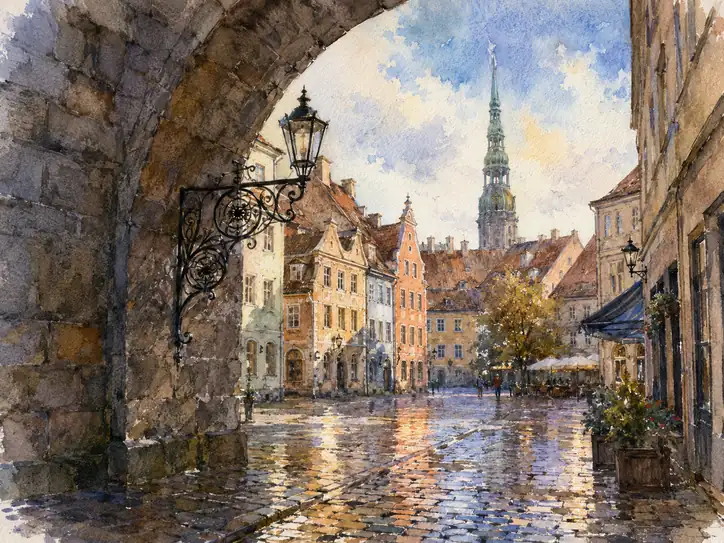 Glistening Rain in the Eternal City
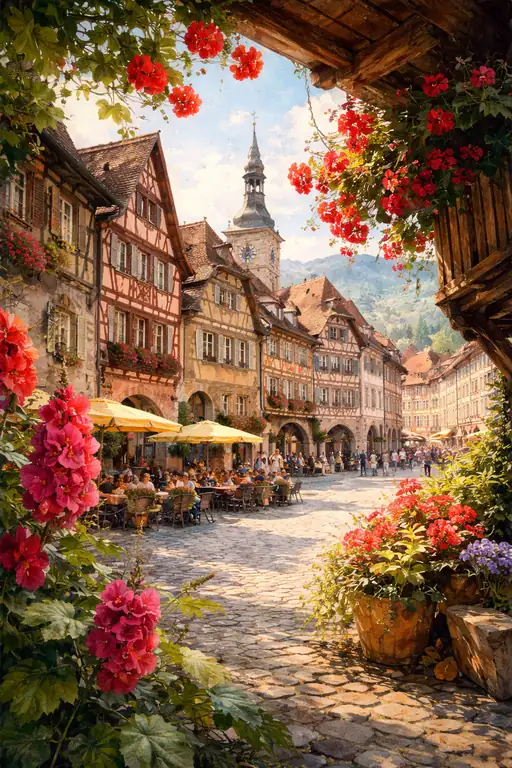 Summer Afternoon in the Square: Flowers and Timbers
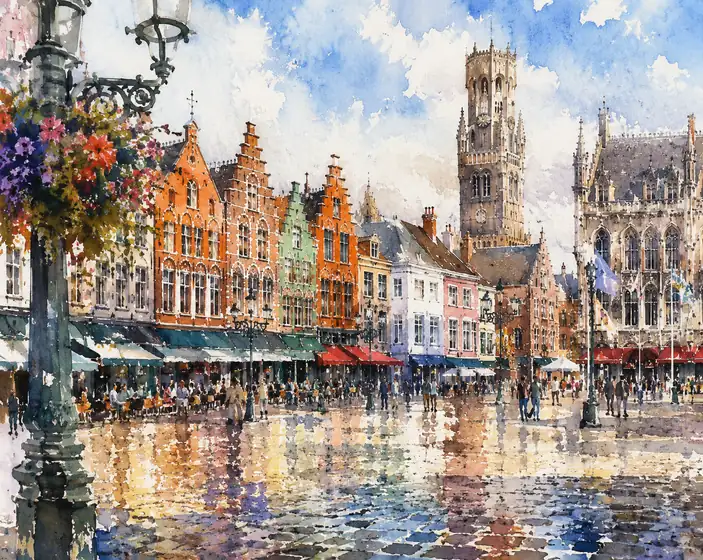 After the Rain, a Canvas of Light
 Walking Through the Mirror of Time
 Whispers of the Rain-Washed Stones
 A Gilded Twilight After the Storm
 Bougainvillea and the Whispering Stones