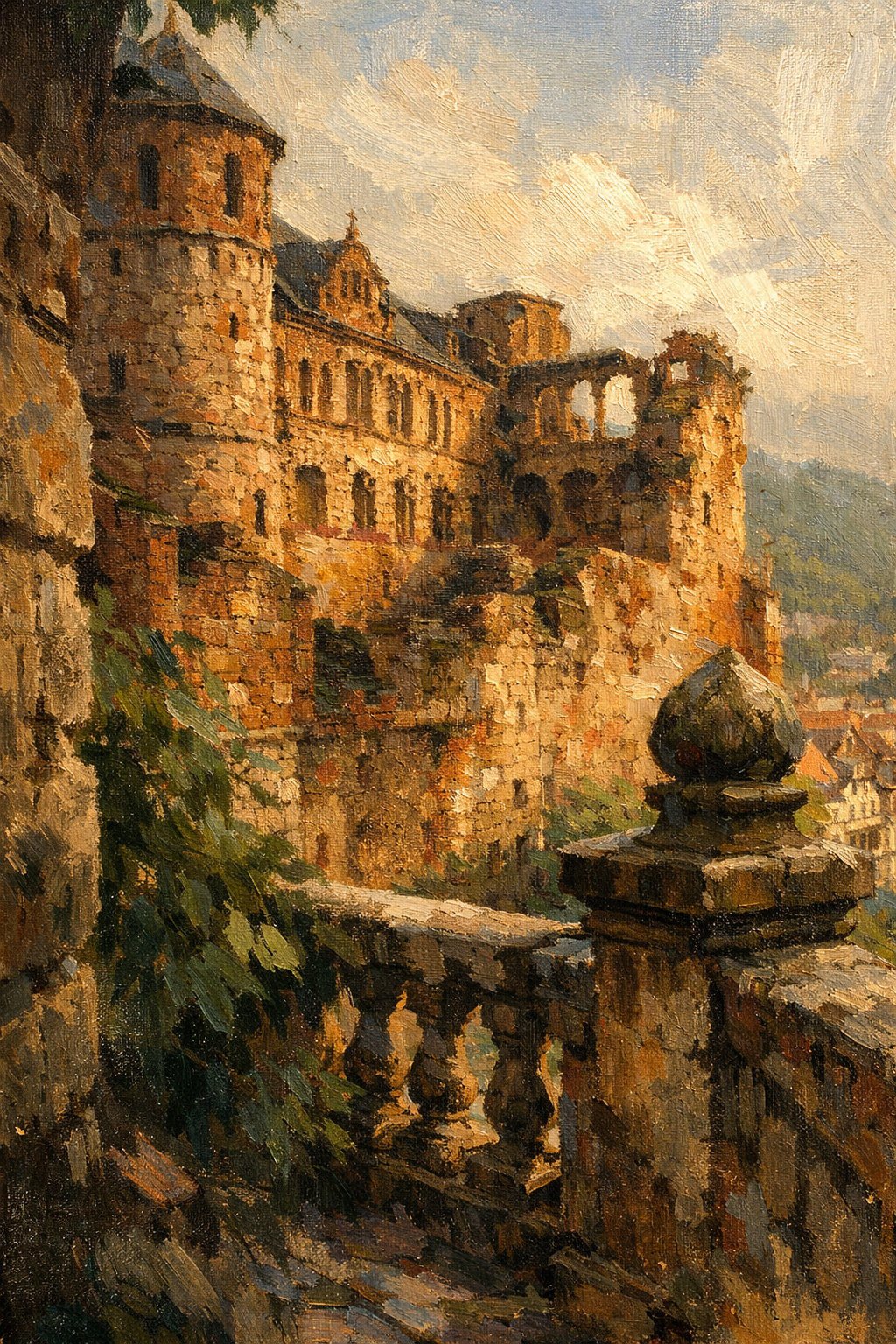
Sunlight on the Weathered Ruins
Critique
1. Introduction This vertical oil painting offers a tactile and sunlight-drenched study of historical stone ruins, viewed from an elevated perspective. The composition focuses on the architectural details of a weathered balcony and the massive walls of a fortress beyond. The artwork captures the enduring strength of ancient masonry through a vigorous application of thick, textured paint. 2. Description In the immediate foreground, a stone balustrade with a decorative, onion-shaped finial is depicted with heavy impasto strokes. Moving into the middle ground, the sunlit facade of a ruined castle reveals arched openings and eroded stone surfaces under a bright, scattered sky. A cascade of dark green foliage clings to the wall on the left, providing a natural contrast to the warm, earthy tones of the architecture. 3. Analysis The artist employs a palette rich in ochre, siennas, and greys, using bold highlights to emphasize the rugged texture of the stone. The light source is consistent, casting deep shadows that define the three-dimensional form of the architectural elements. The heavy brushwork creates a sense of physical weight and permanence, mirroring the literal characteristics of the subject matter. 4. Interpretation and Evaluation The work serves as a meditation on the passage of time and the resilient beauty of classical ruins. The technical execution is exceptional, particularly in the artist's ability to use texture to simulate the coarse feel of aged stone. By focusing on a specific corner of the structure, the piece invites the viewer to appreciate the aesthetic value found in decay and historical continuity. 5. Conclusion Overall, this painting is a compelling example of how impasto techniques can enhance the sensory impact of a landscape subject. It succeeds in transforming a static architectural ruin into a dynamic play of light, shadow, and physical matter. The viewer is left with a profound sense of the structure's enduring presence, standing as a silent witness to the centuries that have passed.
Same Subcategory
Similar Artworks
 Rugged Coastal Ocean Cliffs
 Autumn Light on Forgotten Stones
 Eternal Sun Through Ancient Arches
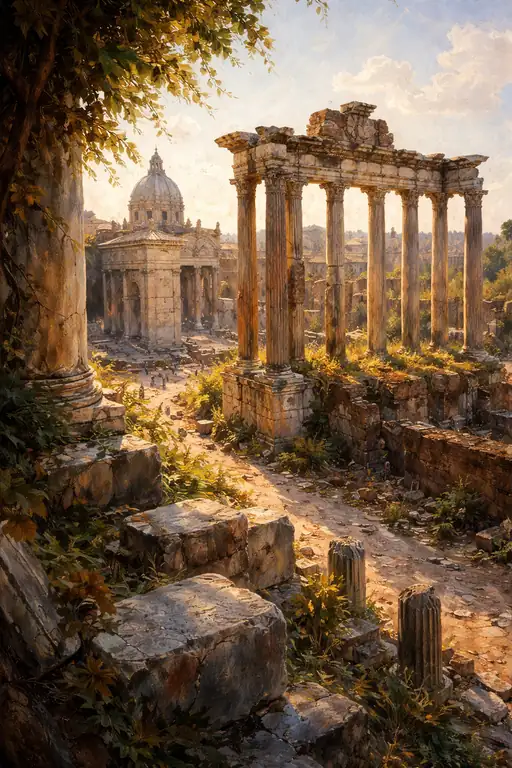 Whispers of the Eternal City's Dawn
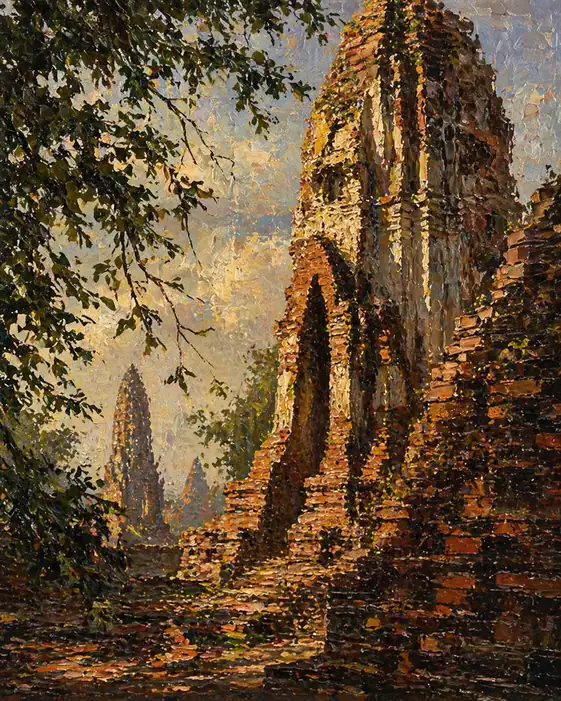 Echoes of a Forgotten Kingdom
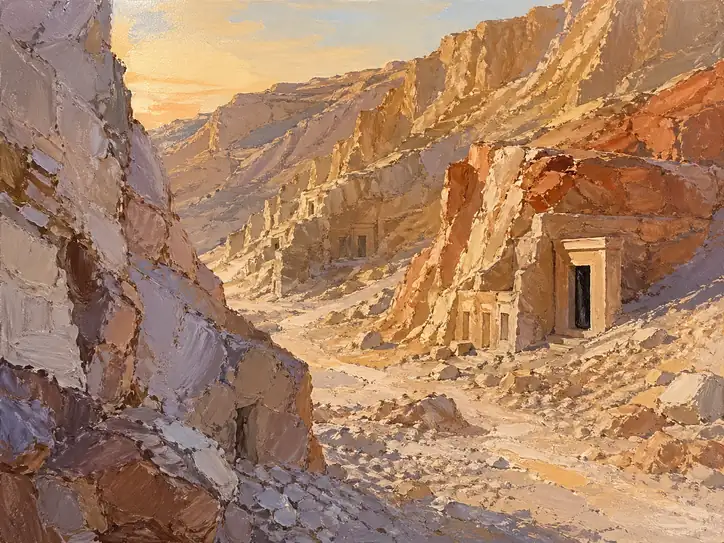 Echoes in the Silent Canyon
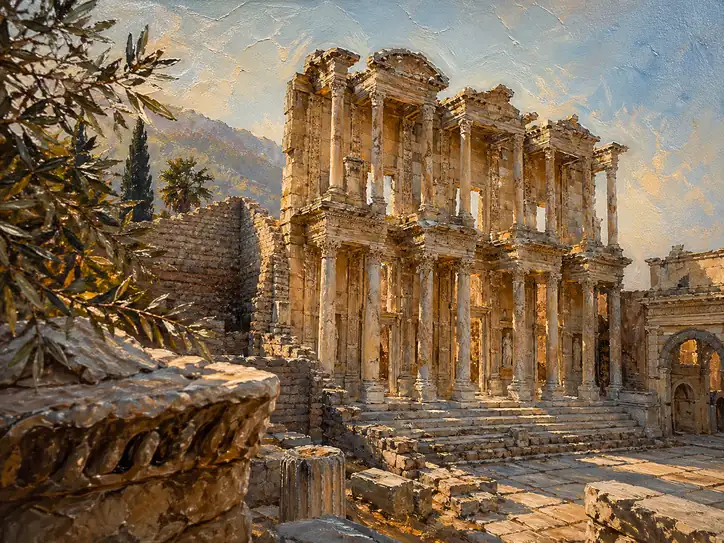 The Eternal Glow of Forgotten Wisdom
 Whispers of Eternal Stone
 The Enduring Pillars of Time
 Echoes of Empire in the Golden Hour