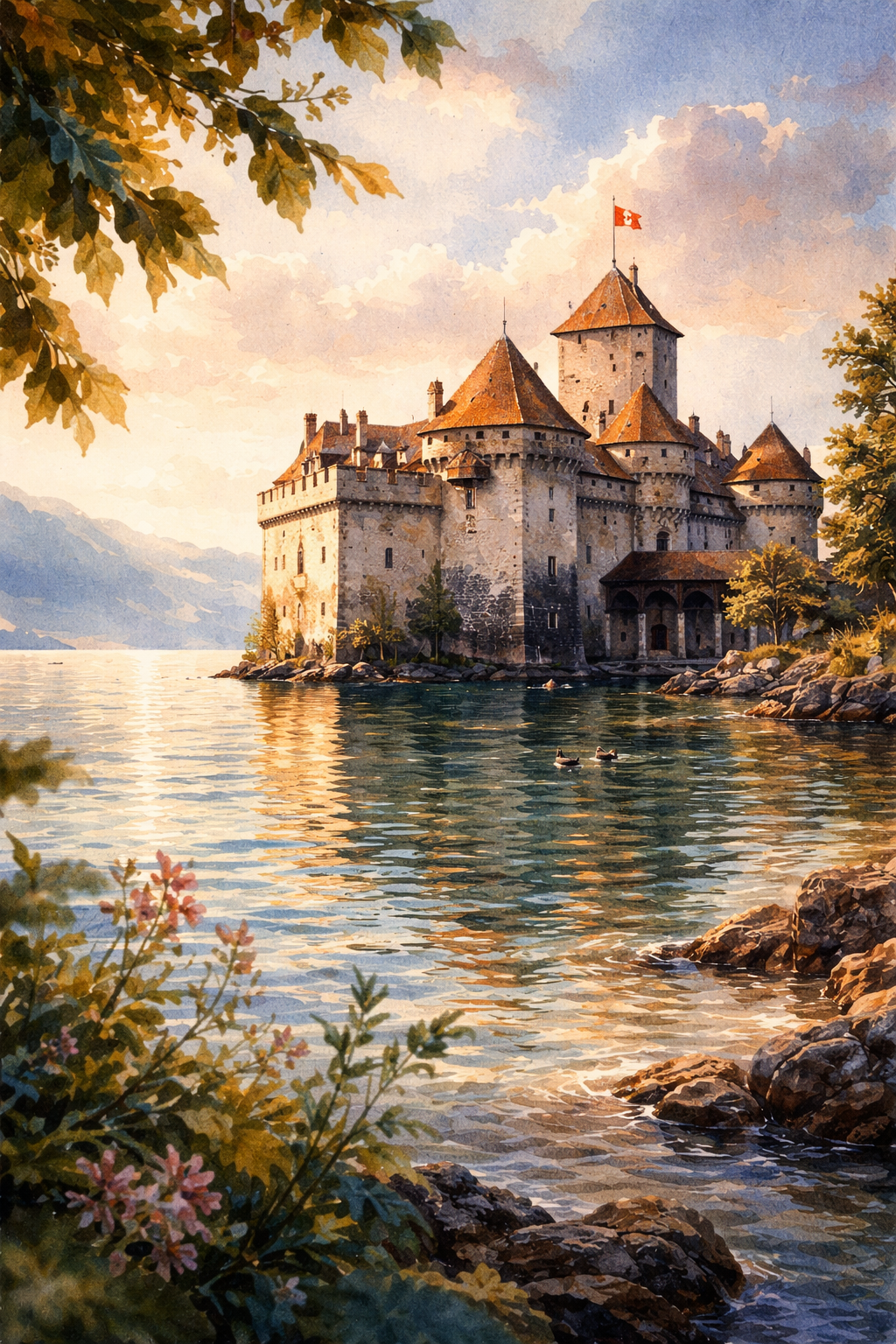
Guardian of the Reflected Realm
Critique
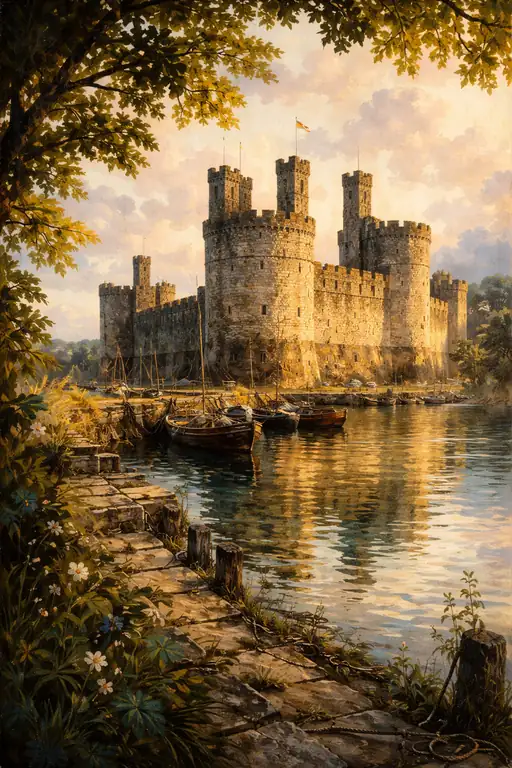
1. Introduction This vertical watercolor masterpiece depicts a medieval stone castle situated majestically on the edge of a tranquil lake, under the warm glow of the golden hour. A small Swiss flag flutters from the tallest tower, identifying the setting as a quintessential Alpine landscape. The work captures a profound sense of historical grandeur and natural serenity through a sophisticated use of light and color. 2. Description The castle dominates the mid-ground, its weathered stone walls and terracotta roofs catching the long rays of the evening sun. In the foreground, delicate flowers and lush foliage frame the view, while the lake surface in the center reflects the amber and violet hues of the sky in rhythmic ripples. Hazy blue mountains rise in the distant background, completing the classic landscape composition. 3. Analysis The artist demonstrates exceptional skill in managing watercolor transparency, particularly in the rendering of the water's surface and the soft, billowing clouds. The contrast between the solid, angular forms of the castle and the fluid, organic textures of the surrounding vegetation creates a dynamic visual balance. The lighting comes from the side, casting deep shadows that give the architecture a powerful three-dimensional quality and emphasizing the texture of the masonry. 4. Interpretation and Evaluation The painting evokes the Romantic tradition of landscape art, where architecture and nature exist in a symbiotic, almost mythical state. The choice of the golden hour enhances the emotional resonance of the piece, suggesting a moment of quiet reflection and timelessness. Technically, the execution of the sunlit highlights on the water and the detailed yet atmospheric treatment of the castle walls indicate a high degree of artistic proficiency. 5. Conclusion Initially striking for its picturesque beauty, the painting reveals itself as a complex study of reflection and atmospheric perspective upon closer inspection. It transcends its traditional subject matter to become a poetic tribute to historical permanence and the ephemeral beauty of light. Ultimately, the work stands as a stellar example of modern watercolor technique applied to a timeless cultural landmark.
Same Subcategory
 Gentle Companions in the Castle Shadow
Similar Artworks
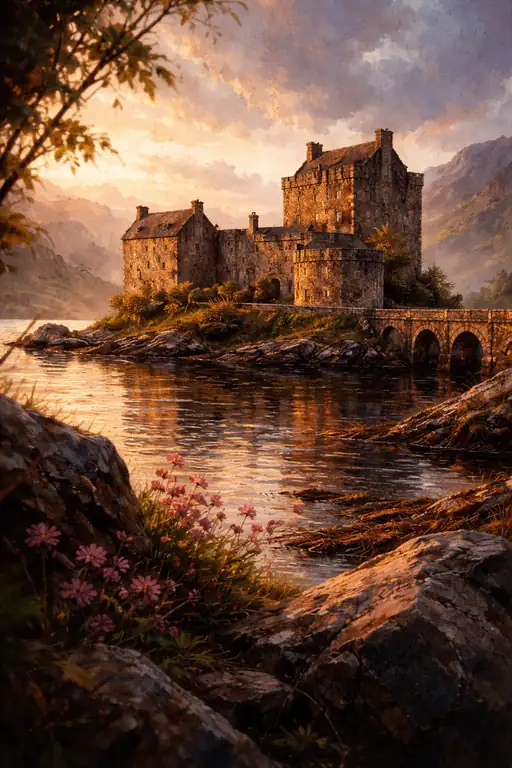 Echoes of a Highland Dusk
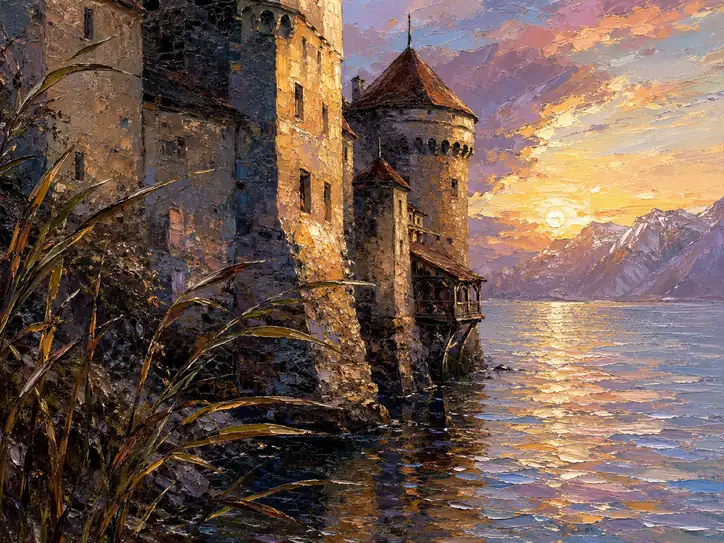 Sentinel of the Golden Hour
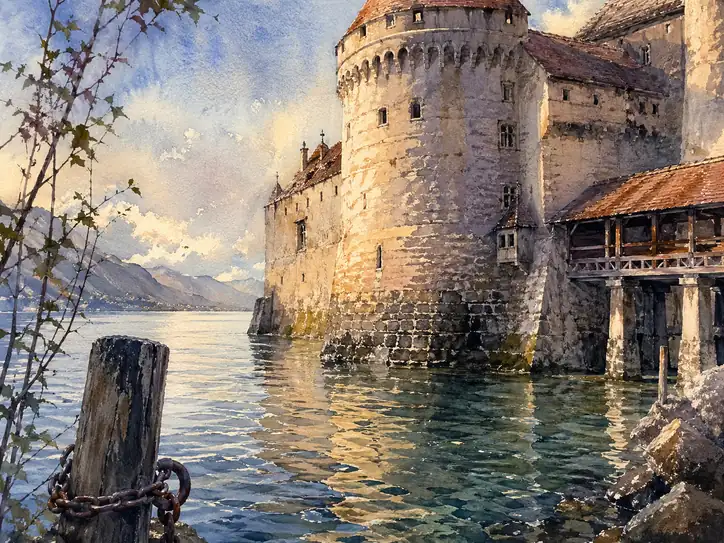 Guardians of the Golden Shore
 Bridge to the Lakeside Citadel
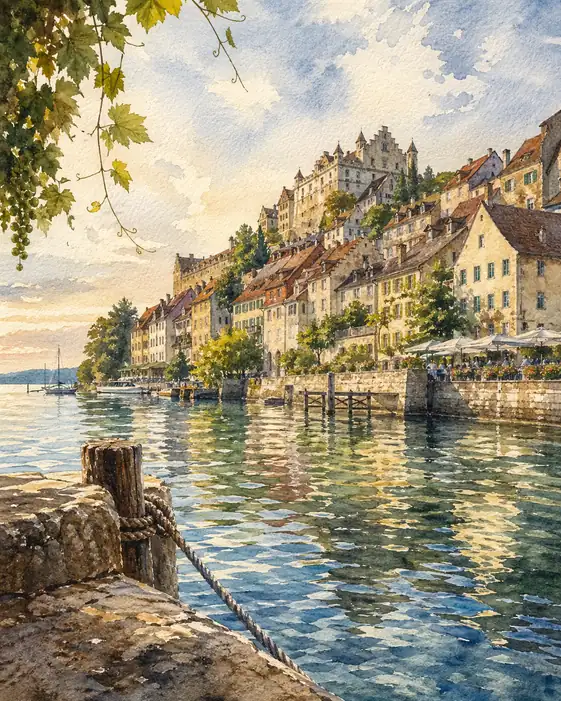 Sun-drenched Gothic Spire Through the Leaves
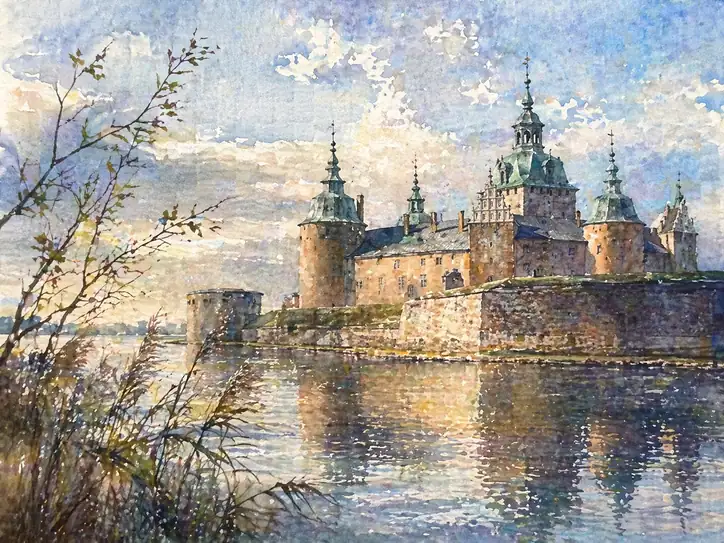 Archway to the Glimmering Horizon
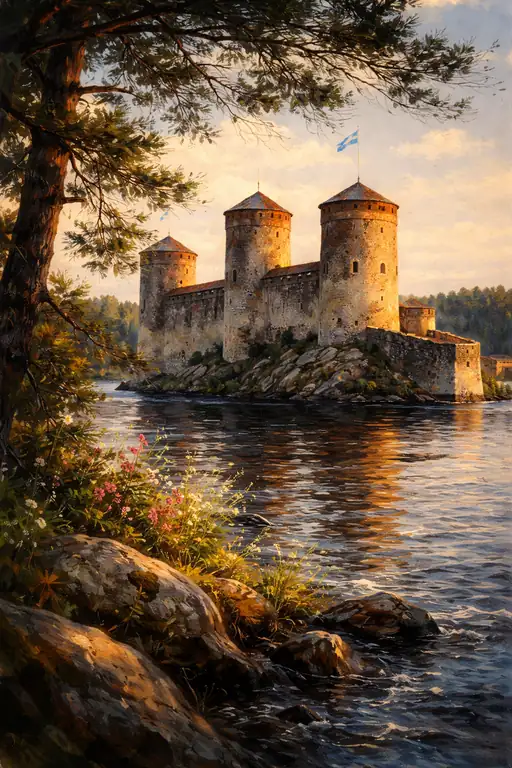 A Serene Vigil Over the Water
 Where Time Stands Still
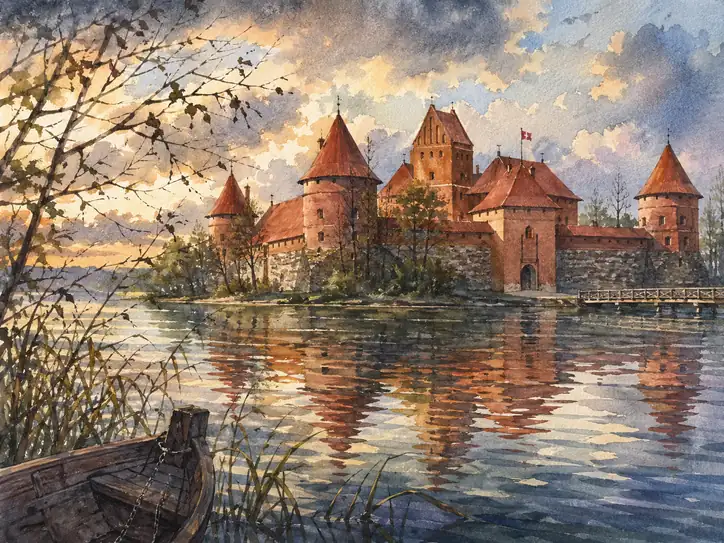 Serene Lake and the Medieval Castle
 A Golden Lullaby for the Old Fortress