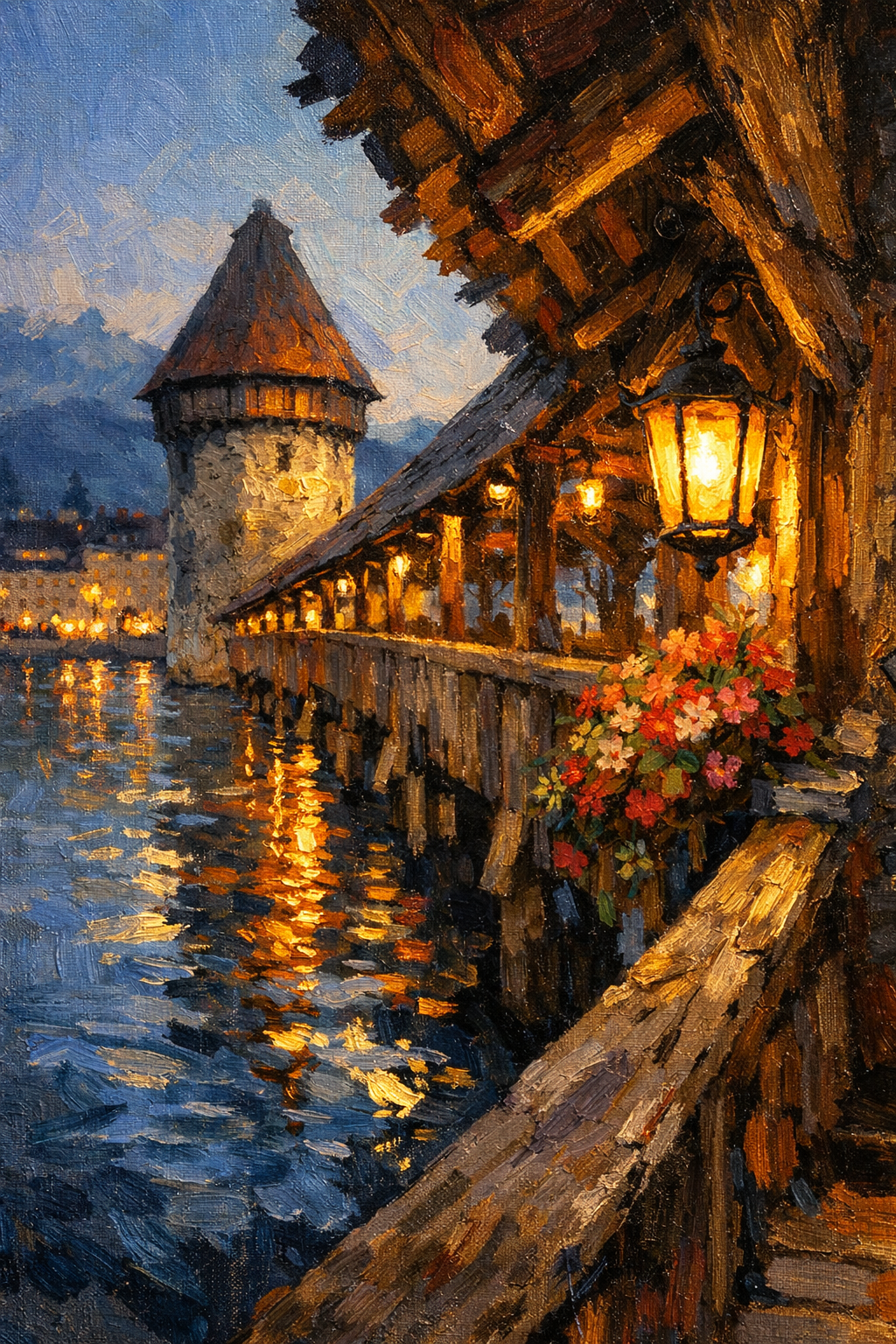
Twilight at the Covered Bridge
Critique
1. Introduction This impressionistic oil painting captures a serene twilight scene featuring a historic wooden covered bridge and a stone water tower. The composition is defined by its dramatic use of light and shadow, evoking a romantic atmosphere typical of European lakeside cities. 2. Description In the foreground, a warm lantern hangs from the eaves of a wooden bridge, its golden light illuminating a vibrant cluster of red and pink flowers. A series of smaller lamps recede into the distance along the bridge’s length. To the left, a sturdy stone tower with a conical roof rises from the dark blue water, while the far shore shows the faint, shimmering lights of a distant town. 3. Analysis The artist employs a high-contrast complementary color palette, juxtaposing deep blues with brilliant oranges and yellows. Thick, visible brushstrokes create a rich texture on the wooden beams and stone surfaces, emphasizing the tactile quality of the materials. The diagonal line of the bridge rail provides a strong sense of perspective, drawing the eye toward the distant horizon. 4. Interpretation and Evaluation The work successfully captures the fleeting beauty of the "blue hour," where artificial lights begin to dominate the landscape. The warmth of the lamp light creates a sense of safety and intimacy against the vast, cool darkness of the water. The technical execution shows a sophisticated understanding of light reflection, as seen in the fractured, golden glimmers on the water’s surface. 5. Conclusion While the subject matter initially appears to be a conventional postcard view, the mastery of color and expressive brushwork elevates it into a compelling atmospheric study. It stands as a testament to the evocative power of light in transforming a familiar architectural landmark.
Same Subcategory
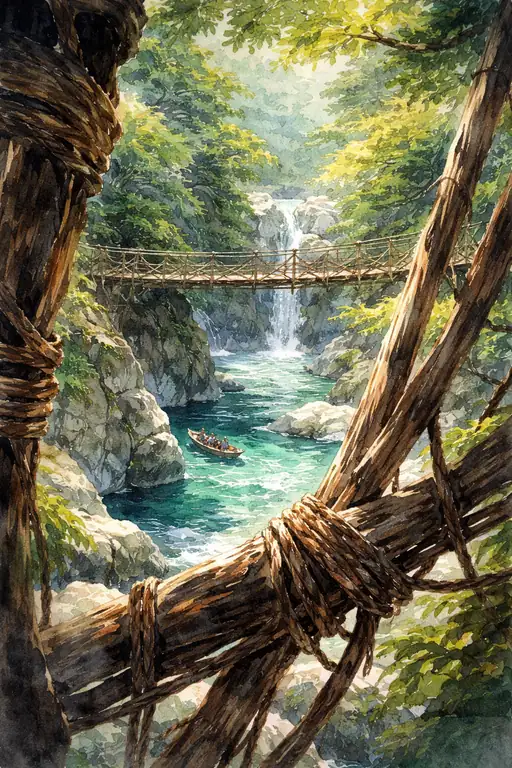 Journey Into the Emerald Embrace
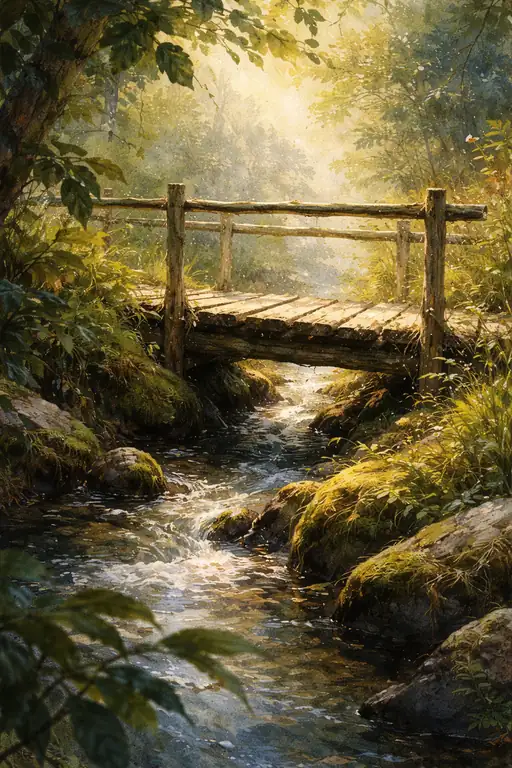 Slumber of the Frosty Earth
Similar Artworks
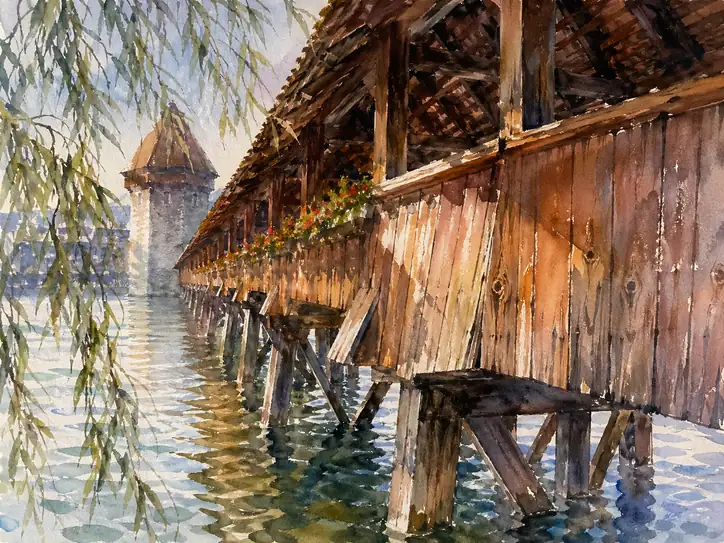 Whispers of a Timeless Bridge
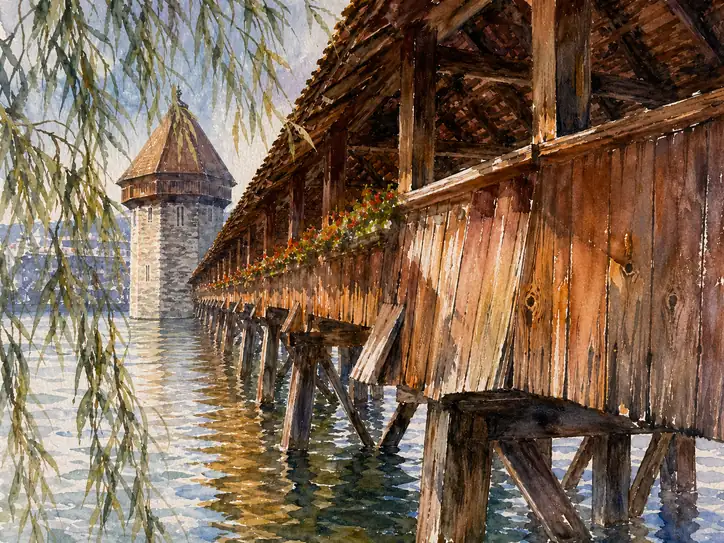 The Wooden Bridge to Yesterday
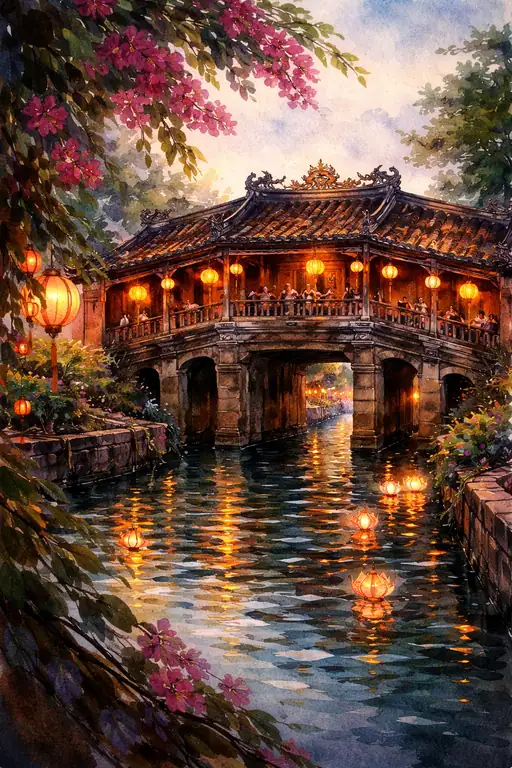 Floating Lanterns Whisper Tales of Old Hoi An
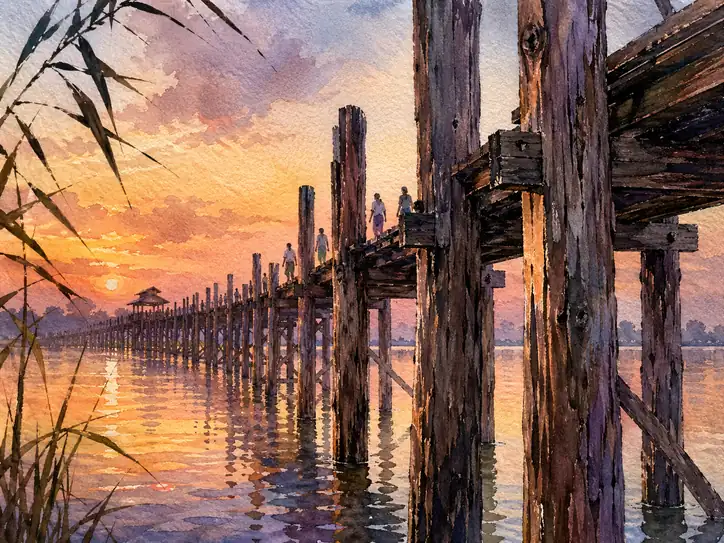 Bridge to the Heart of Twilight
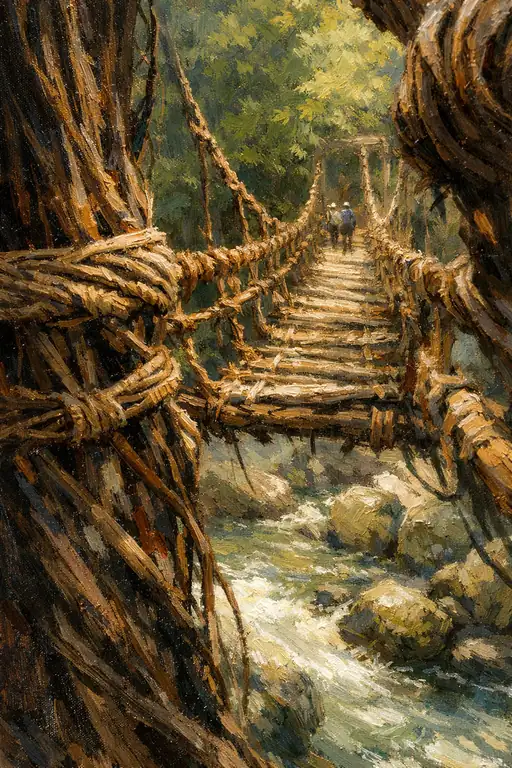 The Rugged Trail of Discovery
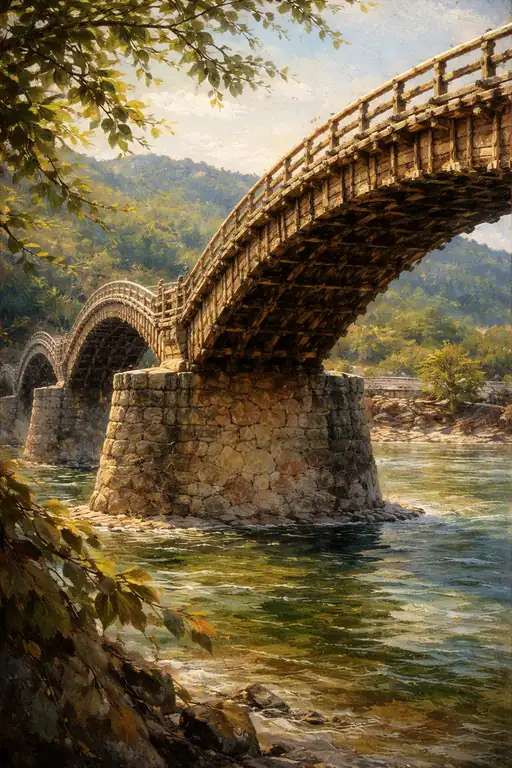 Echoes of the Wooden Arch
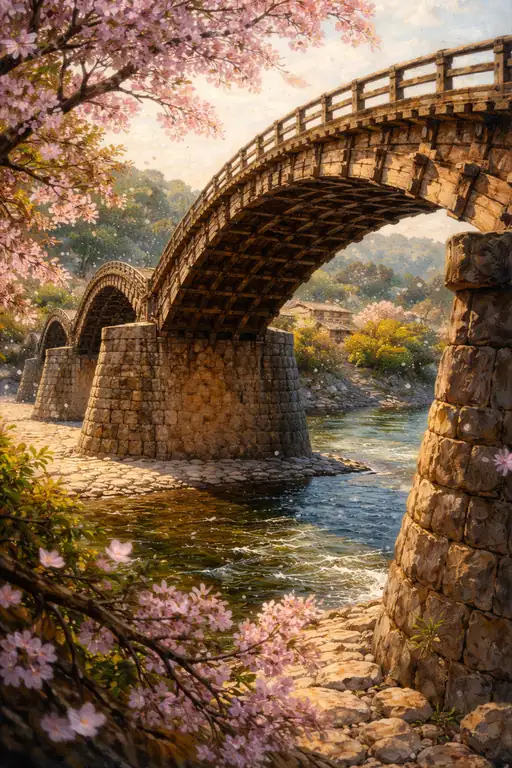 Spring's Reflection on the Arched Heritage
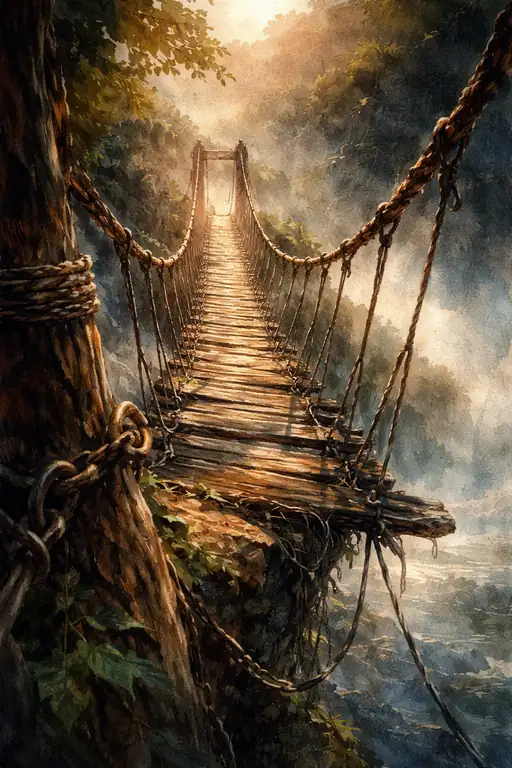 Journey Into the Mist
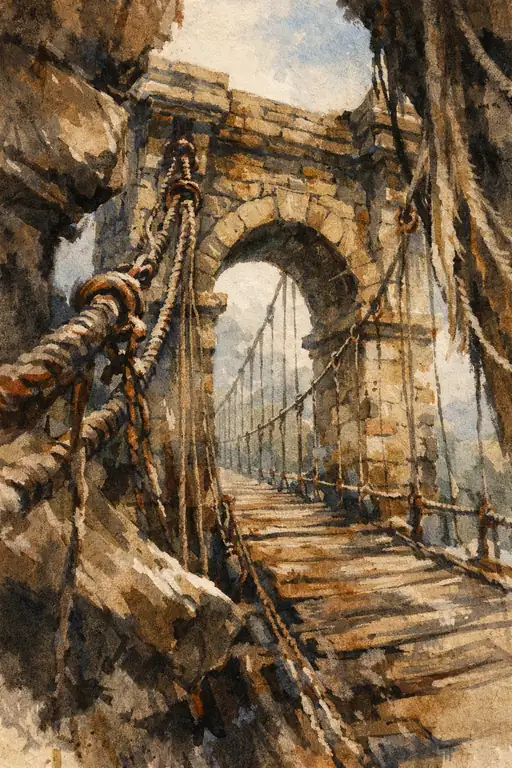 Bridge to the Ancient Stone Gateway
 Pathway Through the Whispering Woods