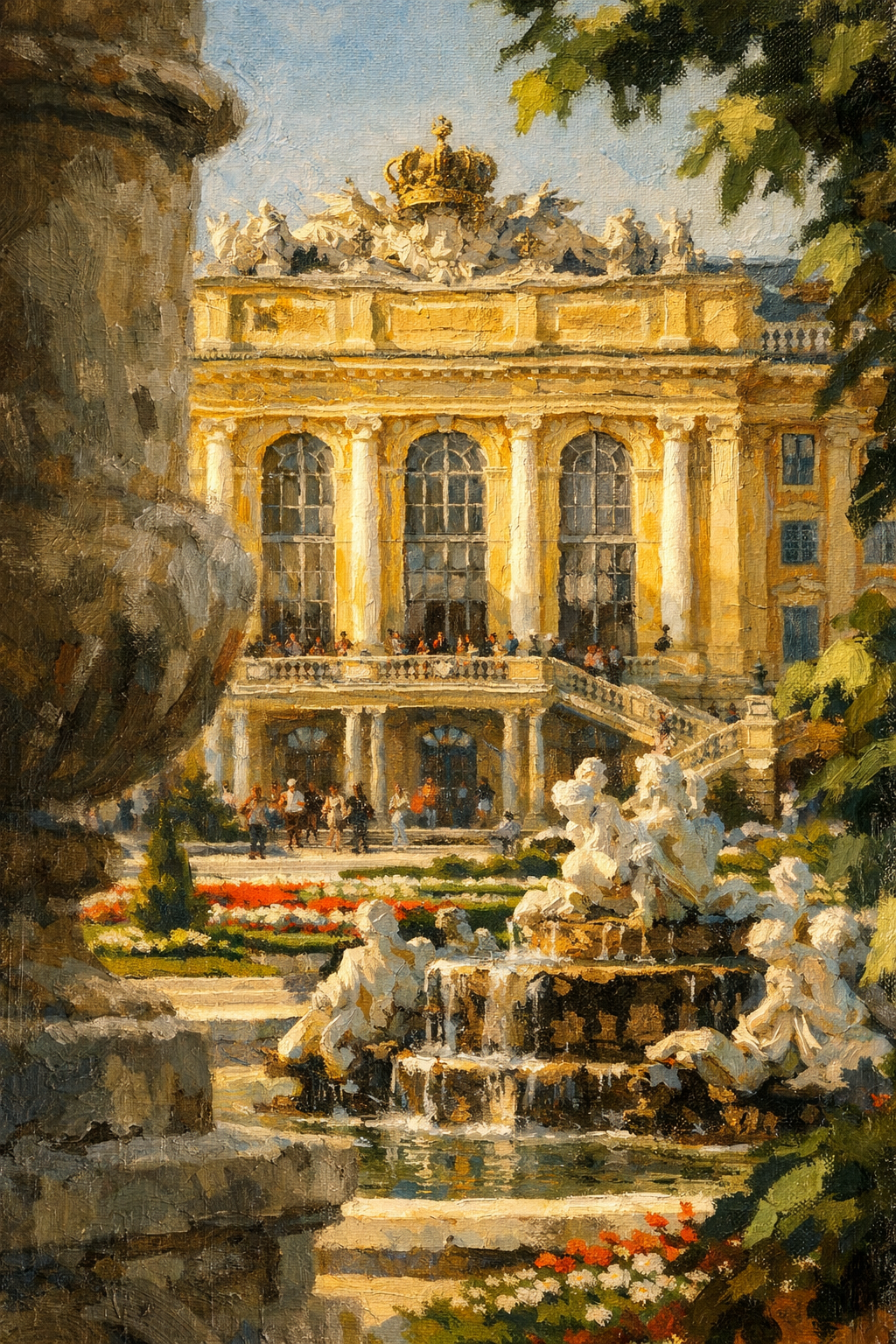
Golden Splendor of a Sunlit Empire
Critique
1. Introduction This oil painting presents a focused, vibrant view of the Schönbrunn Palace in Vienna, specifically highlighting a segment of its ornate baroque facade and the bustling garden courtyard. The composition centers on the imperial grandeur of the architecture, signified by the golden crown ornament atop the building. The work captures the lively atmosphere of this historic landmark during a bright, sunlit day. 2. Description The palace facade is rendered in brilliant shades of yellow and ochre, with large arched windows and white columns that create a rhythmic structural pattern. Below the balcony, where several small figures of tourists can be seen, a classical fountain with intricate white statues serves as a major focal point. The foreground is filled with colorful flower beds in red and white, while the edges of the frame are softened by the dark green foliage of nearby trees. 3. Analysis The artist employs an Impressionistic style, characterized by thick, visible brushstrokes and a primary focus on the play of light over form. The color palette is warm and energetic, dominated by the radiant "Schönbrunn Yellow" of the palace walls. The use of a substantial foreground element on the left side of the canvas helps to frame the scene and adds a sense of immediacy and depth to the urban landscape. 4. Interpretation and Evaluation The painting interprets Schönbrunn as a living site of history, where imperial architecture is integrated with the movement of contemporary people. Evaluation of the work reveals a successful capture of brilliant daylight and its transformative effect on the weathered textures of the building. The technical skill shown in the rapid, confident application of paint effectively conveys the richness of the baroque decorations without becoming bogged down in minute details. 5. Conclusion This study of Schönbrunn Palace is a masterful example of how Impressionistic techniques can bring 18th-century architecture to life for a modern viewer. The initial impression of a static monument is replaced by a sense of light, color, and activity after a more focused observation. It remains a powerful and joyful celebration of Vienna’s imperial heritage and its enduring role as a public space for cultural gathering.
Same Subcategory
Similar Artworks
 Whispers of the Rose Garden
 Sublime Pillars of the Misty Dawn
 Drottningholm Palace in Golden Splendor
 Serenade of the Classical Garden
 Golden Roses of the Baroque Era
 Golden Resonance
 Whispers of the Moorish Stone
 Baroque Sunsets over the Estate
 A Gathering of Souls in the Sun's Embrace
 The Timeless Beauty of the Village