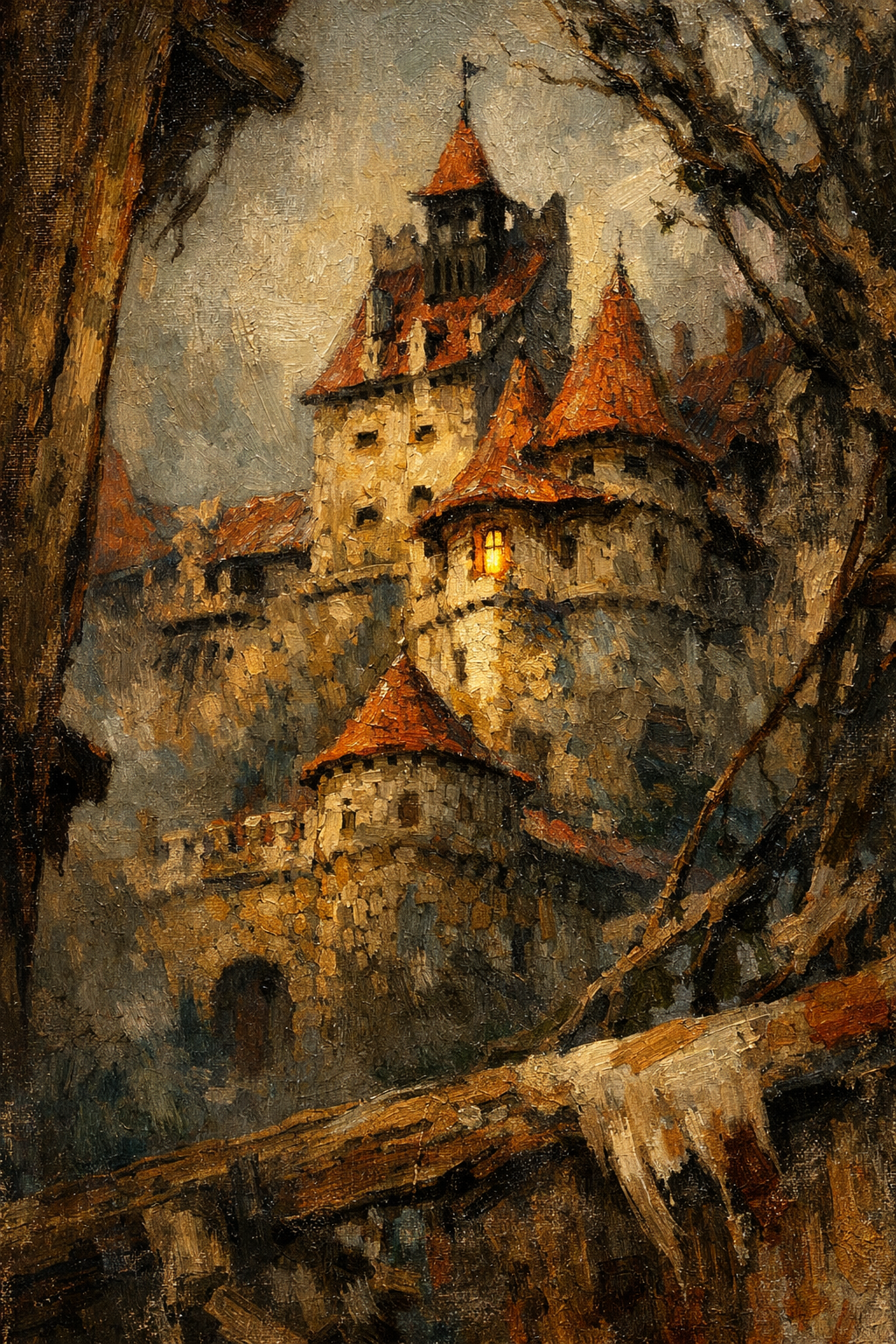
The Last Bastion of Shadows
Critique
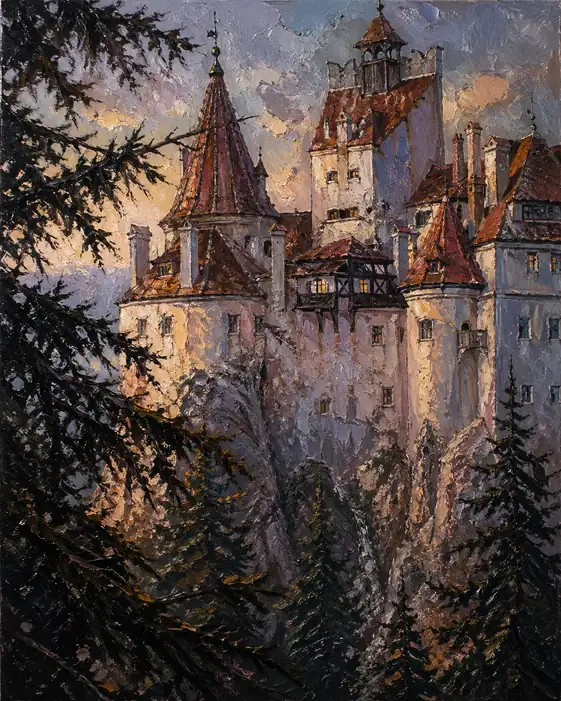
1. Introduction This dramatic oil painting features Bran Castle, a medieval fortress in Transylvania, Romania, famously associated with the Dracula legend. The composition emphasizes the castle’s imposing, rugged architecture as it clings to a steep limestone cliff. The work creates a dark and atmospheric mood, successfully evoking the mystery and gothic heritage of this historic site at dusk. 2. Description The castle is rendered with thick, expressive brushstrokes, showcasing its numerous towers and steeply pitched red-tiled roofs. A single, glowing window provides a small but intense point of yellow light amidst the surrounding shadows of the stone walls. In the foreground, dark and skeletal tree branches frame the view, further enhancing the sense of isolation and secrecy that surrounds the limestone fortress. 3. Analysis The artist utilizes an impasto technique, applying paint in thick layers to create a tangible, weathered texture on the building’s walls and the rocky precipice. The color palette is dominated by deep browns, greys, and blacks, with the sharp red of the roofs and the single golden light creating dramatic focal points. The high-contrast lighting reinforces the fortress’s formidable presence against a turbulent and dimly lit sky. 4. Interpretation and Evaluation The work interprets Bran Castle as a site of myth and legend, focusing on its eerie and defensive nature rather than its domestic history. Evaluation of its formal qualities reveals a powerful emotional impact, achieved through the deliberate use of shadow and dynamic, gestural brushwork. The technical achievement lies in the painting’s ability to suggest a specific, haunting atmosphere without relying on literal or overly detailed descriptive elements. 5. Conclusion This study of Bran Castle is a compelling example of gothic-inspired landscape painting, effectively capturing the legendary aura of its subject. The initial impression of a forbidding, dark fortress is sustained by the artistic choices in texture and lighting, leaving a lasting impact on the viewer. It stands as a masterful atmospheric representation of one of Transylvania’s most enduring and mysterious architectural landmarks.
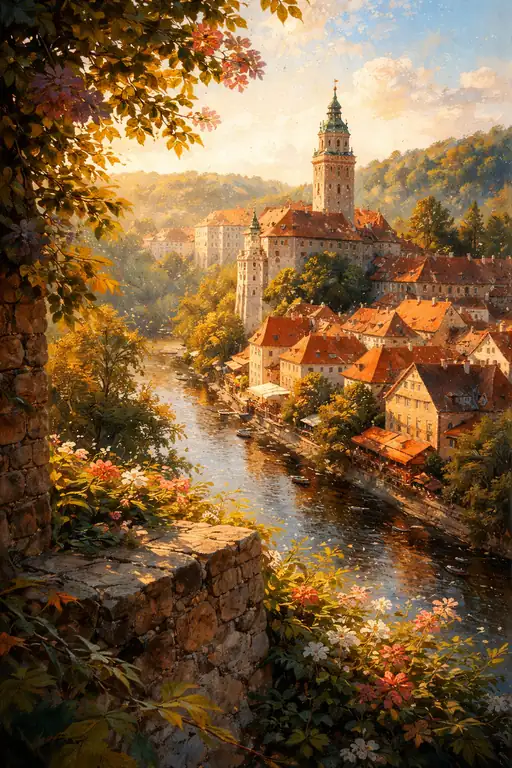 Golden Murmurs of the Bohemian River
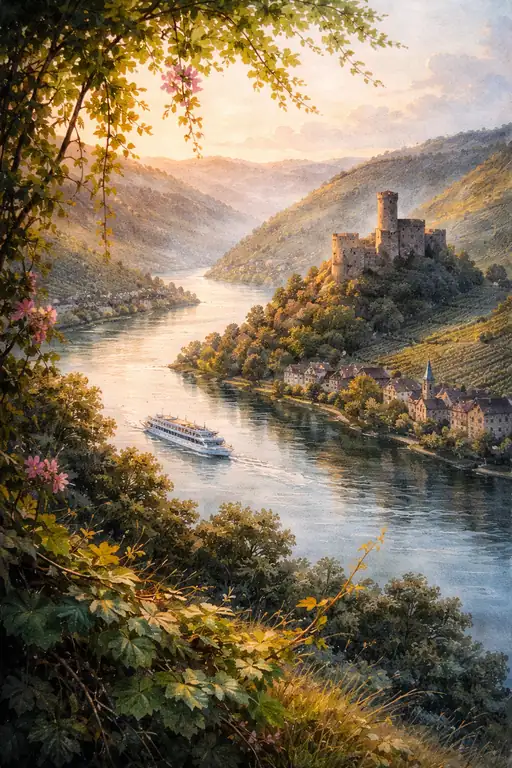 A Voyage Through the Valley of Time
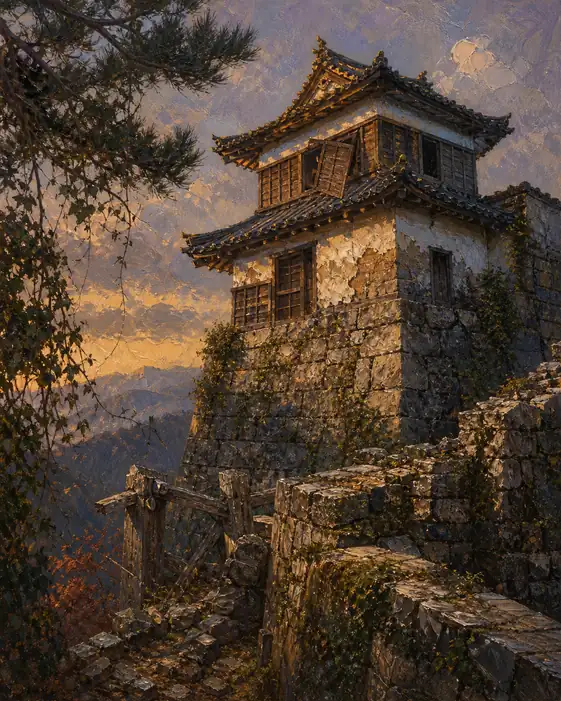 Silent Resilience on the Ancient Ramparts
 Vigil at the Twilight Crag
 Slumbering Giants of Stone
 Golden Echoes of the Citadel
 Sunset Fortress
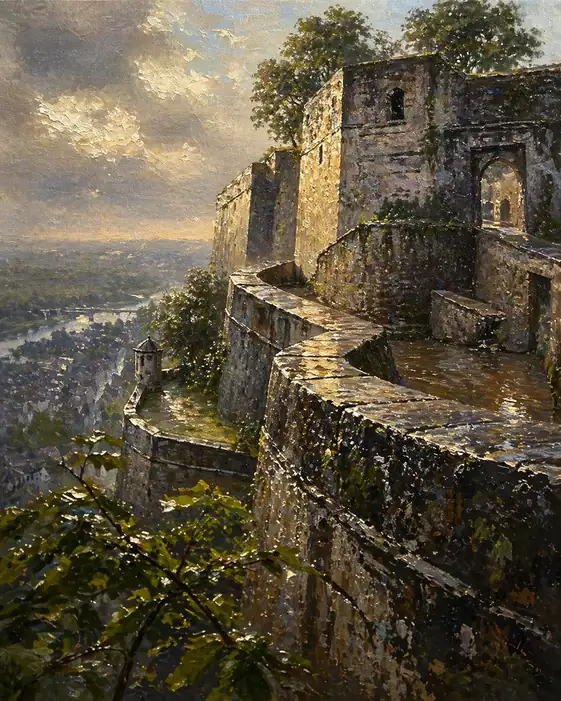 Citadel of Eternal Shadows
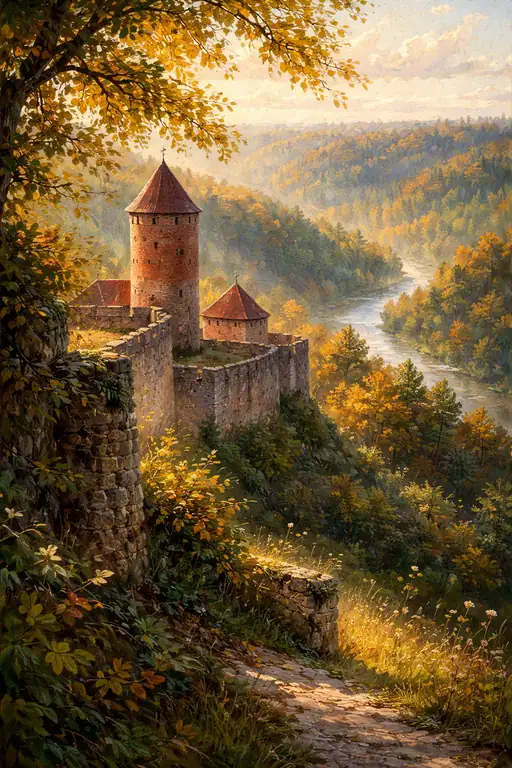 Autumn Citadel Above the Valley
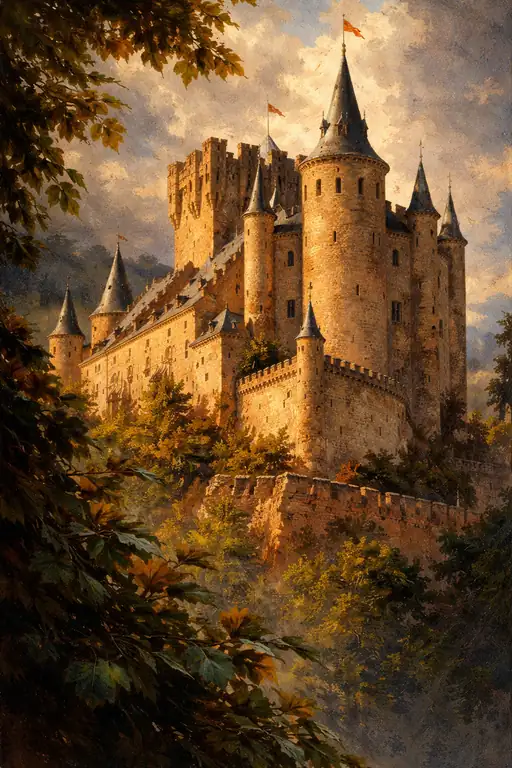 Echoes of a Chivalric Dream
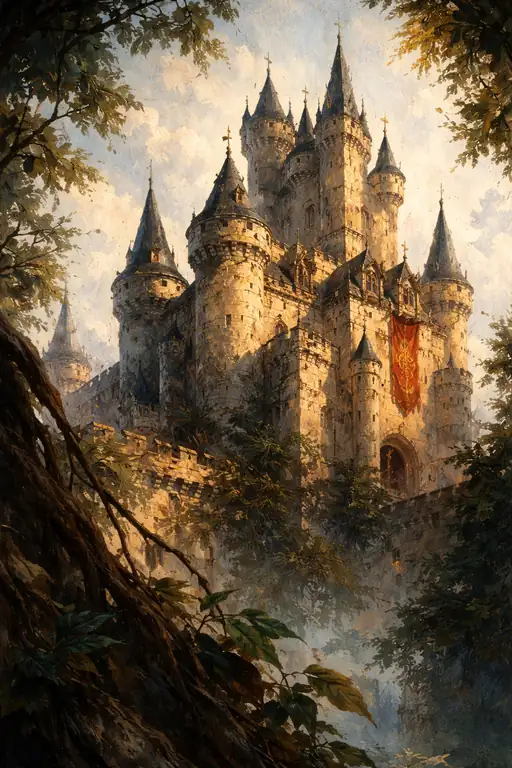 Radiance of the Grand Hall