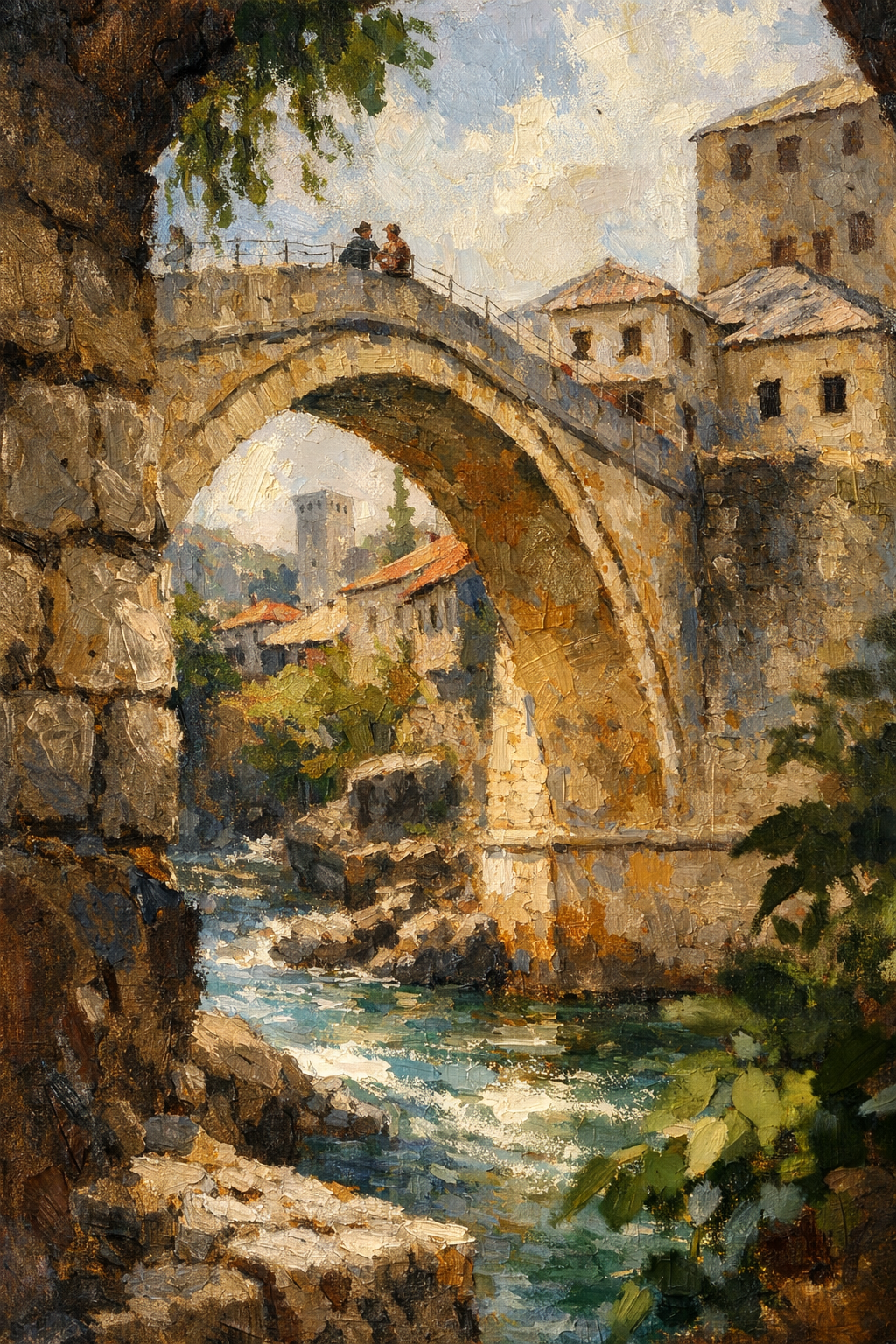
Stari Most Arch Over Churning Waters
Critique
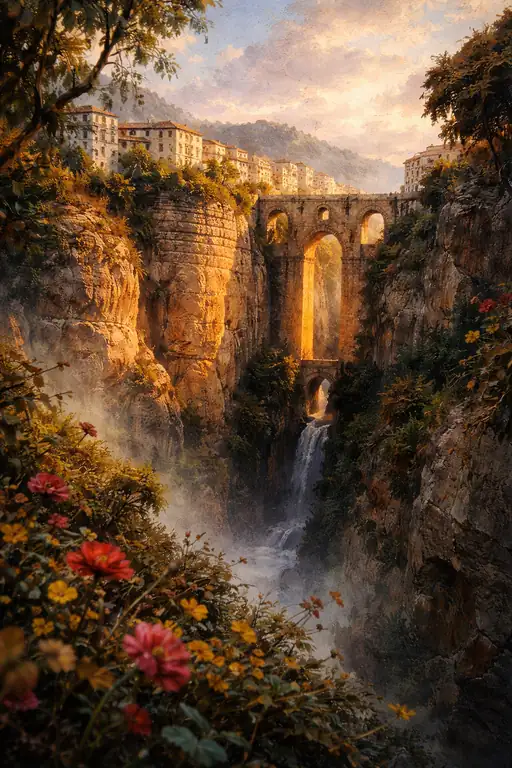
1. Introduction This work is a compelling oil painting that captures a majestic stone arch bridge spanning a deep river gorge, executed with a vigorous impasto technique. The visible, textured brushwork breathes a unique vitality into the canvas, contrasting the solid, historical permanence of the architecture with the dynamic motion of the water below. Framed by a dark, craggy foreground, the sunlit bridge serves as the dramatic focal point of this ancient urban landscape. 2. Description The central element of the composition is the sweeping arc of the stone bridge, upon which two small figures stand, suggesting a quiet moment of human connection. Below, the river is rendered with thick strokes of white and cerulean, depicting a churning current. To the right, old stone buildings with terracotta details cluster along the bank, while a distant tower emerges from a soft, hazy background, hinting at the extent of the historic city. 3. Analysis Technically, the most striking aspect is the bold application of paint, likely using a palette knife or heavy brushes. This creates a tactile surface where the roughness of the stone and the spray of the water are physically present, effectively capturing the play of light. The color palette relies on the vivid interplay between warm ochres of the stonework and cool blues of the stream. Sharp tonal contrasts heighten the sense of depth and three-dimensionality. 4. Interpretation and Evaluation The painting demonstrates a successful synthesis of Impressionist light studies and a more modern, expressive materiality. By treating the historical site as a landscape of texture and light rather than a mere architectural record, the artist achieves a high degree of artistic merit. The heavy impasto provides a sensory reality that communicates the ruggedness of the environment directly to the viewer. It is an evaluative triumph for its energy and masterly command of the medium. 5. Conclusion In summary, the work balances spontaneous execution with a disciplined understanding of composition and light. The juxtaposition of the restless water and the enduring bridge evokes themes of transience versus permanence. As one engages with the piece, the physical beauty of the pigment dissolves into a harmonious and grand vision of history. It is a work of significant presence, reflecting a profound creative passion and technical expertise.
Same Subcategory
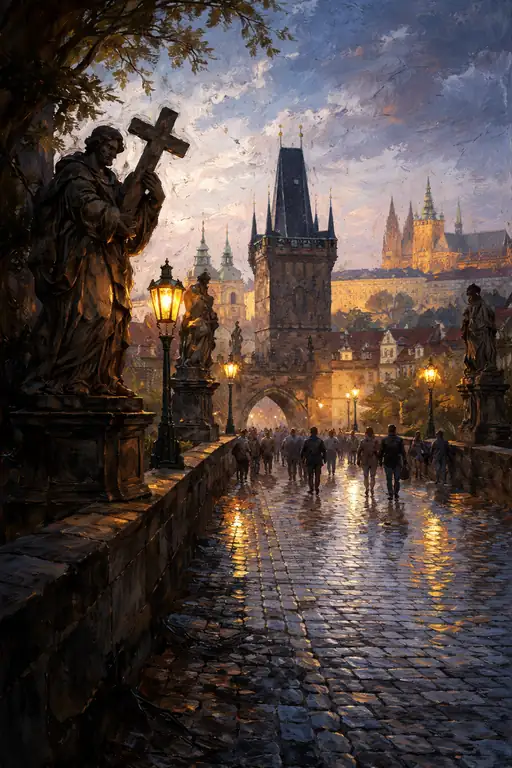 Footsteps on the Golden Cobblestones
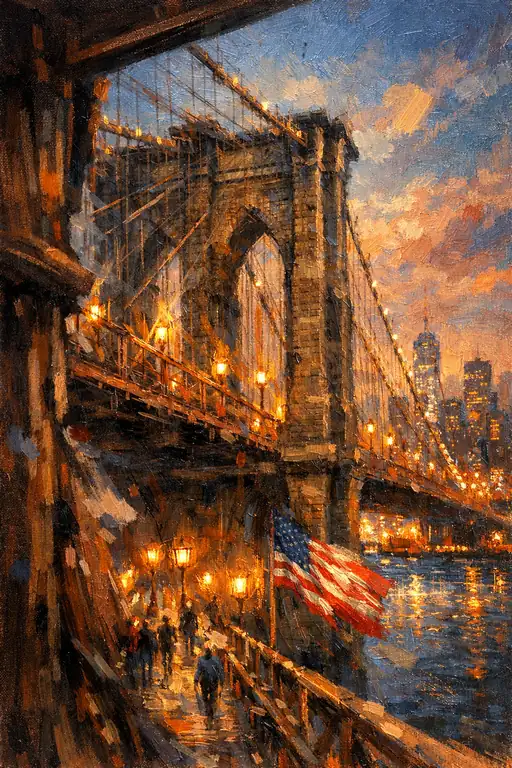 Twilight Over the East River: A Brooklyn Nocturne
Similar Artworks
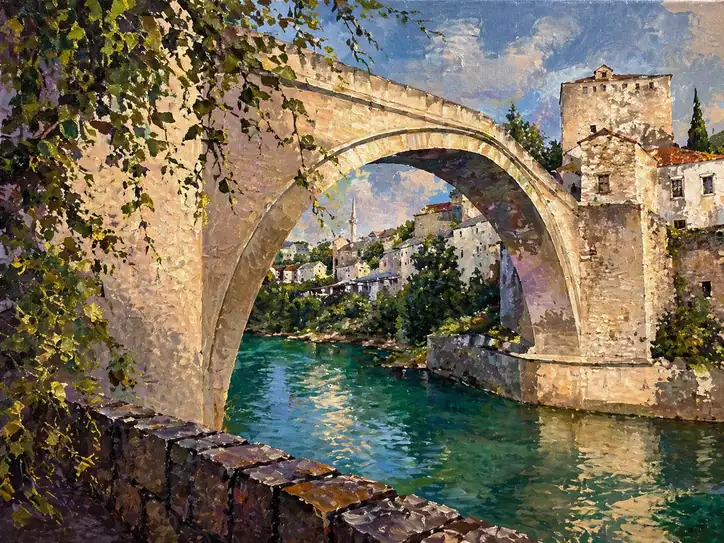 The Eternal Span of Emerald Dreams
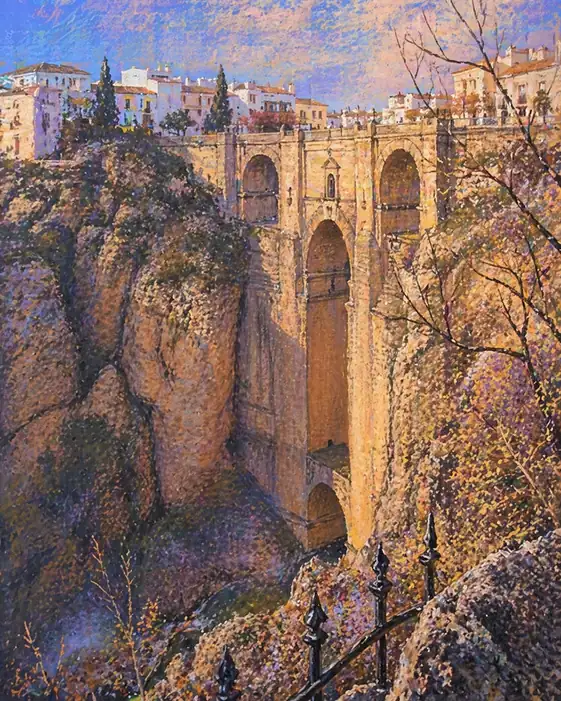 Ronda: The Bridge Between Earth and Sky
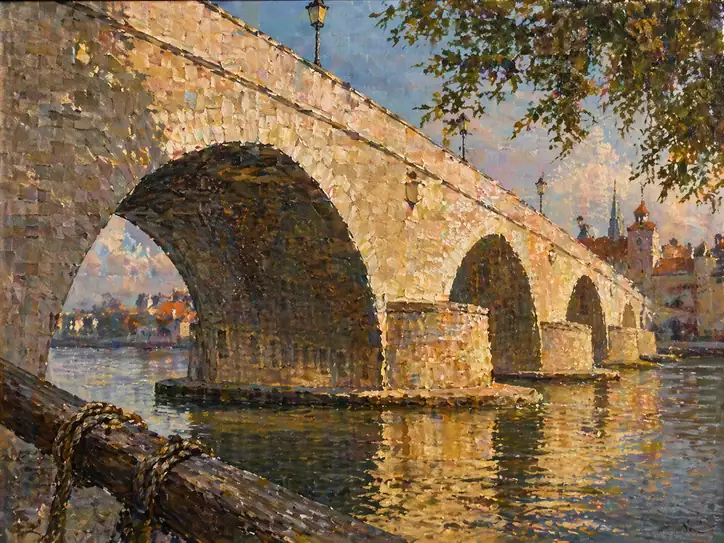 The Golden Arch
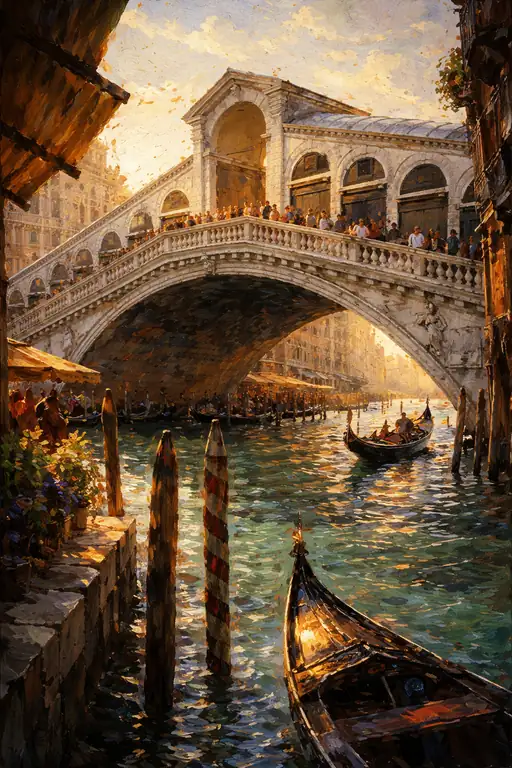 Sunlit Rhythms of the Grand Canal
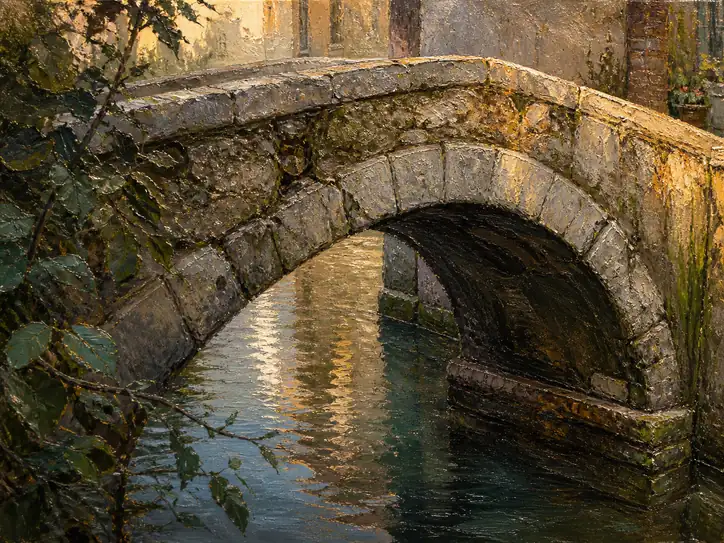 Golden Reflections under the Stone Arch
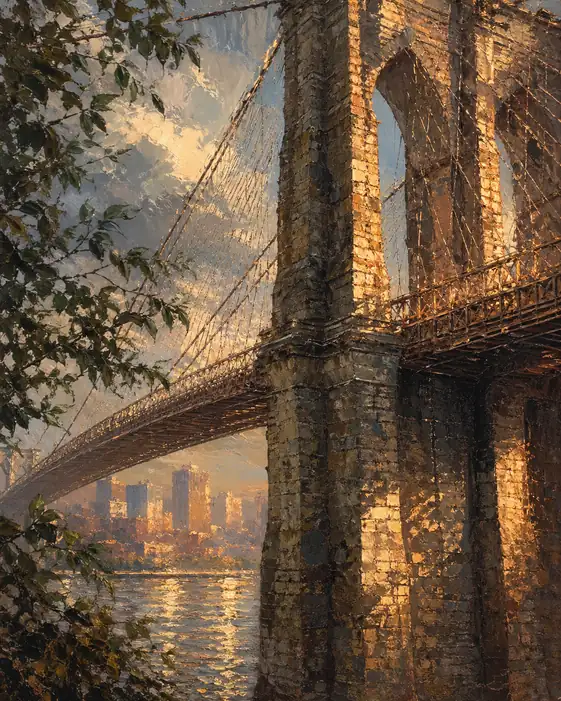 Eternal Gateway to the Golden City
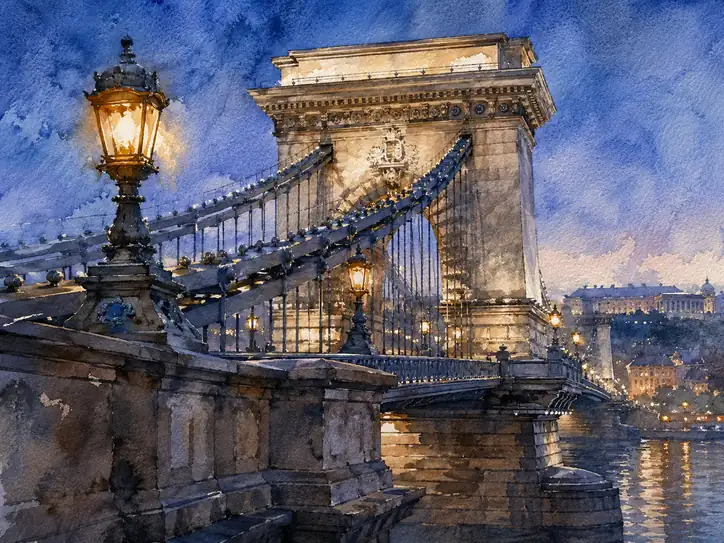 The Golden Pulse of Cobalt Night
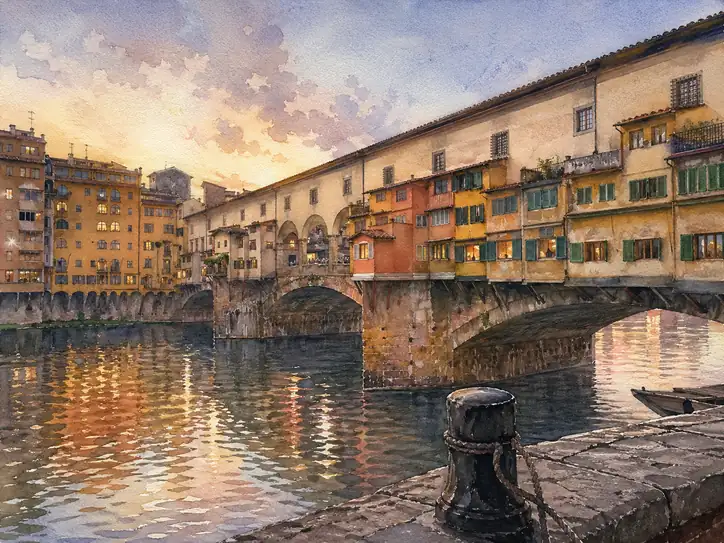 Ripples of a Golden Twilight
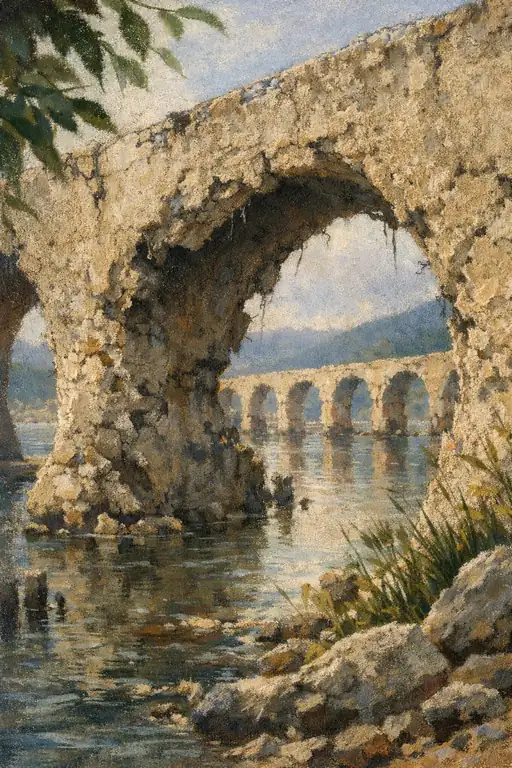 Echoes of the Ancients
 Between the Abyss and the Blossoms