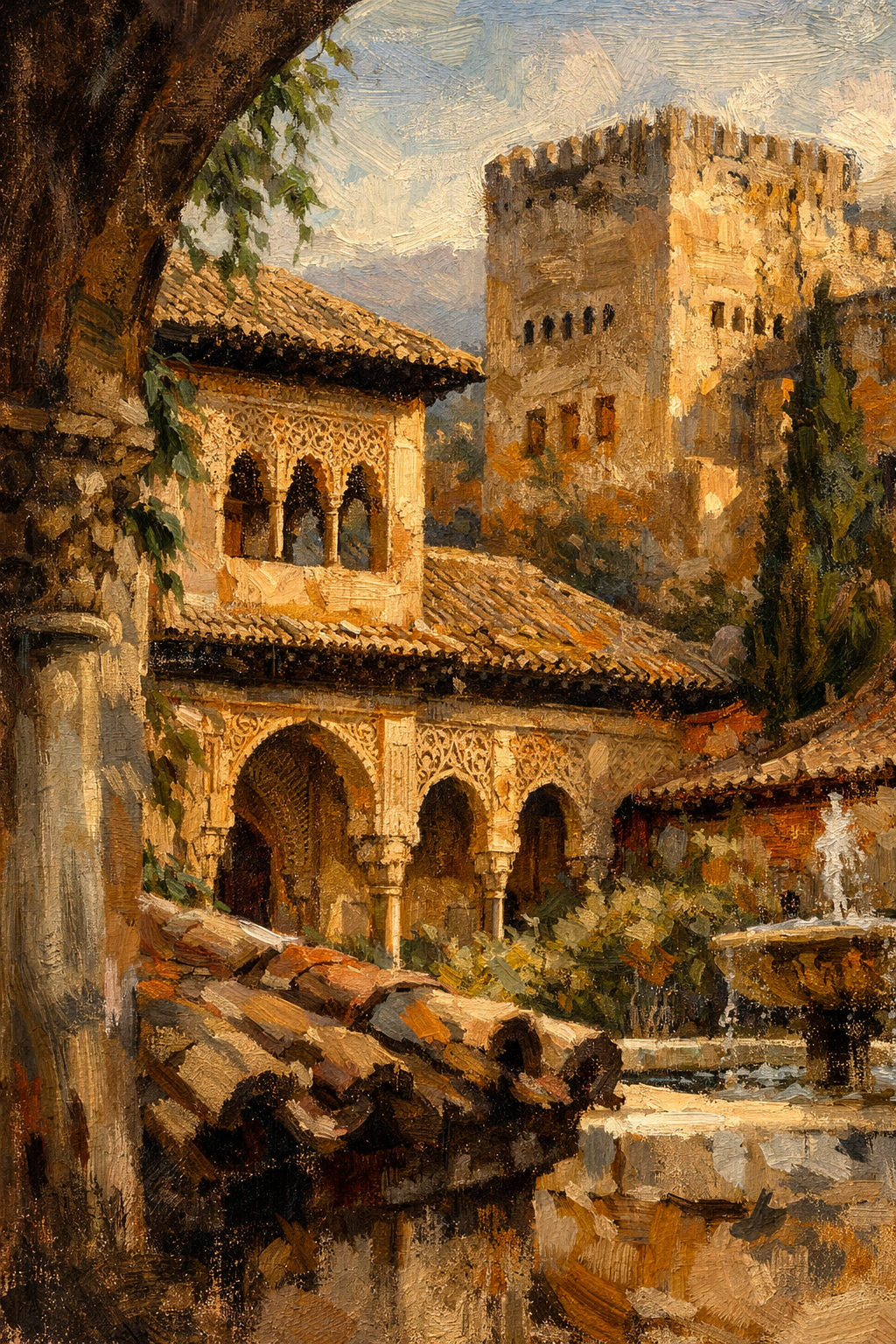
Whispers of the Moorish Stone
Critique
Introduction The painting offers a compelling, texture-rich exploration of Moorish architectural splendor, likely inspired by the historic Alhambra complex. The work focuses on the interplay between sunlight and intricate stone carvings, creating a scene that feels both solid and ethereal. It captures a sense of enduring history through a specialized, painterly lens. Description Centrally, an elegantly arched gallery with delicate stonework is visible, leading the eye towards a courtyard. To the right, a multi-tiered fountain gently splashes water, while the foreground is occupied by weathered, rounded roof tiles showing signs of age. Rising majestically in the background is a large, square defensive tower made of sun-baked stone, contrasting with the sky's soft tones. Analysis The artist utilizes a heavy, impasto-like brushstroke technique that emphasizes the tactile qualities of the ancient surfaces. A warm, golden light source from the left creates high-contrast highlights and deep, cool shadows, which define the complex three-dimensional forms of the arches. The composition is tightly cropped, resulting in a dense, layered perspective that suggests a hidden, intimate sanctuary. Interpretation and Evaluation This piece successfully translates the mathematical precision of Islamic art into a loose, expressive painterly language. The choice of a limited, earthy palette reinforces the connection to the natural materials of the architecture. While the details of the carvings are suggested rather than explicitly rendered, the overall atmosphere of hushed grandeur is powerfully conveyed through the masterful management of light. Conclusion In conclusion, the work is an evocative homage to architectural heritage and the ephemeral quality of light. Beyond its initial aesthetic appeal, the painting invites a deeper appreciation for the textures and forms that define historical identity. It stands as a refined example of how style can enhance the emotional resonance of a familiar, classical subject.
Same Subcategory
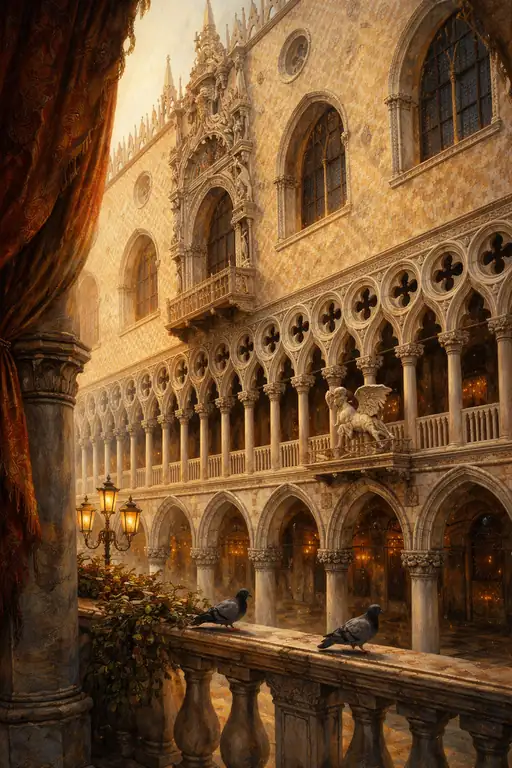 Echoes of Gothic Grandeur
Similar Artworks
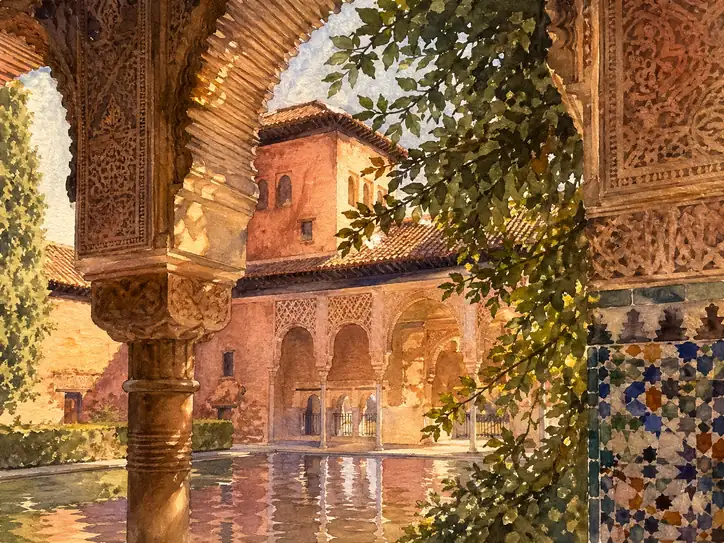 Whispers of the Alhambra Pool
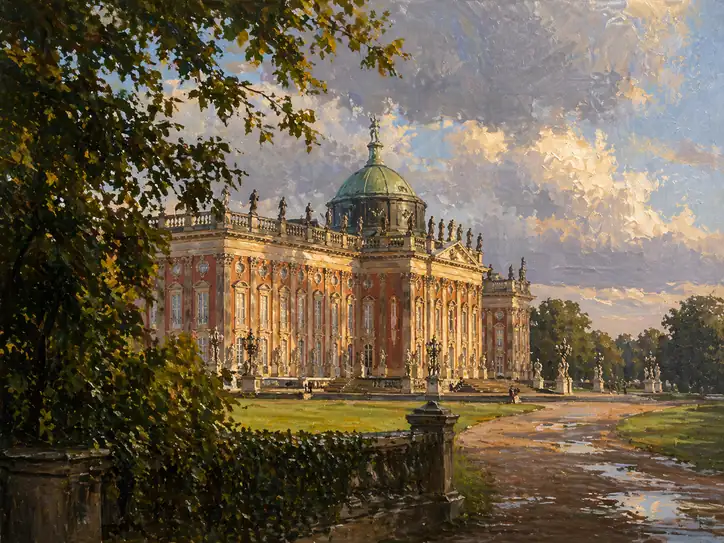 Sublime Pillars of the Misty Dawn
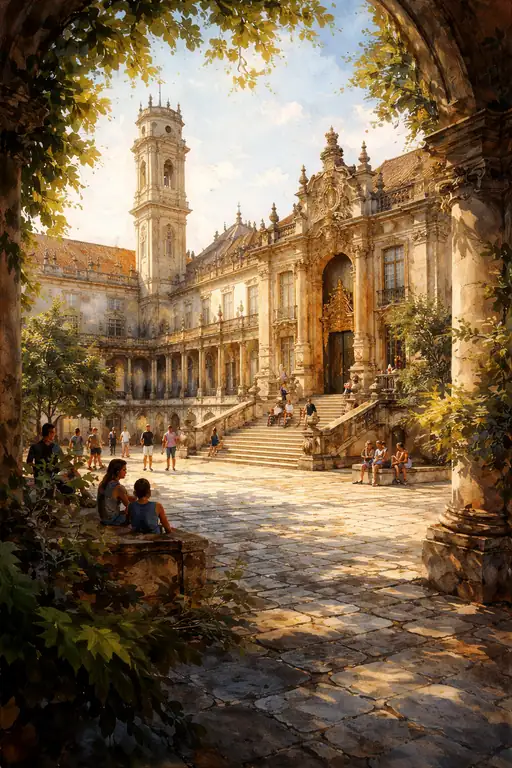 A Gathering of Souls in the Sun's Embrace
 Whispers of the Palace of Winds
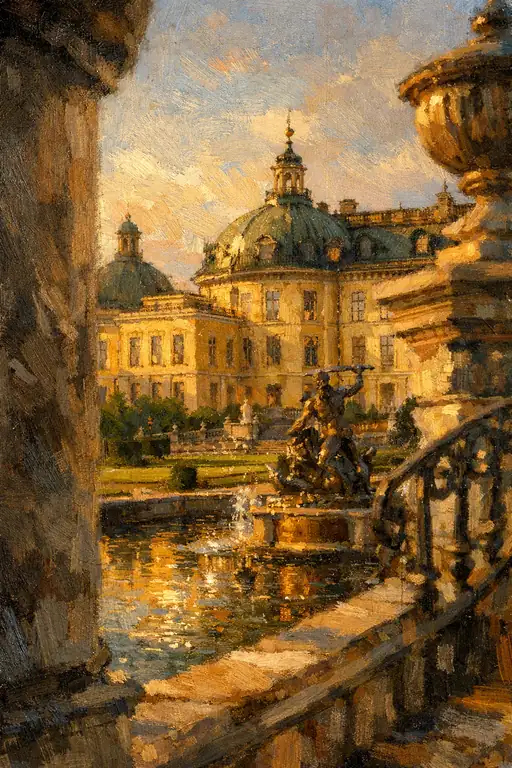 Drottningholm Palace in Golden Splendor
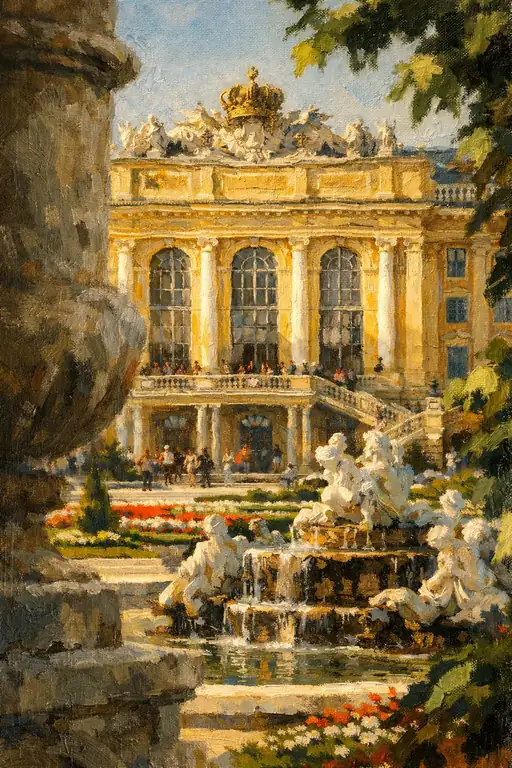 Golden Splendor of a Sunlit Empire
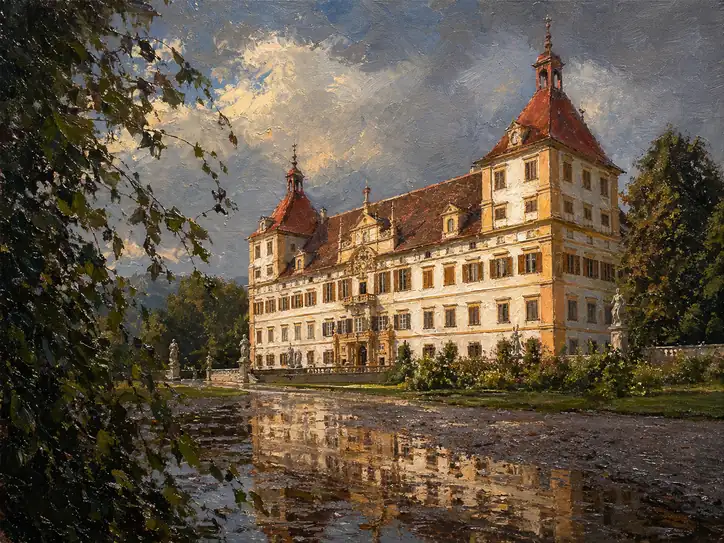 Baroque Palace
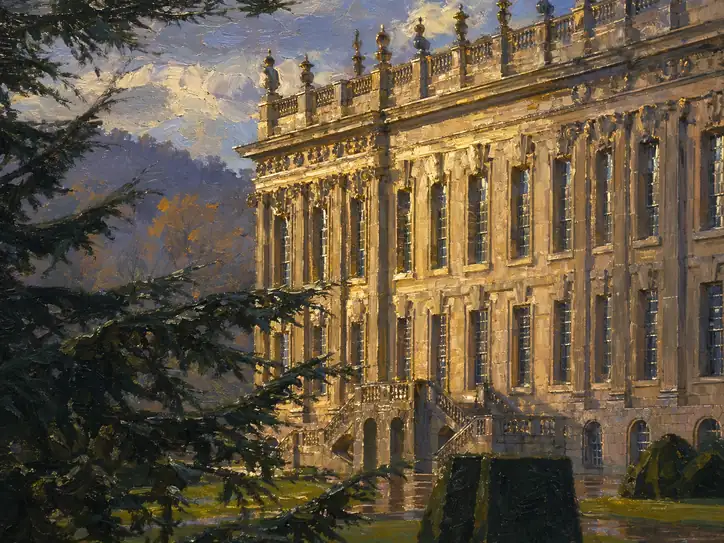 Golden Chatsworth
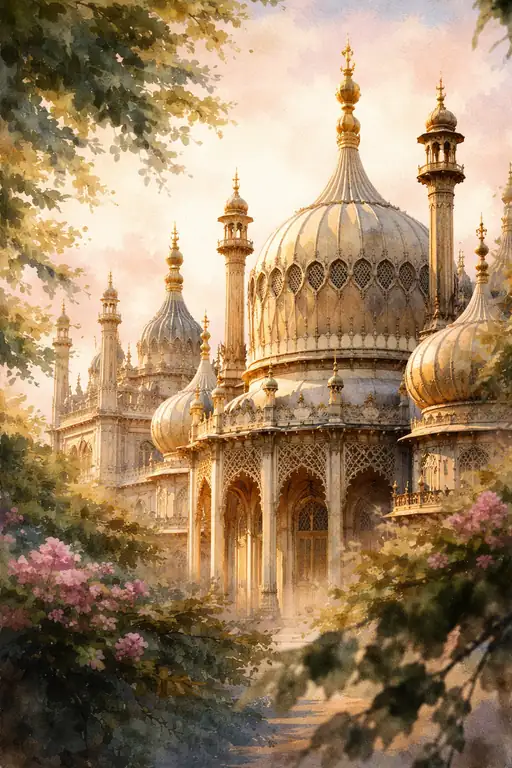 Golden Glow on the Ornate Pavilion
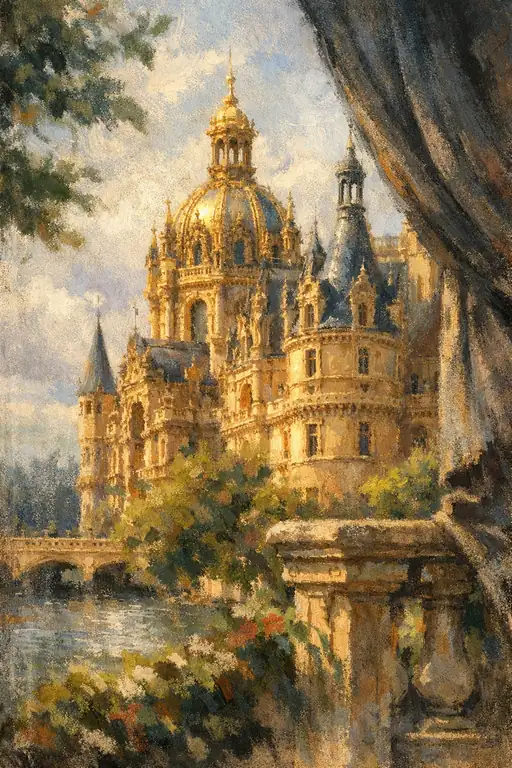 The Golden Chateau's Sunlit Slumber