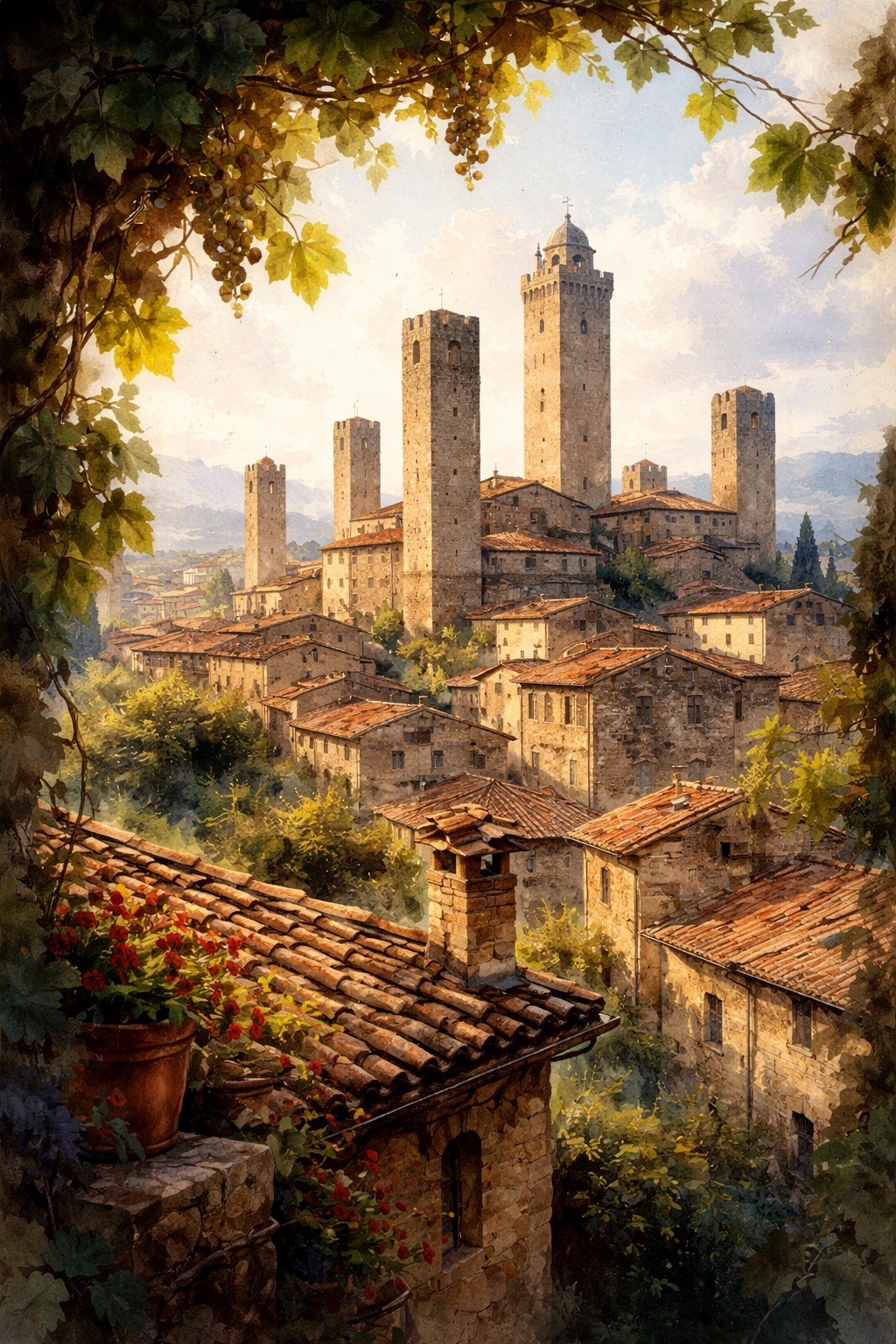
Siena's Golden Afternoon
Critique
1. Introduction This painting offers a panoramic view of a medieval hilltop town, characterized by its distinctive cluster of towers rising above the landscape. The work utilizes a layered foreground of vines and architecture to create a sense of immersion and place. It captures the enduring charm of historical European urbanism through a focus on texture and warm, filtered light. 2. Description The upper portion of the frame is adorned with lush grapevines and hanging clusters of fruit, which provide a natural border for the scene. Below this botanical frame, a series of densely packed houses with weathered terracotta roofs cascade down the hillside. In the center, several prominent square stone towers stand tall against a soft, hazy sky, their masonry catching the golden glow of the sun. Far in the distance, pale blue mountain ranges provide a quiet backdrop to the complex architectural arrangement. 3. Analysis The artist carefully navigates the relationship between organic and inorganic forms, using the greenery to soften the rigid geometry of the stone towers. The play of light and shadow on the various roof planes creates a rhythmic pattern that leads the viewer’s eye through the town. Atmospheric perspective is skillfully employed, with the distant mountains rendered in desaturated tones to emphasize the depth of the valley. The high level of detail in the foreground, including the textures of the stone and the individual tiles, provides a solid anchor for the more generalized background. 4. Interpretation and Evaluation The work successfully conveys a sense of timelessness and historical continuity. By framing the town with symbols of agricultural abundance like grapes, the painting emphasizes the connection between the urban structure and the surrounding land. The technical execution is strong, particularly in the handling of light as it transitions from the bright tower tops to the deep shadows of the narrow streets. The balanced arrangement of vertical towers against the horizontal sprawl of the houses results in a harmonious and aesthetically pleasing composition. 5. Conclusion A first glance at the picturesque town gradually reveals a deeper appreciation for the architectural complexity and regional character. The painting serves as both a detailed descriptive record and a poetic interpretation of a unique cultural landscape. It effectively captures the spirit of a place where history and nature are inextricably linked. The final impression is one of enduring stability and Mediterranean warmth.
Same Subcategory
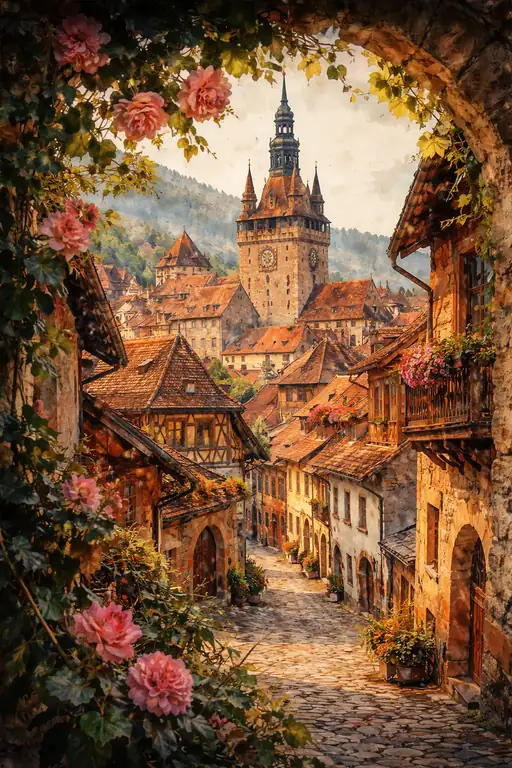 Echoes of Time Through the Rosy Arch
Similar Artworks
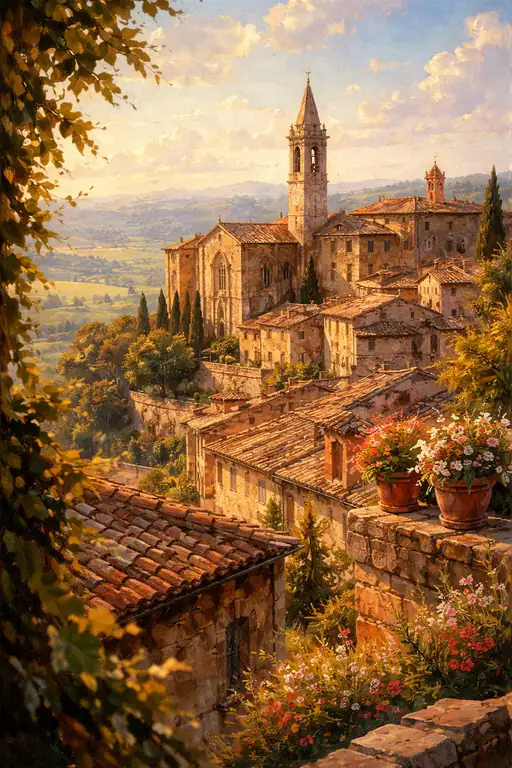 Terracotta Tranquility
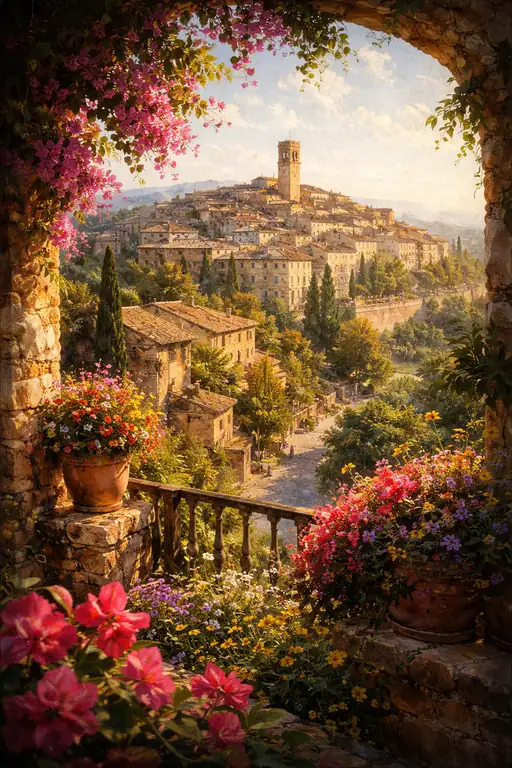 Whispers of the Sunlit Balcony
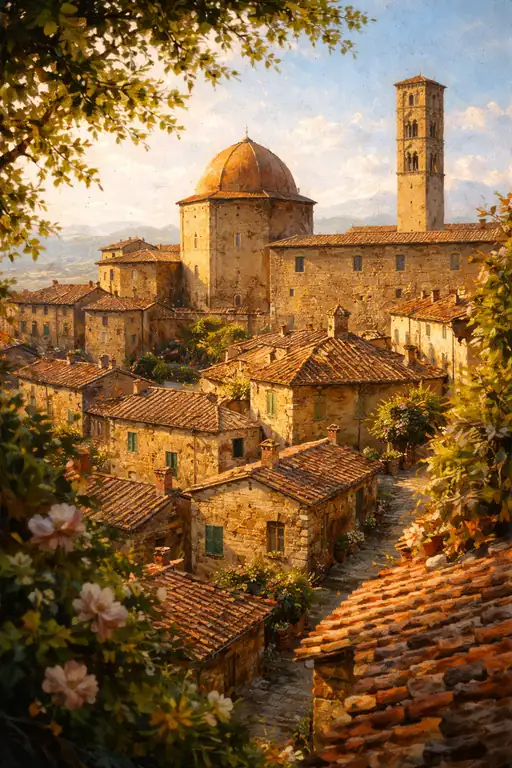 Sienna and Sunbeams
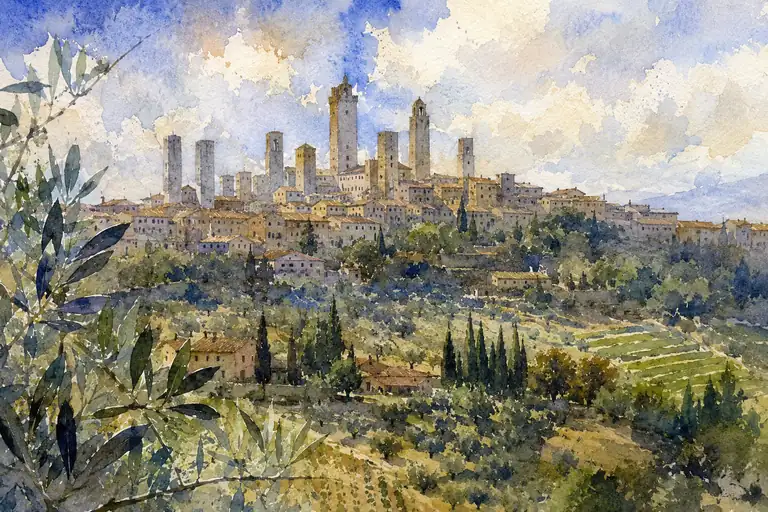 Where the Olive Breeze Whispers
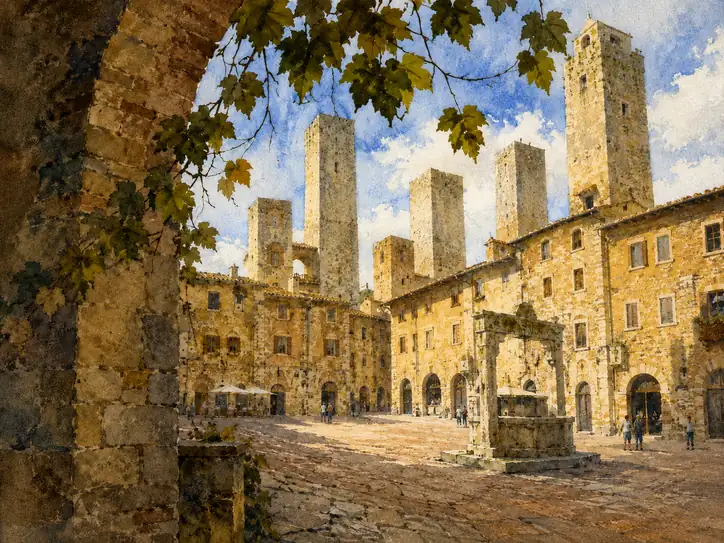 The Golden Piazza: Where History Reaches the Sky
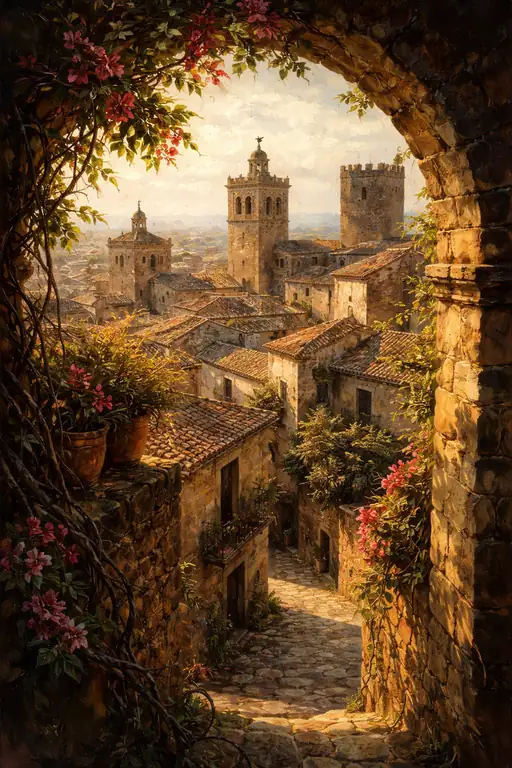 Beyond the Bloom: The Silent Sentinels of Time
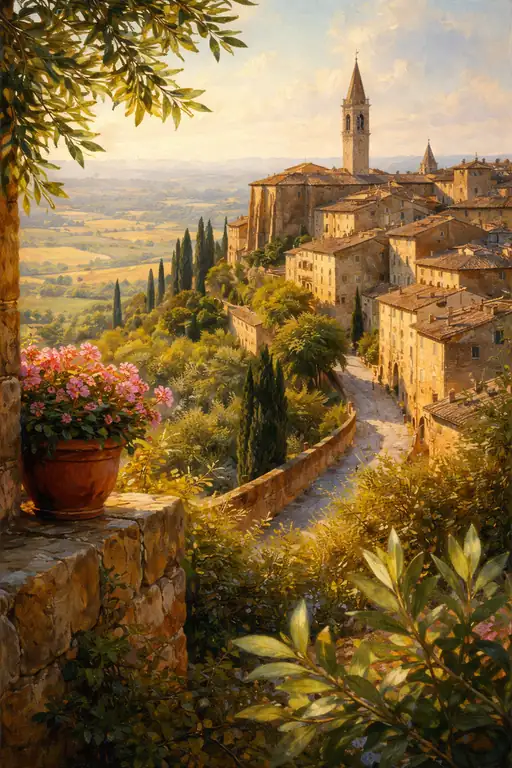 Mediterranean Heritage
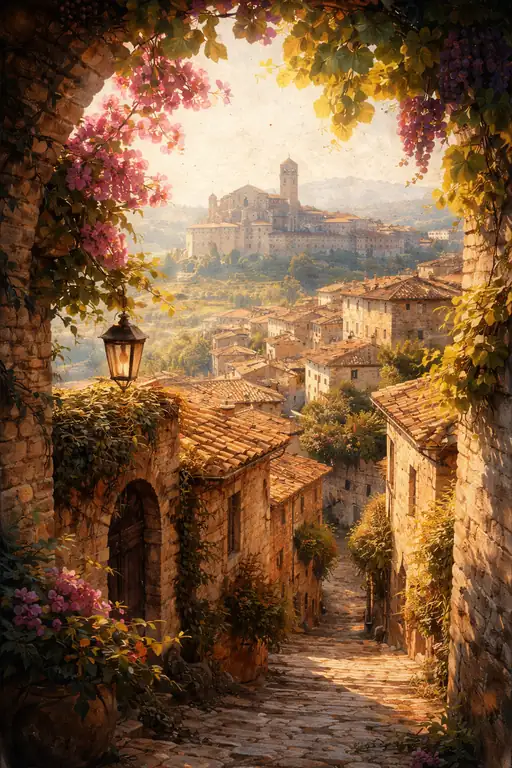 Archway to the Gilded Sanctuary
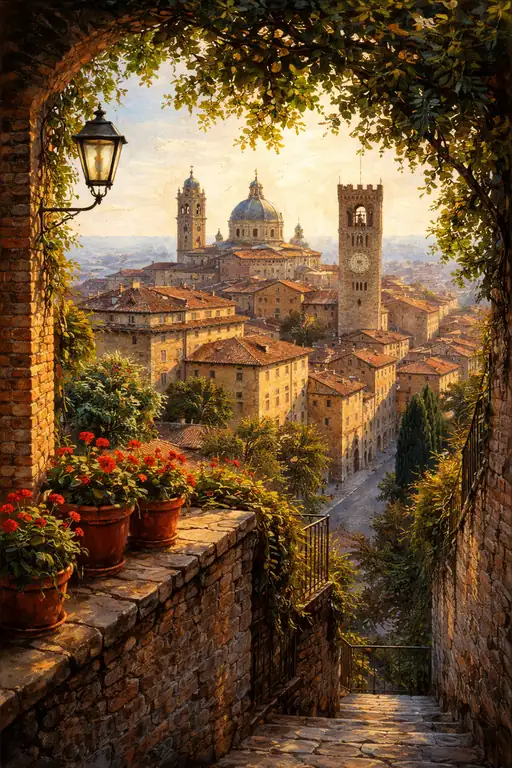 Through the Arch of Golden Memories
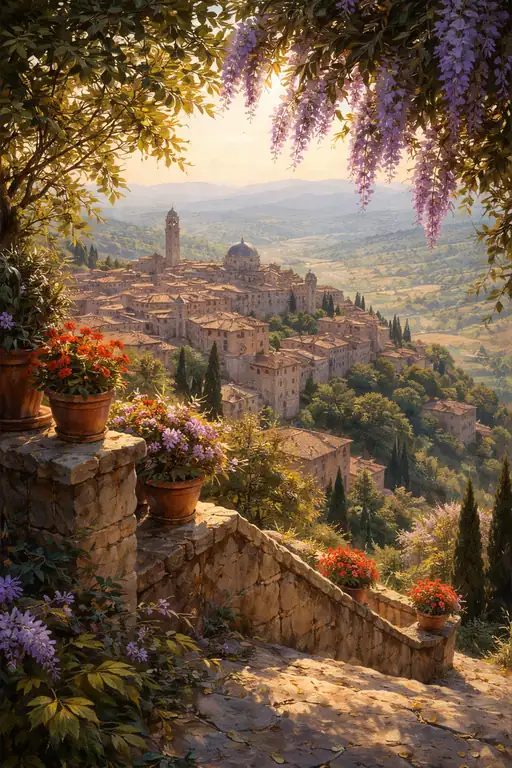 Echoes of a Golden Afternoon