Velvet and Diamonds
Critique
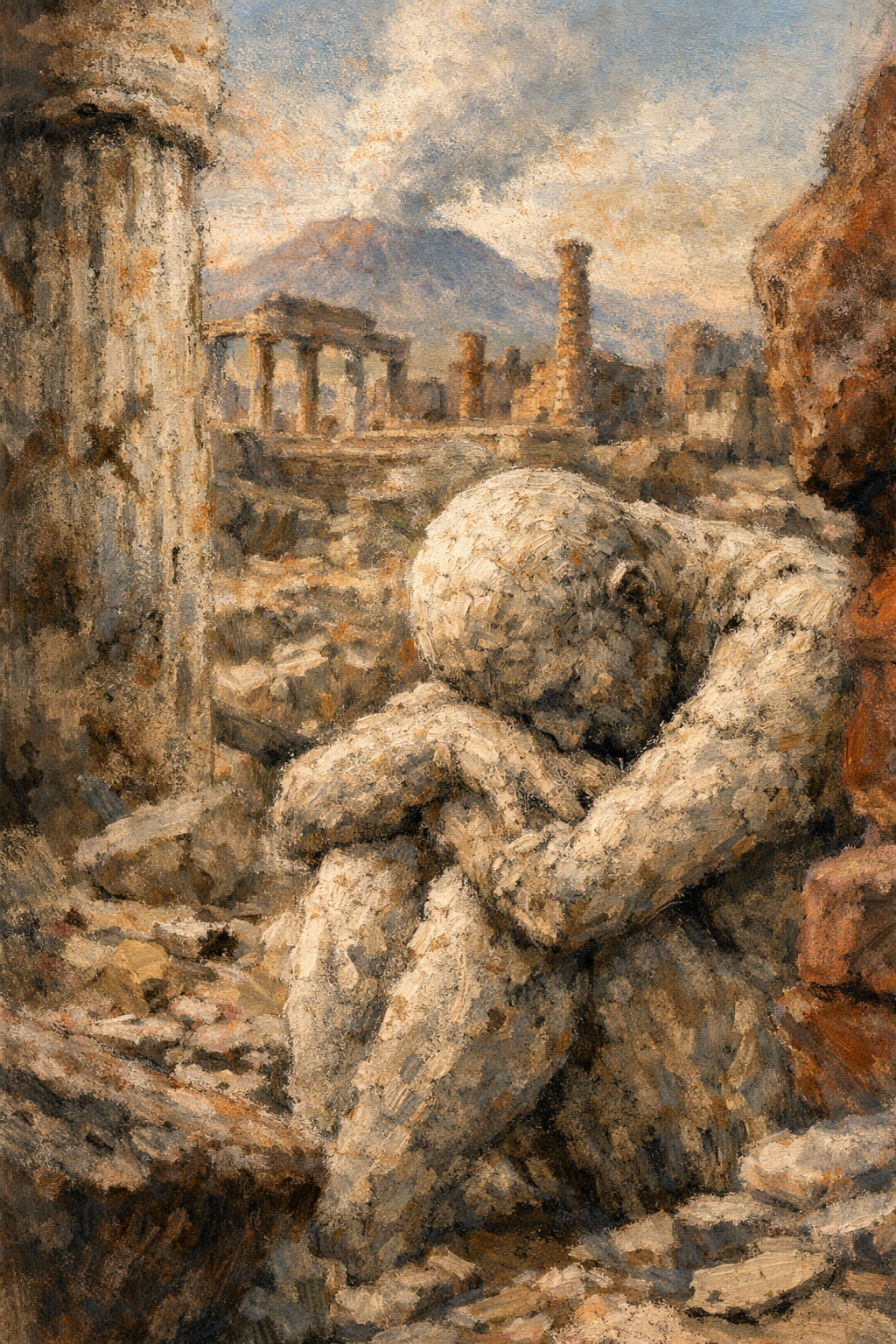
1. Introduction This evocative painting depicts a poignant scene from the ruins of Pompeii, centered on the haunting figure of a volcanic victim. The work masterfully combines a deeply personal, tragic focal point with the grand historical backdrop of a lost civilization. It serves as a powerful meditation on mortality and the suddenness of natural catastrophe. 2. Description In the immediate foreground, a plaster cast of a human figure is huddled in a protective fetal position, its surface rendered with a cracked, stone-like texture. Behind this silent witness, the skeletal remains of classical architecture, including fluted columns and pediments, rise from the ash-colored ground. The distant background is dominated by the looming silhouette of Mount Vesuvius, from which a plume of dark smoke and ash ascends into a turbulent, pale sky. The entire scene is bathed in a muted, somber palette of ochre, sienna, and cool grays. 3. Analysis The artist employes a heavily textured, impasto technique to emphasize the calcified nature of the subject and the surrounding debris. This thick application of paint adds a physical weight to the composition, echoing the smothering effect of the volcanic eruption. The stark contrast between the rounded, organic form of the victim and the rigid, crumbling lines of the architecture heightens the emotional impact. Atmospheric perspective is used to push the mountain into the far distance, yet its presence remains an ominous and unifying force within the frame. 4. Interpretation and Evaluation The painting is deeply successful in conveying the profound human tragedy inherent in the site's history. By placing the victim so prominently in the foreground, the artist forces the viewer into an intimate encounter with a moment of individual suffering. The technical execution is particularly effective in its use of texture to suggest both the permanence of the cast and the fragility of the life it once contained. The work achieves a successful balance between archaeological record and expressive, emotional storytelling. 5. Conclusion A first impression of archaeological devastation matures into a somber reflection on the vulnerability of the human condition. The painting stands as a moving tribute to those whose lives were frozen in time by the forces of nature. It effectively captures the silent, enduring grief that permeates the ancient site. Ultimately, this is a masterful synthesis of history, texture, and deep emotional resonance.
Same Subcategory
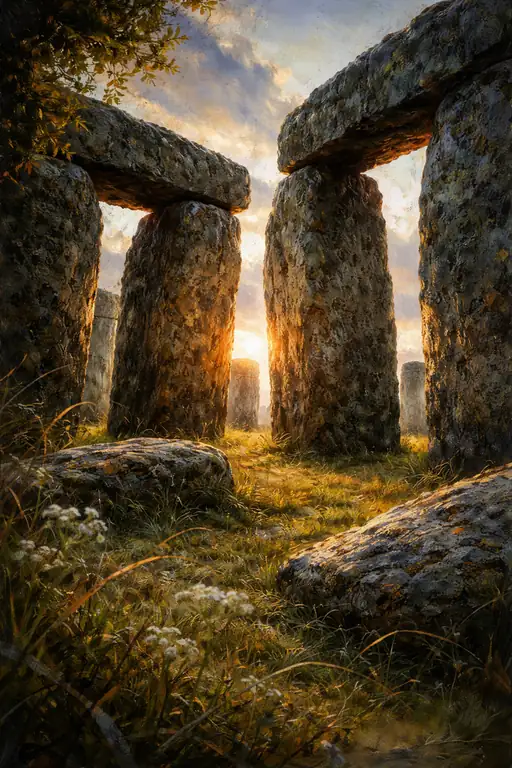 Dawn's Awakening at Stonehenge: A Megalithic Monologue
Similar Artworks
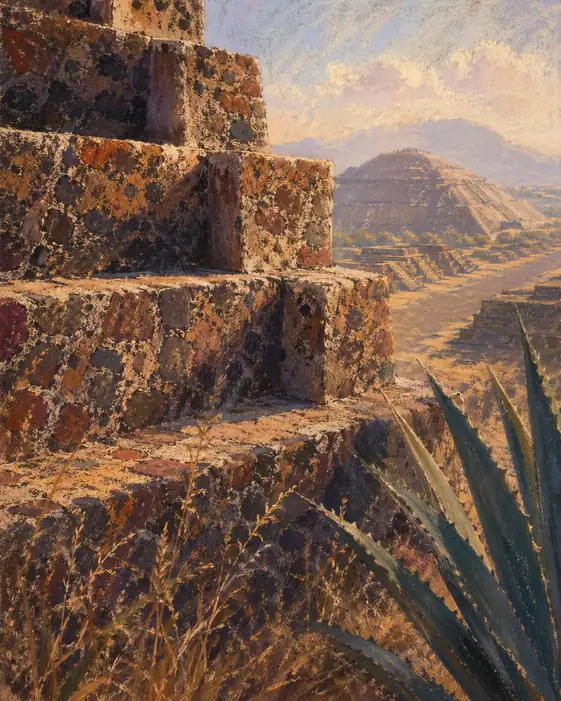 The Earth's Silent Prayer
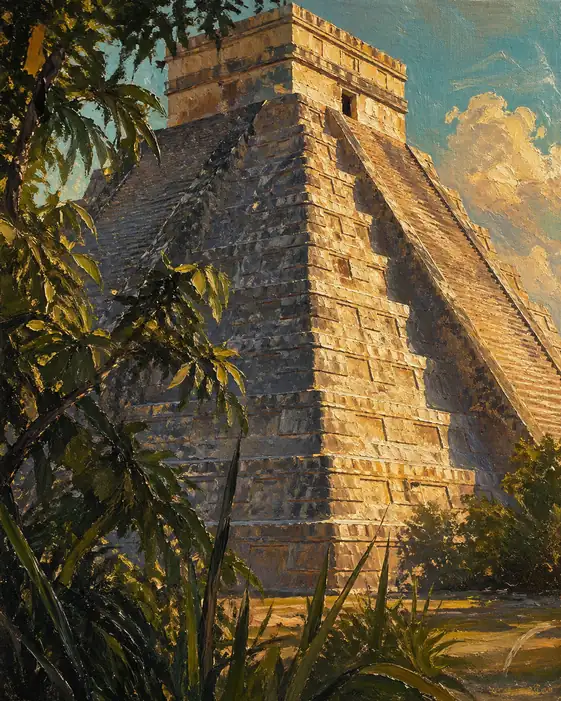 Echoes of the Golden Empire
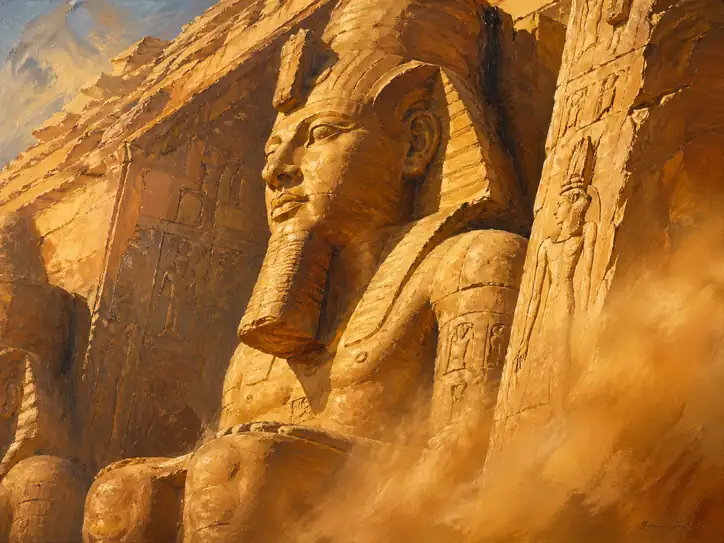 The Pharaoh's Eternal Vigil in the Storm
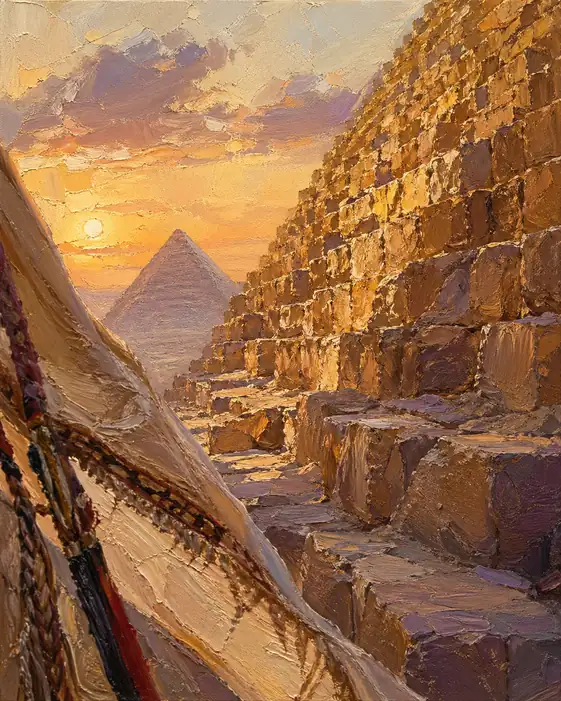 A Prayer Carved in the Sands of Time
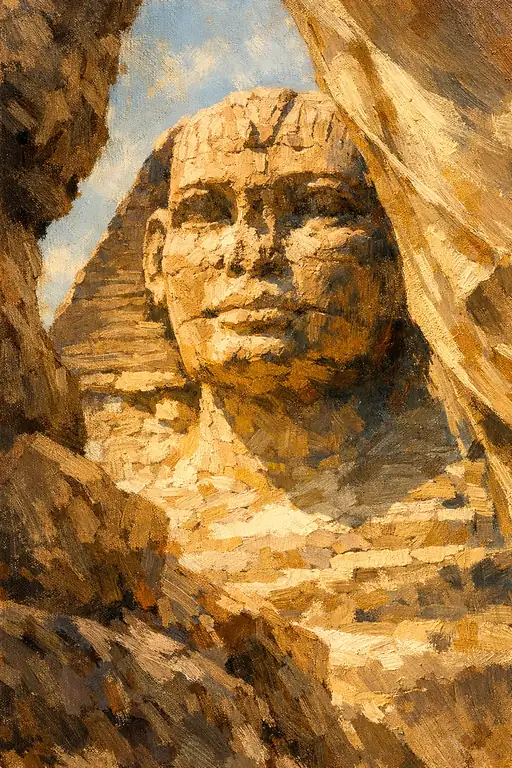 The Weathered Gaze of the Great Sphinx
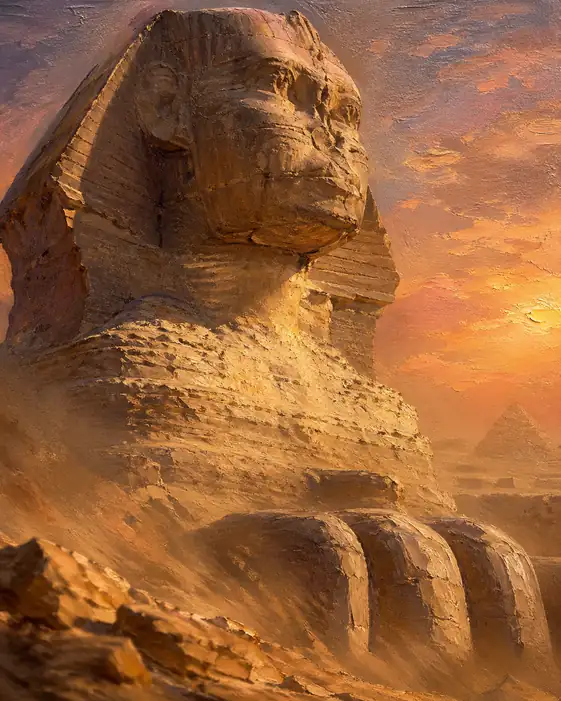 The Sun-Kissed Gaze of Infinity
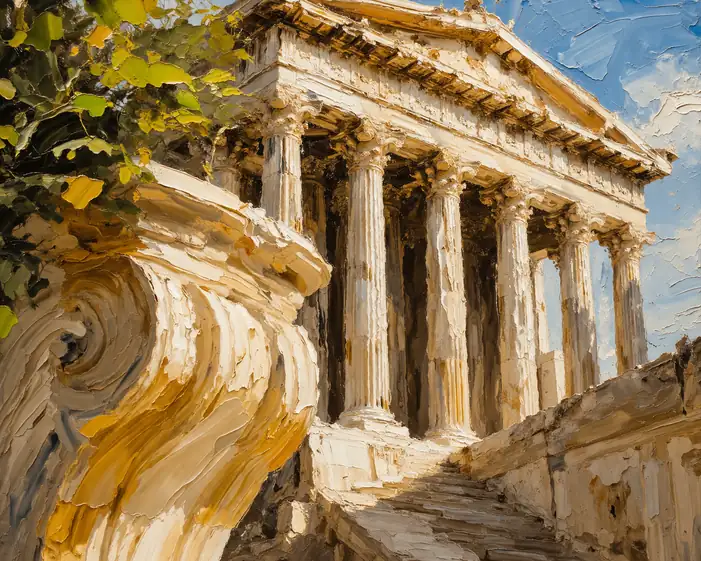 Echoes of the Ancient Sun
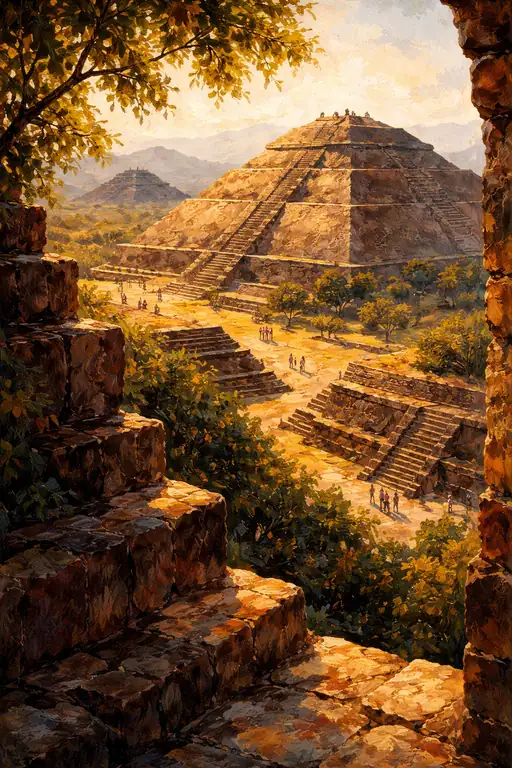 Echoes of the Sun: Steps of the Ancients
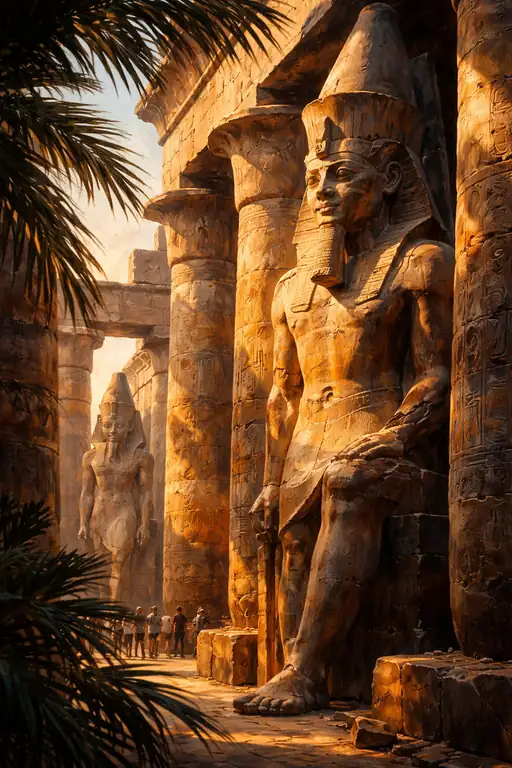 Sunlit Shadows Among the Monumental Pharoahs
 Serenade to the Golden Arcadia