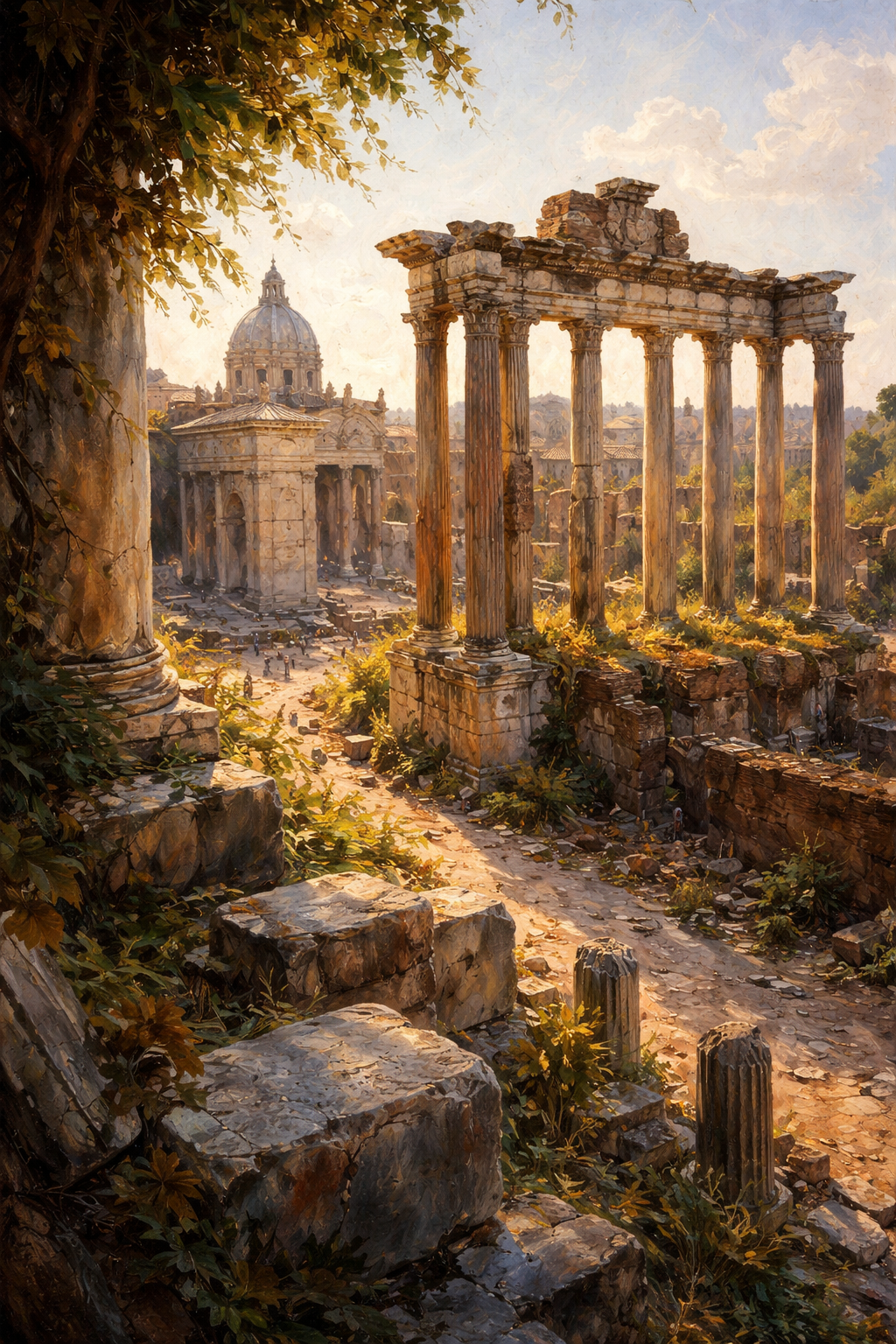
Whispers of the Eternal City's Dawn
Critique
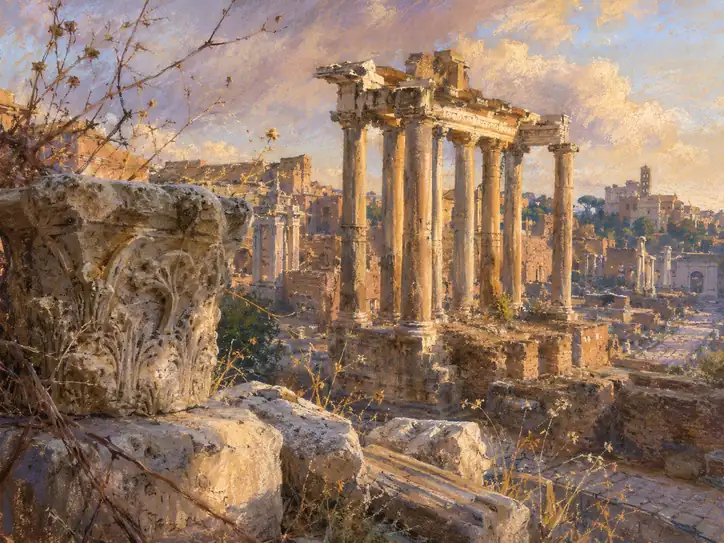
1. Introduction This painting offers a panoramic and deeply evocative view of the Roman Forum, masterfully juxtaposing the skeletal remains of the ancient Temple of Saturn with the distant, crowning dome of St. Peter's Basilica. The work acts as a visual timeline, capturing the multilayered history of Rome through a lens of romanticized classicism. By employing a sophisticated aerial perspective and a warm, golden palette, the artist creates a sense of profound stillness and historical gravity. 2. Description The composition is structured around the remnants of the Temple of Saturn, whose weathered columns stand as resilient witnesses to the past. In the foreground, shattered marble blocks and broken column drums are scattered amidst wild vegetation, suggesting the relentless force of nature reclaiming human artifice. A path leads the eye through these ruins toward the middle ground, where the temple’s architrave is still partially intact. In the far distance, the soft silhouette of the Vatican dome rises above the urban haze, symbolizing the city's transformation from a pagan empire to a Christian center. 3. Analysis The artist’s use of light is particularly effective in defining the spatial depth of the scene. The sun, positioned high in the sky, casts long, raking shadows that highlight the fluting of the columns and the rugged surface of the fallen stones. The palette is dominated by earthy tones—burnt sienna, ochre, and olive green—which harmonize the architectural elements with the natural surroundings. The sky is a delicate wash of pale blue and cream, suggesting the hazy warmth of a Roman afternoon. 4. Interpretation and Evaluation The work can be interpreted as a meditation on the cyclical nature of power and the endurance of culture. The contrast between the ruined ancient forum and the intact Renaissance basilica reflects the ongoing dialogue between different eras of Roman history. The inclusion of small, blurred figures walking among the ruins emphasizes that these sites are not just static monuments, but living spaces where people continue to seek connection with the past. It is a scene that evokes both melancholy for what has been lost and admiration for what remains. 5. Conclusion In conclusion, this painting is a significant contribution to the tradition of Roman ruins imagery. The artist’s ability to balance architectural accuracy with a poetic atmosphere demonstrates a high level of technical and conceptual maturity. By capturing this specific convergence of ancient and early modern landmarks, the work provides a powerful visual summary of Rome's enduring identity as the "Eternal City." It remains a compelling exploration of the relationship between time, memory, and the built environment.
Same Subcategory
Similar Artworks
 The Silence of Shattered Grandeur
 Where Time Rests Its Weary Head
 Golden Echoes of Empire
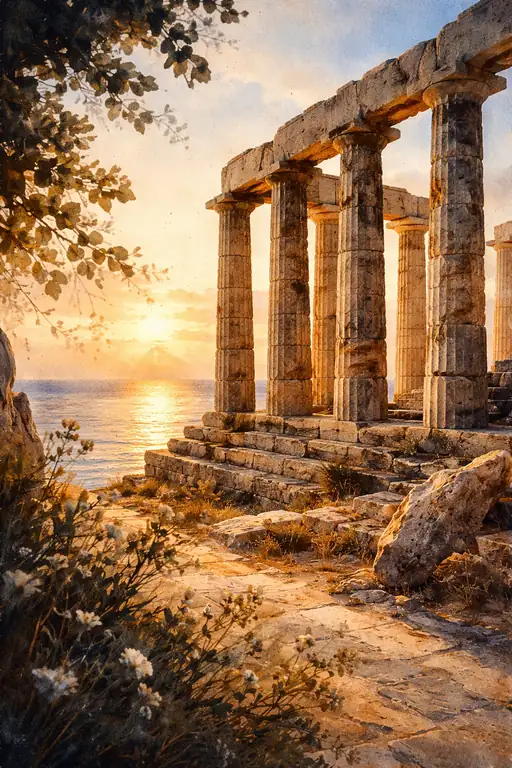 Golden Sun on Ancient Pillars
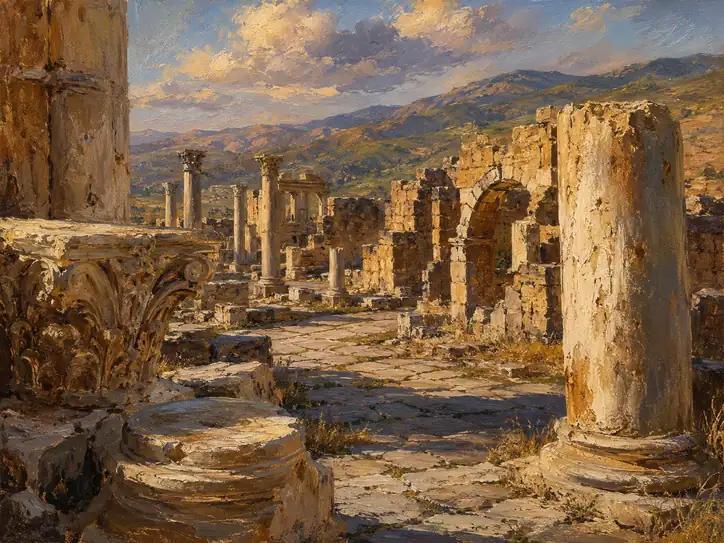 Where Glory Rests in Gold
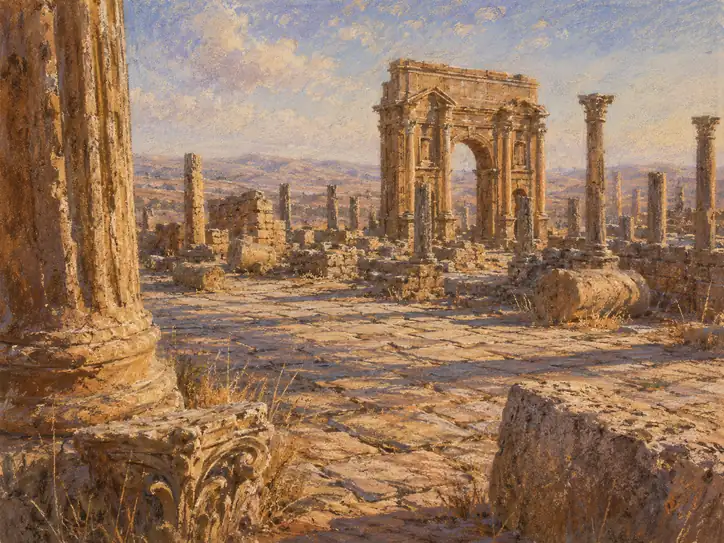 The Silent Dignity of Time
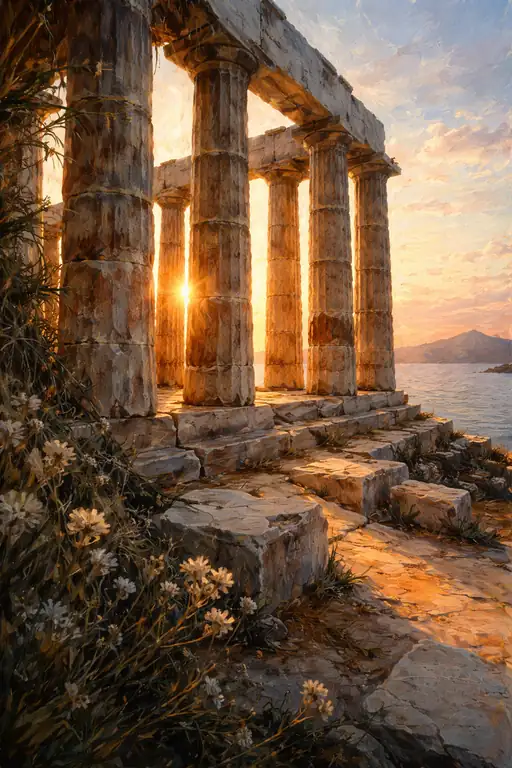 Echoes in Stone: A Sunlit Requiem
 The Ancient Stage's Whisper: A Timeless Romance Overlooking the Sea
 Whispers of the Golden Forum
 Taormina: The Golden Stage of Antiquity