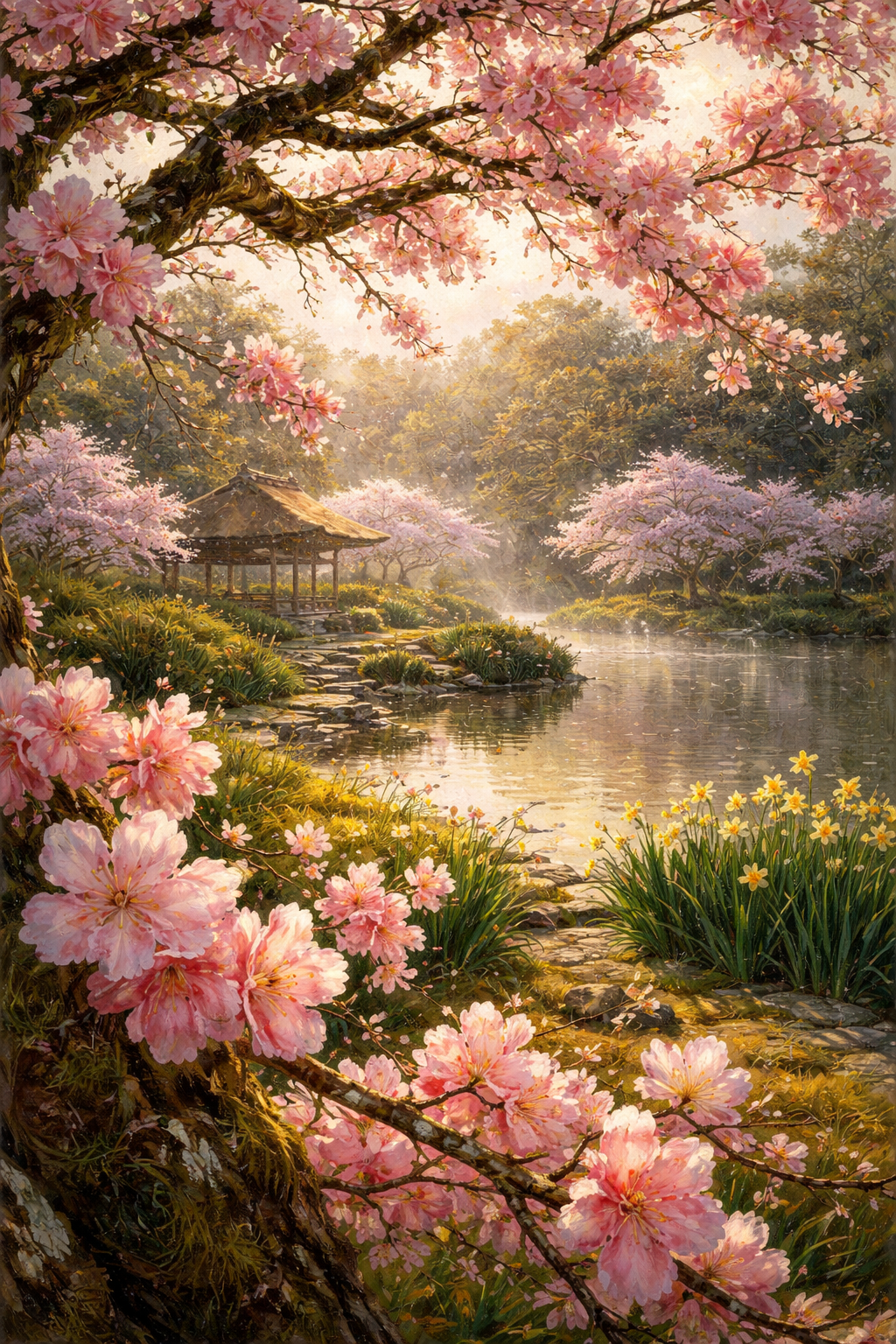
A Golden Sanctuary of Spring
Critique
1. Introduction This painting depicts a classic Japanese garden during the height of the cherry blossom season. The artwork features a serene pond, a traditional thatched-roof pavilion, and a wealth of seasonal flora, all bathed in a warm, golden light. By employing a dense, floral frame in the foreground, the artist creates an immersive experience that celebrates the fleeting beauty of spring. The overall atmosphere is one of profound tranquility and poetic nostalgia. 2. Description The foreground is dominated by large, pink cherry blossoms that branch inward from the left and top edges. To the lower right, a cluster of bright yellow daffodils grows among lush green blades of grass. In the middle ground, a calm pond reflects the surrounding trees and the hazy, luminous sky. A traditional wooden pavilion with a thatched roof sits on the far bank, surrounded by more flowering trees that fade into a soft, sunlit forest in the background. 3. Analysis The artist uses a rich, impasto-like technique to give the cherry blossoms a tangible, three-dimensional quality. The color palette is centered on warm pinks, soft yellows, and earthy browns, which are unified by the pervasive golden-hour light filtering through the canopy. The composition follows a diagonal path from the foreground flowers toward the pavilion, creating a sense of invitation into the garden. Light is handled masterfully, creating a shimmering effect on the water and a soft glow on the petals. 4. Interpretation and Evaluation This work explores the concept of "mono no aware," or the bittersweet awareness of the impermanence of things, through the depiction of blooming flowers. The contrast between the fragile blossoms and the sturdy, traditional architecture suggests a harmony between nature and human craftsmanship. Technically, the artist demonstrates exceptional skill in managing complex layers of foliage and light. The composition is highly effective in its use of color to evoke a specific emotional response of peace and wonder. 5. Conclusion Upon initial viewing, the abundance of pink blossoms is striking, but further observation reveals the subtle interplay of light and shadow across the garden. The painting successfully captures a quintessentially Japanese aesthetic through a sophisticated use of texture and warm tonality. By focusing on the sensory experience of a spring morning, the artist has created a work that is both visually rich and emotionally resonant. It is a remarkable portrayal of a idealized natural sanctuary.
Same Subcategory
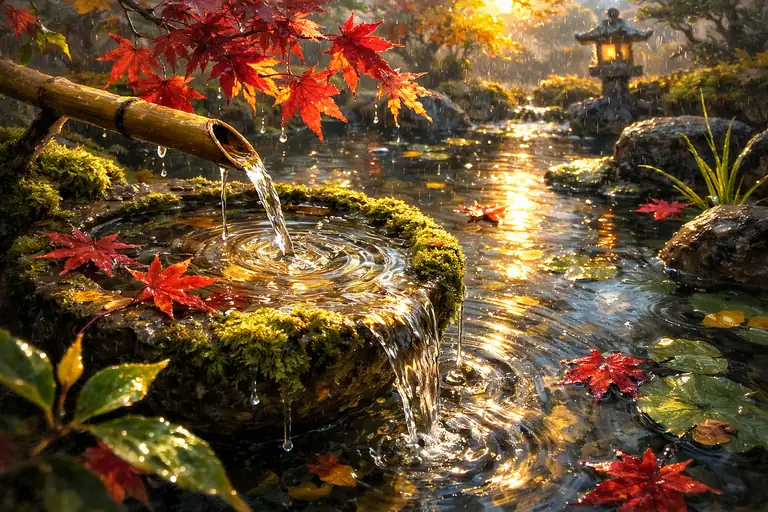 Golden Echoes in the Zen Garden
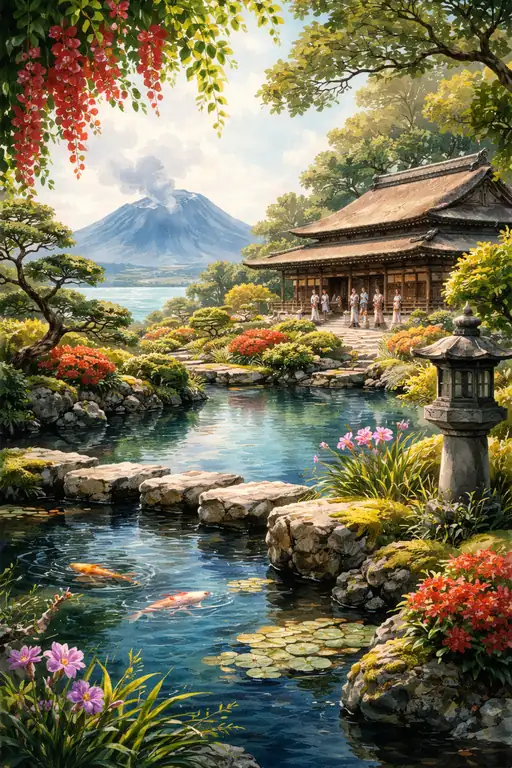 Echoes of Eternity: The Garden and the Volcano
Similar Artworks
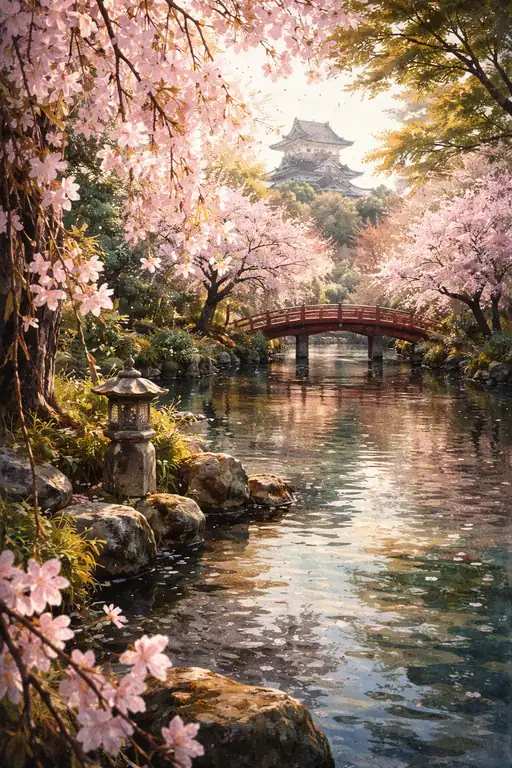 Echoes of Spring by the Crimson Bridge
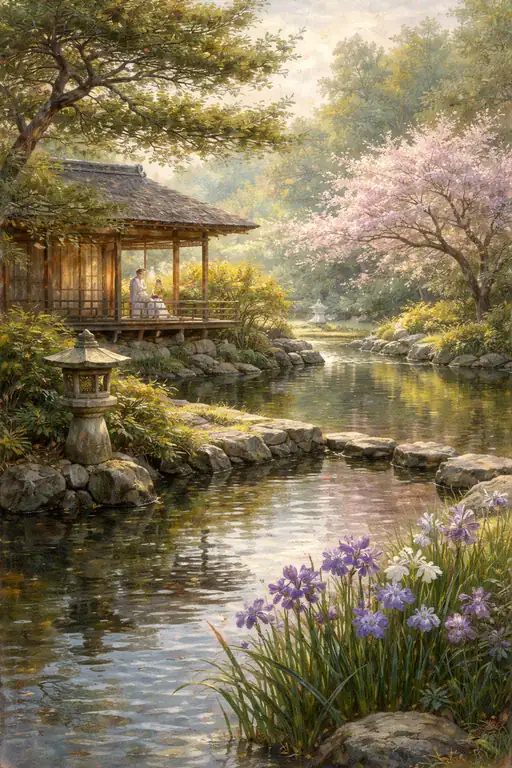 Sighs of the Sunlit Moss
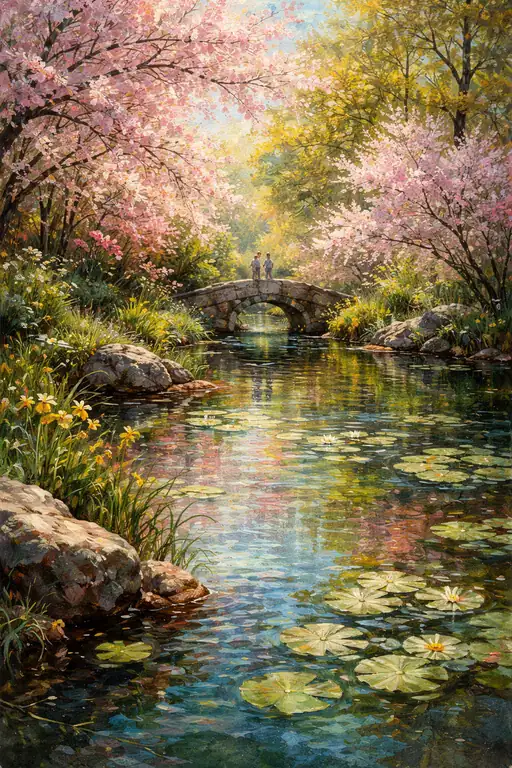 Fugitive Light on the Meadow
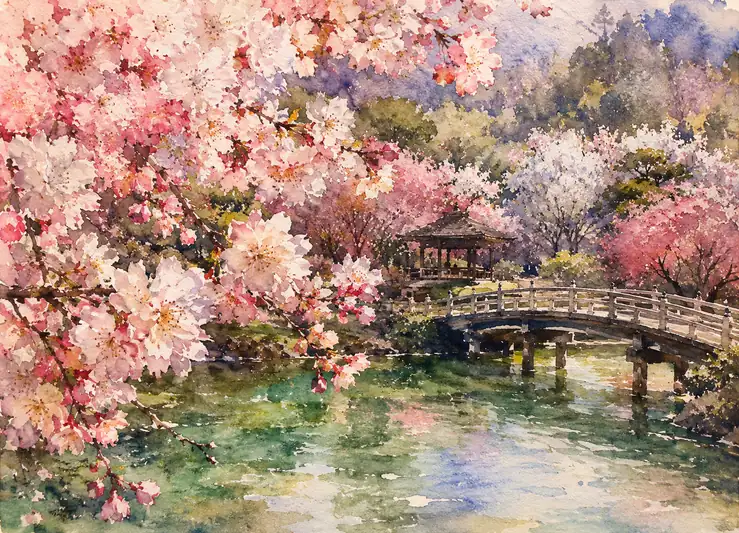 The Waltz of Sakura and Stone
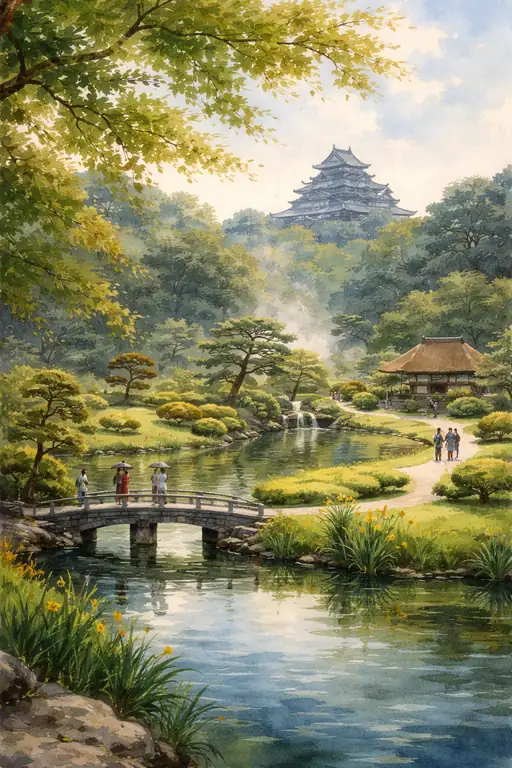 Serenity Under the Castle's Watch
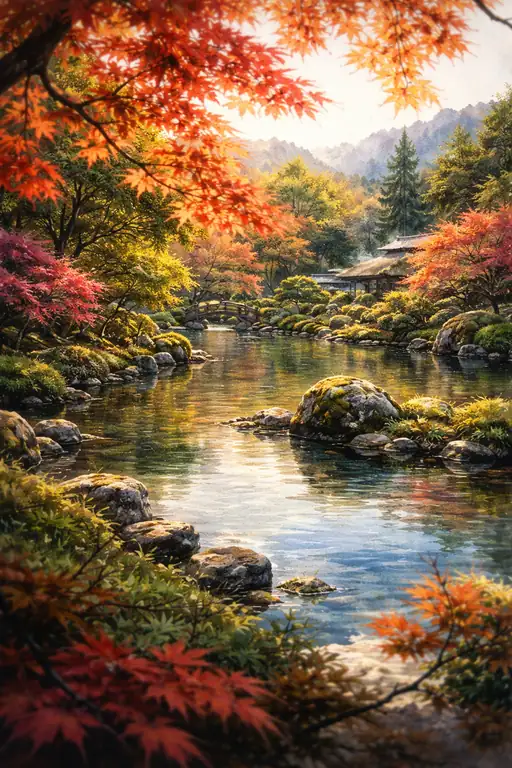 Autumn's Embrace at the Still Water
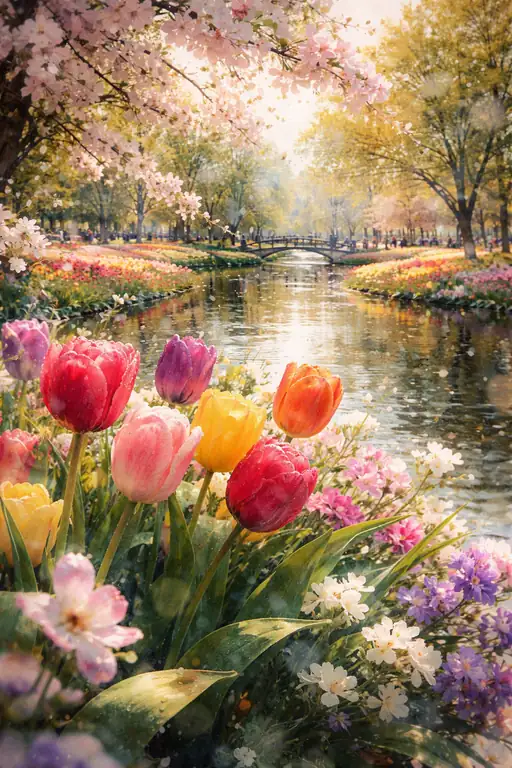 Symphony of Spring
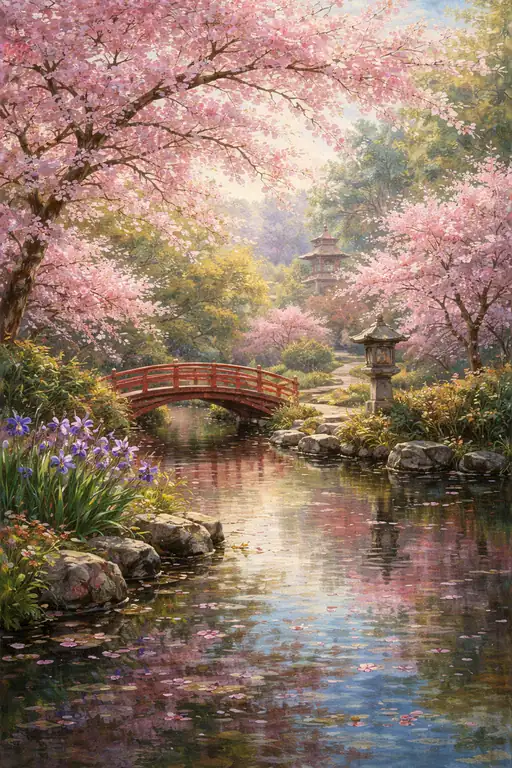 Tranquility in the Zen Garden
 Where the Spring Breeze Lingers
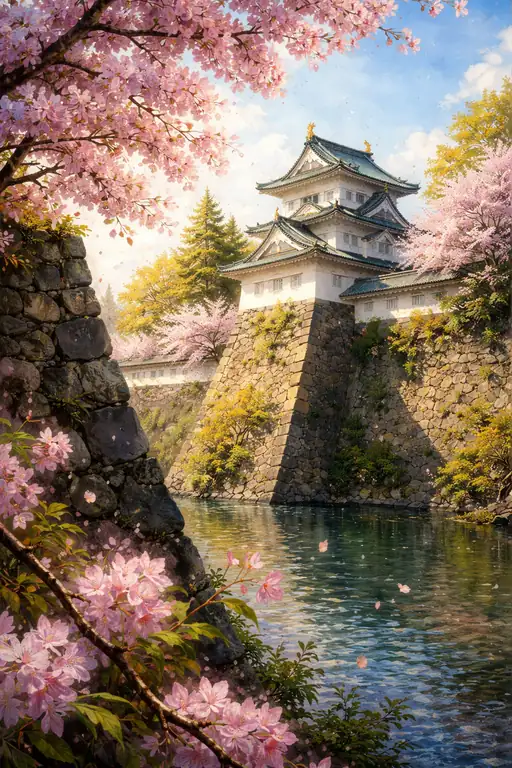 The Silver Castle and Blossoms Unfolding on the Water