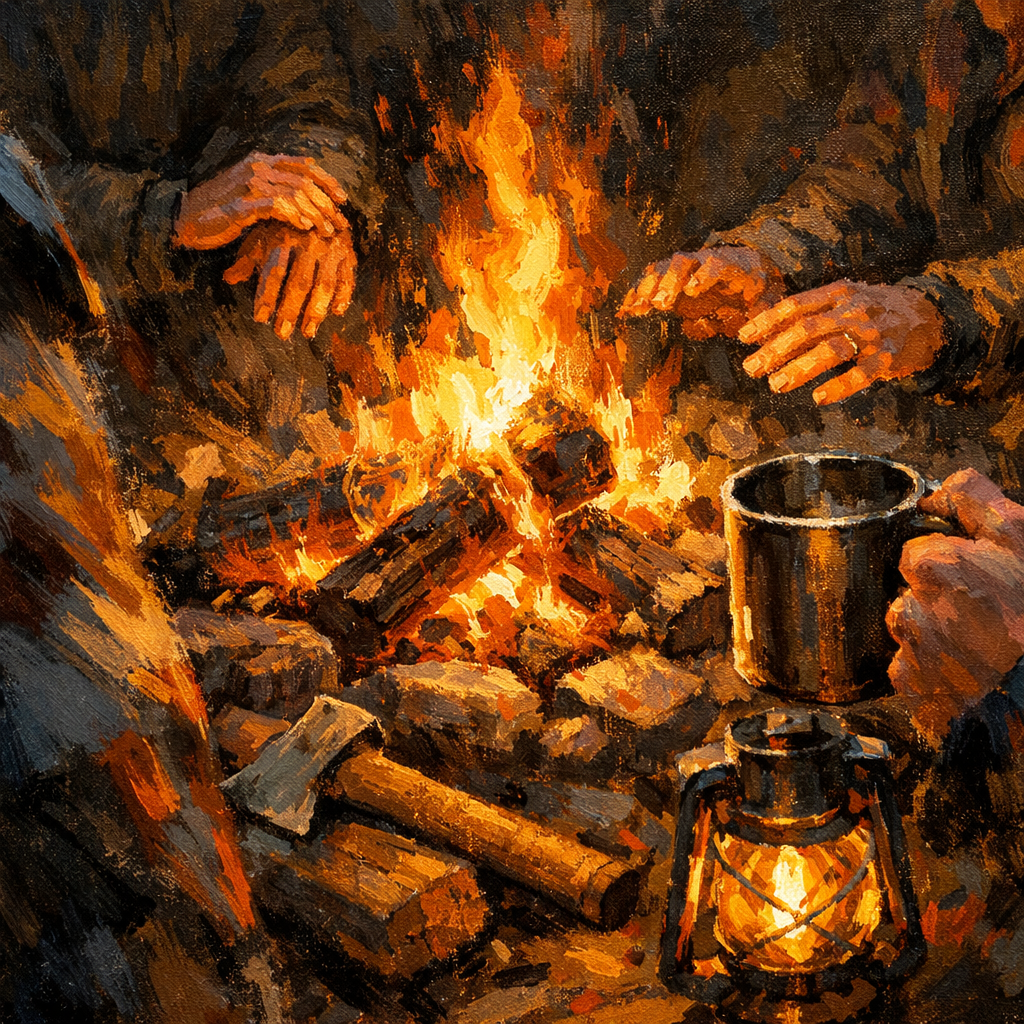
Embers of Belonging in the Wild
Critique
This vibrant impasto painting captures the primal and communal warmth of a campfire, focusing on the intimate human experience of sharing heat and light. The expressive brushwork and high-contrast lighting create a visceral sense of energy and atmosphere, drawing the viewer into the close-knit circle. At the center of the composition, a vigorous fire blazes atop charred logs, its flames reaching upward in bold strokes of orange, yellow, and white. Several pairs of weathered hands are depicted in the surrounding shadows, reaching toward the heat in a universal gesture of comfort. In the foreground, a sturdy axe and a glowing lantern lie on the uneven ground, while a hand holds a dark metal mug, catching the flickering reflections of the fire. The artist employs thick, tactile brushstrokes to build up the forms, giving the work a sculptural quality that mirrors the raw nature of the subject. The lighting is intensely localized, with the fire acting as the primary light source that carves the shapes of the hands and objects out of the deep, dark background. The color palette is restricted but highly effective, using a range of fiery tones against cool, dark grays and browns to enhance the sense of warmth. The work celebrates the fundamental connection between humanity and fire, symbolizing survival, community, and the shared stories of a wilderness life. The focus on hands rather than faces suggests a collective identity, emphasizing the shared physical sensation of warmth over individual personality. It evokes a sense of timelessness, as if this scene could belong to any era of human history. Overall, the painting is a powerful and evocative study of light and texture. Its energetic execution and focused composition successfully convey the sensory experience of a campfire's heat. The piece stands as a compelling example of how a traditional subject can be rendered with modern expressive vigor to create a profound emotional impact.
Same Subcategory
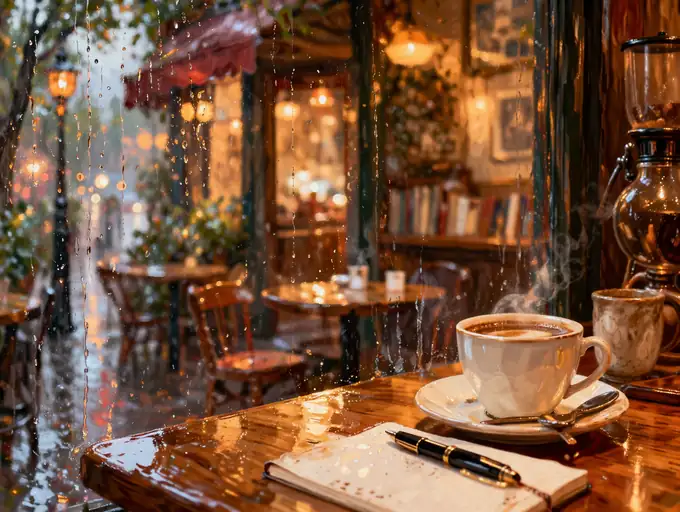 Melancholy Tears on the Cafe Window
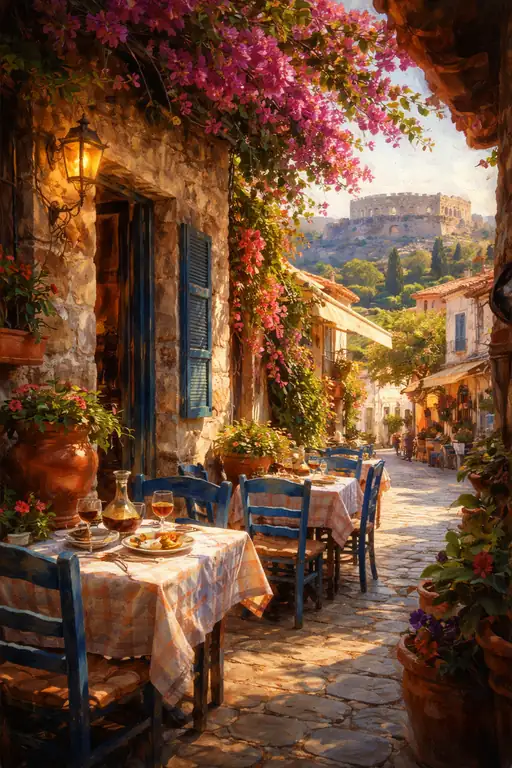 Sunlit Shadows in the Greek Alley
Similar Artworks
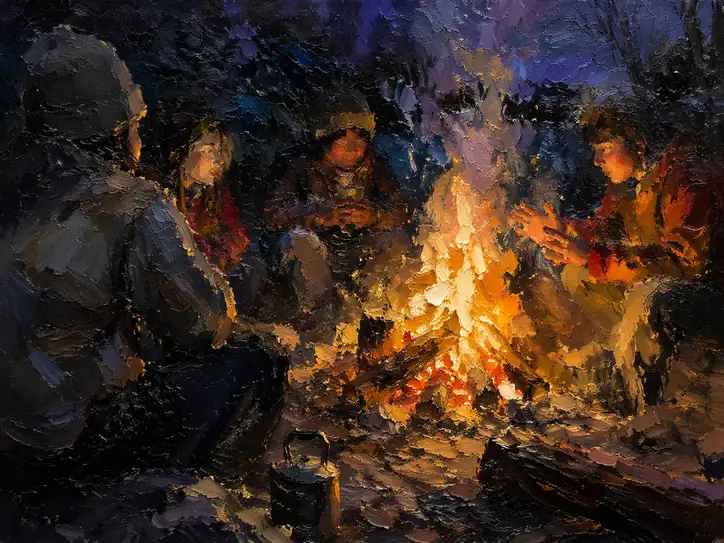 The Hearth in the Deep
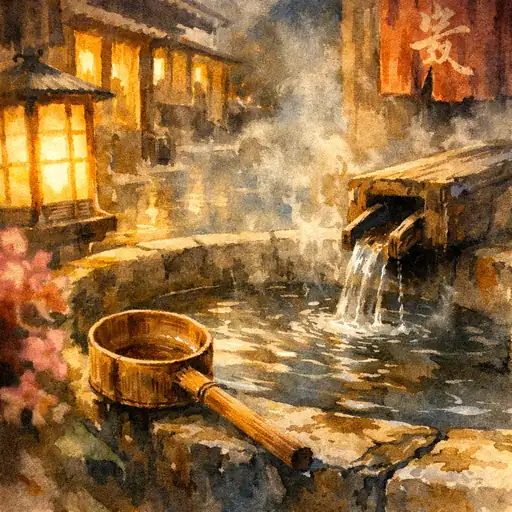 Solace in the Steaming Waters
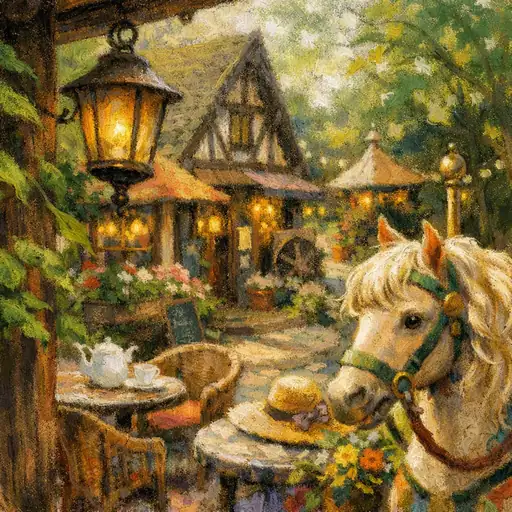 A Warm Afternoon's Reverie
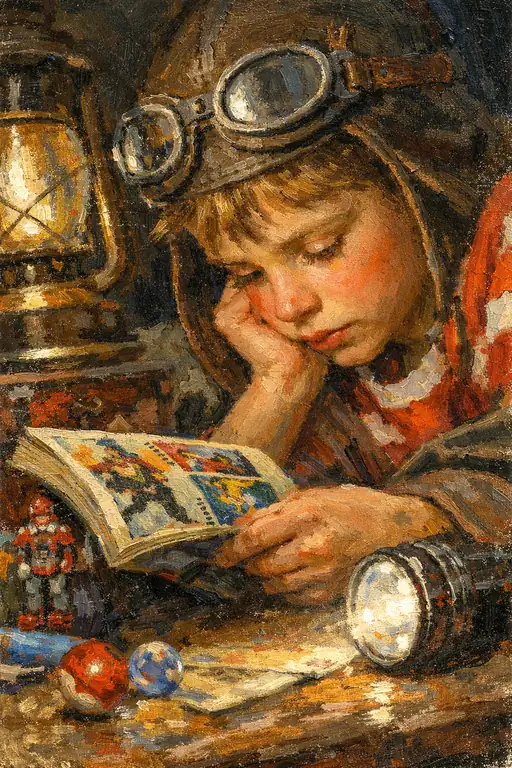 Midnight Flight of Fancy
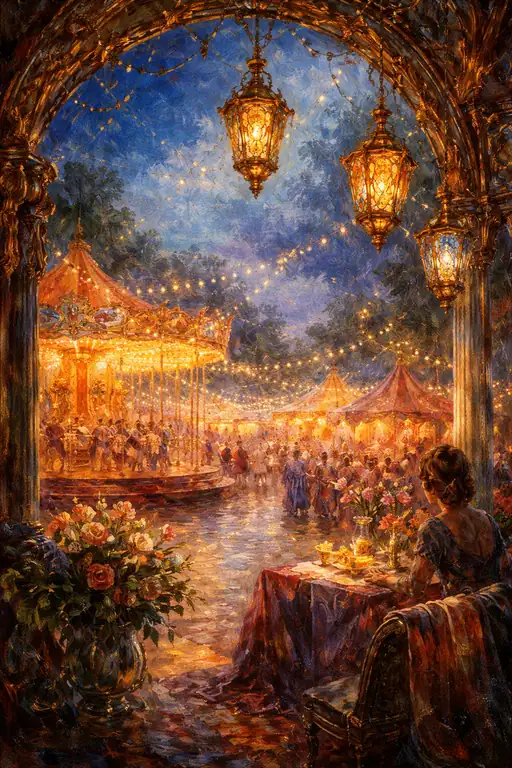 A Golden Reverie Beyond the Archway
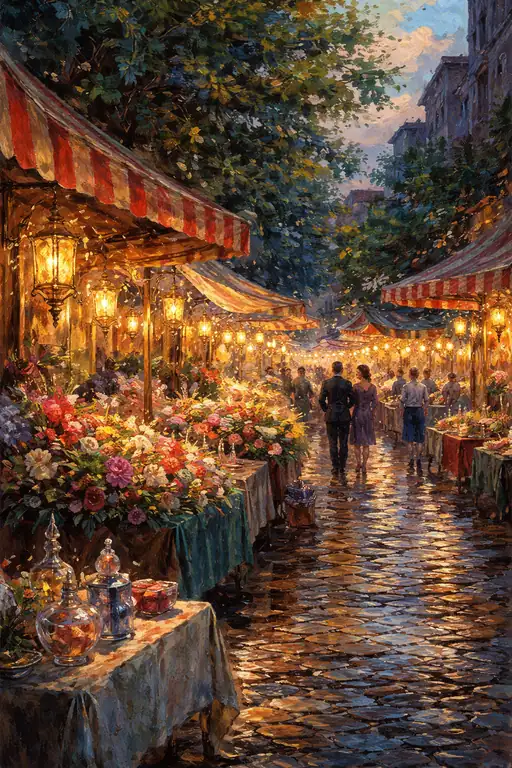 Golden Embers of the Midnight Market
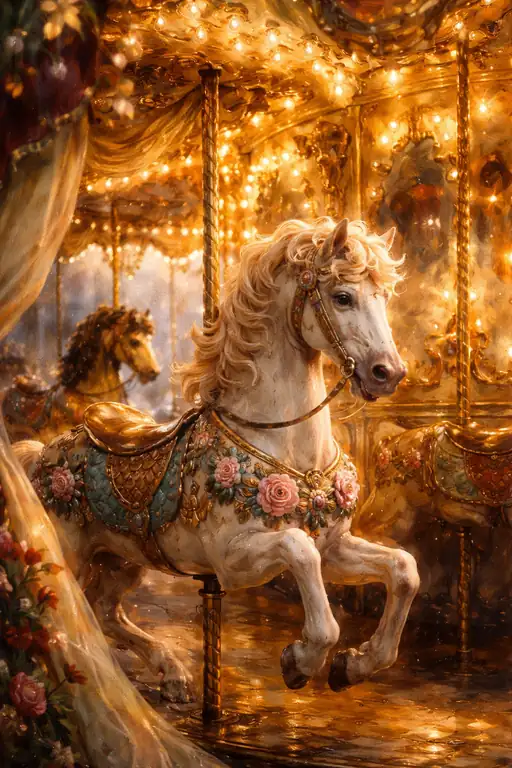 Carousel Mirage: The Gilded Gallop
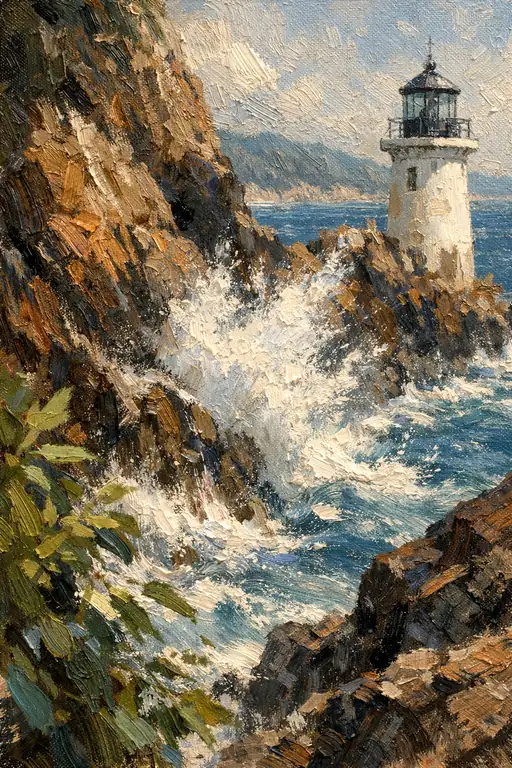 Elongated Echoes: The Silent Rhythm of Shadows on Pavement
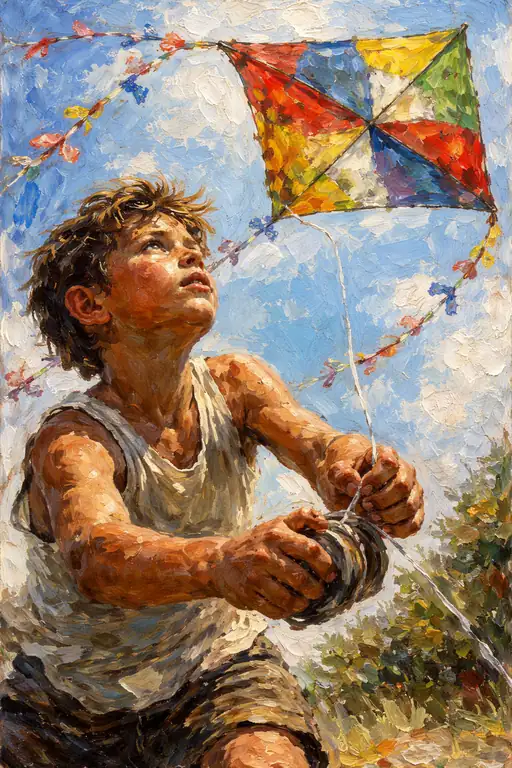 A Colorful Dream Soaring in the Wind
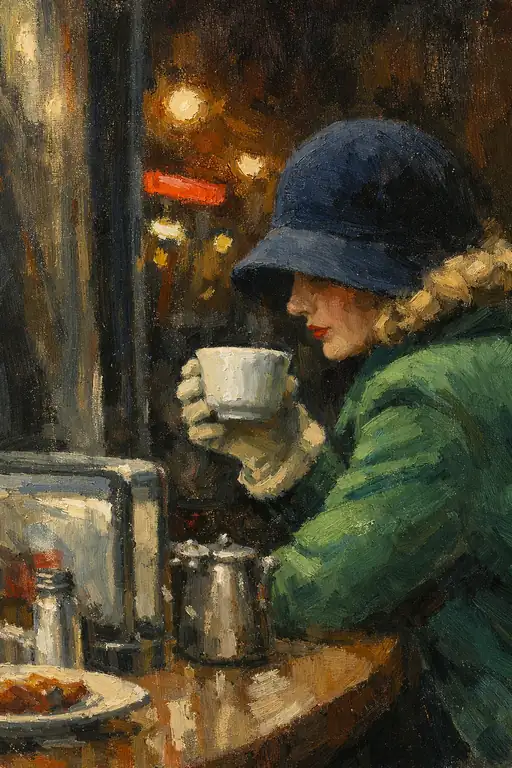 The Warmth of Midnight Solitude