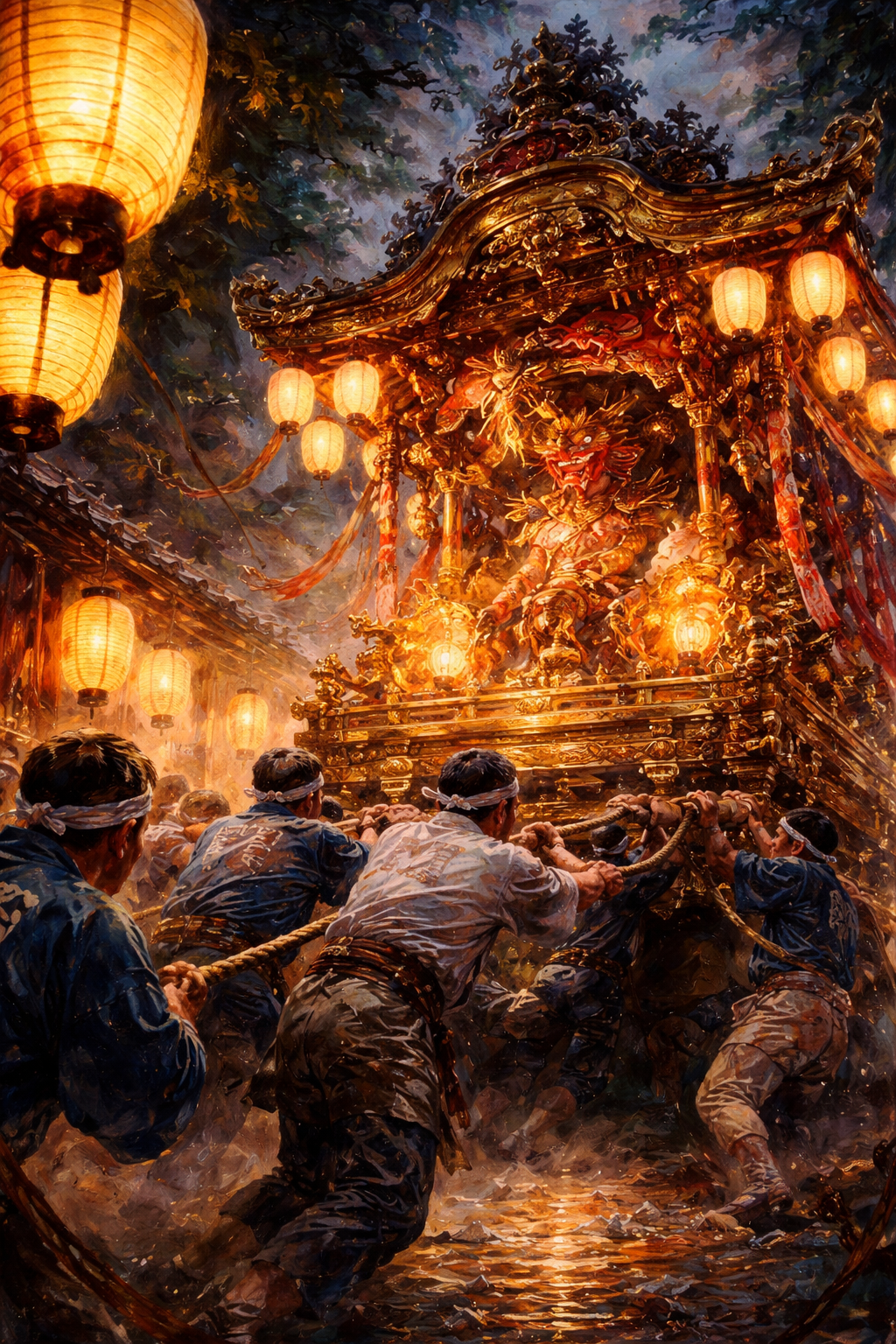
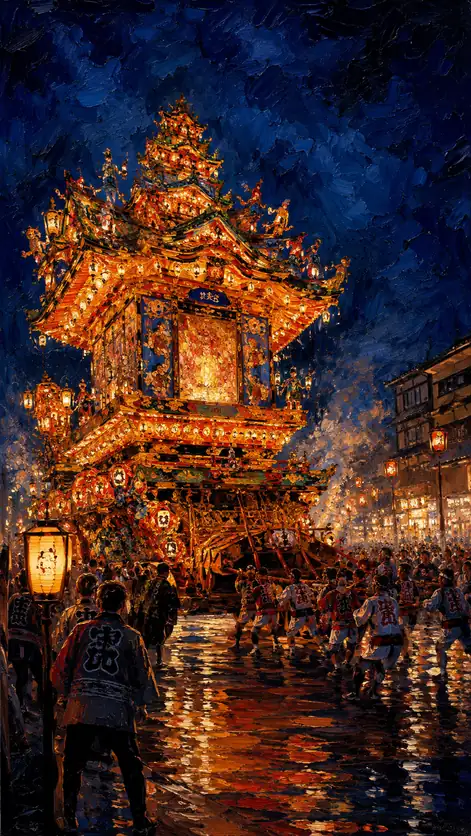
Golden Pulse of the Night Festival
Critique
1. Introduction The artwork captures a high-energy scene from a traditional Japanese festival, featuring a group of men pulling an elaborately decorated golden float through the streets at night. This painting embodies the spirit of communal effort, religious devotion, and cultural heritage. The composition focuses on the physical intensity of the participants as they navigate the massive, glowing structure through a dark, lantern-lit environment. It serves as a powerful portrayal of the vitality and ritualistic significance of regional Japanese celebrations. 2. Description In the foreground, several men clad in traditional blue and white festival coats and headbands are shown from behind, leaning forward with immense physical exertion as they pull thick ropes. Above them, a monumental float shines brilliantly with gold leaf and intricate carvings, housing a central figure that appears to be a red-faced deity or mythical character. The scene is illuminated by numerous glowing paper lanterns hanging from the float and along the surrounding buildings. The ground reflects the golden light, while the upper background is filled with the dark silhouettes of trees and architectural details. 3. Analysis The artist utilizes a dynamic and expressive brushwork to convey the sense of motion and the raw energy of the festival. There is a dramatic contrast between the brilliant, almost blinding gold of the float and the deep, atmospheric shadows of the night. The composition is built on powerful diagonal lines formed by the leaning bodies of the men and the tension of the ropes, which guide the viewer's eye toward the central deity. The color palette is dominated by intense yellows and oranges, balanced by the cool blues of the men's clothing and the dark surroundings. 4. Interpretation and Evaluation This work successfully translates the multisensory experience of a Japanese festival into a compelling visual narrative. The technical skill is evident in the handling of the reflective golden surfaces and the convincing depiction of physical strain in the human figures. By choosing a low, rear perspective, the artist places the viewer directly into the action, emphasizing the collective power of the participants. The painting celebrates the endurance of cultural traditions and the profound sense of unity found in shared rituals. It is a masterful study of light, movement, and cultural identity. 5. Conclusion While the initial impression is one of chaotic energy and brilliant light, a closer look reveals a carefully orchestrated balance between human effort and divine splendor. The artwork elevates the spectacle of the festival into a significant exploration of human willpower and spiritual connection. Ultimately, it leaves the viewer with a deep respect for the physical and emotional commitment required to sustain such vibrant traditions. This piece is a highly accomplished example of how modern painting can capture the essence of ancient cultural practices.
Same Subcategory
 A Joyous Feast Under the Sun
 The Eternal Vow in Sacred Light
Similar Artworks
 Joyful Whirl of the Shan-Shan Umbrellas
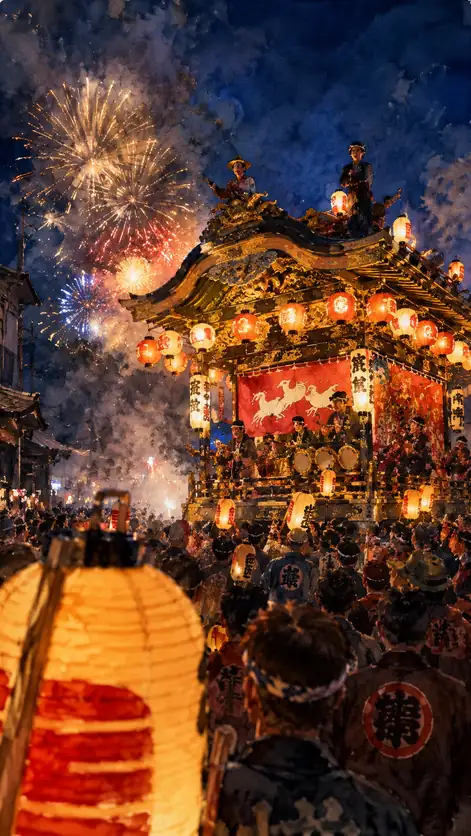 Lanterns Rise with the Festival Heart
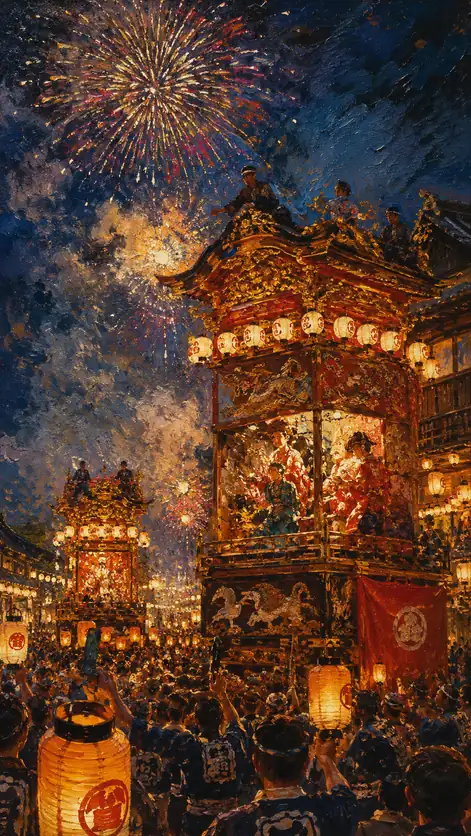 Fireworks Crown the Lantern City
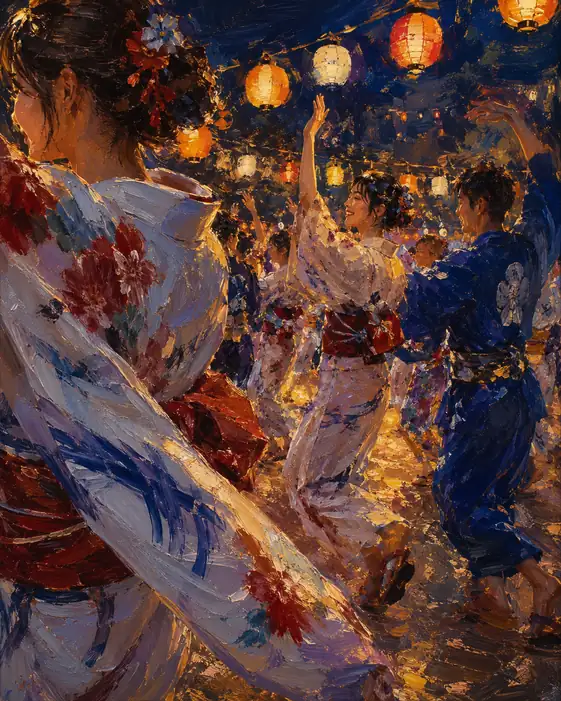 The Pulse of the Summer Night
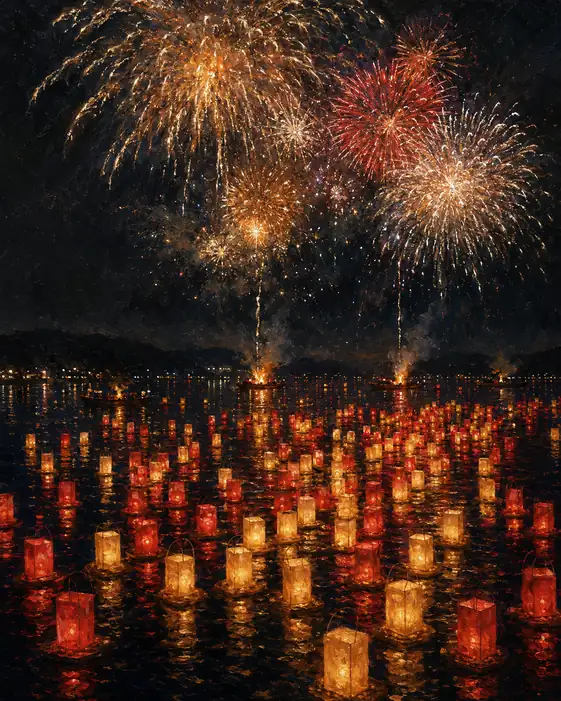 Golden Canopy Over Lake Lanterns
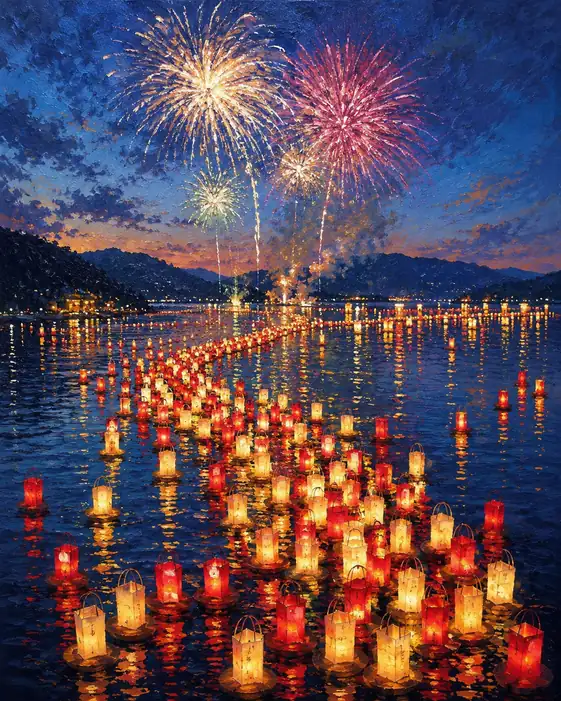 River of Lanterns and Summer Fireworks
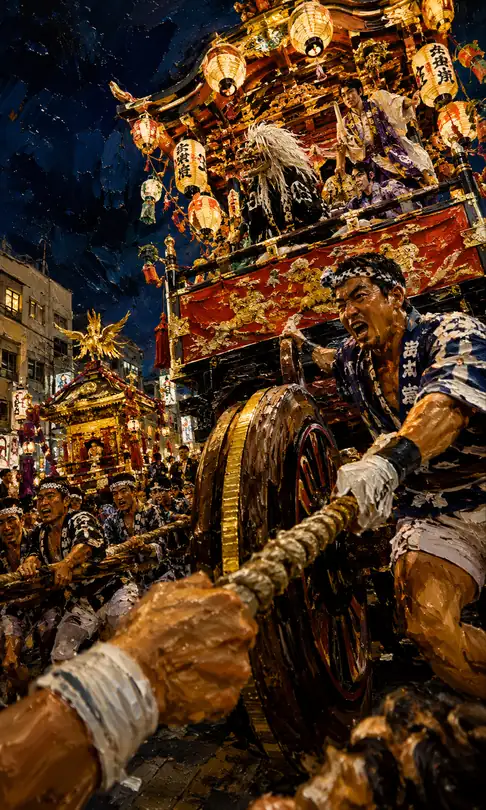 Passionate Cries of Men Pulling the Vermilion and Gold Float
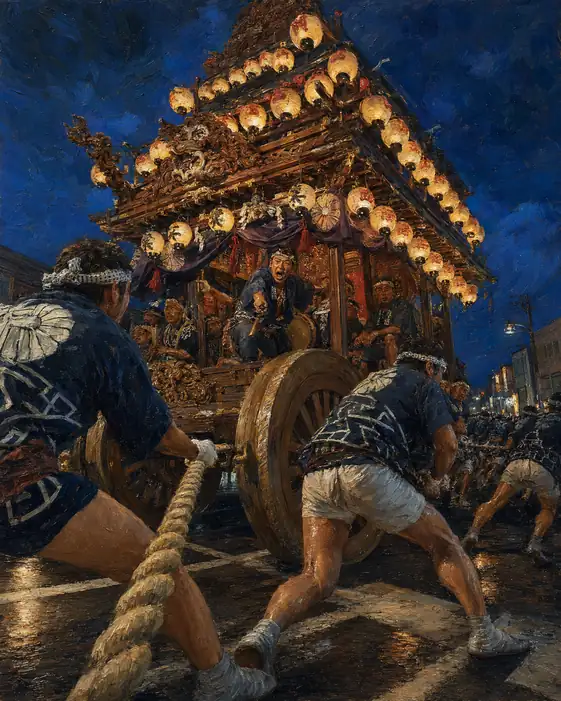 Warm Luminescence Rising in Darkness (No. 18)
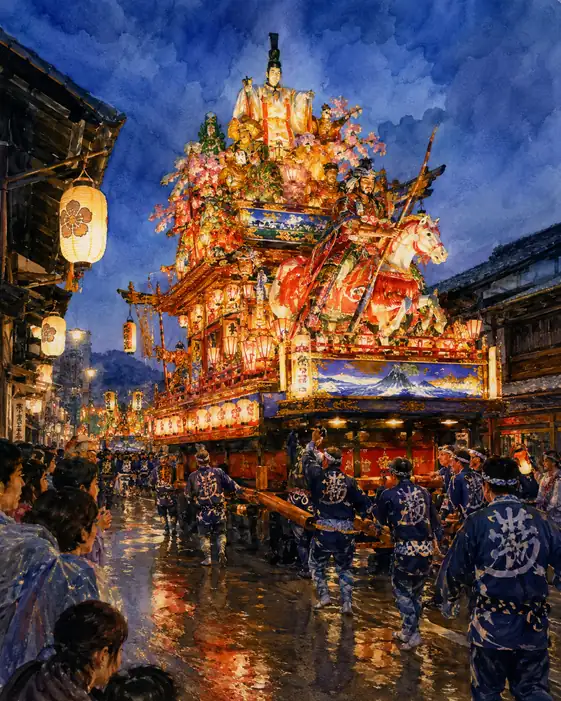 The City Blooms into a Festival
 The Night Carries a Palace of Fire