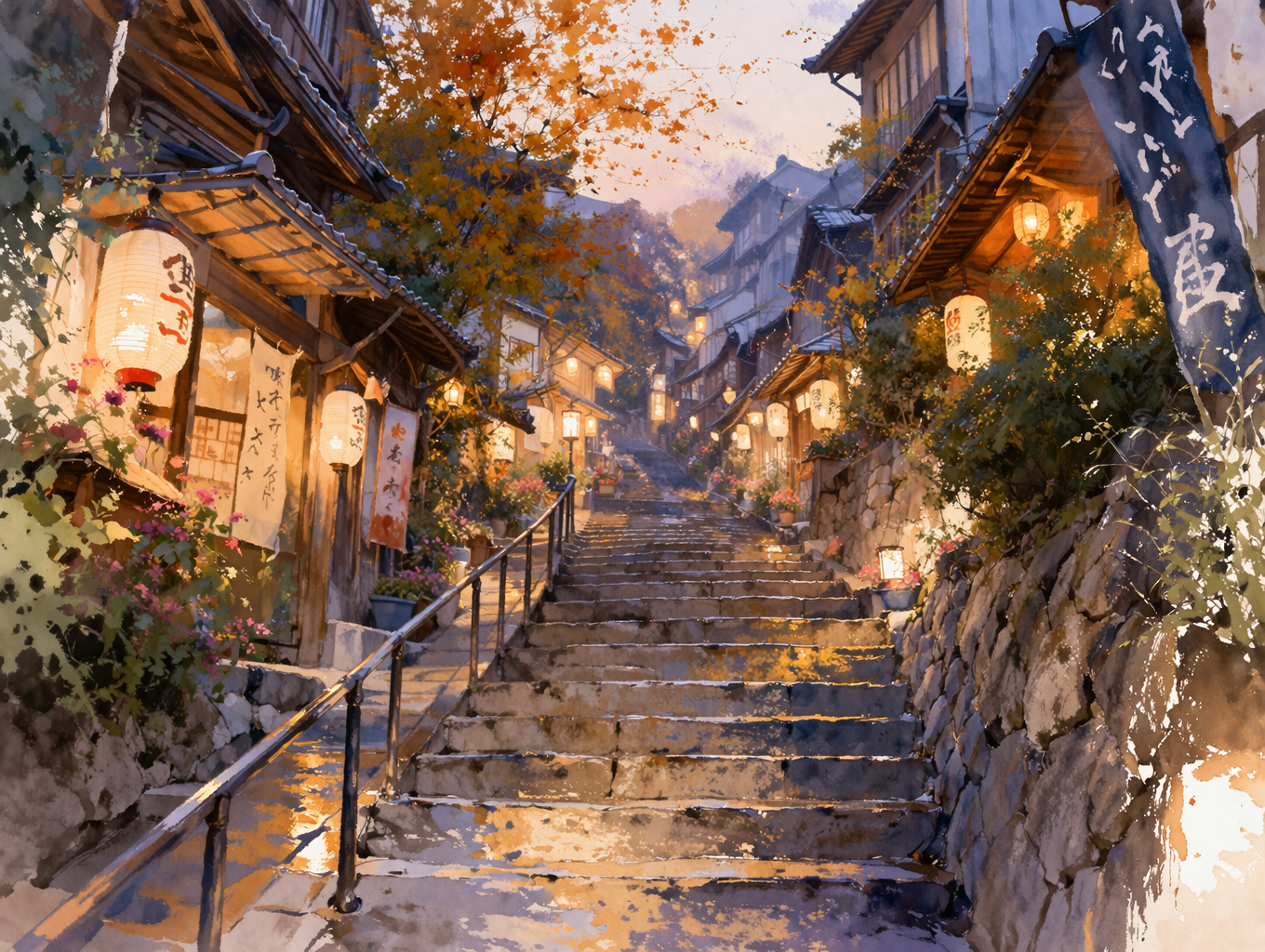
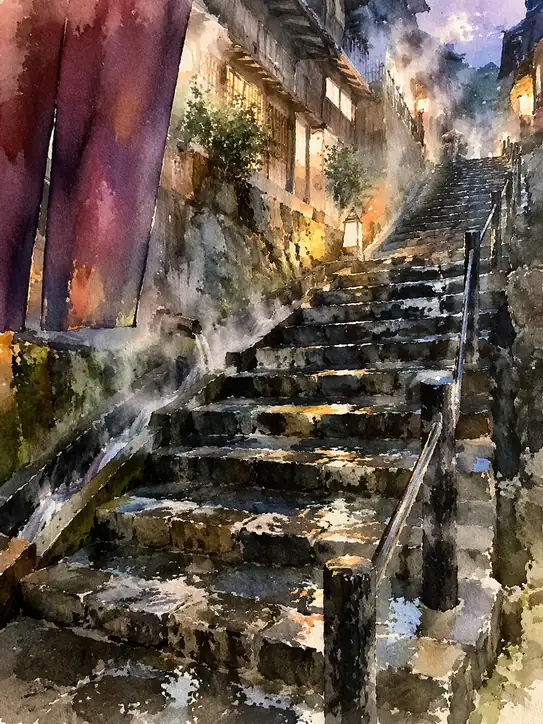
Nostalgic Dusk on the Stone Steps
Critique
1. Introduction This painting depicts a nostalgic and atmospheric Japanese townscape at dusk, rendered in a style that blends watercolor delicate textures with strong compositional elements. The work captures a serene moment in a traditional setting, where man-made structures and natural beauty coexist harmoniously. By focusing on a steep stone staircase flanked by historic buildings, the artist invites the viewer on a visual journey through time and space. It serves as a poetic exploration of cultural heritage and seasonal change. 2. Description The focal point of the composition is a long, ascending stone staircase that leads the eye toward the center of the image. On either side, traditional wooden buildings with tiled roofs are adorned with glowing paper lanterns and shop banners. The warm light from the lanterns spills onto the uneven surfaces of the stone steps, creating highlights and shadows. Autumnal foliage in shades of orange and yellow peeks through the gaps between buildings, while soft pink flowers add a touch of color to the foreground. The sky is a pale, fading hue, suggesting the transition from late afternoon to evening. 3. Analysis The artist utilizes a strong one-point perspective, which creates a deep sense of spatial recession and pulls the viewer upward into the scene. The color palette is dominated by warm ochre, sienna, and golden tones, which are effectively contrasted by the cool grays of the stone and the dark indigo of the banners. Lighting is the key expressive element, with the lanterns serving as localized light sources that imbue the scene with a cozy, inviting glow. The brushwork is loose and fluid, characteristic of watercolor techniques, allowing colors to bleed into one another and creating a dreamlike quality. 4. Interpretation and Evaluation This work successfully evokes a sense of "nostalgia for a place never visited," a common theme in depictions of traditional Japan. The technical execution of the light reflecting on the stone steps is particularly noteworthy, demonstrating a keen observation of how artificial light interacts with textured surfaces. The balance between the detailed architecture and the more impressionistic rendering of the foliage creates a dynamic visual rhythm. Evaluation of the piece reveals a masterful control of mood, where the silence of the evening is palpable through the absence of human figures. 5. Conclusion Initially, the viewer is drawn to the warm, inviting light of the lanterns, but the true depth of the piece lies in its complex spatial arrangement. The journey up the stairs symbolizes a transition from the mundane to a more contemplative state of mind. The painting stands as a beautiful tribute to traditional aesthetics and the enduring charm of historical architecture. Ultimately, it provides a quiet and deeply resonant viewing experience that celebrates the tranquility of a town settling into the night.
Same Subcategory
Similar Artworks
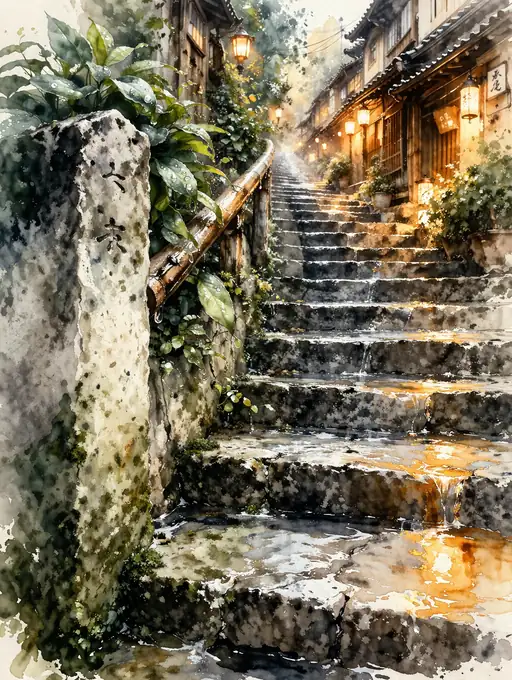 Reflections on the Wet Stone Path
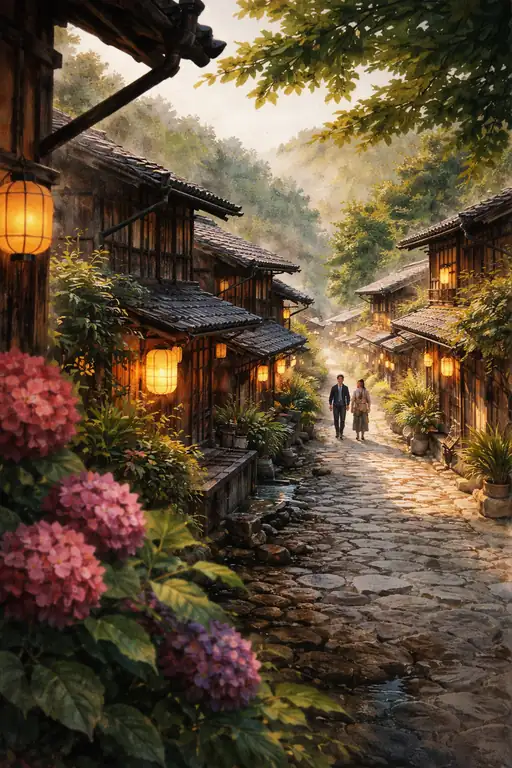 Lanterns' Glow on the Misty Trail
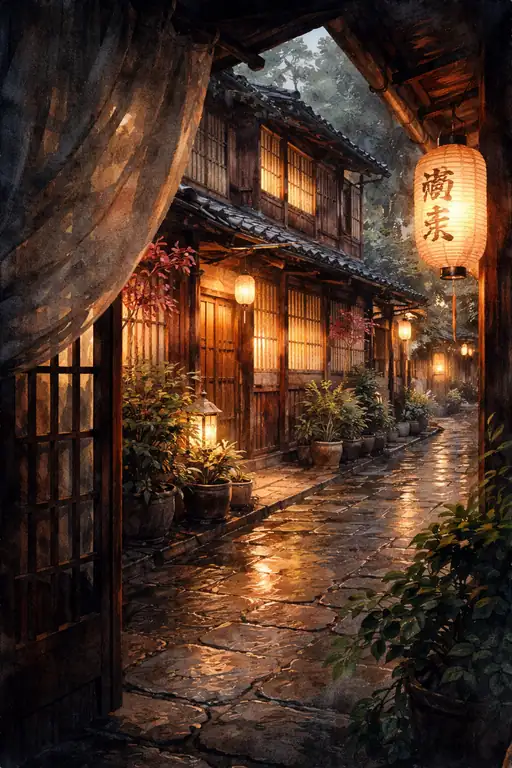 The Lantern's Reflection: A Rainy Night in Kyoto
 Gliding Through the Golden Tapestry: A Serenade on the Grand Canal
 Autumn's Embrace
 Dusk Settles on the Stone Steps
 The Festive Glow of the Tiered Village
 Reflections of the Silent Ryokan
 Echoes in the Autumn Mist
 Path of the Crimson Leaves