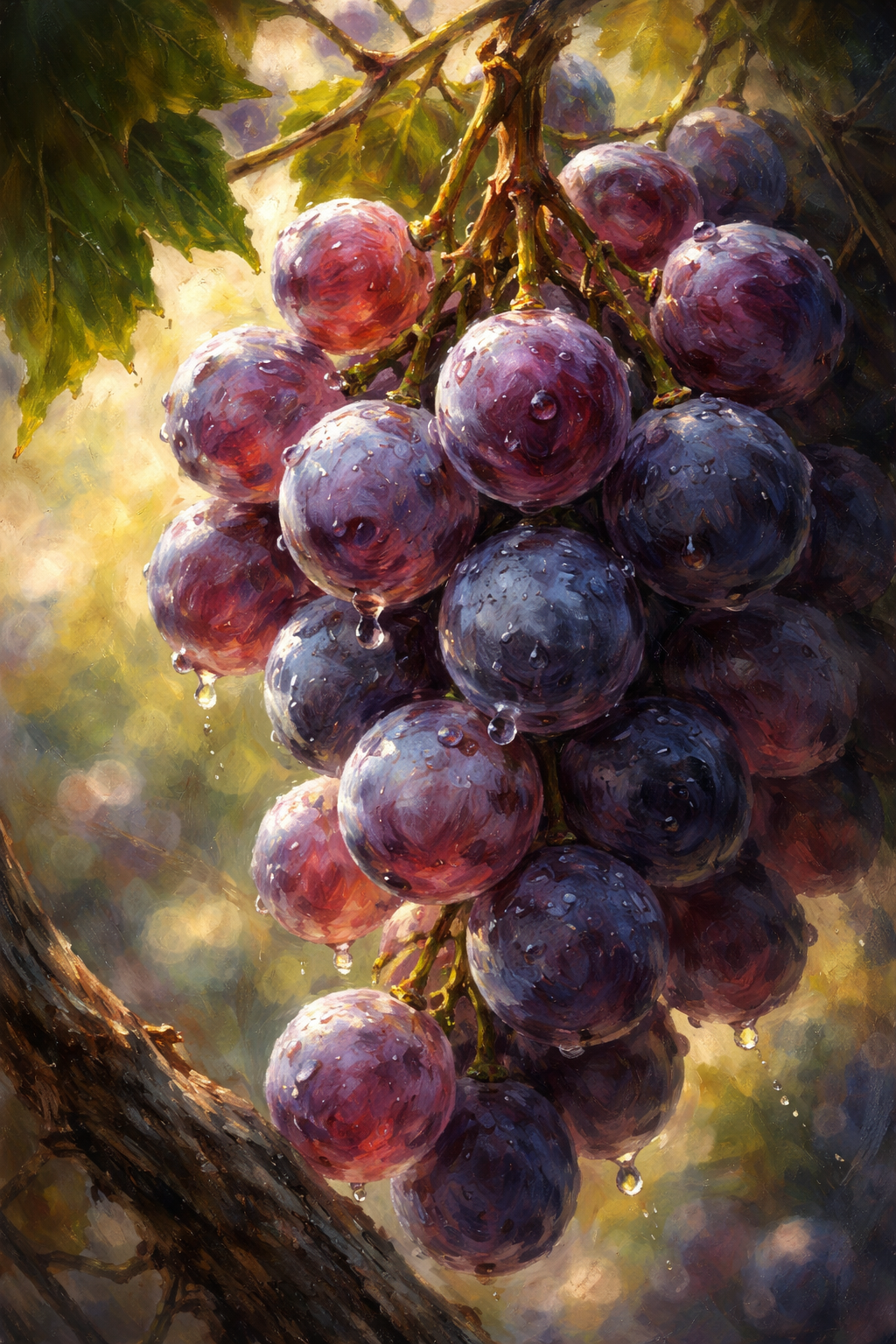
Violet Drops Unfurling in Dappled Light
Critique
1. Introduction This oil painting presents a detailed and vivid study of a bunch of grapes, capturing a moment of natural abundance. The composition focuses heavily on the textures and lighting of the fruit, creating a sense of immediacy and tactile richness. It serves as a classic exploration of still life, emphasizing the interplay between light and organic form. The work invites the viewer to appreciate the subtle complexities found in common natural subjects. 2. Description The central subject is a dense cluster of deep purple and reddish grapes hanging from a vine. Numerous translucent water droplets cling to the surface of the fruit, reflecting light and suggesting recent rain or morning dew. In the upper left, a vibrant green grape leaf provides a color contrast to the darker tones of the grapes. The background is softly blurred with golden and earth-toned brushstrokes, which enhances the focal point of the cluster. A weathered, textured vine branch is visible at the bottom left, grounding the composition. 3. Analysis The artist employs a sophisticated lighting scheme, with a strong light source originating from the upper left. This illumination creates brilliant highlights on the water droplets and the rounded surfaces of the individual grapes. The color palette is rich, utilizing various shades of violet, crimson, and indigo to build volume and depth. Brushwork is expressive and varied, ranging from fine details in the droplets to broader, more impressionistic strokes in the background. The vertical arrangement of the cluster creates a balanced yet dynamic visual flow. 4. Interpretation and Evaluation This piece demonstrates a high level of technical skill in representing translucency and reflection. The inclusion of water droplets adds a layer of freshness and vitality, transforming a static subject into a living scene. The composition successfully balances realistic rendering with a painterly atmosphere, avoiding the coldness of photorealism. The choice of colors evokes a sense of ripeness and the cyclical nature of growth. It is a compelling example of how traditional techniques can be used to elevate a simple botanical subject. 5. Conclusion Upon initial observation, the painting appears to be a straightforward botanical study, but closer inspection reveals a deep engagement with light. The transition from noticing the overall form to appreciating the minute details of the reflections is particularly rewarding. The work stands as a testament to the beauty of the natural world and the artist's ability to capture its fleeting qualities. Ultimately, the painting provides a serene and technically masterful viewing experience that resonates with classic still-life traditions.
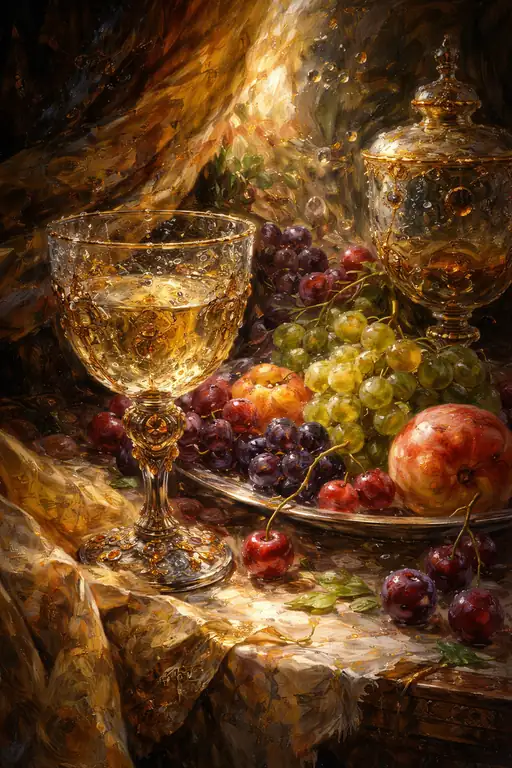 Banquet of the Sun
 Sunlit Jewel of the Vineyard
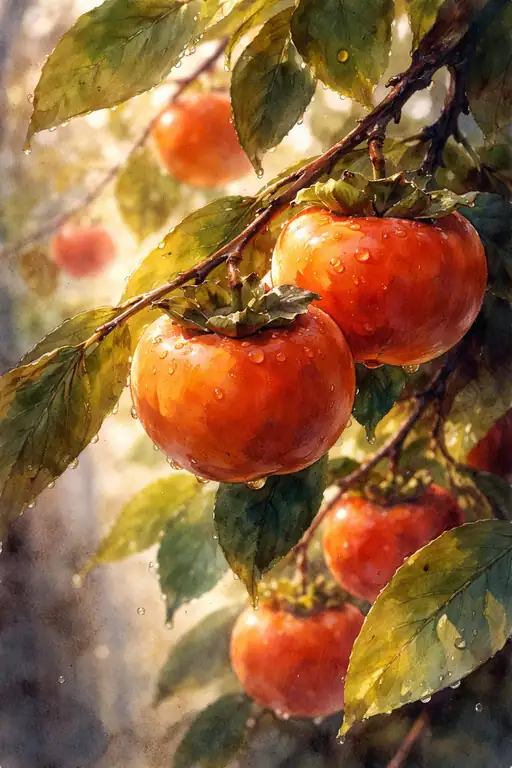 Morning Dew on the Persimmon Branch
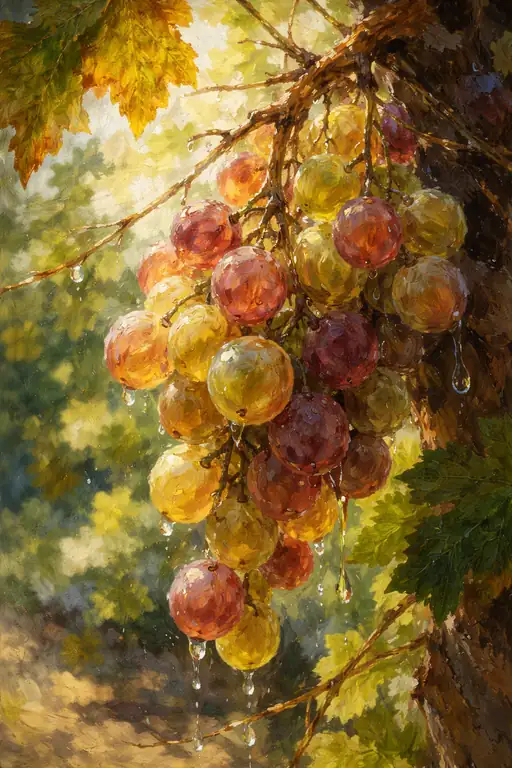 Tears of the Ripening Vine
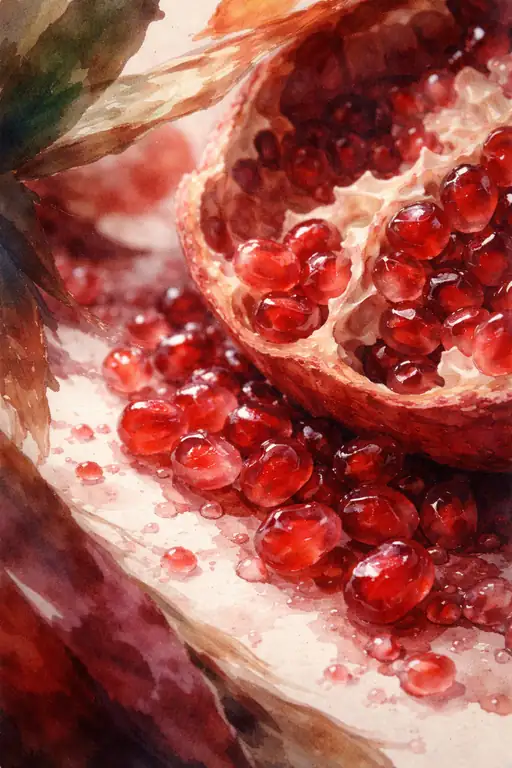 The Bursting Secret of Life
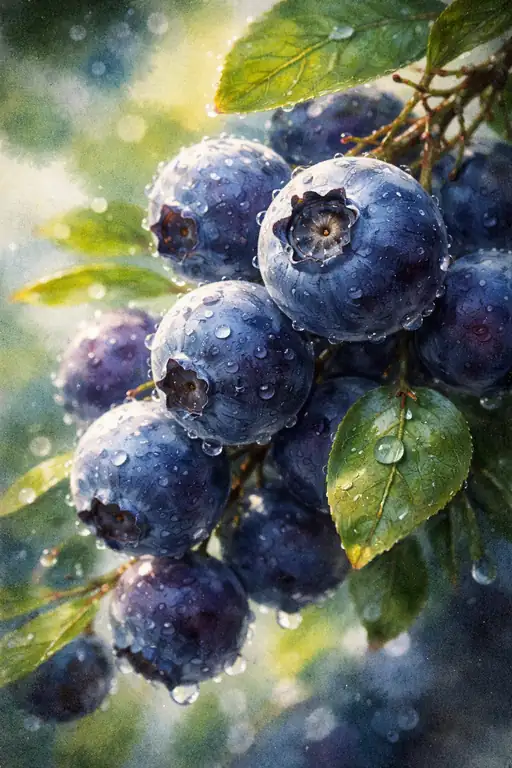 Pearls of the Morning Mist
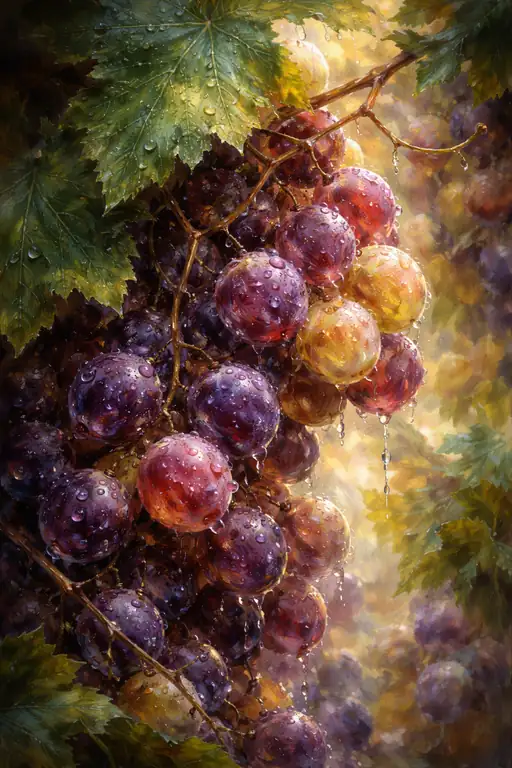 A Slumbering Giant's Embrace
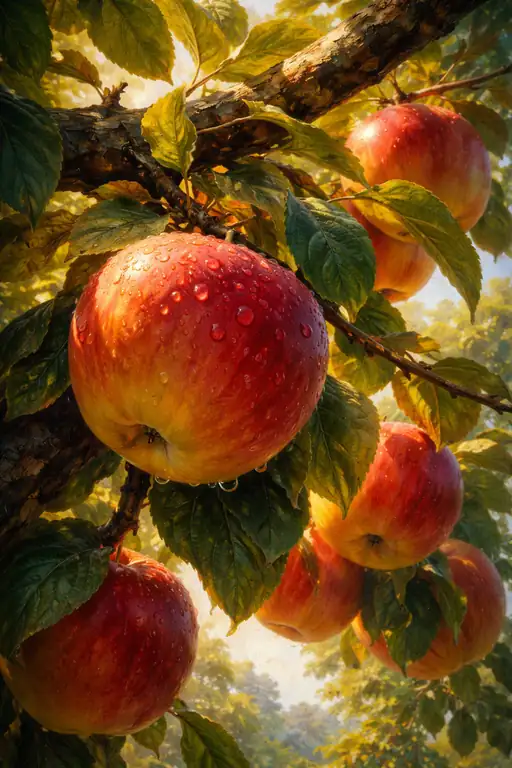 Whispers of the Orchard
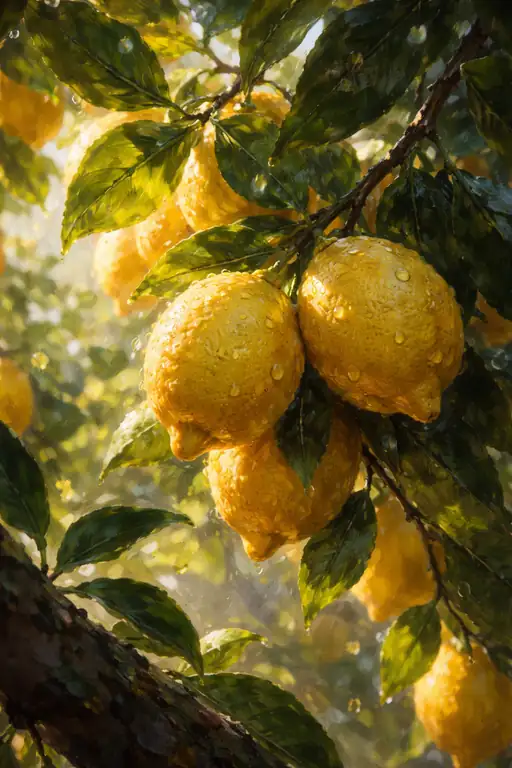 Tears of Gold in the Rain
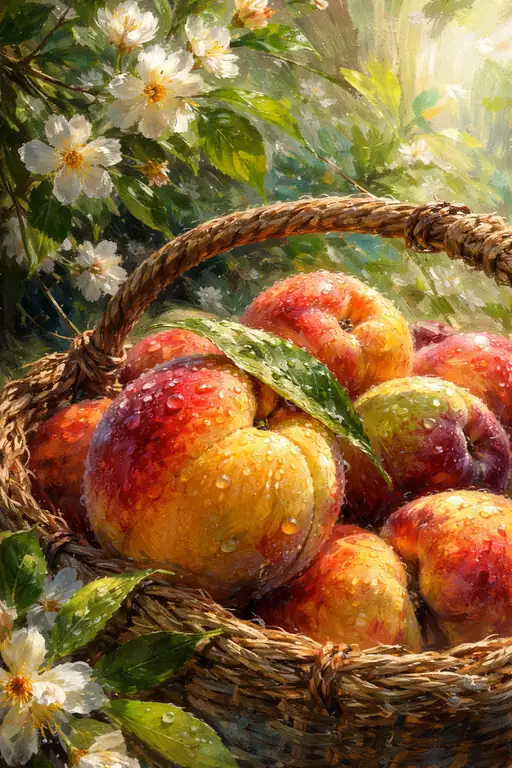 Summer's Bounty
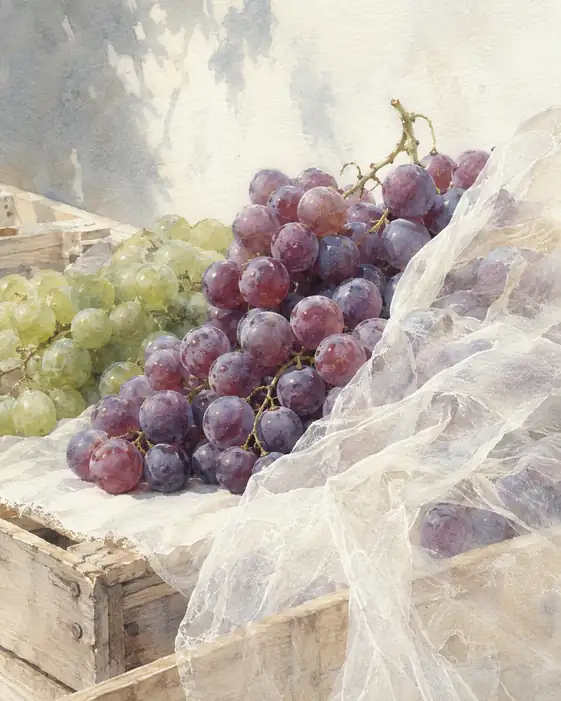 Grapes Beneath a Veil of Noon
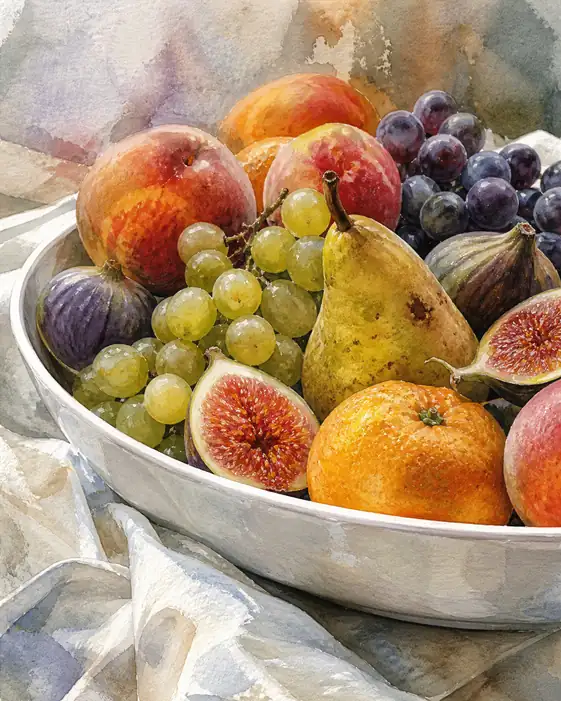 Symphony of Nature's Bounty