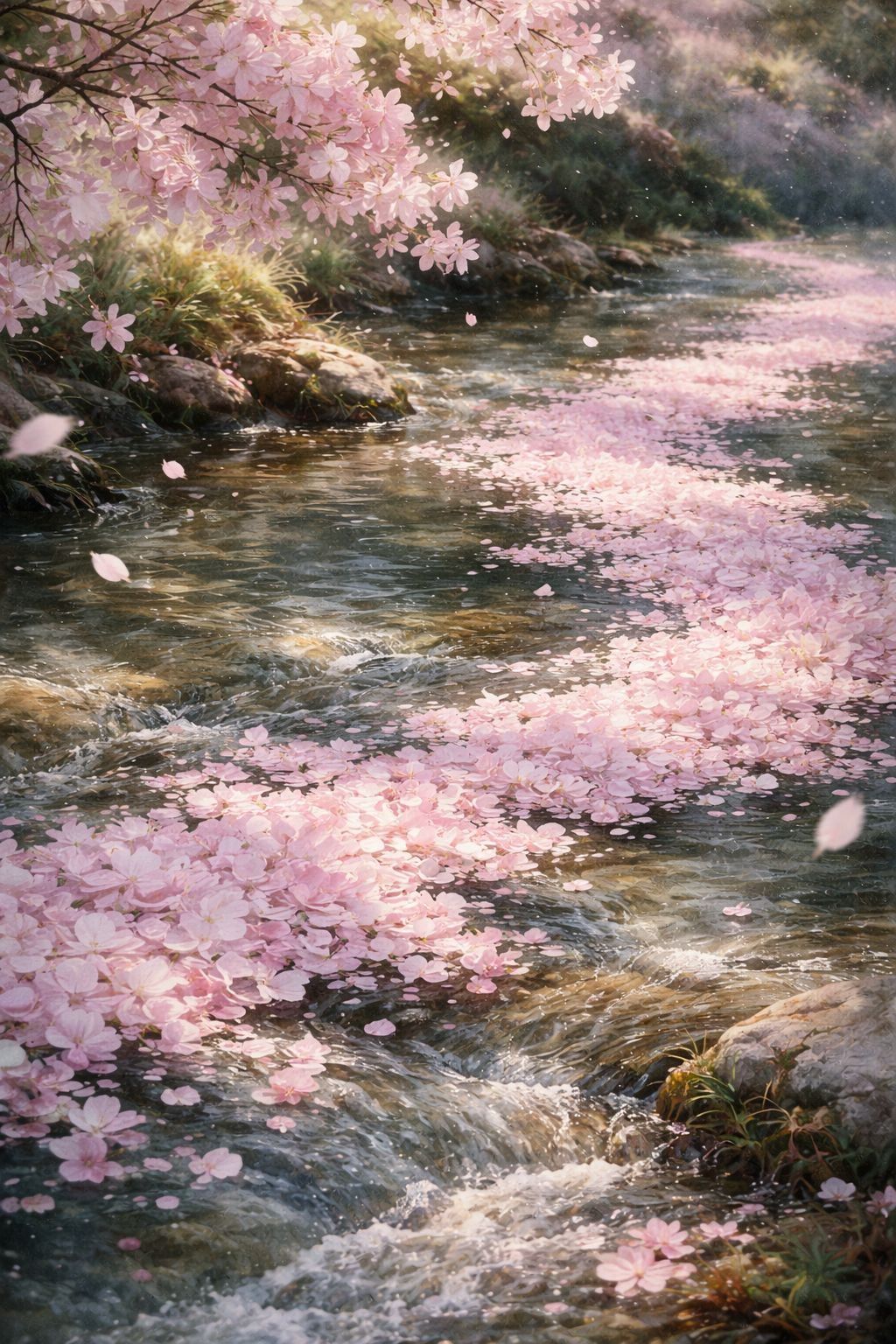
River of Floating Dreams
Critique
1. Introduction This evocative painting depicts the traditional Japanese aesthetic of "hanaikada," or flower rafts, where fallen cherry blossom petals blanket the surface of a moving stream. The work captures a poignant moment of seasonal transition, blending a sense of tranquility with the inevitable passage of time. Through a masterful handling of light and water, the artist creates a landscape that is both realistic in its detail and poetic in its atmosphere. 2. Description The composition is centered on a winding stream that flows from the background toward the viewer. A dense, winding carpet of pink cherry blossom petals floats on the water's surface, tracing the path of the current. On the left, cherry blossom branches heavy with flowers lean over the water, while mossy rocks line the bank. The water is clear, showing the rocky bed beneath, and light filters through the canopy, creating dappled patterns of brightness and shadow across the scene. 3. Analysis The artist demonstrates exceptional skill in depicting the movement of water and the floating petals. The use of perspective draws the viewer's eye along the serpentine path of the petals, creating a strong sense of depth. The color palette is dominated by the contrasting tones of the vibrant pink blossoms and the cool, translucent greens and browns of the stream. Light is a critical element, with the sunbeams cutting through the trees to illuminate the petals, adding a sense of volume and three-dimensionality to the work. 4. Interpretation and Evaluation This artwork can be interpreted as a meditation on the concept of "mono no aware," the pathos of things or a sensitivity to ephemera. The drifting petals symbolize the beauty and fragility of life. The technical execution is highly successful, particularly in the rendering of the water's surface and the complex lighting. The composition is dynamic yet balanced, effectively conveying the quiet power of nature's cycles. It is a work of significant emotional depth and technical proficiency. 5. Conclusion A close examination reveals that the initial beauty of the scene is underpinned by a sophisticated understanding of natural form and light. The artist's ability to capture the specific texture of both the soft petals and the hard stones of the riverbed is remarkable. Overall, the piece is a serene and masterfully executed tribute to one of nature's most fleeting and celebrated spectacles.
Same Subcategory
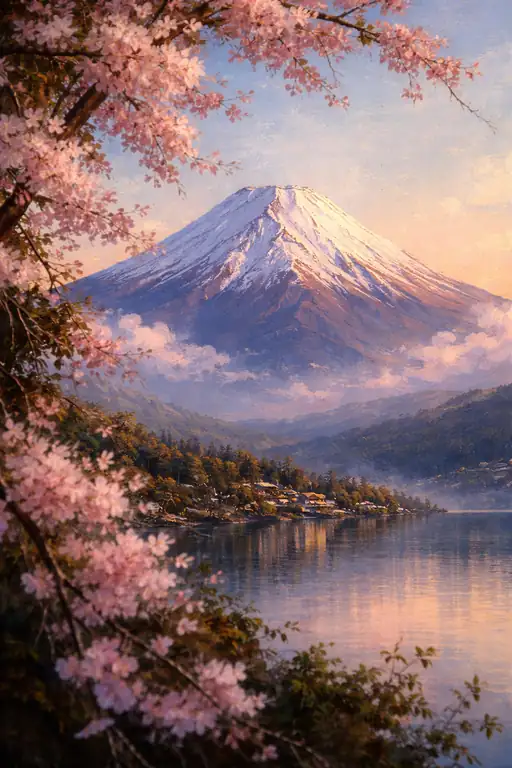 The Eternal Peak in a Breath of Spring
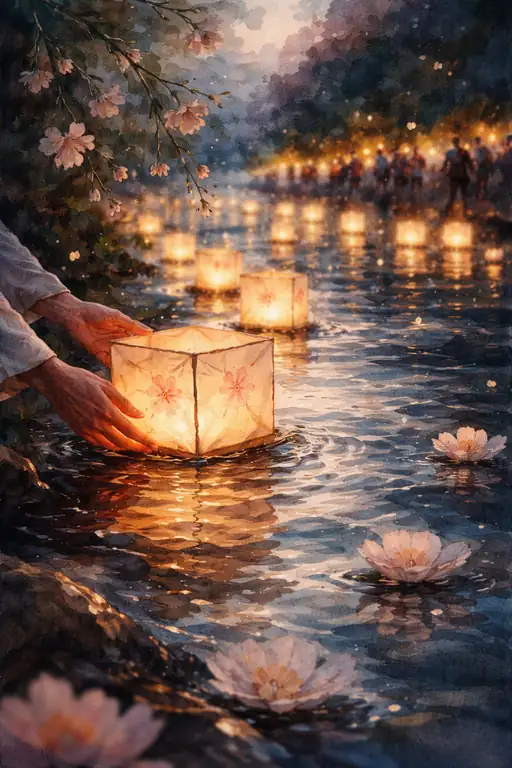 Floating Prayers beneath the Cherry Blossoms
Similar Artworks
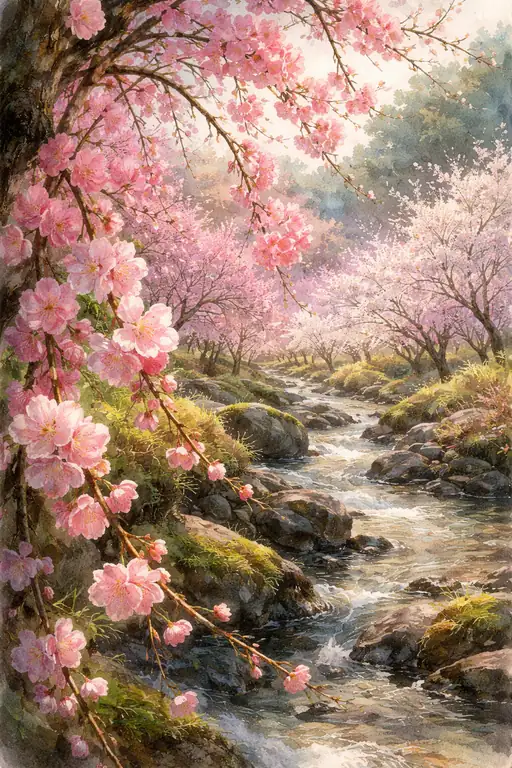 Spring's Gentle Melody by the Stream
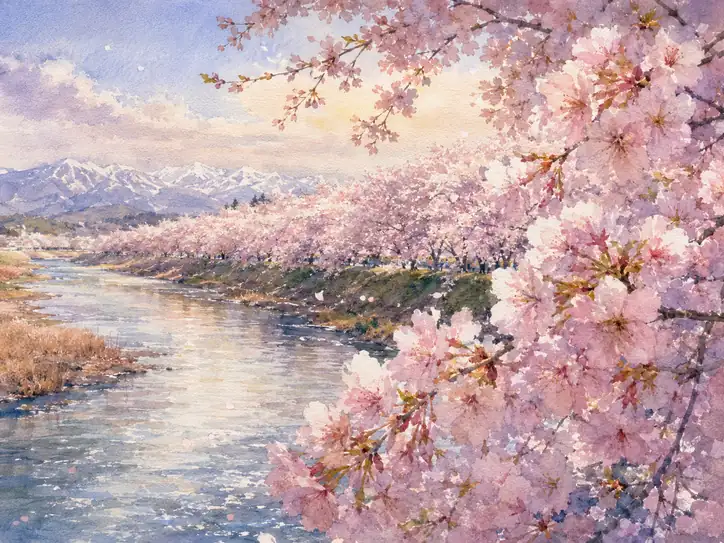 Spring Reflections by the Snowy Peaks
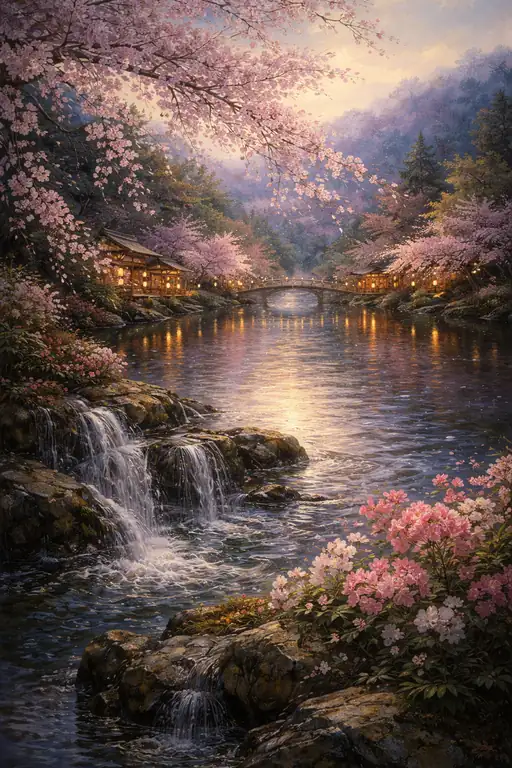 Whispers of the Sakura Moon
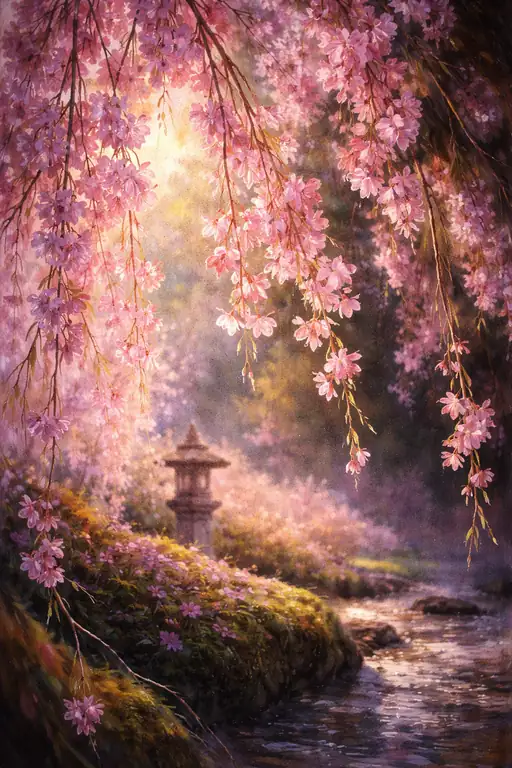 Spring's Ethereal Embrace
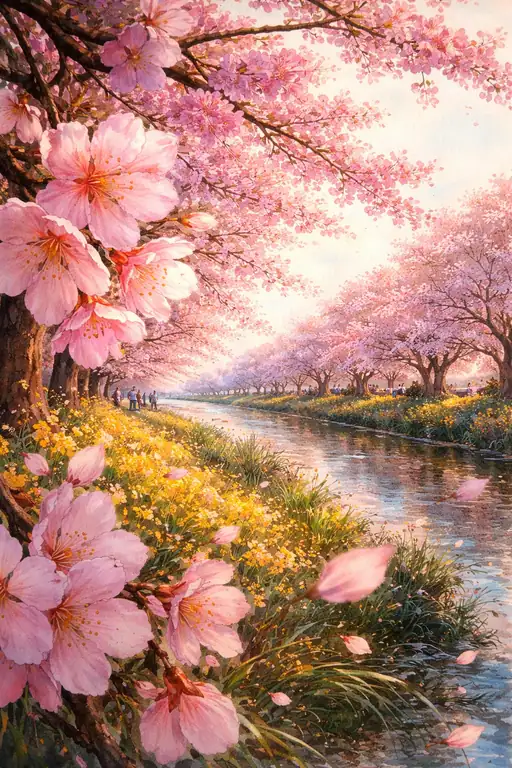 Awakening Spring, A Glimmer of Eternity
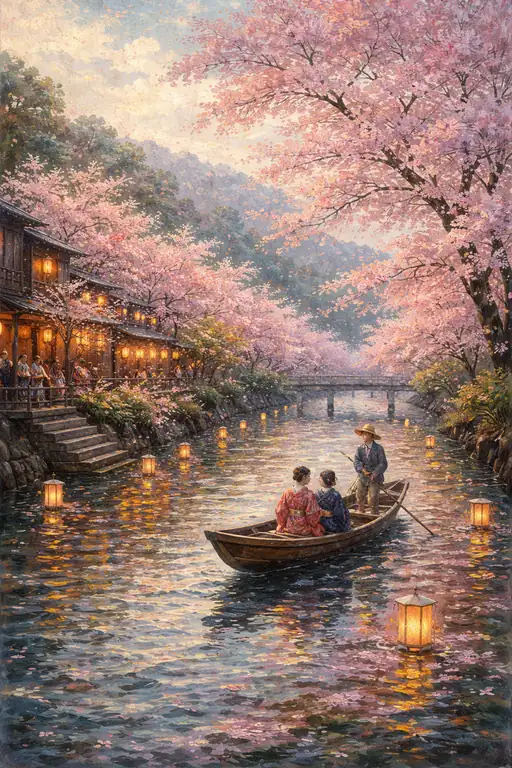 Spring's Eternal Float
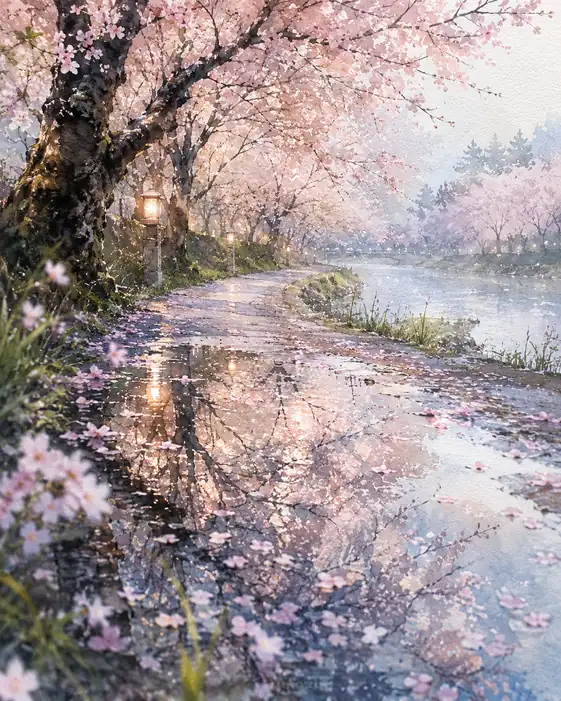 Morning Reflections Along the Cherry Path
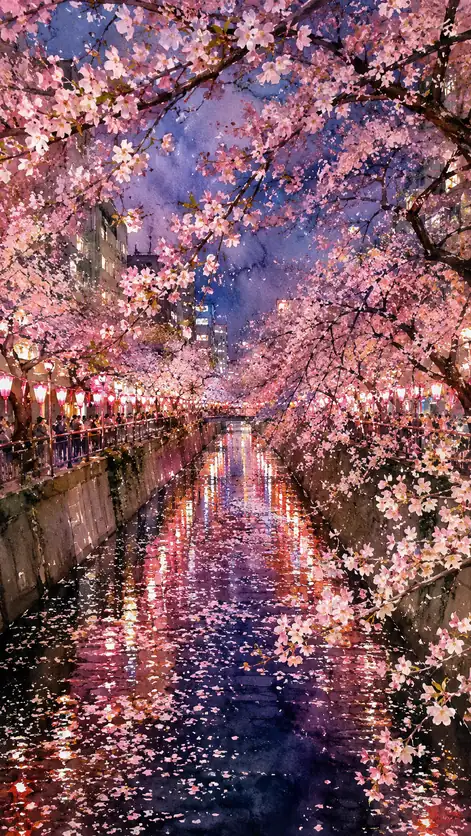 Petals Carry the City Lights
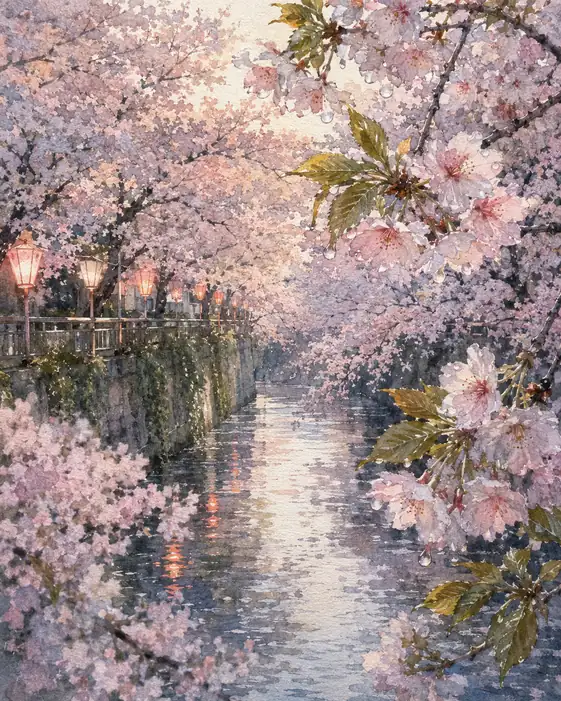 Rain Beads on the Passing Bloom
 Spring Drifts Across the Ramparts