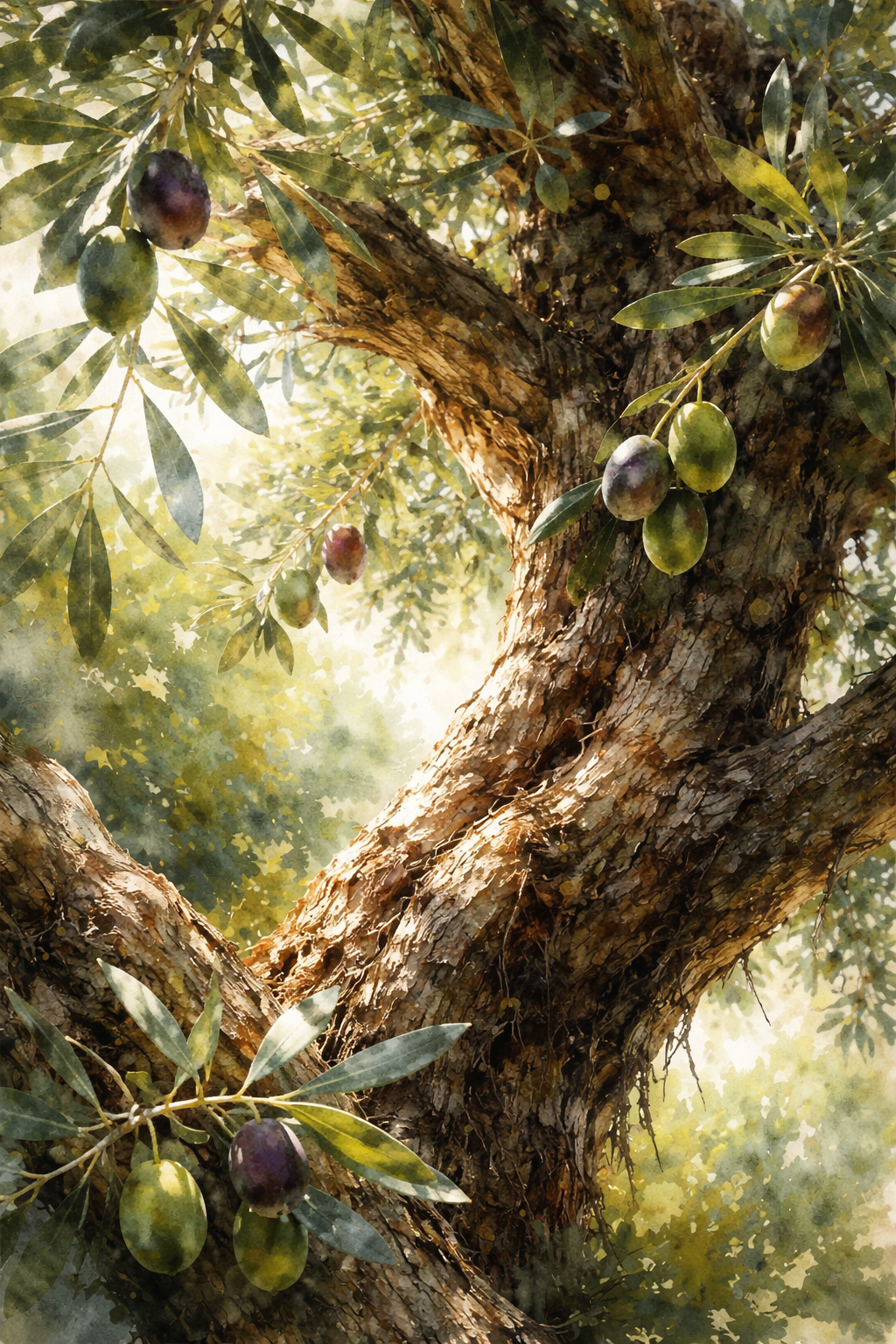
Wisdom of the Ancient Silver Leaves
Critique
1. Introduction The painting presents a detailed watercolor study of an ancient olive tree, focusing on the rugged texture of its trunk and the bounty of its fruiting branches. This work captures the enduring strength and character of a Mediterranean botanical icon, emphasizing the complex interplay of light and organic form. Through a sophisticated use of watercolor washes and fine line work, the artist conveys the tactile reality of the bark against the softness of the foliage. 2. Description The composition is dominated by the thick, gnarled trunk of the olive tree, which extends diagonally across the frame. Its bark is rendered with intricate layers of brown and ochre, showing deep fissures and weathered surfaces. Several branches reach out toward the viewer, laden with olives in various stages of ripeness, ranging from pale green to deep purple. The background consists of a soft, out-of-focus canopy of leaves, where bright sunlight filters through in shimmering patches. 3. Analysis Formal analysis reveals a masterful handling of texture and light. The artist uses dry brush techniques to simulate the rough, peeling quality of the tree's bark, while smoother, more transparent washes are employed for the leaves and olives. The color palette is earthy and natural, with the silvery-greens of the foliage providing a cool contrast to the warm browns of the wood. The lighting is particularly effective, as the strong backlighting creates brilliant highlights on the edges of the trunk and leaves. 4. Interpretation and Evaluation This work evaluates the olive tree as a symbol of resilience and history through its meticulous attention to detail. The technical execution is highly successful, particularly in the artist's ability to render the three-dimensional form of the trunk through careful shading and highlight. The composition feels dynamic and immersive, placing the viewer directly beneath the protective canopy of the tree. Its originality lies in the specific focus on the textural complexity of the bark, which becomes a landscape in itself. 5. Conclusion In summary, the initial observation of a tree trunk develops into a profound appreciation for the artist's ability to capture the passage of time through texture. The painting successfully evokes the warmth and stillness of a sun-drenched grove. It remains a powerful example of how a focused botanical study can transcend mere documentation to become an expressive exploration of the natural world's enduring and intricate beauty.
Same Subcategory
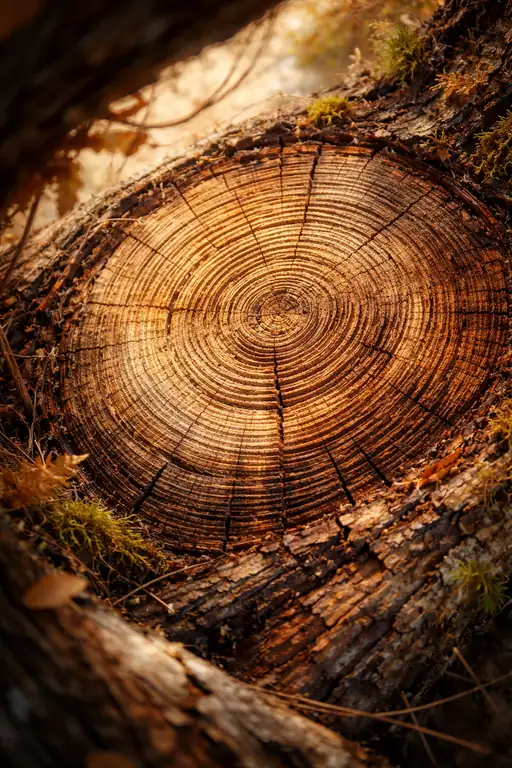 Echoes of the Concentric Years
Similar Artworks
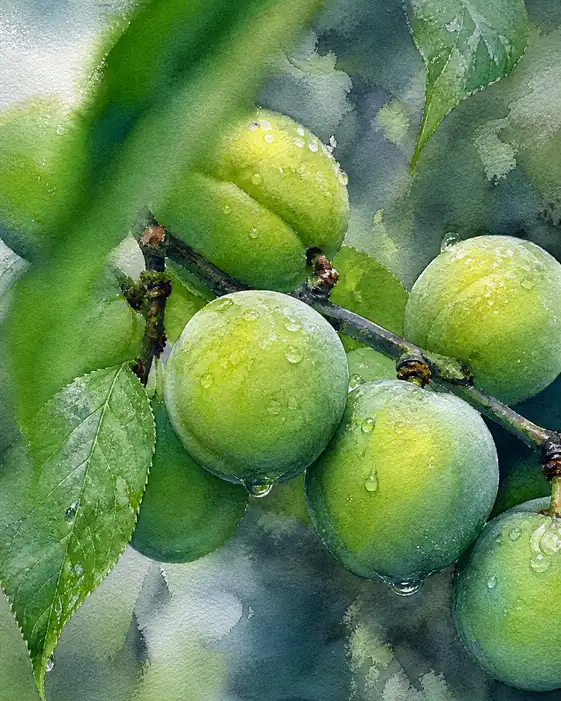 Summer Rain's Crystal Breath
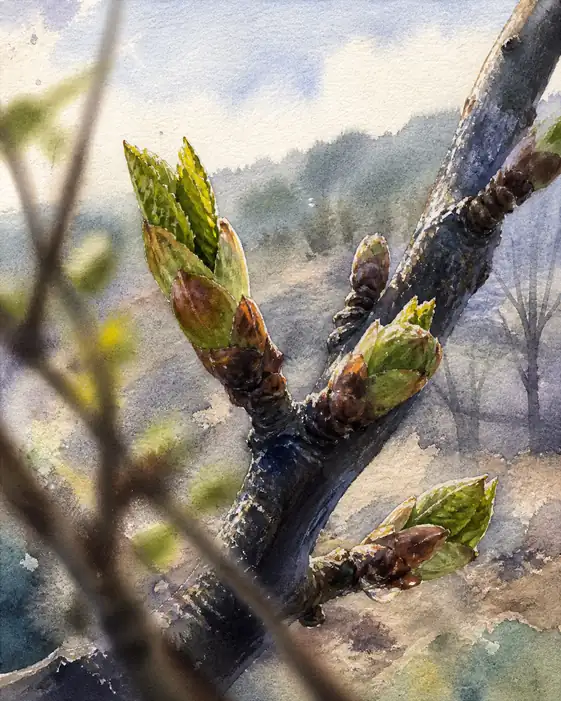 The Awakening Pulse: Spring's Quiet Promise
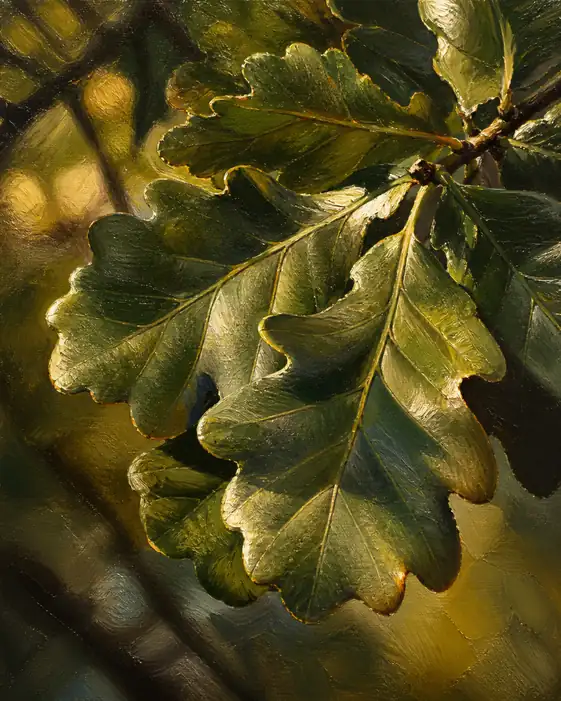 The Golden Weight of Time
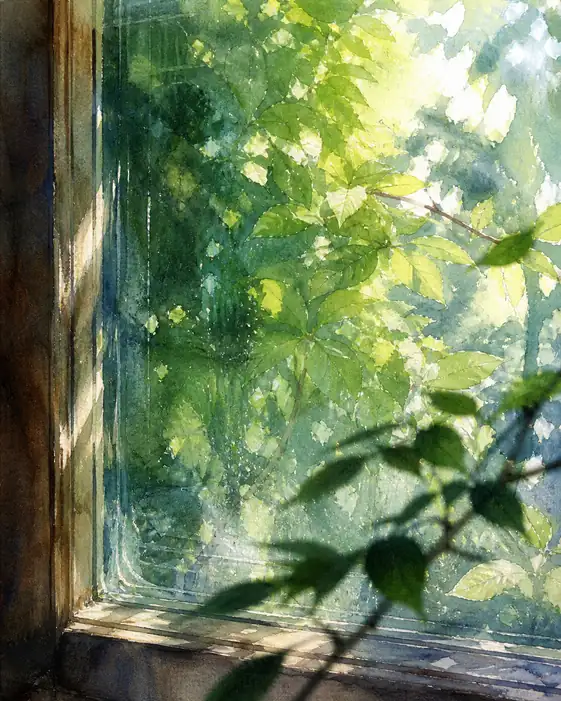 Verdant Portal to Summer Light
 Radiant Pulse: The Garden's Warm Embrace
 Whispers of the Dew-Laden Bloom
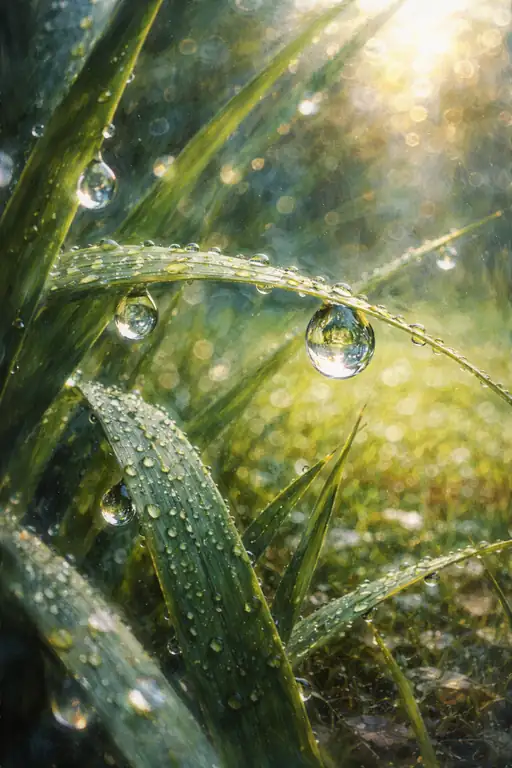 Solitude in the Whispering Woods
 Under the First Green Sky
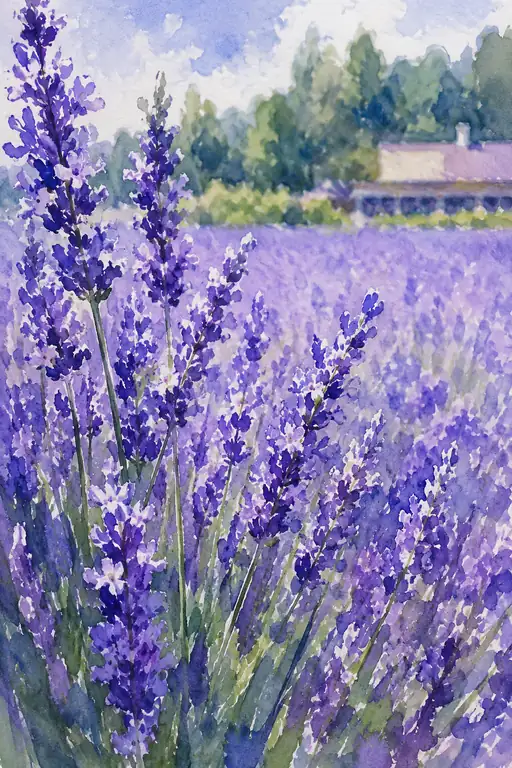 A Gentle Whisper of Early Summer
 Purity Awakens in Silence