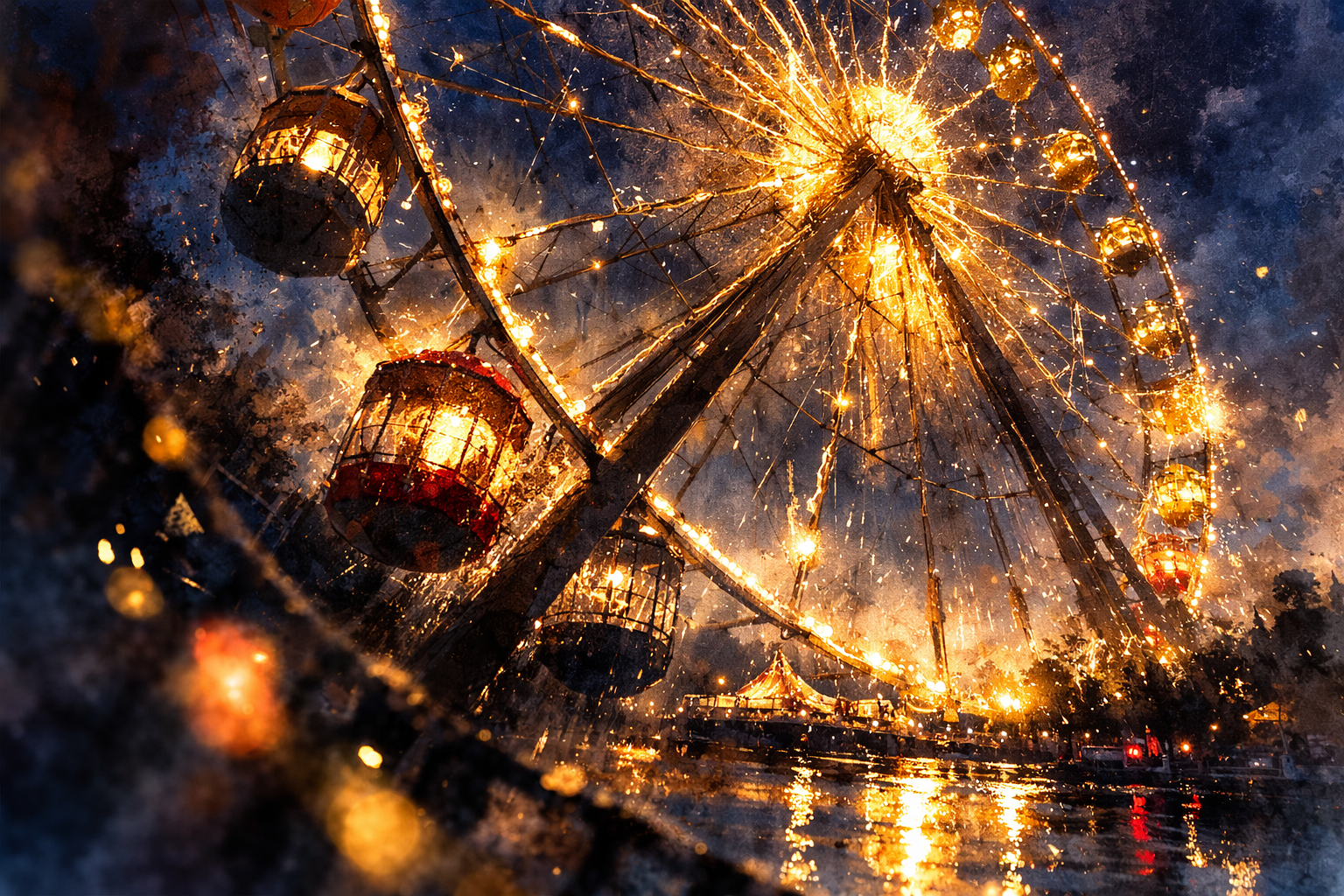
Nocturnal Lullaby of Lights
Critique
1. Introduction This artwork presents a nighttime scene centered on a large Ferris wheel, rendered in a distinctive painterly style that emphasizes light and atmosphere. The piece captures a sense of festive vibrance through its focus on artificial illumination against a dark, textured background. By elevating a common amusement park element to a subject of artistic study, the work explores the relationship between structural form and the ephemeral qualities of light. It serves as a study in contrast, where mechanical precision meets fluid, impressionistic application. 2. Description The composition is dominated by the massive circular structure of a Ferris wheel, positioned at a slight diagonal to create dynamic tension. Glowing golden lights trace the spokes and the perimeter of the wheel, casting a warm radiance that appears to dissolve into the surrounding darkness. Several passenger gondolas are visible, some rendered in deep reds and yellows, glowing from within. Below the wheel, a reflection of the lights shimmer on a dark, wet-looking surface, possibly water or a rain-slicked pavement. The background is a dark, mottled indigo, filled with spark-like flecks of light and soft, blurry shapes suggestive of a distant carnival environment. 3. Analysis The artist utilizes a high-contrast palette of deep blues and brilliant golds to create a powerful focal point within the composition. The brushwork is energetic and textured, moving away from sharp realism toward an expressive, almost tactile surface quality. Light is treated not just as an illuminant but as a physical presence, with splatters and dabs of paint suggesting the scattering of glow and the movement of the night air. The diagonal tilt of the Ferris wheel breaks the potential static nature of the circular subject, guiding the viewer's eye across the canvas. A shallow depth of field is simulated through the softening of details in the lower foreground and distant background. 4. Interpretation and Evaluation The work succeeds in transforming a familiar industrial object into a symbol of nostalgic wonder and energy. The use of light conveys a sense of magic and celebration, yet the dark surroundings and the heavy texture introduce an undercurrent of solitary reflection. The technical execution is impressive, particularly in how the artist balances the rigidity of the wheel's architecture with the loose, spontaneous application of light. The composition effectively captures the fleeting nature of a moment, making the mechanical structure feel alive and breathing. It is a compelling example of how traditional painterly techniques can be applied to modern, everyday subjects to evoke a strong emotional response. 5. Conclusion Upon initial viewing, the intense glow of the Ferris wheel provides a direct and inviting entry point into the festive scene. However, a deeper examination reveals a complex interplay of texture and shadow that gives the work its lasting resonance. The piece effectively summarizes the essence of a night at the fair, focusing on the sensory experience of light rather than mere topographical detail. This transition from observing a structure to feeling an atmosphere marks the true strength of the composition. It concludes as a successful exploration of light as both a formal element and an emotional anchor.
Same Subcategory
 Rhythm of the Golden Soul
Similar Artworks
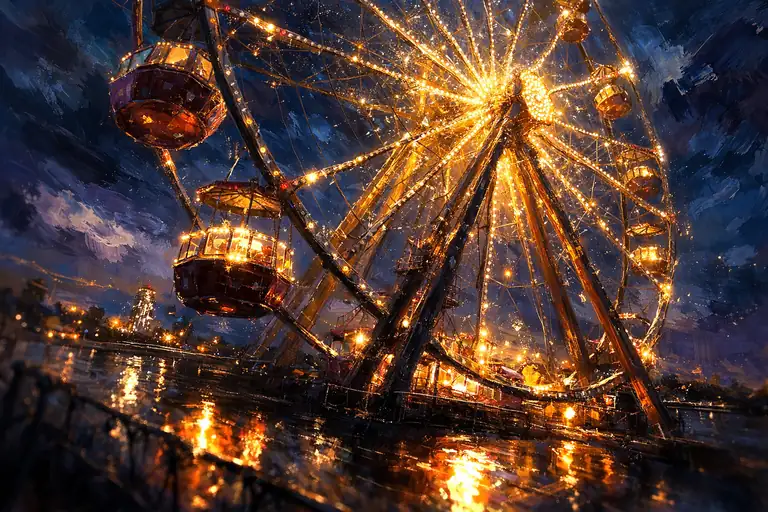 Majestic Glow of the Night Sky
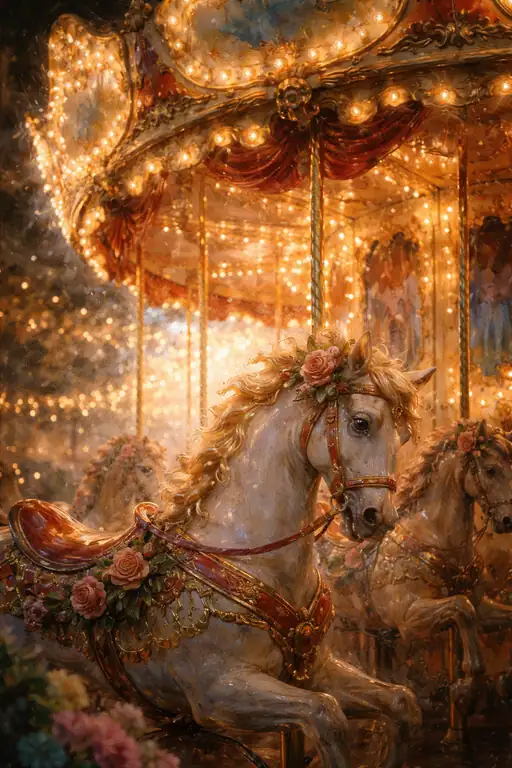 Amber Dreams of the Carousel
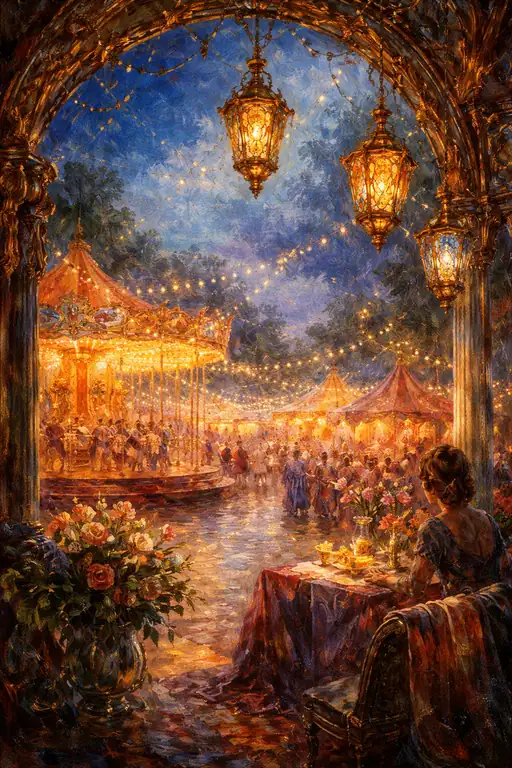 A Golden Reverie Beyond the Archway
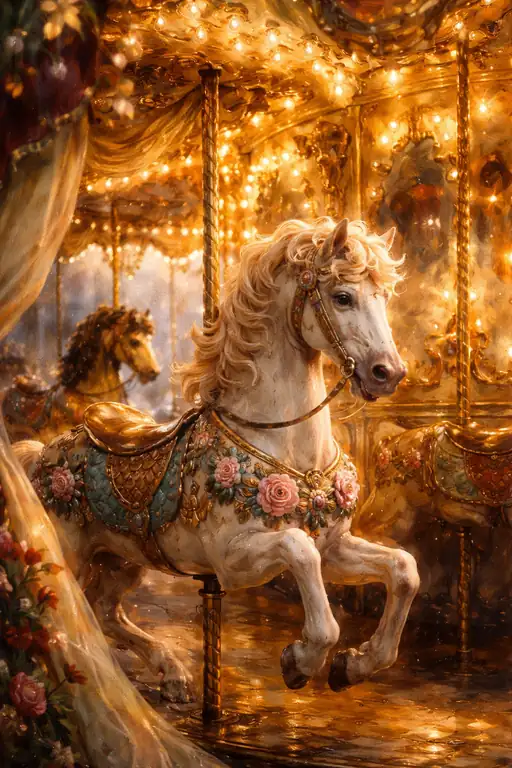 Carousel Mirage: The Gilded Gallop
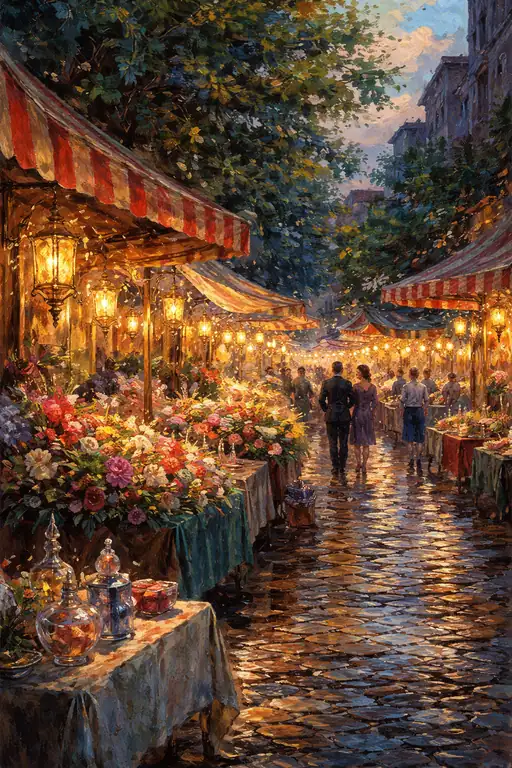 Golden Embers of the Midnight Market
 Footprints in the Amber Glow
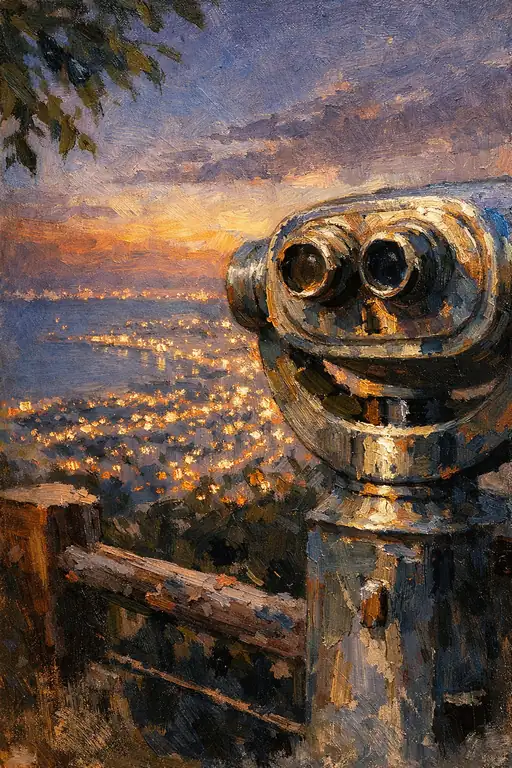 Twilight Gaze Over the Glowing Metropolis
 Footprints in the Twilight Sands
 Melancholy Tears on the Cafe Window
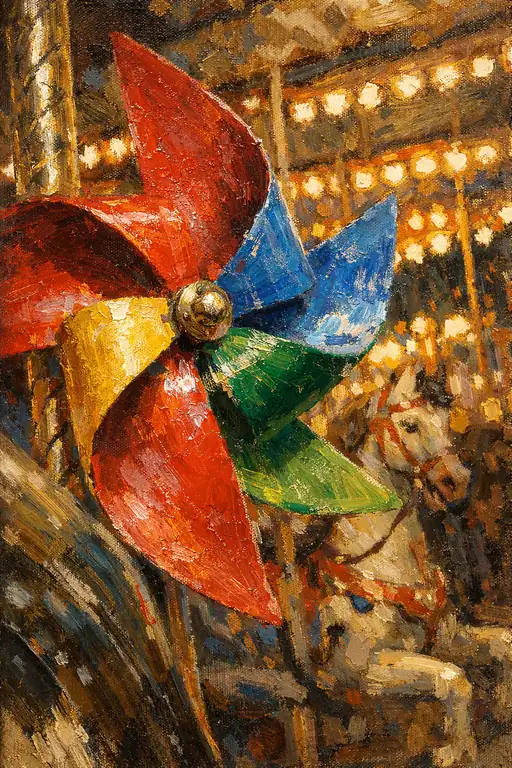 Spinning Memories in the Wind