Leap of the Golden Wings
Critique
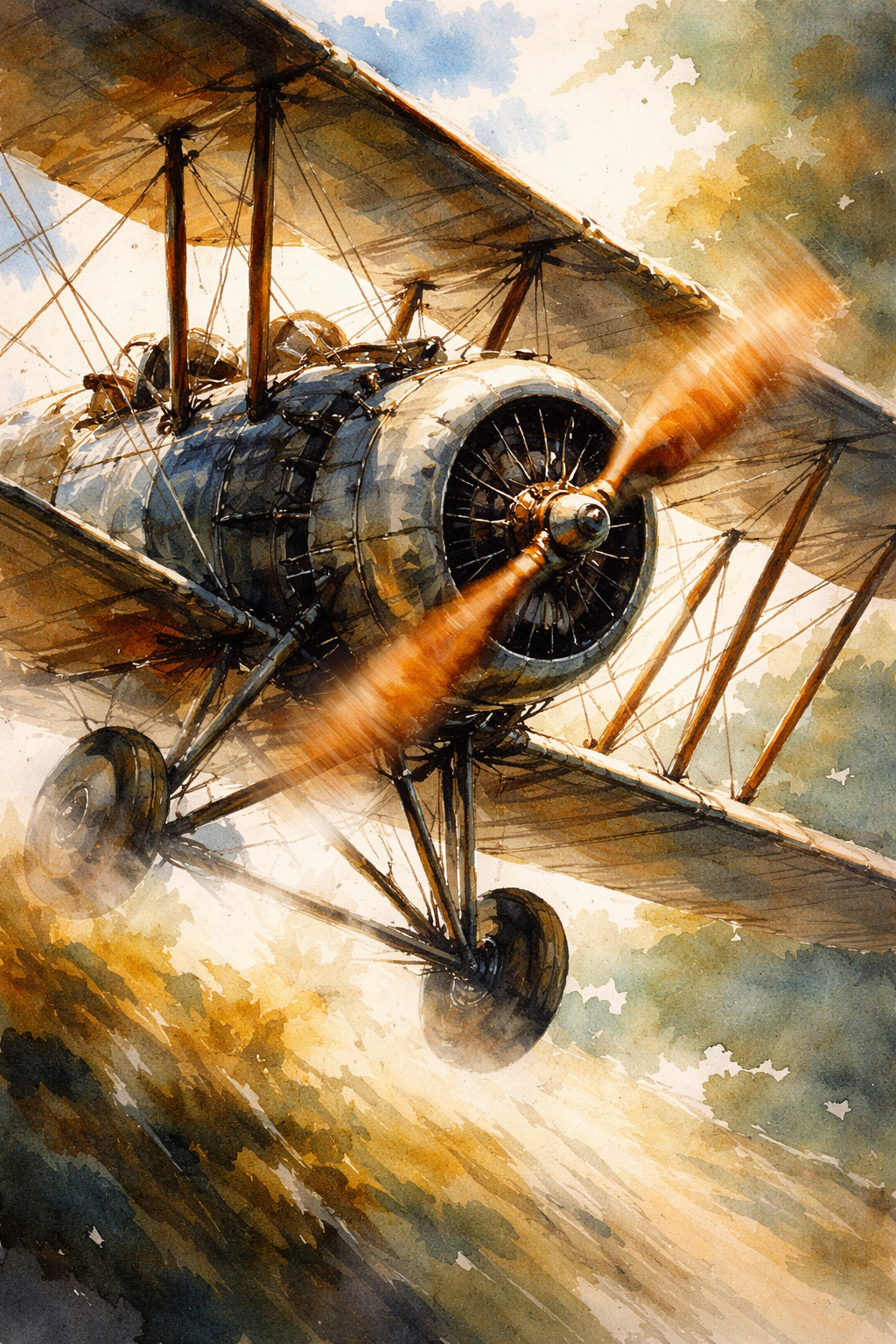
1. Introduction The artwork is a sophisticated watercolor painting featuring a vintage biplane captured from a dynamic, low-angle perspective during takeoff. This piece successfully conveys the powerful energy and pioneering spirit of early aviation through its expressive brushwork and a thoughtfully curated warm color palette. The composition creates an immediate sense of immersion for the viewer. 2. Description The biplane dominates the upper two-thirds of the composition, shown in the midst of a rapid ascent from what appears to be a dusty airfield. Its radial engine and the blurred motion of the rotating propeller are rendered with remarkable detail, while the tension in the struts and landing gear is palpable. Swirling dust and brilliant light emanate from beneath the aircraft, effectively filling the lower frame with atmospheric movement. 3. Analysis The composition masterfully utilizes strong diagonal lines to emphasize the aircraft's upward trajectory and inherent speed. The artist employs a deliberate combination of precise line work for the mechanical components and loose, fluid washes for the surrounding background environment. This sharp contrast directs the viewer's eye toward the intricate structural details of the cockpit and the textured metal of the engine casing. 4. Interpretation and Evaluation The warm, sepia-toned color scheme evokes a profound sense of nostalgia and the romanticism of historical adventure. The technical execution of the watercolor medium is highly commendable, particularly in the subtle way that golden sunlight filters through the semi-transparent fabric of the wings. This dynamic arrangement effectively communicates the sheer excitement and the physical sensation of achieving flight during a bygone era. 5. Conclusion This work successfully achieves a balance between mechanical accuracy and the fluid, evocative nature of the watercolor medium. It offers a compelling and aesthetically pleasing tribute to the golden age of flight through its skillful manipulation of light and momentum. The initial impression of raw mechanical power is ultimately transformed into a lasting appreciation for the delicate transparency of the artistic execution.
 Silent Dance Among the Clouds
 Wings Resting in the Twilight
 The Cradle of Flight
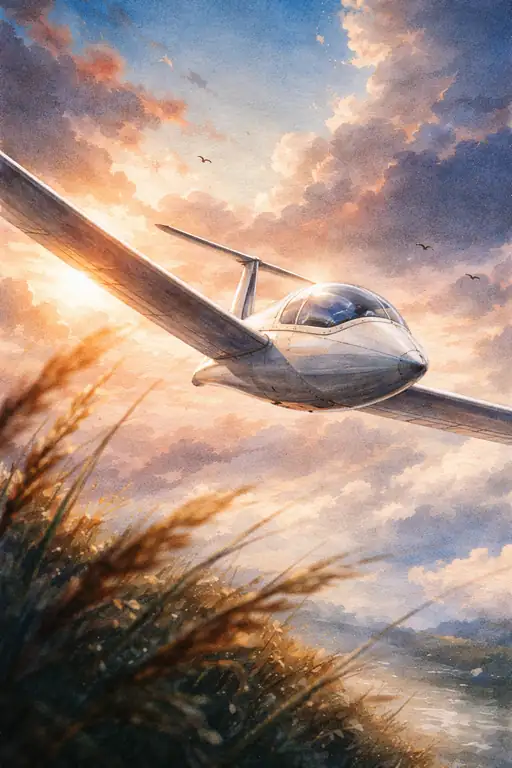 Golden Glide: The Silent Wings of Dusk
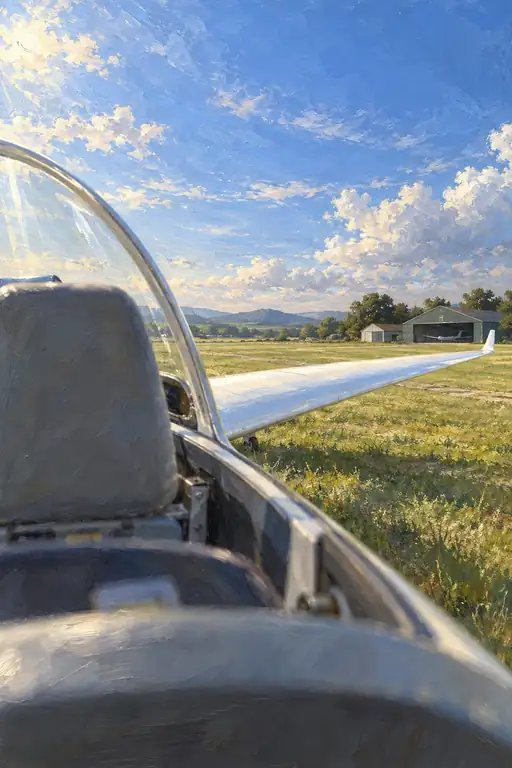 The Sky Is Already Calling
 Ascending on Pale Wings
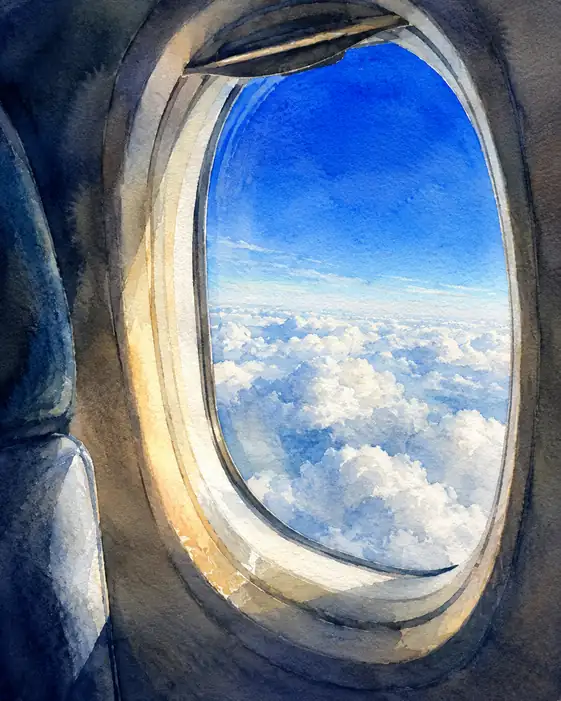 Window to the Endless Blue
 Ceremony of the Celestial Trails
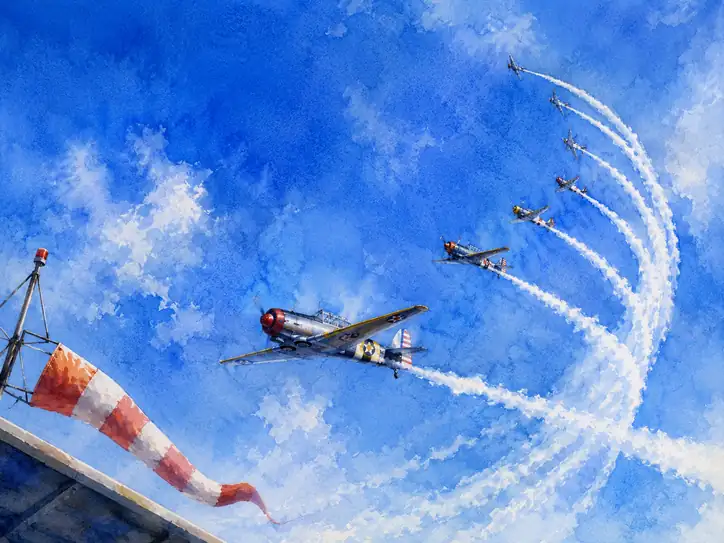 Where the Winds Call Home
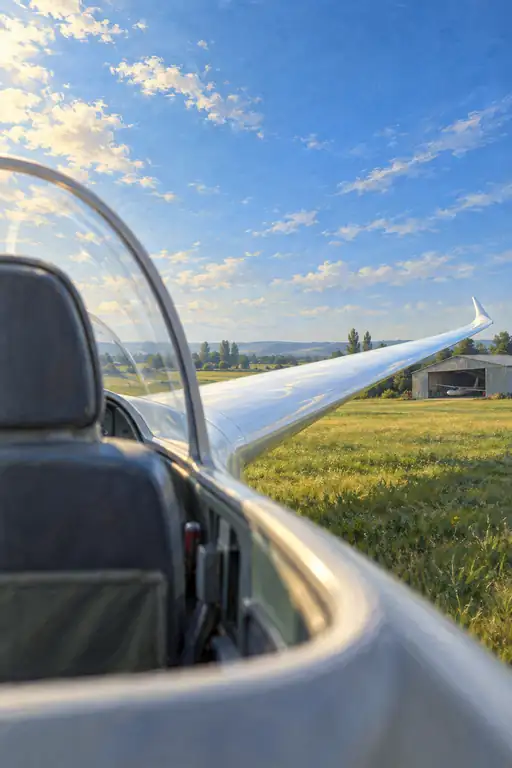 Already Airborne in My Thoughts