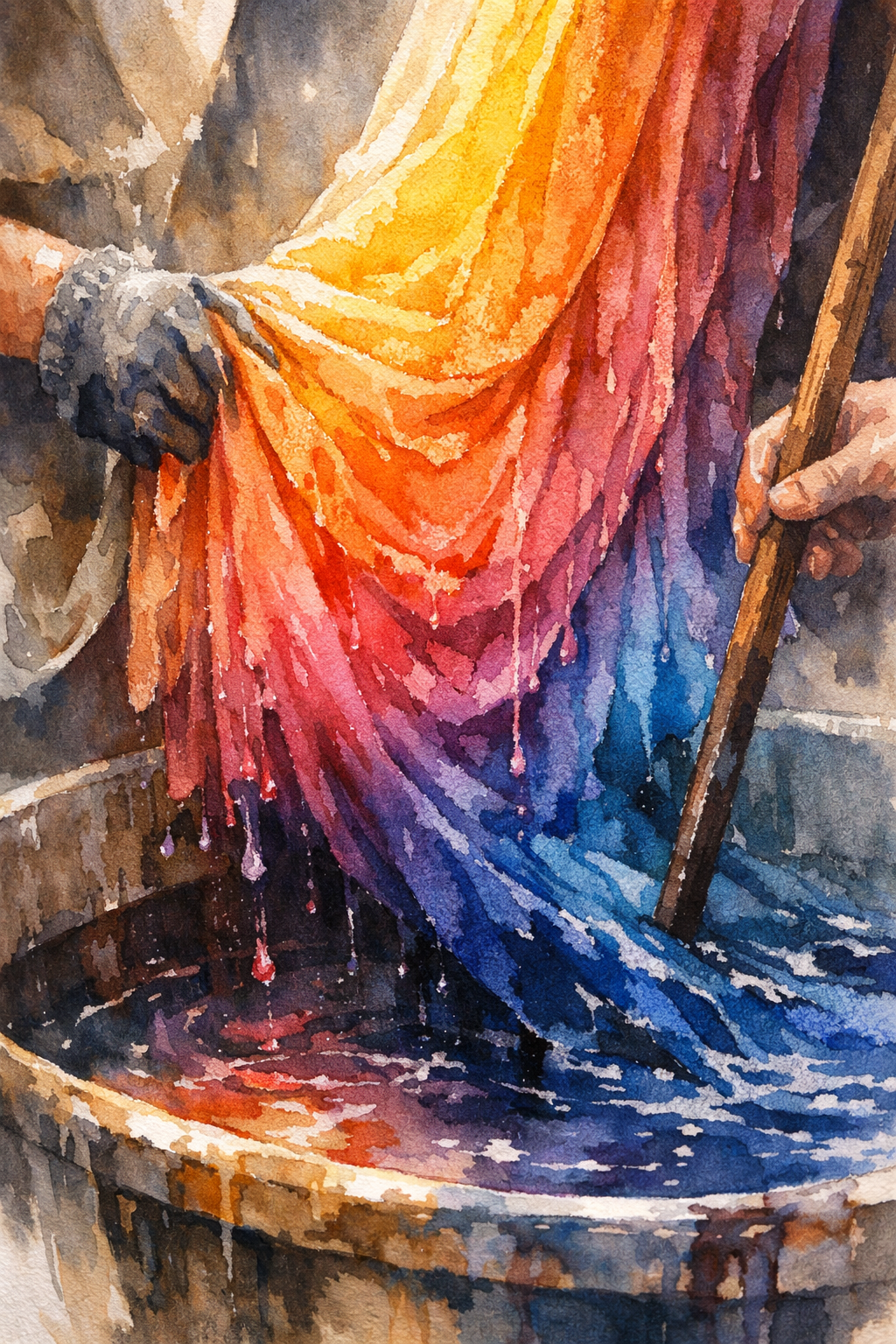
Dipped in Colors
Critique
1. Introduction This evocative watercolor painting captures the transformative and almost alchemical process of fabric dyeing within a traditional workshop. The composition focuses on the dramatic moment when a length of cloth is lifted from a dye vat, revealing a spectacular and vibrant gradient of colors. Through the fluid and expressive qualities of the watercolor medium, the artist masterfully portrays the interaction between pigment, water, and textile. The work serves as a celebration of the artisan’s skill and the inherent beauty found in the messy, liquid reality of manual creation. 2. Description In the center of the frame, a pair of hands—one clad in a heavy, dark glove—lifts a large piece of fabric from a deep wooden vat. The cloth displays a brilliant transition of hues, beginning with a sun-drenched yellow at the top, merging into intense oranges and reds, and finally deepening into a rich, oceanic blue. Drips of colored dye are captured in mid-air, falling back into the dark, swirling liquid of the vat. The texture of the damp fabric is palpable, with folds and pleats catching the light and emphasizing the saturation of the pigments. 3. Analysis The artist effectively utilizes the inherent properties of watercolor, such as bleeding and granulation, to represent the liquid nature of the dye. These techniques create soft transitions between the primary colors on the fabric, mirroring the actual process of immersion dyeing. The composition is primarily vertical, following the upward movement of the fabric and the downward path of the dripping dye, which creates a dynamic sense of action. The contrast between the dark, shadowy interior of the vat and the luminous, brilliantly colored cloth focuses the viewer’s attention on the moment of revelation. 4. Interpretation and Evaluation This painting can be interpreted as a metaphor for the fluidity of the creative process, where control and spontaneity must coexist. The dyer’s hands represent human agency, while the unpredictable flow of the dye suggests the role of chance and natural forces in art. Technically, the work is highly successful in its ability to render the translucency and weight of wet fabric. The choice of a warm-to-cool color gradient is particularly effective, evoking a sense of elemental transformation from fire to water. The overall execution demonstrates a sophisticated understanding of color theory and medium-specific techniques. 5. Conclusion While the initial impression is one of simple visual pleasure derived from the vibrant colors, a deeper examination reveals a profound respect for the physical reality of the craft. The painting successfully bridges the gap between a utilitarian task and a moment of pure aesthetic wonder. It captures the essence of dyeing not just as a production method, but as a living, breathing dialogue between the artist and the elements. Ultimately, this work stands as a refreshing and brilliant tribute to the enduring power of color and the artisan’s touch.
 Symphony of Threads
 The Meditative Flow of Matcha
 The Light Forger
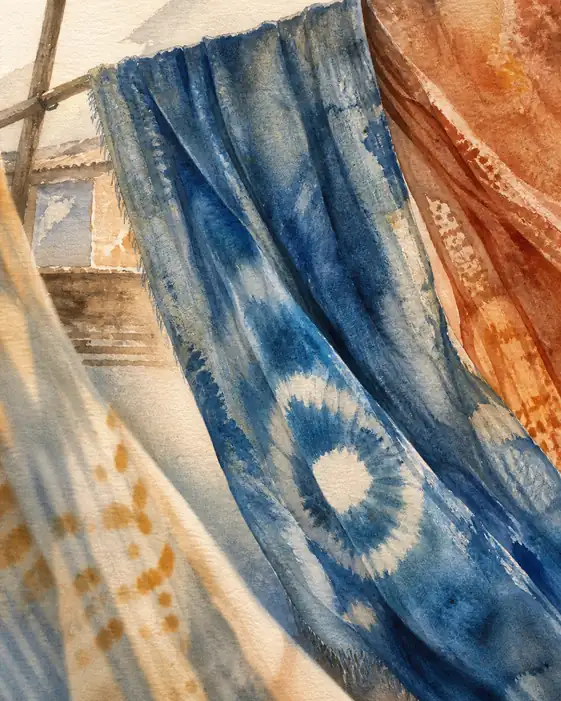 Indigo Dreams Under the Sun
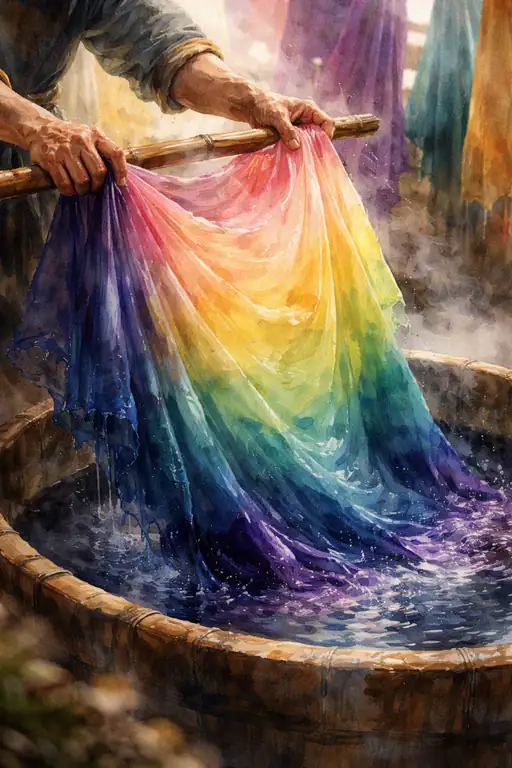 Vibrant Vats: The Color Catcher
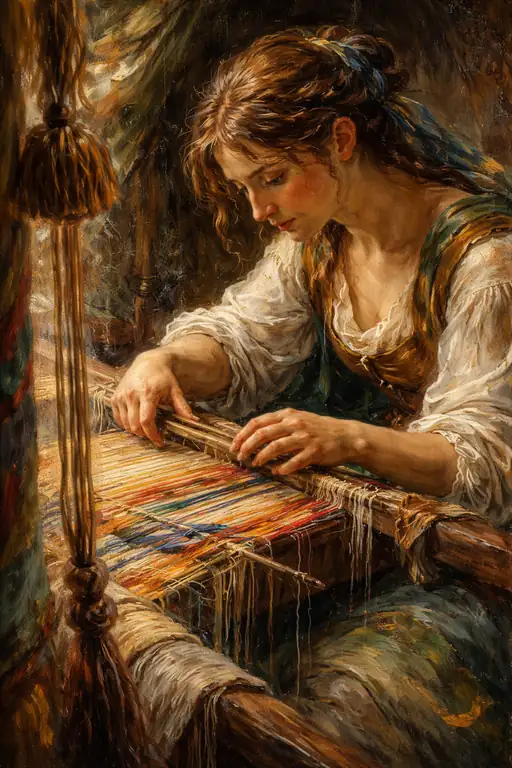 Rhythmic Hands of Creation
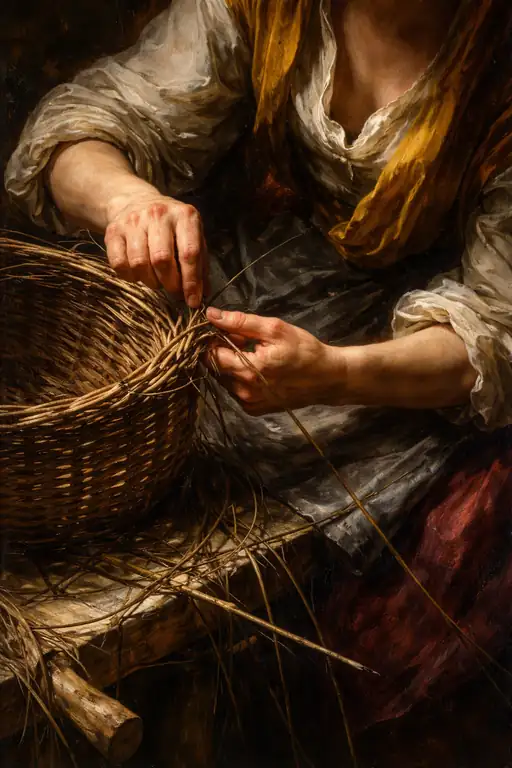 The Nimble Weave of Time
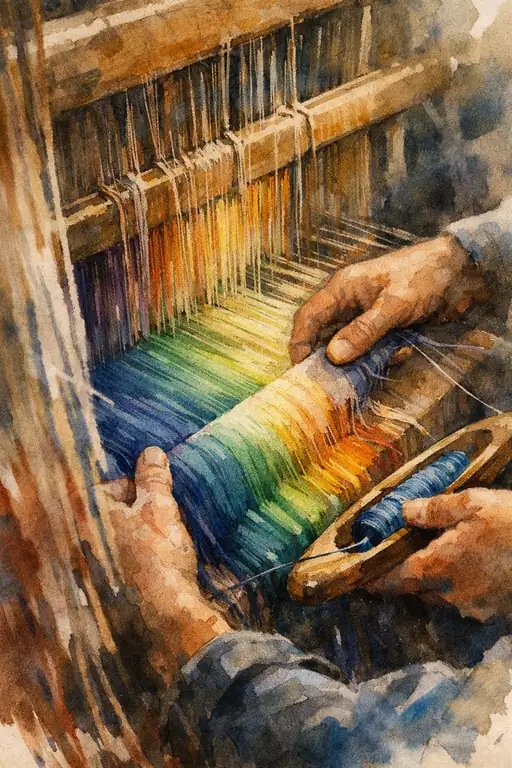 Rainbow Threads: The Weaver's Devotion
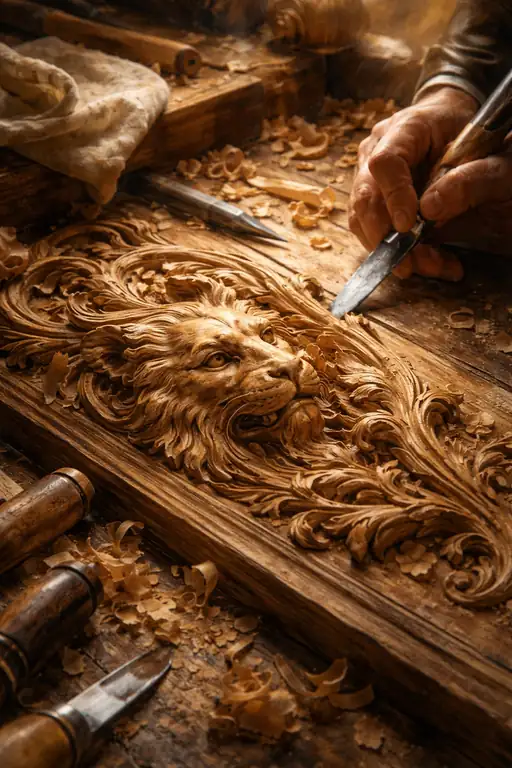 The Artisan's Devotion Etched in Wood
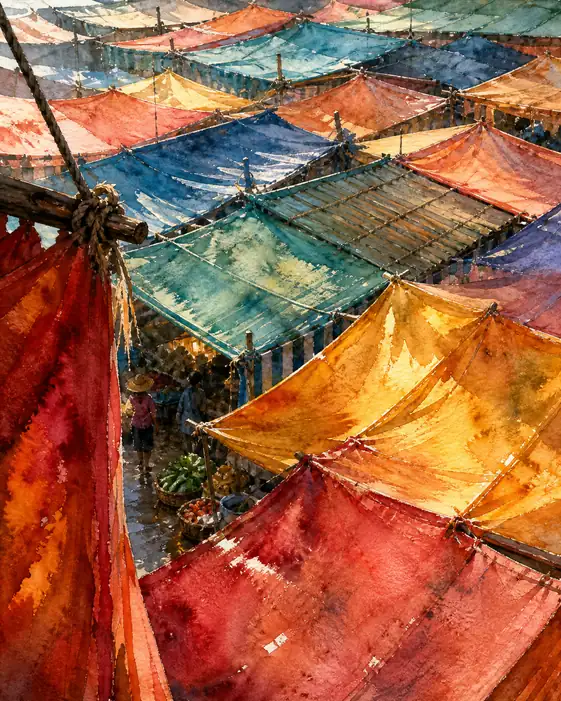 Kaleidoscopic Echoes of the Bazaar