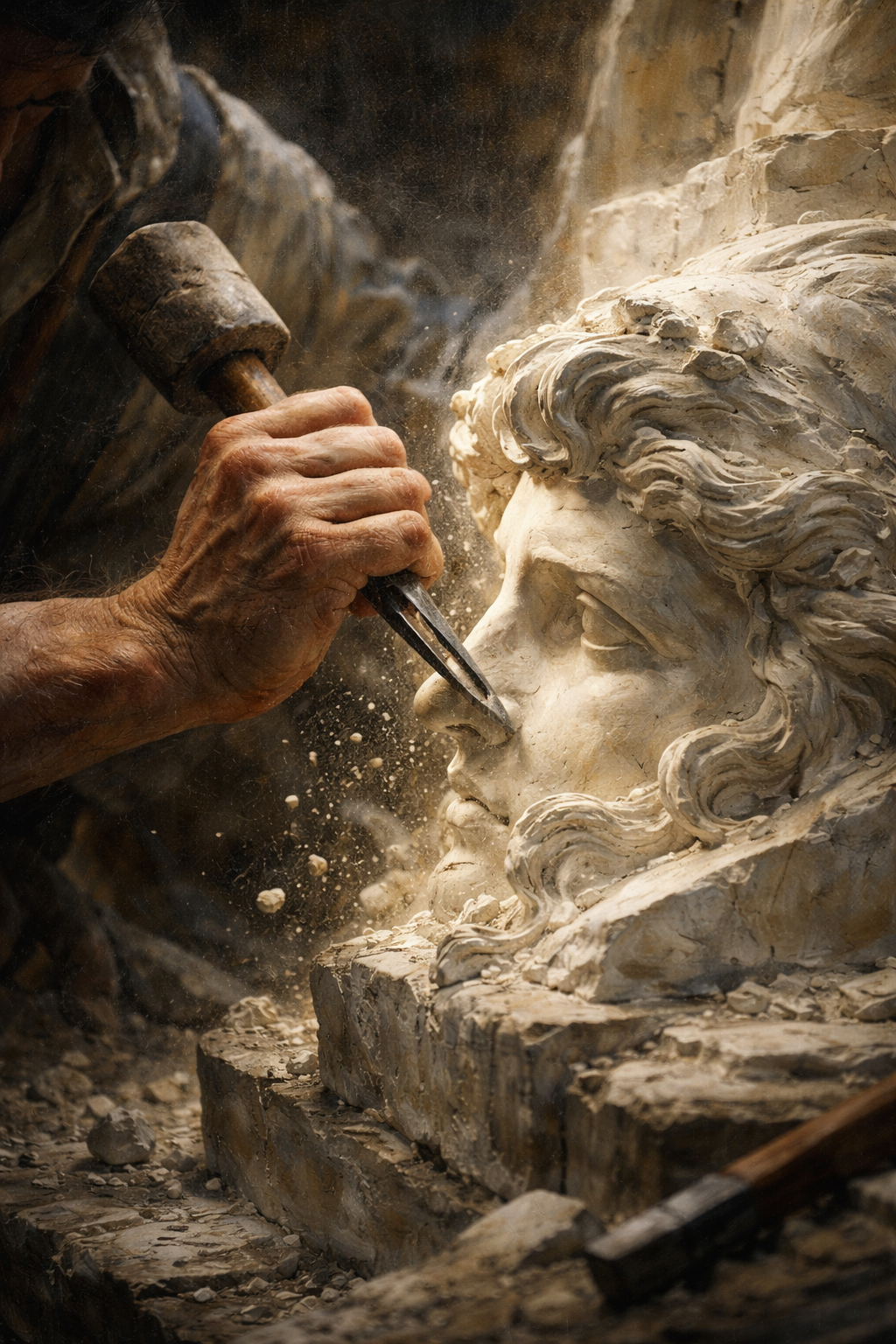
Awakening from Stone
Critique
1. Introduction This evocative oil painting captures the visceral intensity of a sculptor engaged in the transformative act of carving stone. The composition focuses on the dramatic moment of impact, where a raw block of marble begins to yield the elegant features of a classical head. Through a masterful depiction of motion and texture, the artist portrays the sculptor’s struggle to release a pre-existing form from its stony prison. The work serves as a powerful meditation on the physical and intellectual labor involved in the creation of classical art. 2. Description A muscular, aged hand dominates the center of the frame, firmly gripping a pointed metallic chisel positioned against the nose of a stone sculpture. A heavy wooden mallet is caught in the split second of striking the chisel, sending a cloud of fine white dust and jagged stone chips flying into the air. The emerging face possesses a serene, idealized expression with flowing, curly hair that contrasts sharply with the unworked, blocky stone surrounding it. The floor and workbench are covered in debris, attesting to the extensive work already completed by the artist. 3. Analysis The artist utilizes a strong directional light that casts deep, sharp shadows, emphasizing the three-dimensional quality of both the hand and the stone head. This lighting enhances the textural contrast between the rough, unfinished stone and the emerging smooth, polished skin of the sculpture. The inclusion of airborne dust creates a palpable sense of movement and auditory impact, making the viewer feel as though they are standing within the dusty workshop. The tight, vertical composition heightens the focus on the singular point of contact where creation occurs. 4. Interpretation and Evaluation The painting eloquently illustrates the concept of sculpture as an act of subtraction, where beauty is found by removing the unnecessary. The sculptor’s hand, weathered and strained, represents the human will imposing order upon the chaotic and resistant medium of stone. There is a profound sense of respect for the classical tradition, evidenced by the idealized features of the carved head. The technical execution is exceptional, particularly in the rendering of the kinetic energy of the flying debris and the subtle variations in the gray and white tones of the marble. 5. Conclusion Initially appearing as a scene of violent destruction, the work reveals itself upon closer study to be an act of profound creation and rebirth. It successfully captures the paradox of how heavy, brute force can lead to the production of something delicate and spiritually uplifting. The painting does not merely depict a craftsman at work, but explores the eternal human desire to give permanent form to the ephemeral ideals of beauty. Ultimately, it stands as a brilliant tribute to the enduring power and physical reality of the sculptor’s art.
Same Subcategory
 Symphony of Threads
Similar Artworks
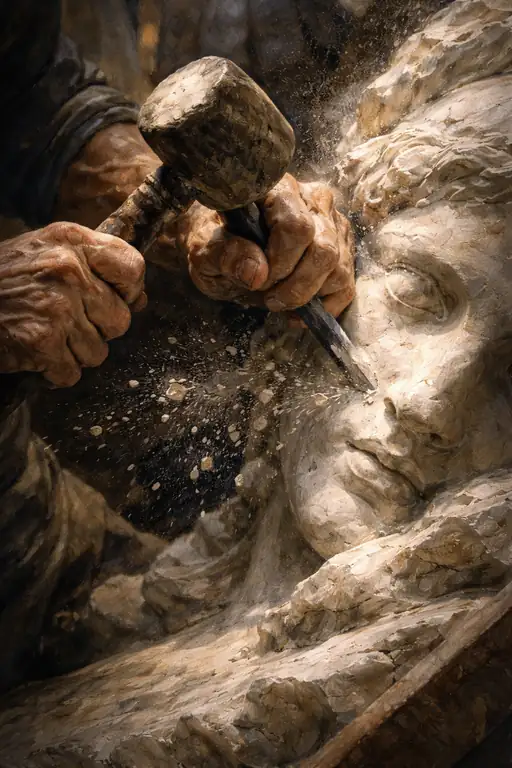 The Chisel's Climax: Birth from Stone
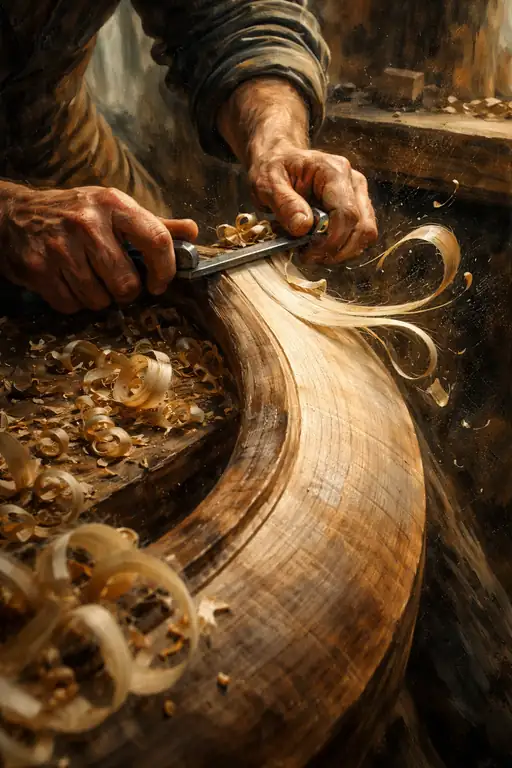 Whispers of the Wood
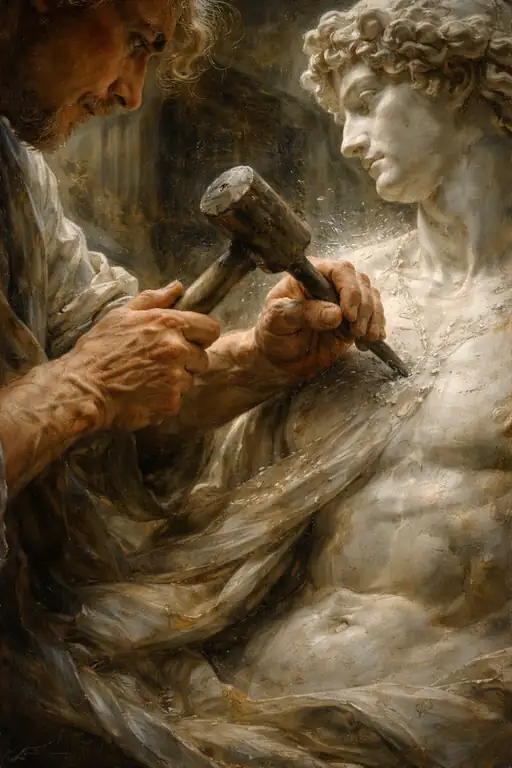 The Genesis of Form: Breathing Life into Marble
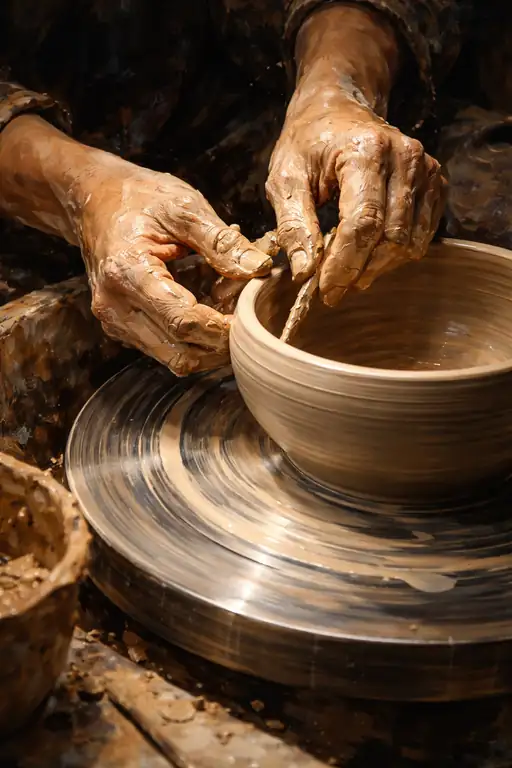 Earthly Genesis: Form from Formless Clay
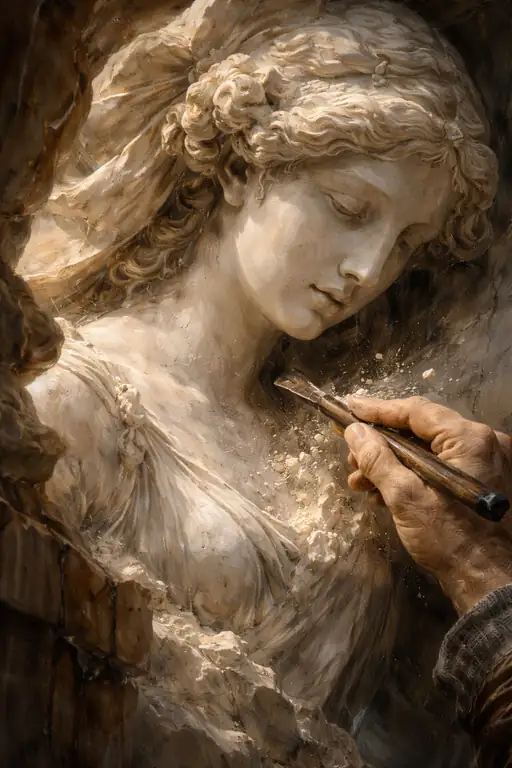 The Creator's Pulse
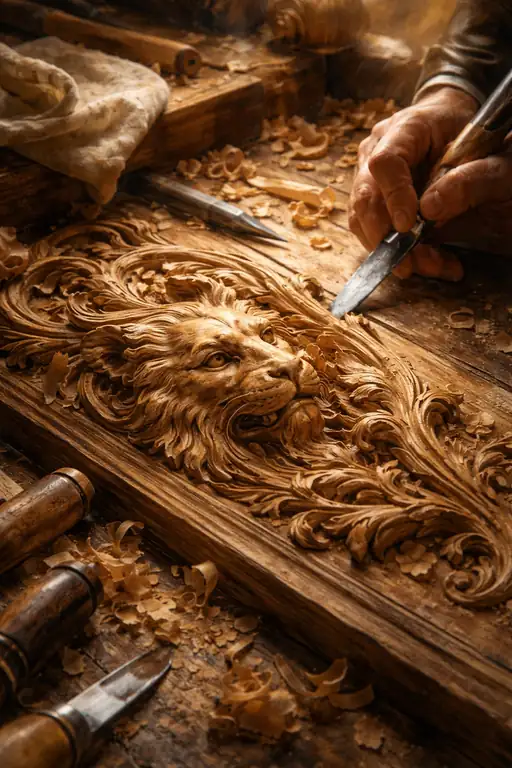 The Artisan's Devotion Etched in Wood
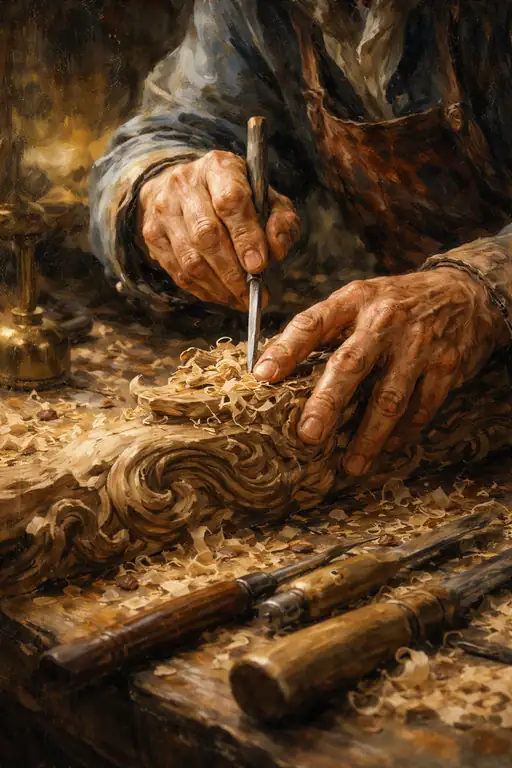 The Soul Carved in Wood
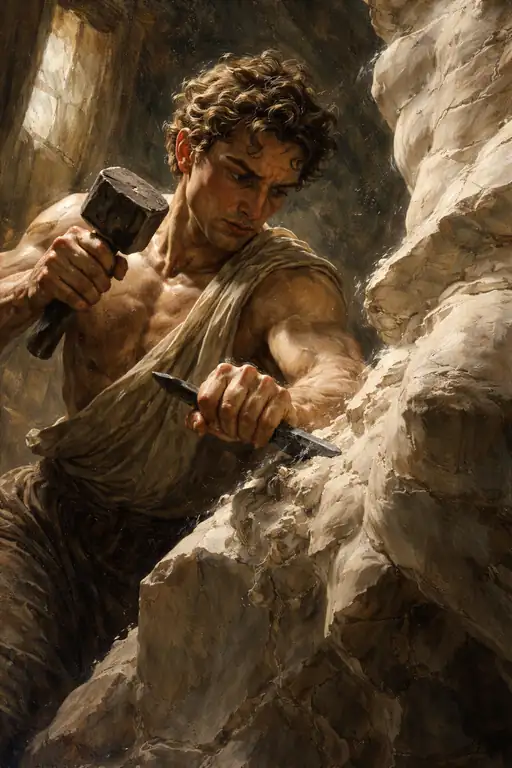 Awakening the Slumbering Stone
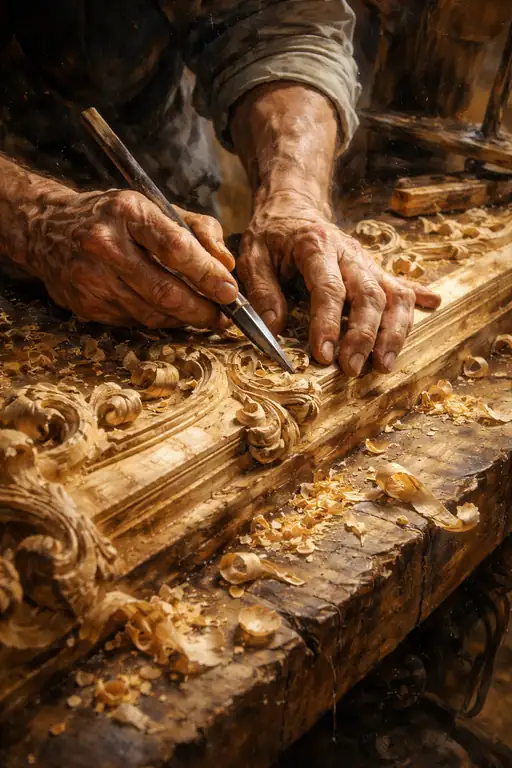 The Enduring Legacy of Woodcarving
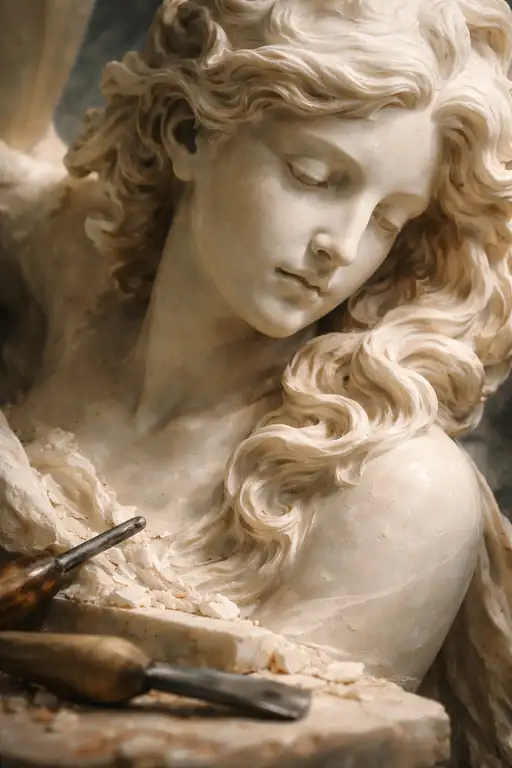 Goddess Awakening from Stone