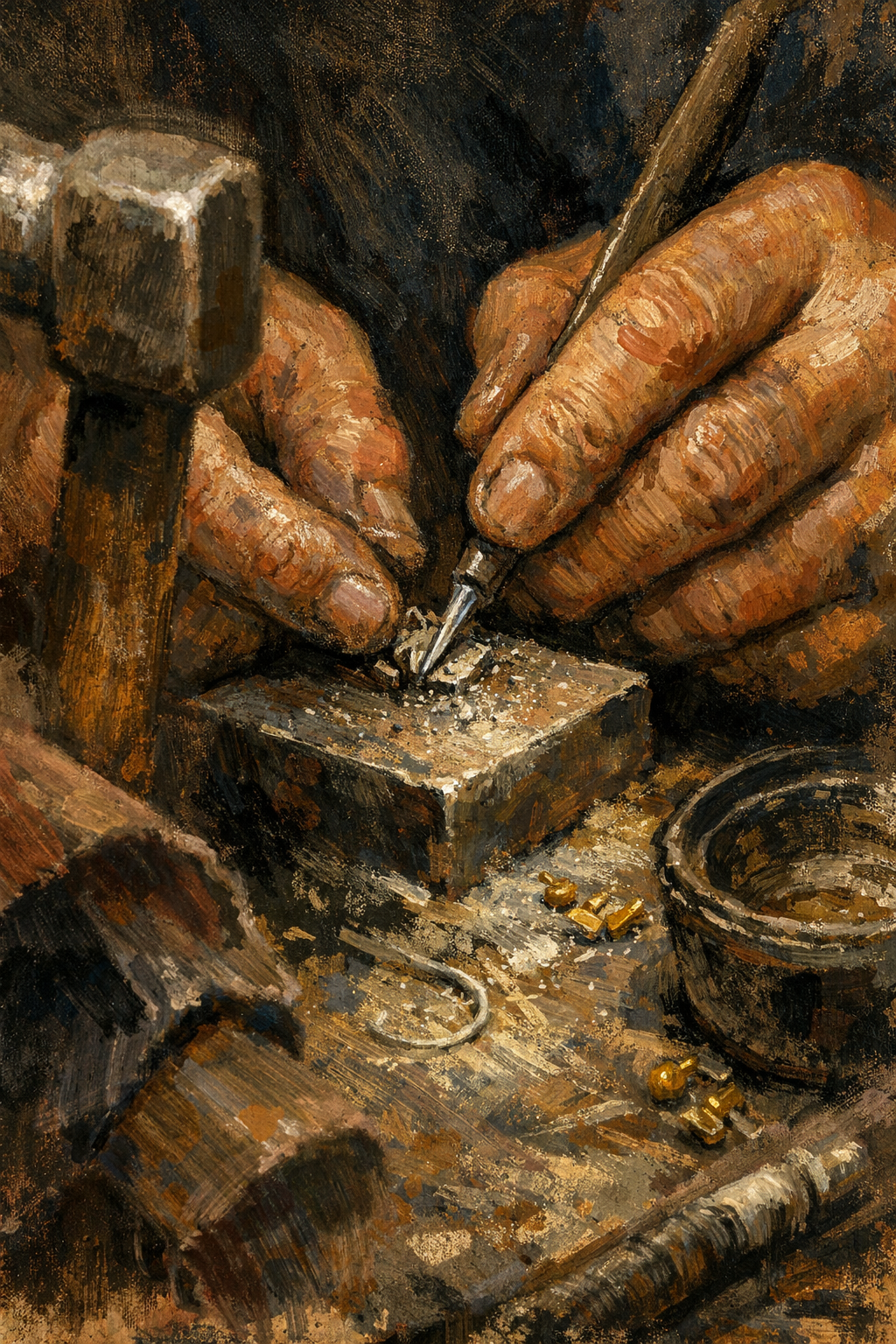
The Weight of Time in Calloused Hands
Critique
1. Introduction This powerful oil painting depicts the intense focus and physical demand of manual craftsmanship. The work centers on a pair of weathered hands engaged in a delicate metalworking task, utilizing a tight composition to immerse the viewer in the artisan’s world. Emphasis on the textures of skin and raw materials serves as a tribute to the dignity of skilled labor and the tactile nature of creation. 2. Description The composition is dominated by two large, calloused hands positioned over a small rectangular metal block. The right hand holds a fine chisel, while the left steadies the workpiece. To the left, a heavy wooden hammer rests, its surface showing signs of long use. Scattered across the dark, gritty workbench are small fragments of gold-colored metal and fine dust, alongside a dark ceramic bowl. The scene is illuminated from an unseen source, casting deep shadows and highlighting the rugged contours of the craftsman’s fingers. 3. Analysis Technically, the artist employs a thick, impasto-like brushwork that lends the painting a physical, almost sculptural quality. The heavy application of paint mirrors the ruggedness of the subject matter, creating a surface that is as textured as the weathered skin it portrays. The lighting is dramatic, using a limited but effective palette of earthy browns, ochres, and metallic highlights to create a strong sense of volume and depth. The vertical orientation and close-up perspective eliminate all distractions, forcing the viewer to confront the raw materiality of the workshop. 4. Interpretation and Evaluation This work can be interpreted as an exploration of the intimate relationship between the creator and the object. The contrast between the massive, powerful hands and the minute, delicate work on the metal block suggests a balance of strength and precision. There is a sense of timelessness in the scene, as if the act of carving and shaping metal transcends specific eras. The artist’s ability to convey the weight and history of the tools through rough, expressive strokes is highly commendable, demonstrating a deep understanding of the emotional potential of oil paint. 5. Conclusion In conclusion, the painting is a masterful study of human industry, successfully capturing the essence of manual work through its gritty and honest aesthetic. The initial impression of a dark, cluttered workshop gives way to an appreciation of the focused energy and technical skill required for such labor. By celebrating the physical reality of the craft, the work achieves a balanced and emotionally resonant portrayal of the human spirit. This work remains a compelling example of how traditional techniques can be used to document the enduring value of craftsmanship.
Same Subcategory
 The Persistent Stroke
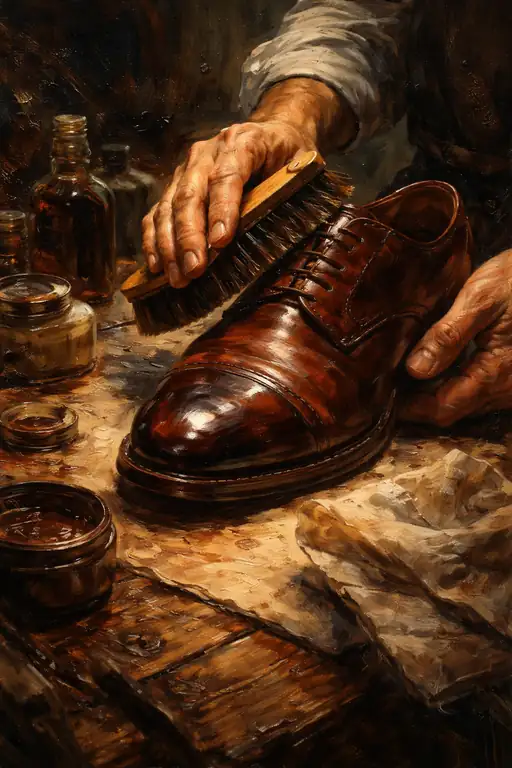 Reviving the Sole
Similar Artworks
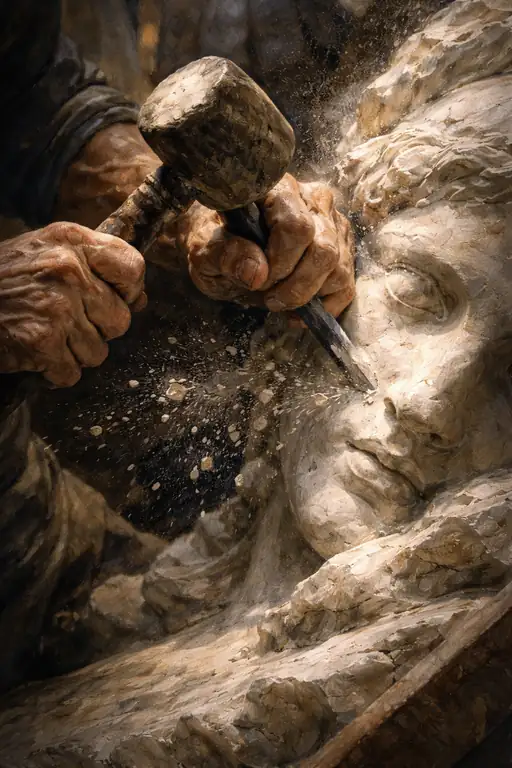 The Chisel's Climax: Birth from Stone
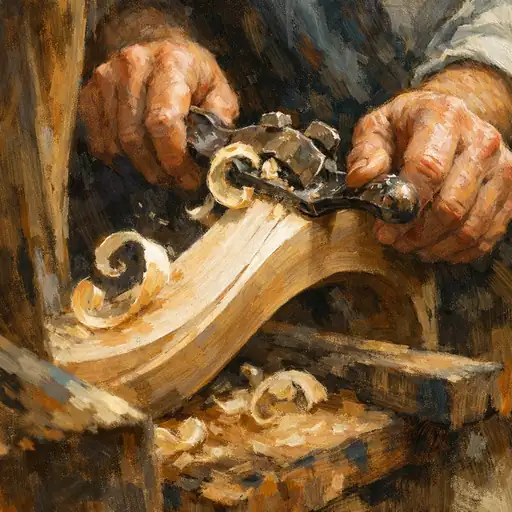 The Graceful Curve of Craftsmanship
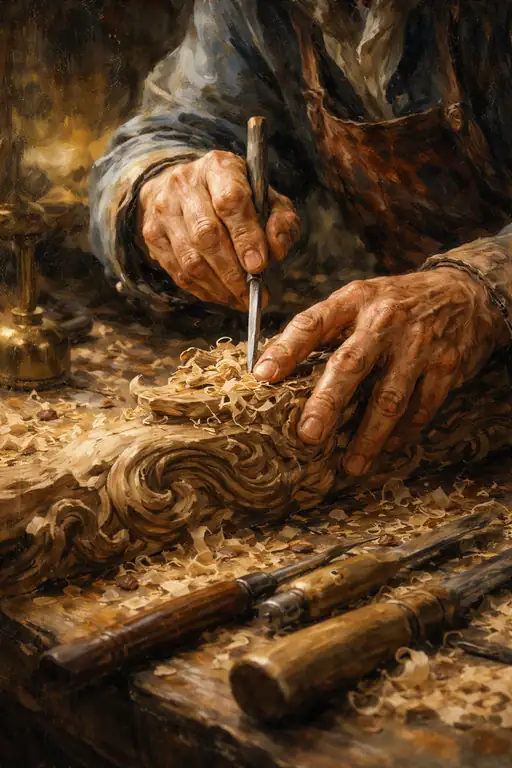 The Soul Carved in Wood
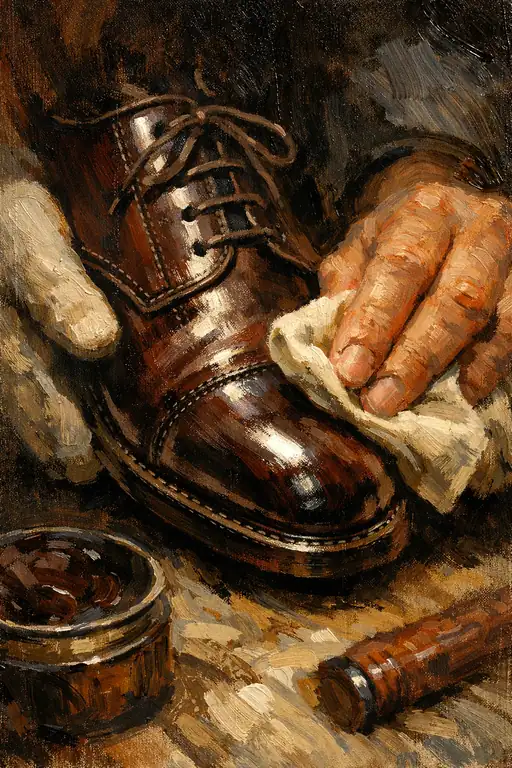 The Polished Pride: A Artisan's Touch
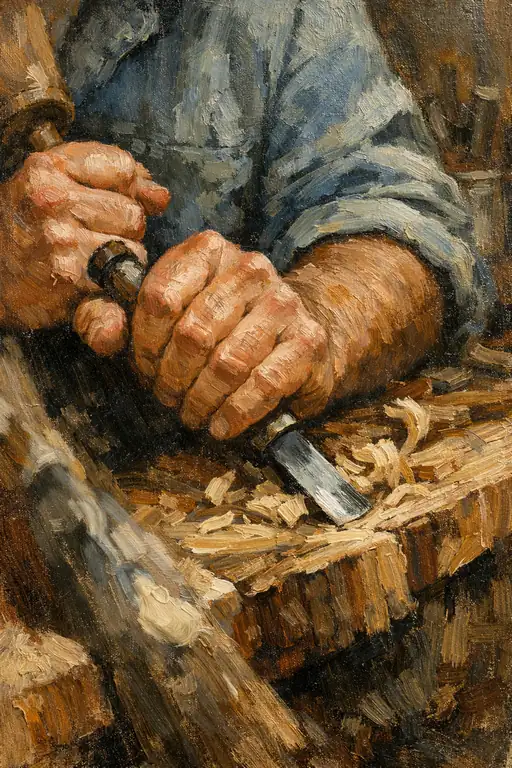 Carving Time with Weathered Hands
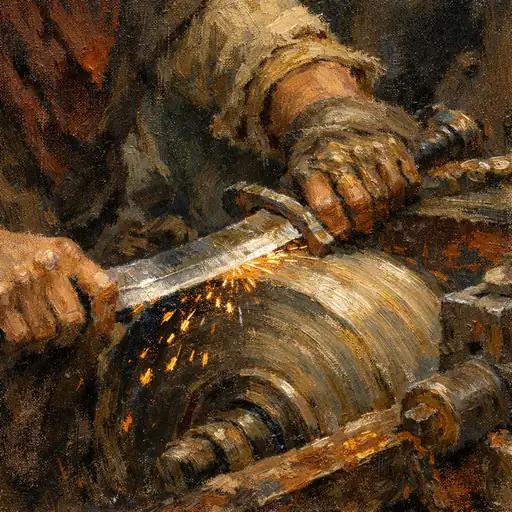 Sparks of the Forged Soul
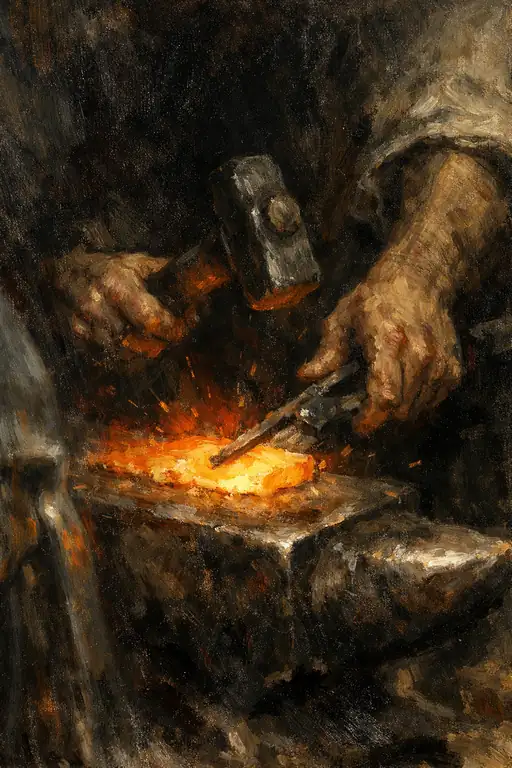 Heartbeat of the Forge
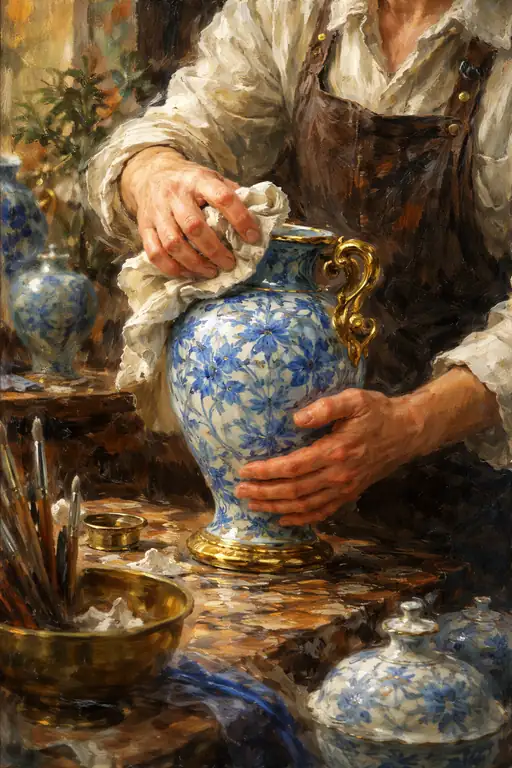 Gentle Hands of the Blue Heritage
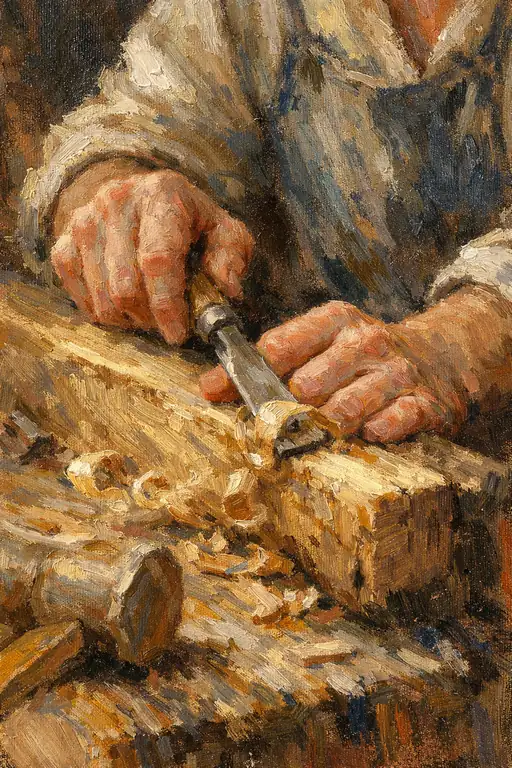 The Last Ember of Hope
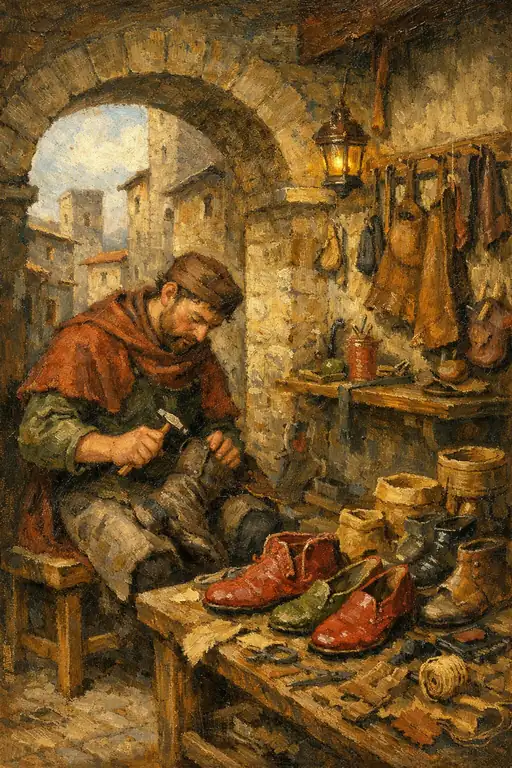 A Stitch in the Archway's Shadow