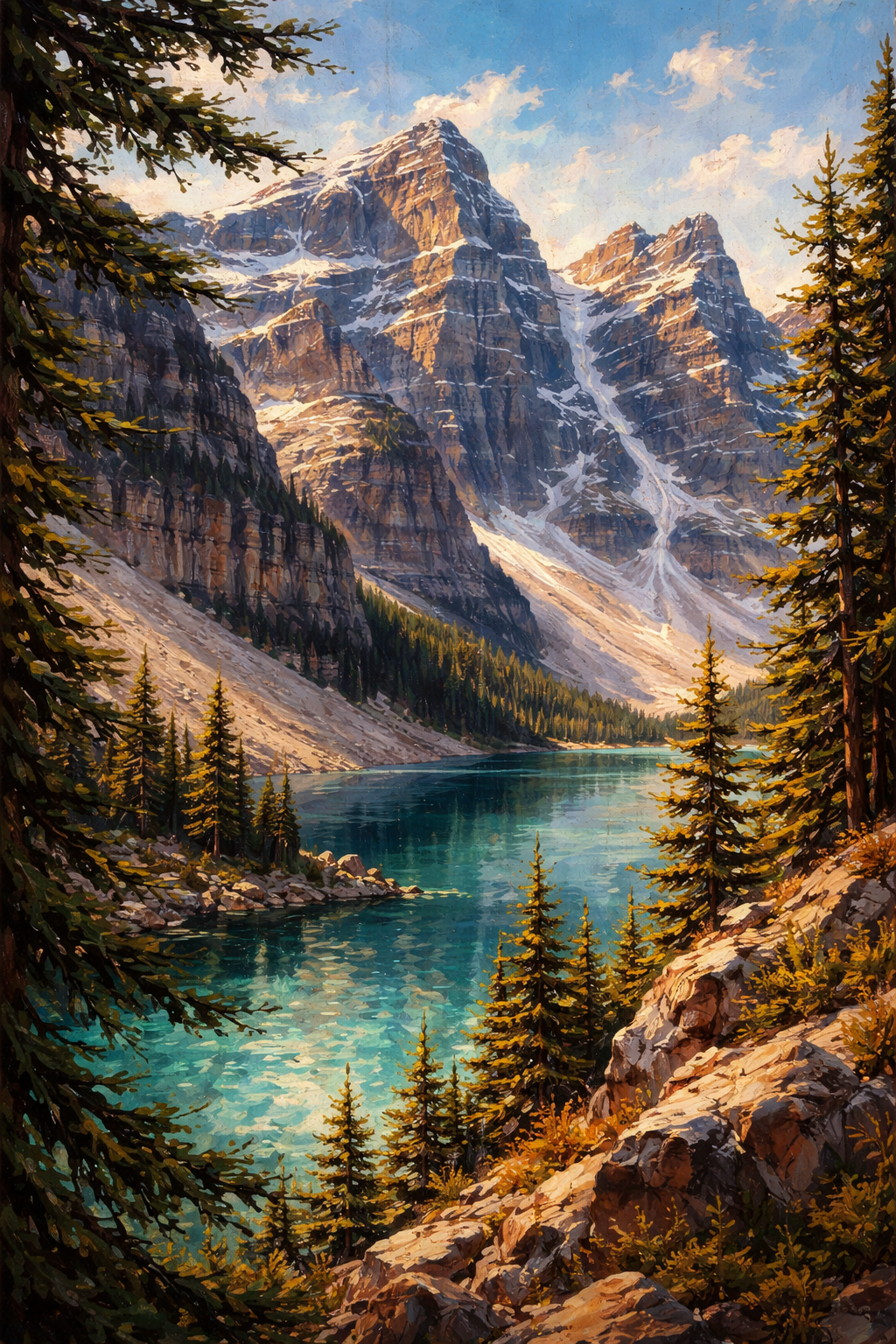
Lullaby for the Wandering Soul
Critique
1. Introduction This painting presents a grand mountain landscape featuring rugged peaks and a serene alpine lake. The composition meticulously renders natural textures, achieving a sense of scale that captures the viewer's attention. While following traditional landscape forms, the work delivers a fresh impression through its unique luminosity and precise spatial arrangement. 2. Description Densely forested evergreens in deep green tones occupy the foreground, functioning as a natural border for the scene. The central lake transitions from translucent turquoise to deep emerald, faintly reflecting the surrounding cliffs on its calm surface. In the background, massive mountain ranges rise with vertical precipices and patches of white snow. Warm sunlight bathes the right slopes in a vibrant golden hue under a clear sky. 3. Analysis The heavy framing by the foreground trees enhances stability while guiding the viewer's eye toward the vast central scenery. The color scheme creates tension, as the cool tones of the blue lake contrast with the warm orange-yellow sunlight on the rocks. The tactile texture of the rugged rocks and the gentle ripples are recreated through careful brushwork. The transition between light and shadow highlights the three-dimensionality of the space. 4. Interpretation and Evaluation The work symbolically represents the absolute silence of the wilderness and the life force inherent in nature. The artist constructs an idealized world of sublime beauty through skillful lighting. Technically, the differentiation between the transparency of the water and the weight of the massive rocks is commendable. The solid completion based on classical aesthetics provides the piece with a quiet, persuasive power. 5. Conclusion Initial observation reveals a beautiful landscape, but further study draws the viewer into the depth of expression created by the light and material quality. It is an accomplished painting that sublimes awe for nature into quiet emotion. The harmony between the greatness of nature and the presence of the observer is palpable in this piece.
Same Subcategory
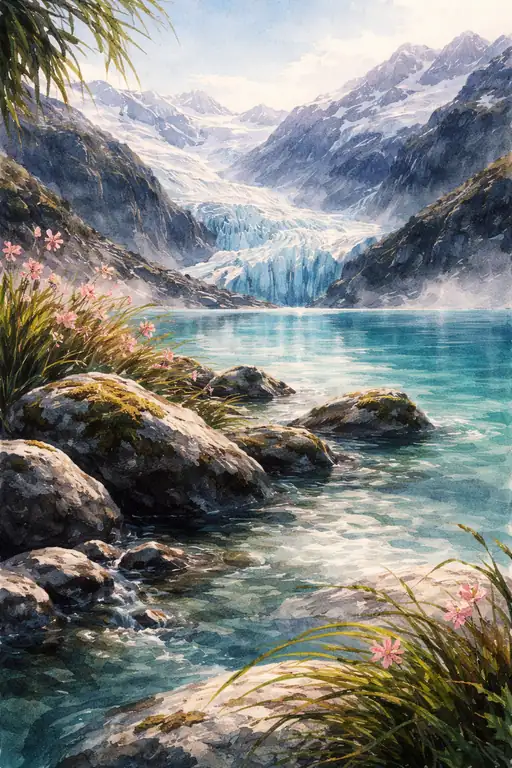 Ethereal Solitude of the Glacial Lake
Similar Artworks
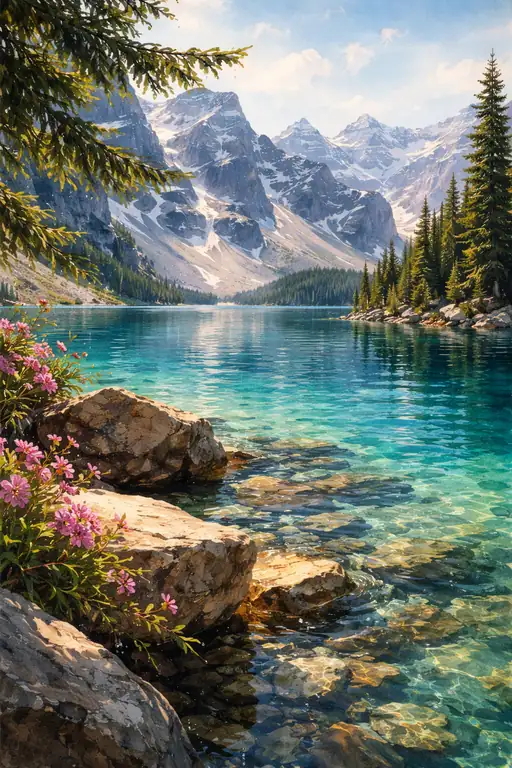 The Forgotten Symphony of Autumn
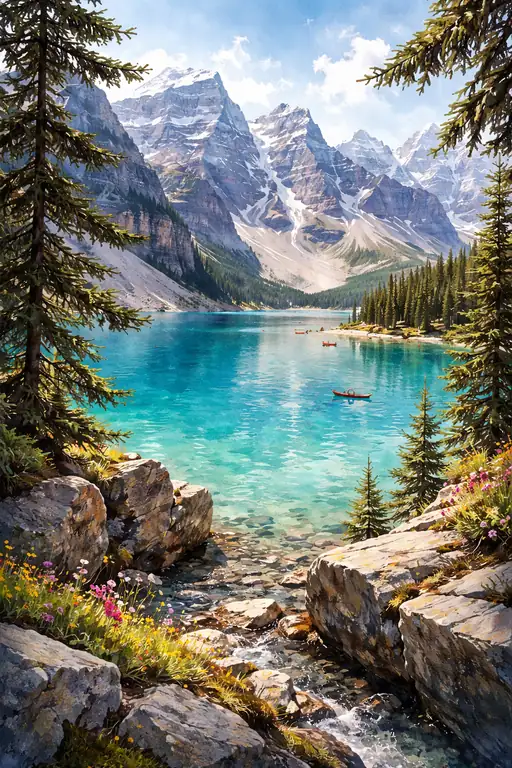 The Azure Sanctuary of Moraine
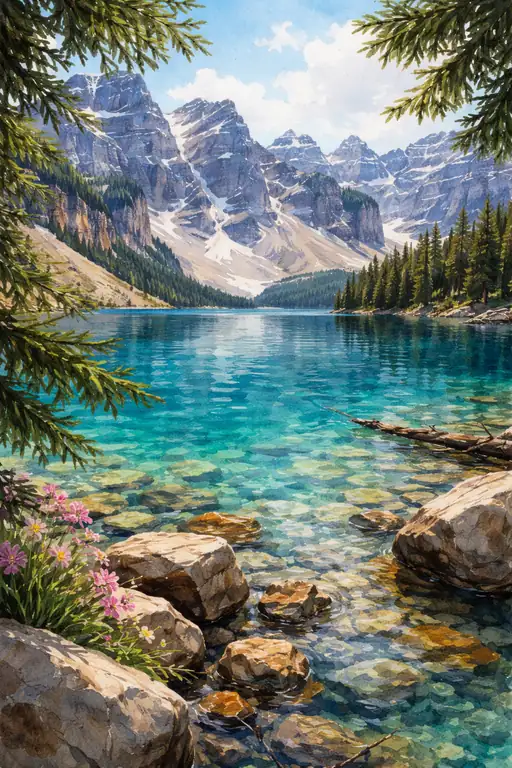 Serenity at Moraine Lake
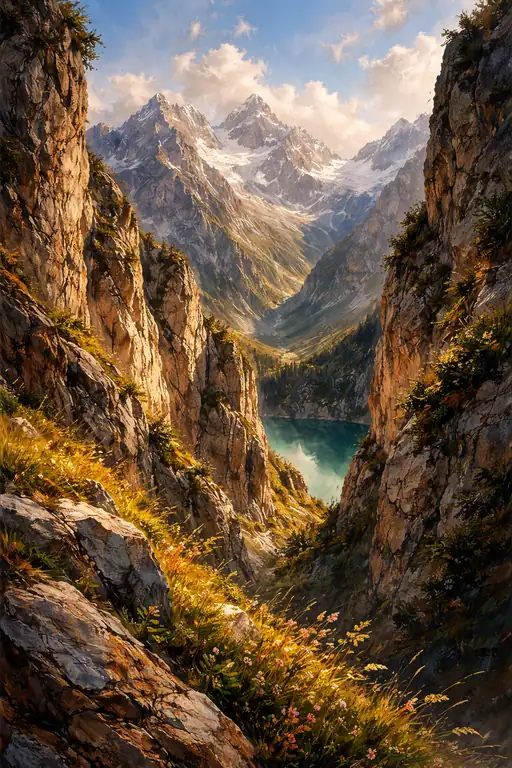 Ethereal Glow Over the Turquoise Valley
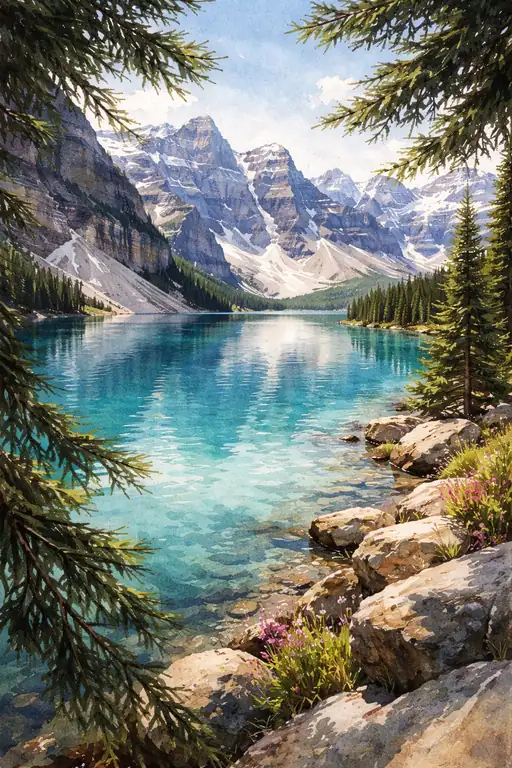 Tranquil Moraine Lake in the Rockies
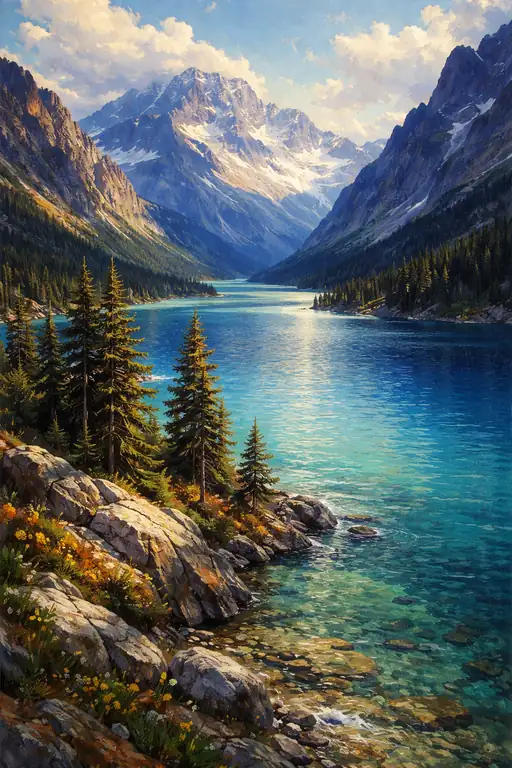 Slumber of the Alpine Giants
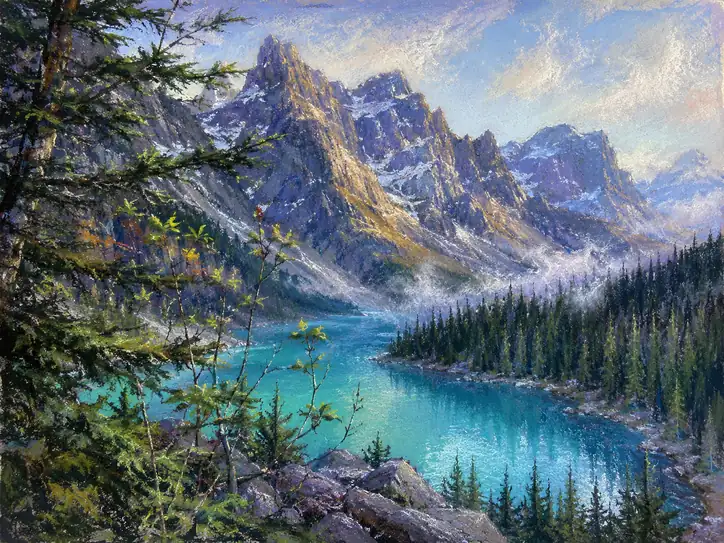 Sanctuary of the Turquoise Waters
 Sanctuary of the Silent Mist
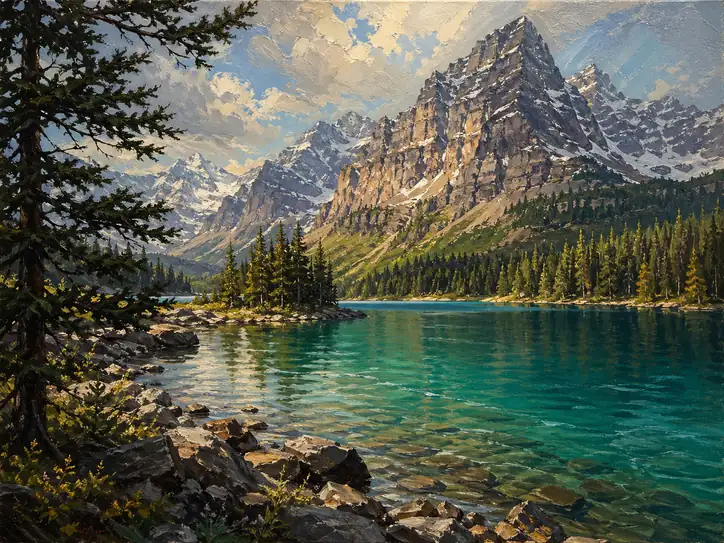 Stillness of the Alpine Throne
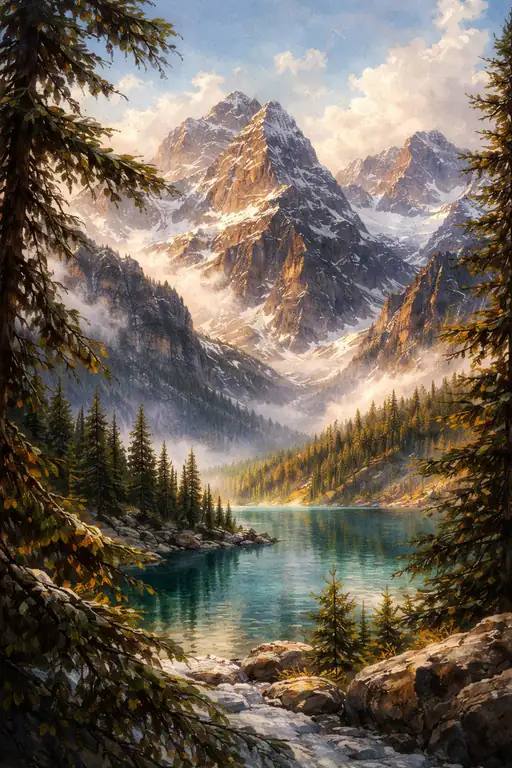 Majestic Peaks at Dawn