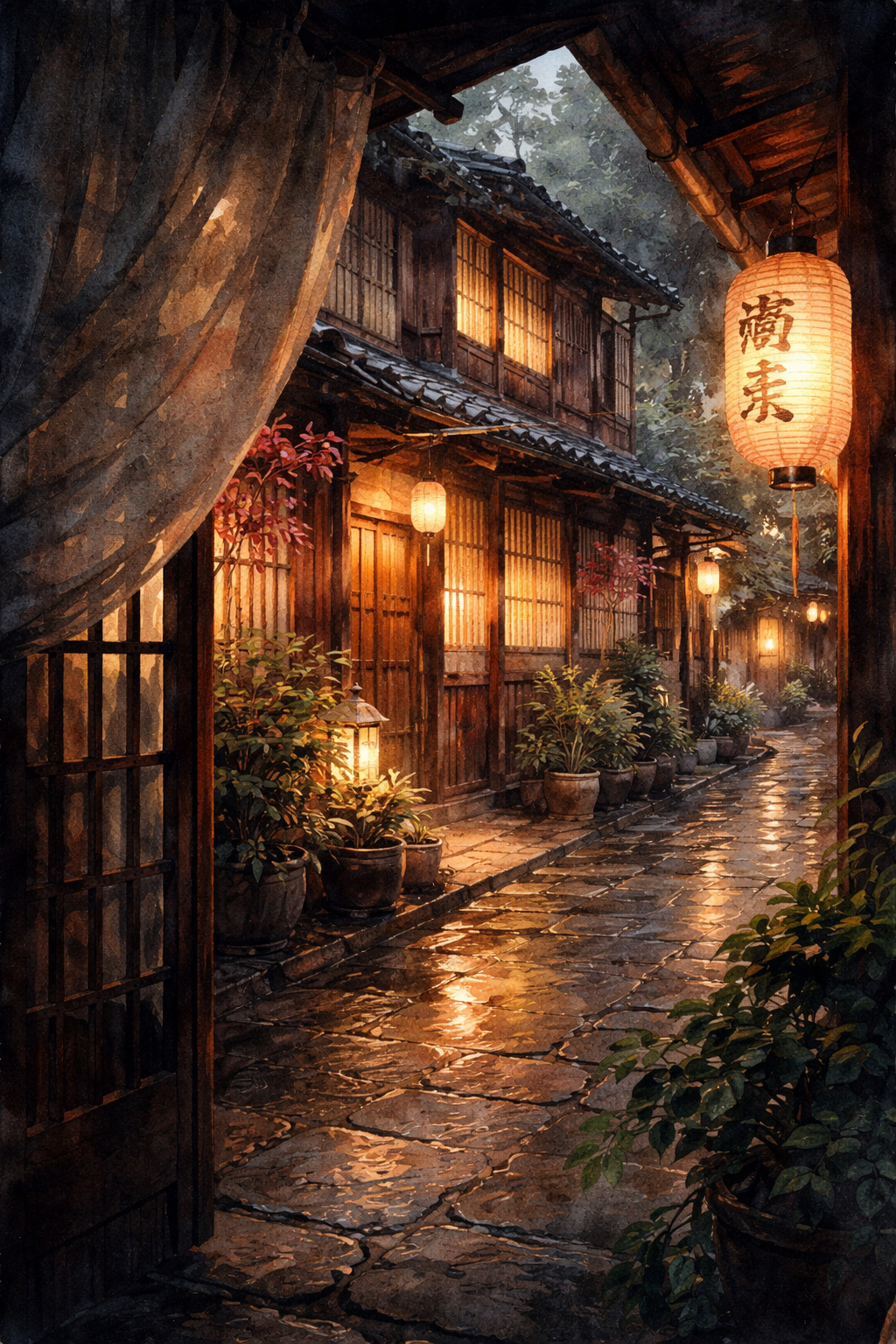
The Lantern's Reflection: A Rainy Night in Kyoto
Critique
1. Introduction This evocative oil painting captures the quiet beauty of a traditional Japanese alleyway at night, shortly after a rainfall. The scene is defined by the intimate glow of lanterns that reflect off the wet, polished stone pavement. The overall atmosphere is one of profound stillness and mystery, inviting the viewer into a secluded urban space where history and nature coexist in a harmonious, nocturnal embrace. 2. Description The composition features a narrow, winding path lined with traditional wooden machiya buildings, their lattice windows emitting a soft, warm light from within. In the upper right foreground, a large paper lantern with black kanji characters provides a primary light source, while smaller lanterns recede into the distance. Numerous potted plants are neatly arranged along the base of the buildings, their leaves catching the ambient light. The view is framed on the left by a dark curtain and a wooden doorframe, suggesting a vantage point from a threshold. 3. Analysis The artist demonstrates a mastery of light and shadow, using a warm color palette of ambers, golds, and deep browns to contrast with the dark, shadowy corners of the alley. The highlight of the work is the rendering of the wet cobblestones, which utilize broad, rhythmic brushstrokes to capture the complex reflections of the surrounding lights. The vertical lines of the wooden slats and the diagonal recession of the path create a strong sense of spatial depth and architectural structure. 4. Interpretation and Evaluation The work successfully conveys the Japanese aesthetic of "shizue" or tranquility through its focus on silent, inanimate elements. By omitting human figures, the artist allows the architecture and the light to become the protagonists of the narrative, emphasizing a sense of timelessness. The technical execution of the varied textures—from the rough stone to the delicate paper of the lanterns—is highly accomplished. It is a contemplative piece that elevates a simple urban scene into a poetic meditation on light. 5. Conclusion This painting stands as a refined exploration of the interplay between traditional architecture and nocturnal atmosphere. Initial impressions of a dark alleyway are replaced by an appreciation for the intricate layers of light and reflection that the artist has carefully constructed. It is a compelling and technically sophisticated work that effectively captures the unique character of Japan’s historic urban environments under the cover of night.
Same Subcategory
Similar Artworks
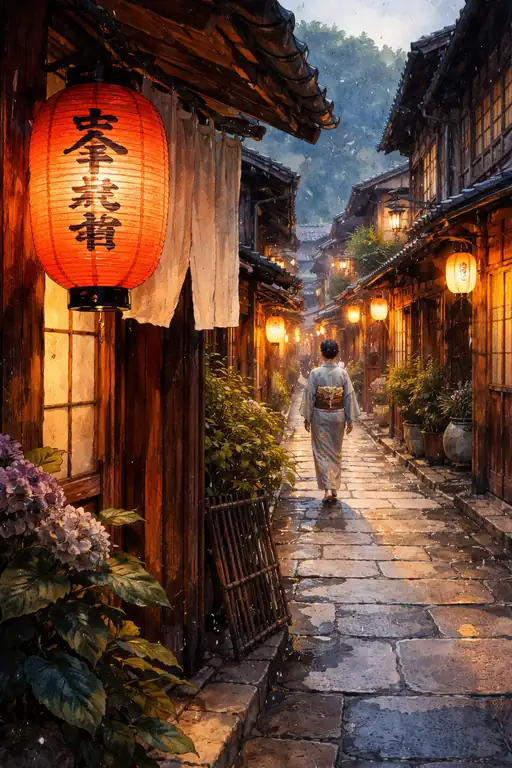 Gliding Through the Golden Tapestry: A Serenade on the Grand Canal
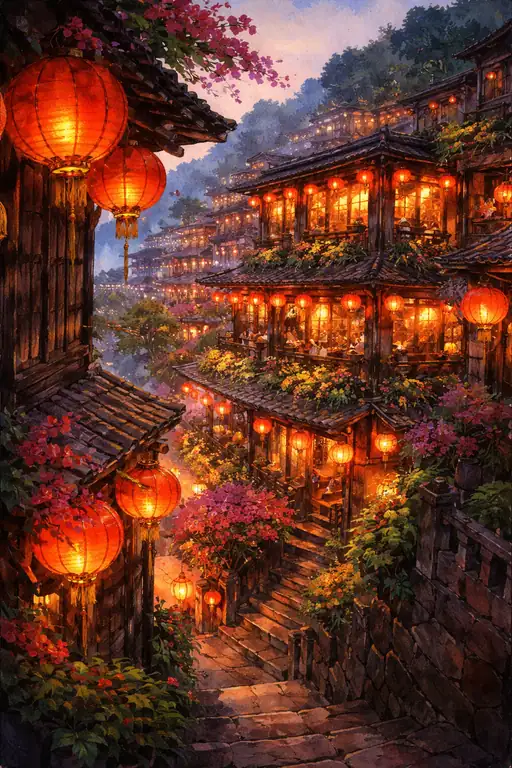 The Festive Glow of the Tiered Village
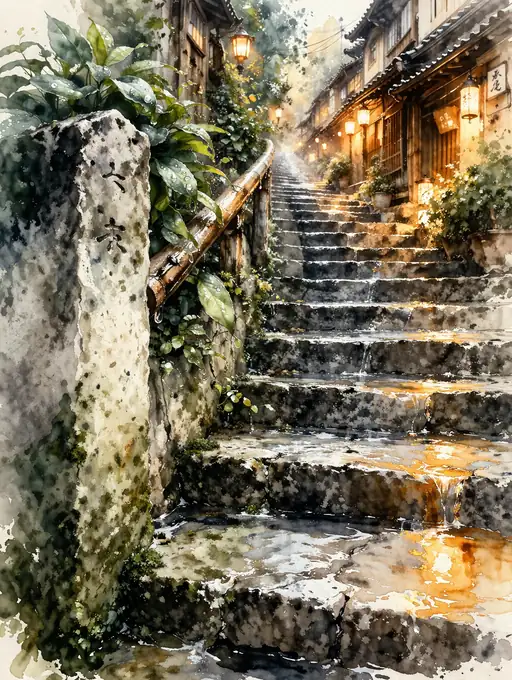 Reflections on the Wet Stone Path
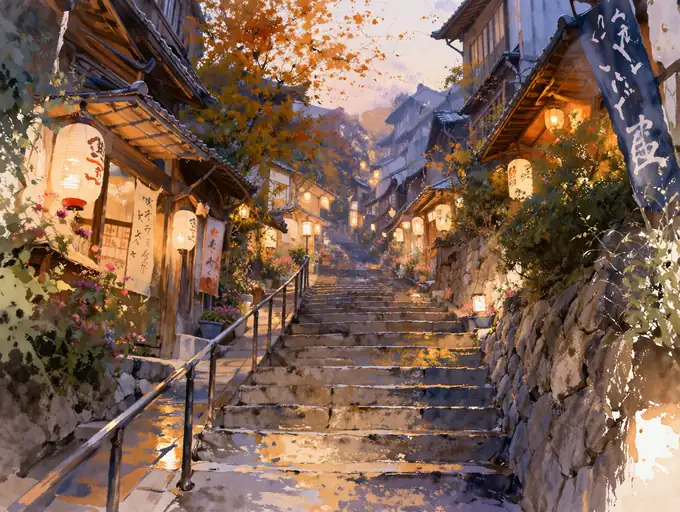 Nostalgic Dusk on the Stone Steps
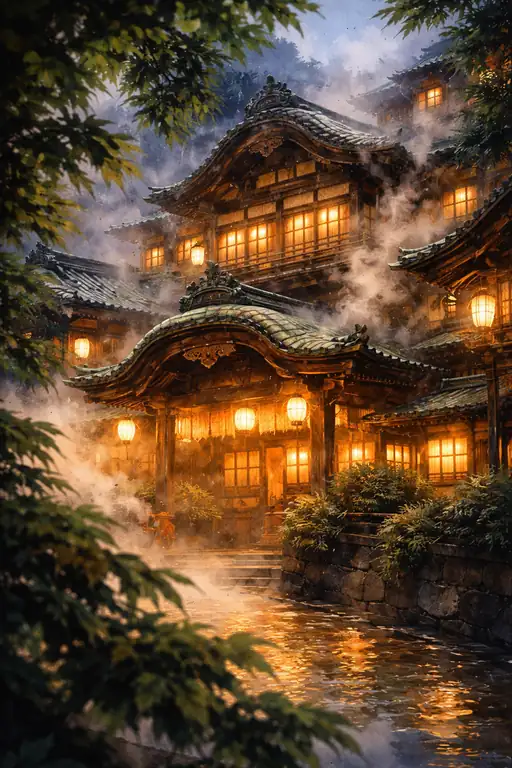 Mystic Vapors of the Evening Lanterns
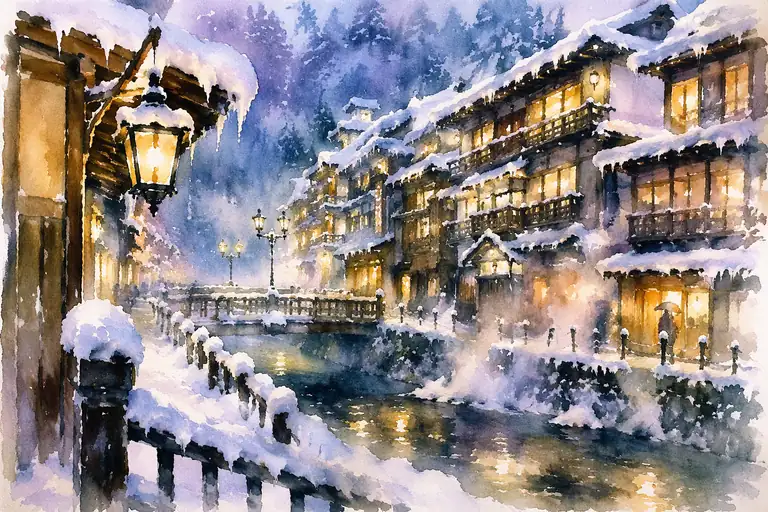 Twilight Whispers Along the Snow
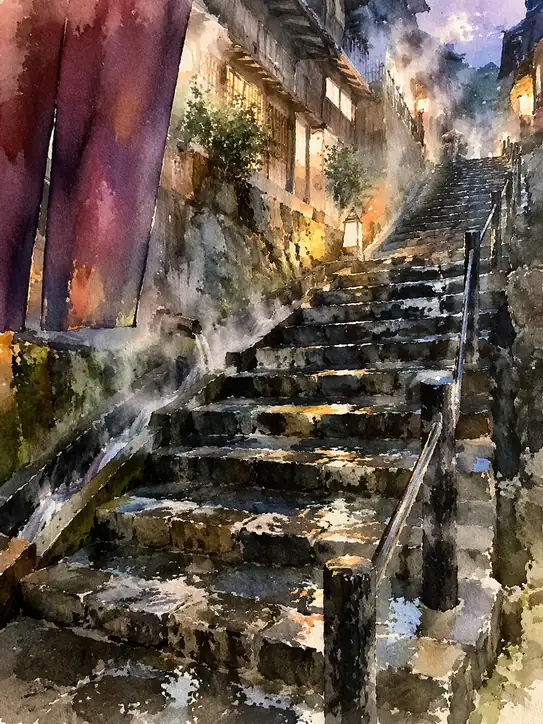 Dusk Settles on the Stone Steps
 Nostalgia Wrapped in Amber Light
 Lanterns' Glow on the Misty Trail
 Autumn's Embrace