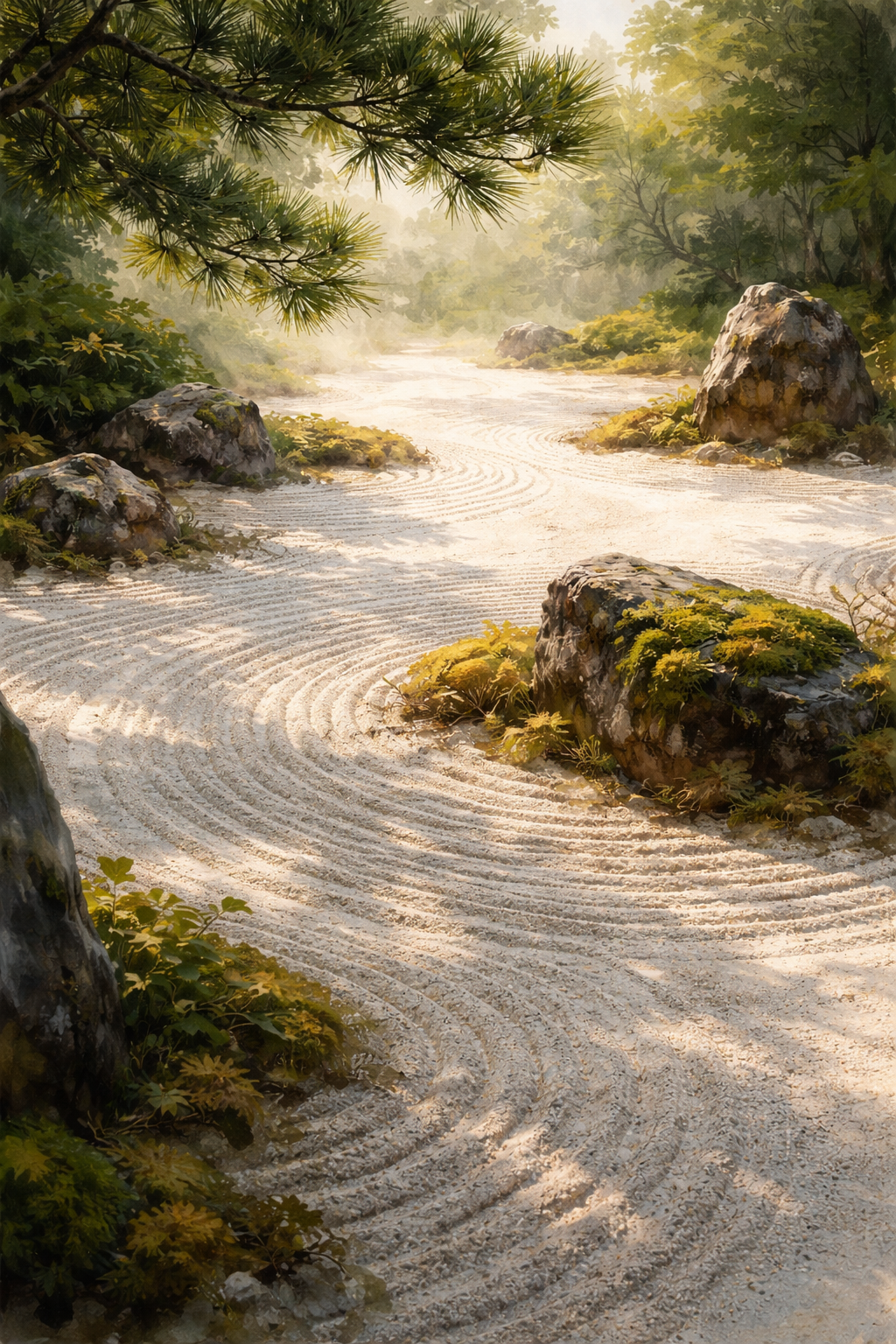
Meditative Silence: The Karesansui Cosmos
Critique
1. Introduction This artwork depicts a tranquil Zen dry garden, or karesansui, characterized by its minimalist beauty and symbolic representation of nature. The scene focuses on a vast area of raked white gravel that surrounds large, weathered stones covered in green moss. Set within a vertical format, the painting captures the meditative essence of Japanese landscape art, where simple elements evoke profound spiritual themes. 2. Description The foreground is filled with the rhythmic, concentric patterns of raked sand, which swirl around several prominent dark boulders. These rocks are partially adorned with lush moss and small green plants, suggesting islands in a metaphorical sea. Overhanging from the upper left, the needles of a pine tree frame the top of the composition. In the background, a dense, misty forest is bathed in a soft, ethereal light that blurs the boundaries between the garden and the wild forest. 3. Analysis The artist uses the circular patterns in the gravel to create a powerful sense of movement and visual rhythm. These lines lead the viewer’s eye from the lower foreground toward the luminous center of the painting. The contrast between the light-colored sand and the dark, heavy masses of the boulders provides a stable and grounded feel to the ethereal atmosphere. The vertical orientation emphasizes the depth of the garden and the height of the pine branches, creating a balanced and immersive perspective. 4. Interpretation and Evaluation This work successfully conveys the core principles of Zen philosophy: simplicity, stillness, and the beauty found in the void. The technical skill in rendering the subtle variations of light on the textured sand is particularly noteworthy. The integration of the garden with the misty natural background suggests a seamless continuity between human-created spaces and the broader universe. The painting is a masterful exploration of texture, light, and silence. 5. Conclusion Initial observation reveals a simple garden scene, but closer inspection highlights the deliberate artistry in every line and shadow. The interaction between the structured gravel and the organic forms of the moss and pine creates a deep sense of harmony. Ultimately, the painting stands as a serene and profound tribute to the enduring aesthetic of the Japanese dry garden.
Same Subcategory
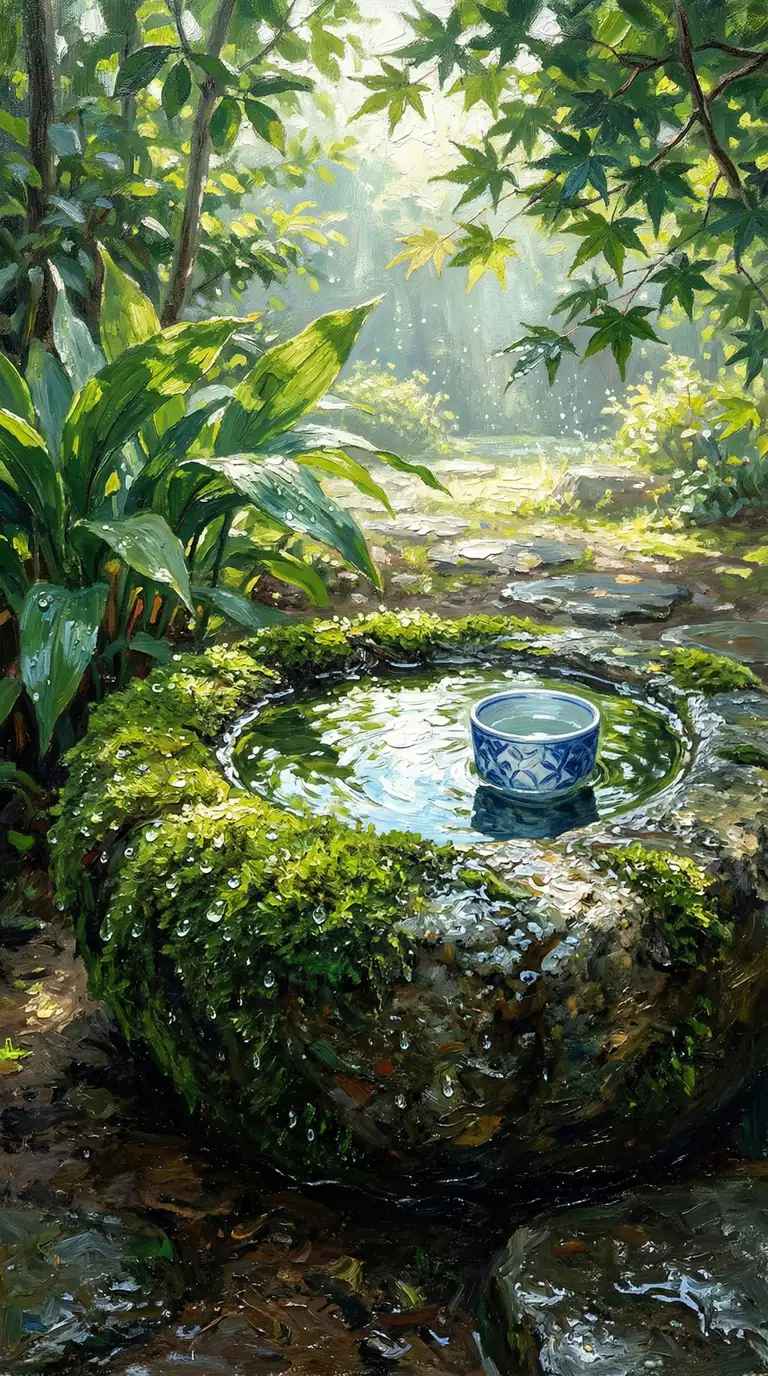 Reflection in the Timeless Basin
Similar Artworks
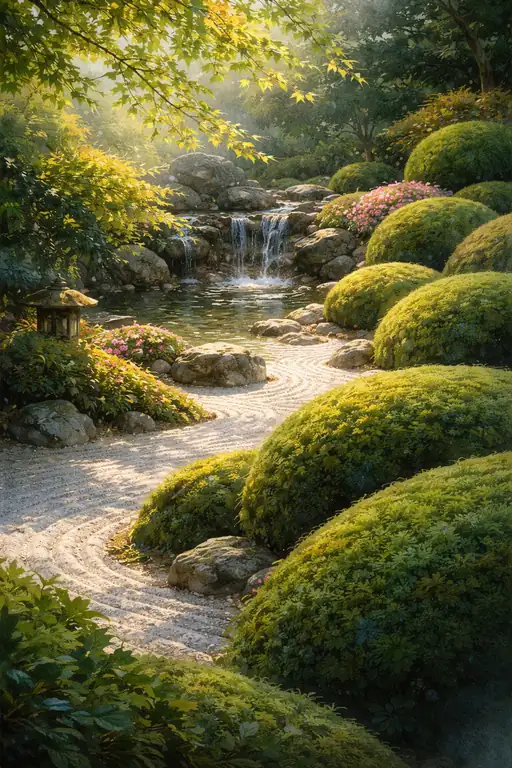 Ripples of the Raked Zen Sea
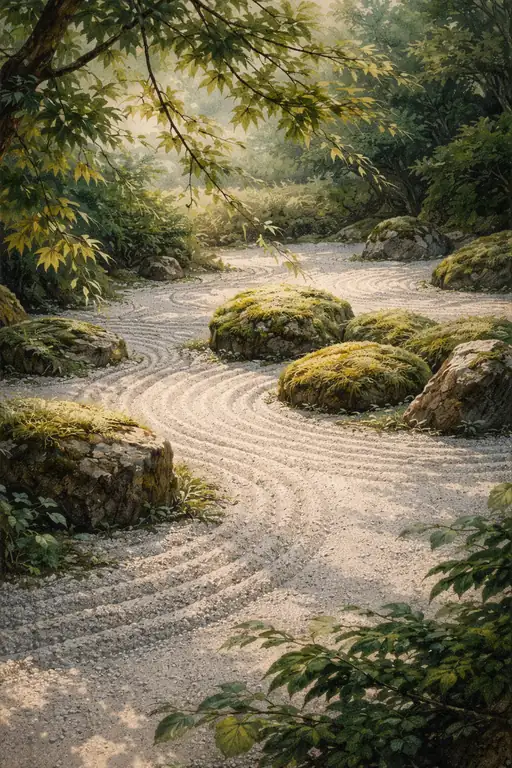 Rhythms of the Raked Sand
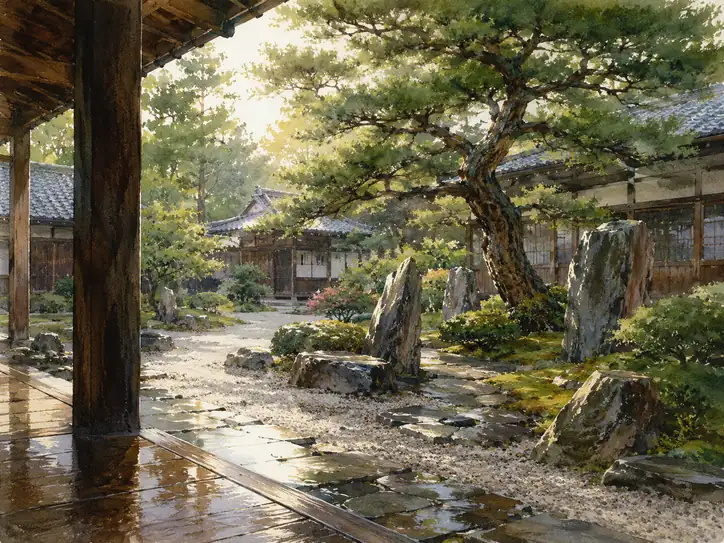 Reflections of Tranquility: Sunlight on the Wet Engawa
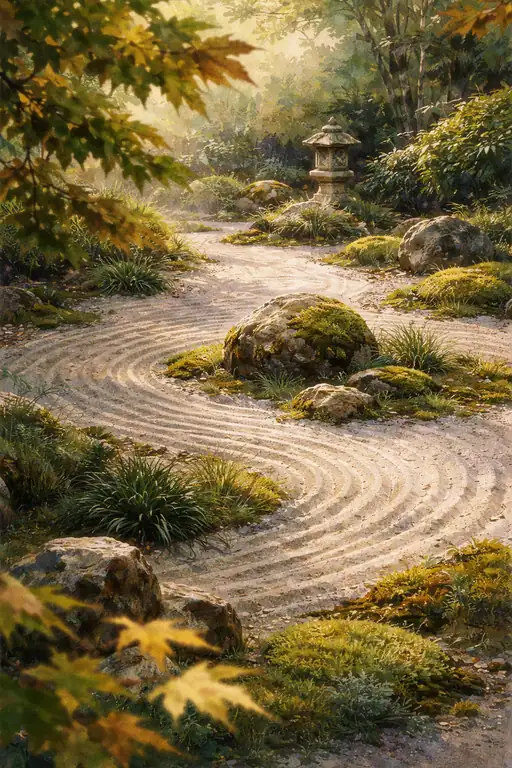 The Golden Harmony
 One Red Word in the Garden of Silence
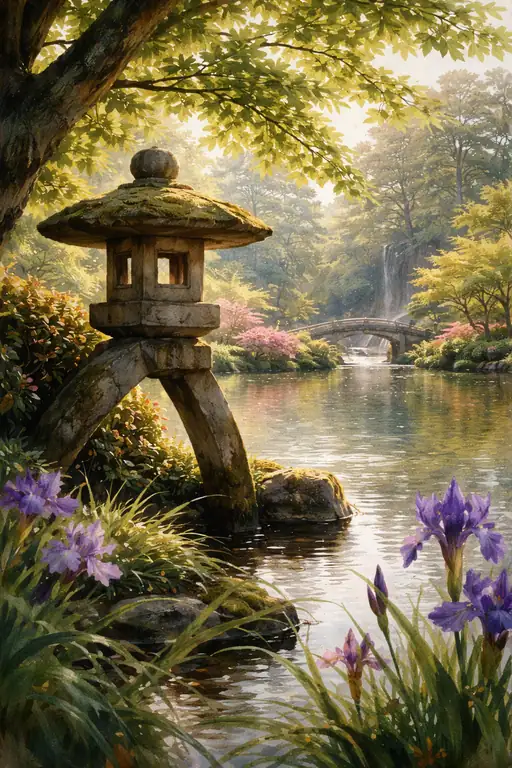 Serenity of the Whispering Waterfall
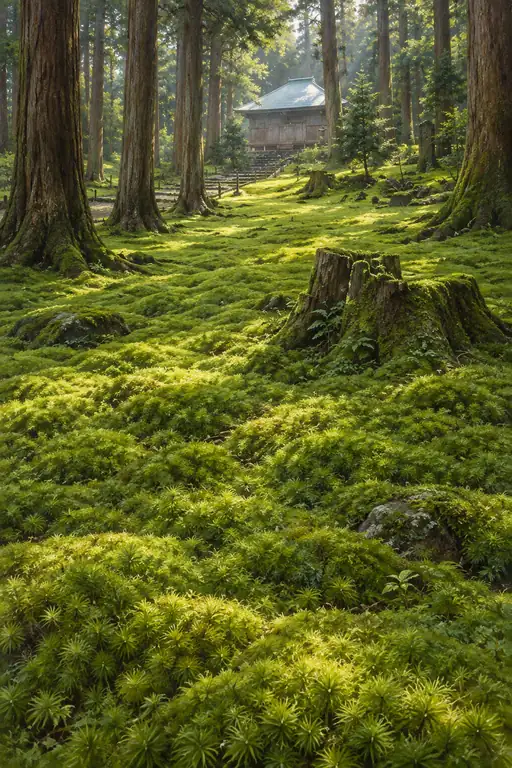 Prayer Among a Thousand Moss Stars
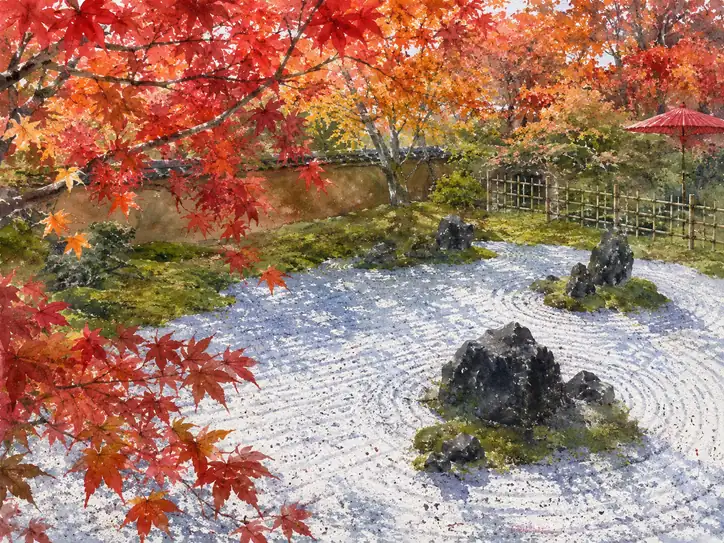 Zen Garden, Where Maples and Sand Ripples Weave Silence
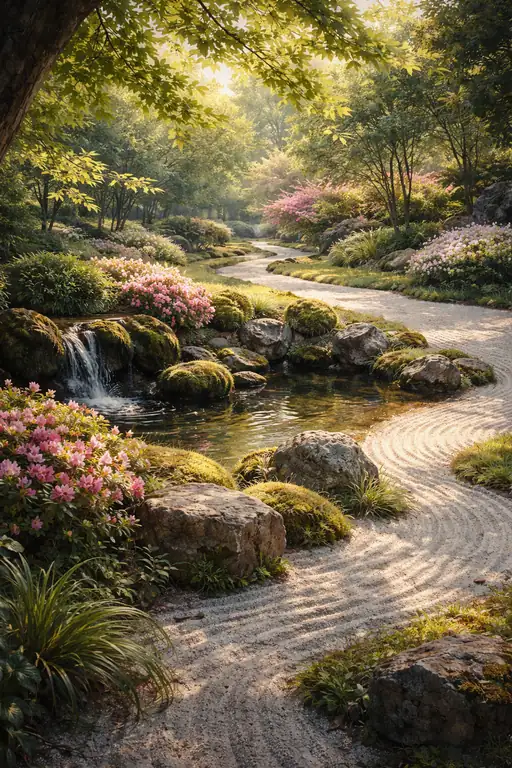 Serene Harmony: The Water's Gentle Path
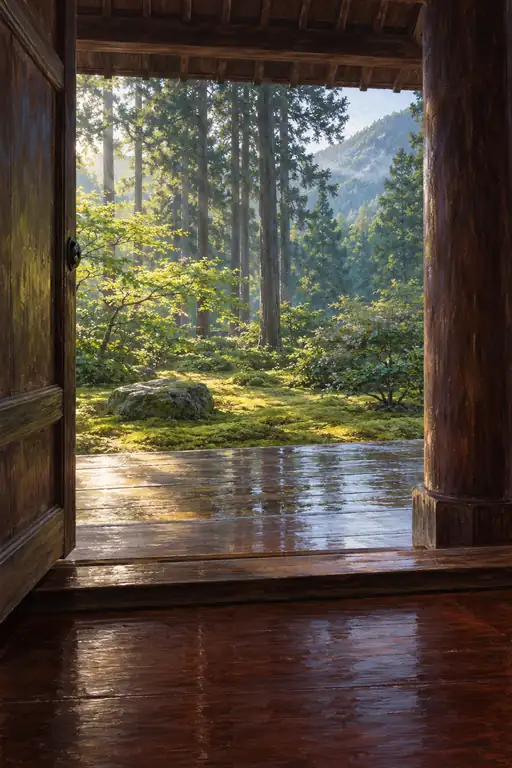 Green Shadows on Polished Wood