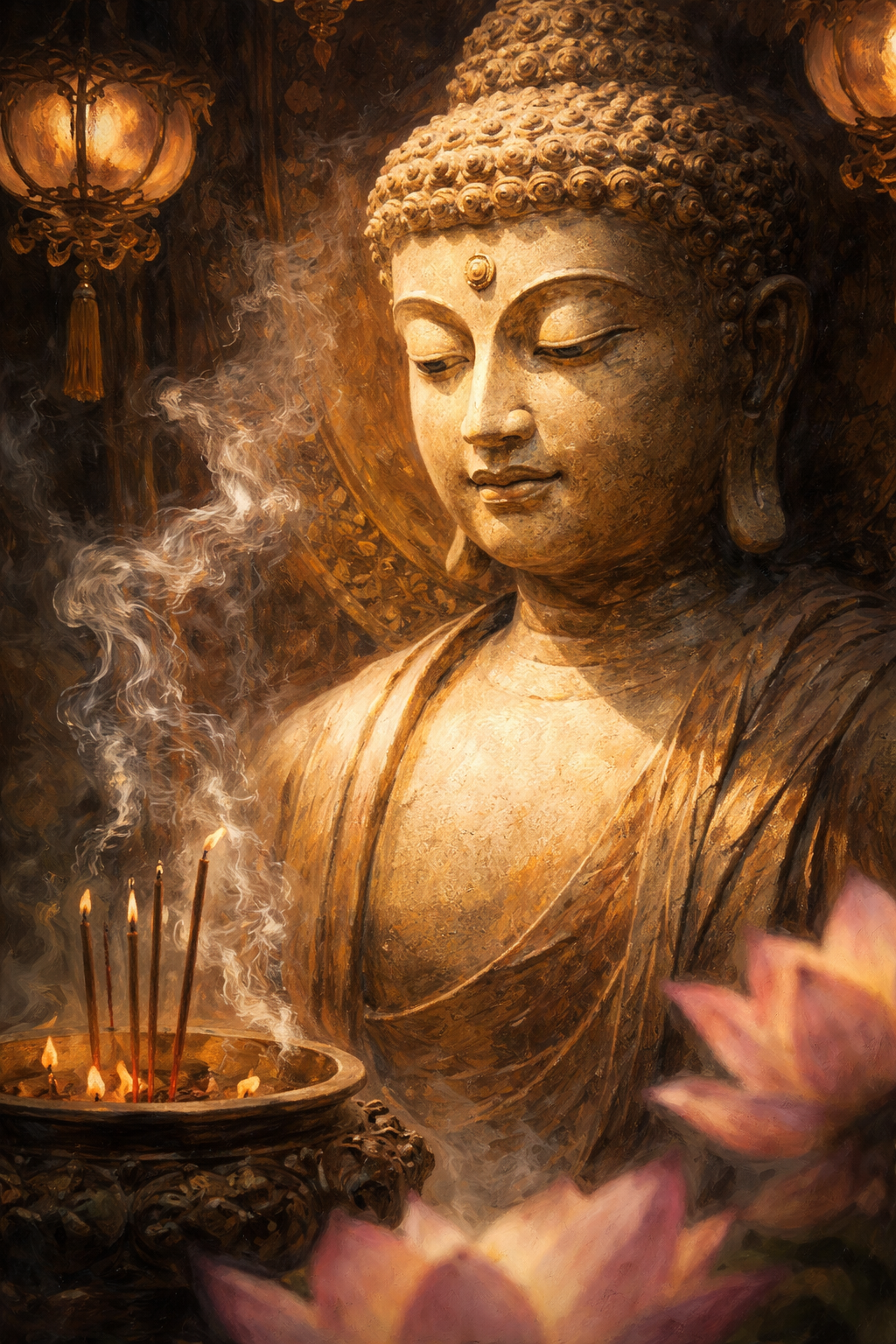
Whispers of Incense
Critique
1. Introduction This piece depicts a serene Buddha statue enveloped in a warm, golden atmosphere, accompanied by the ritualistic presence of incense and lotus flowers. The composition focuses on the upper torso and head of the deity, creating an intimate space for contemplation. While the specific period or origin of the style remains unidentified, the work exudes a timeless spiritual quality. It serves as a standard example of religious portraiture that emphasizes tranquility and internal peace through careful lighting and symbolic elements. 2. Description The central figure is a large, weathered Buddha statue with a gentle, downcast gaze and a slight, enigmatic smile. In the lower left, an ornate bronze incense burner holds several lit sticks, from which thin ribbons of white smoke curl upward across the statue's chest. Pink lotus flowers are visible in the soft-focus foreground, adding a touch of organic color to the scene. The background is adorned with decorative lanterns and intricate relief patterns on the wall, all rendered in shades of amber and brown. 3. Analysis The artist utilizes a strong directional light source from the upper left, which highlights the contours of the Buddha’s face and creates deep, dramatic shadows. This chiaroscuro effect lends a three-dimensional weight to the stone-like texture of the statue. The swirling smoke acts as a dynamic linear element, contrasting with the solid, static presence of the figure. A harmonious color palette dominated by warm ochre and gold creates a unified tone, while the blurred lotuses provide depth through a shallow field of view. 4. Interpretation and Evaluation The work effectively communicates a sense of meditative stillness, where the physical and spiritual realms seem to merge. The technical execution of the textures, from the crumbling surface of the statue to the ethereal quality of the smoke, demonstrates a high level of descriptive skill. The composition is well-balanced, using the incense burner and flowers to frame the central deity without distracting from its presence. This piece stands out for its atmospheric consistency and the evocative use of lighting to enhance the sacred mood. 5. Conclusion Ultimately, the painting succeeds in transforming a traditional religious subject into a compelling visual experience. The interplay between the solid form of the statue and the transient nature of the rising smoke invites the viewer to reflect on the concept of impermanence. My understanding shifted from seeing it as a mere depiction of a statue to recognizing it as an exploration of light and devotion. The work remains a powerful testament to the enduring aesthetic and spiritual appeal of Buddhist iconography.
Same Subcategory
 Whispers of Wind and Faith on the High Peaks
Similar Artworks
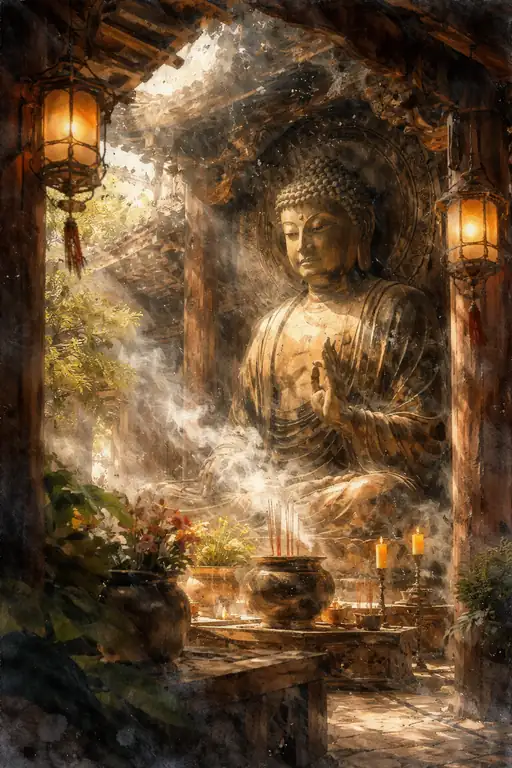 Incense and the Ray of Divine Light
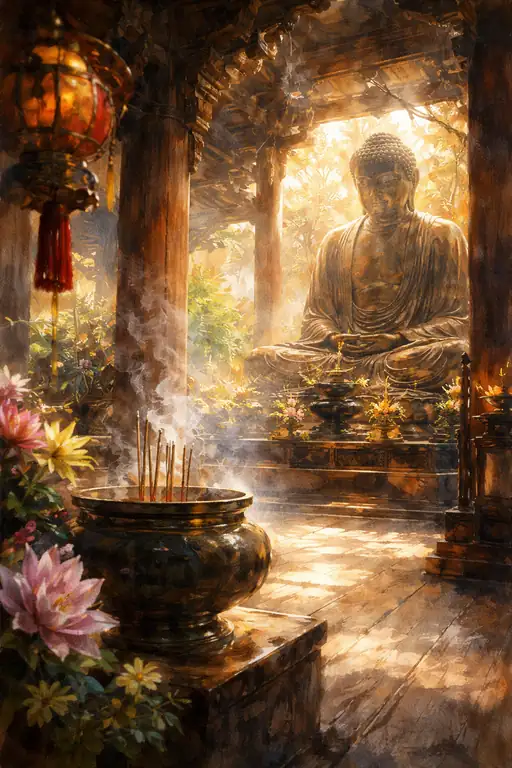 Incense and the Golden Zen
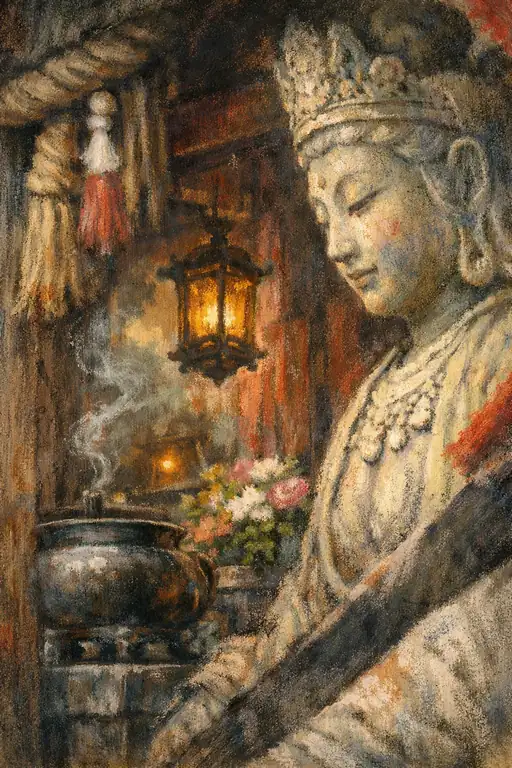 Radiance in the Silent Sanctuary
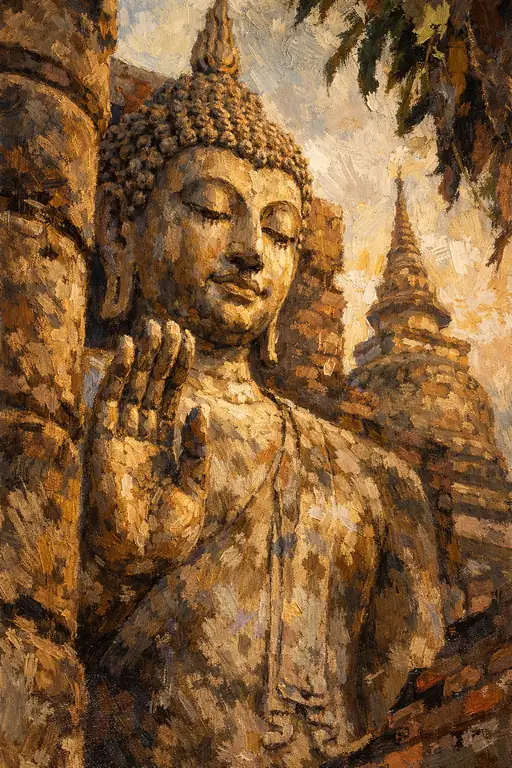 The Serene Gaze of Ancient Enlightenment
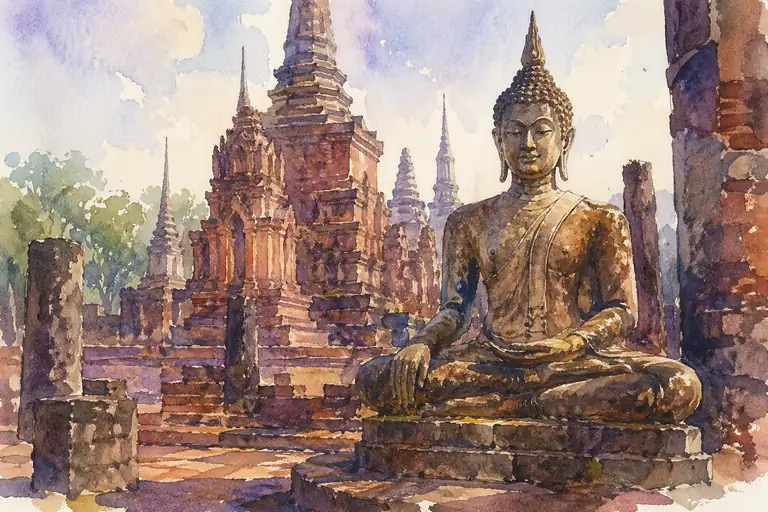 Stillness Across the Ages
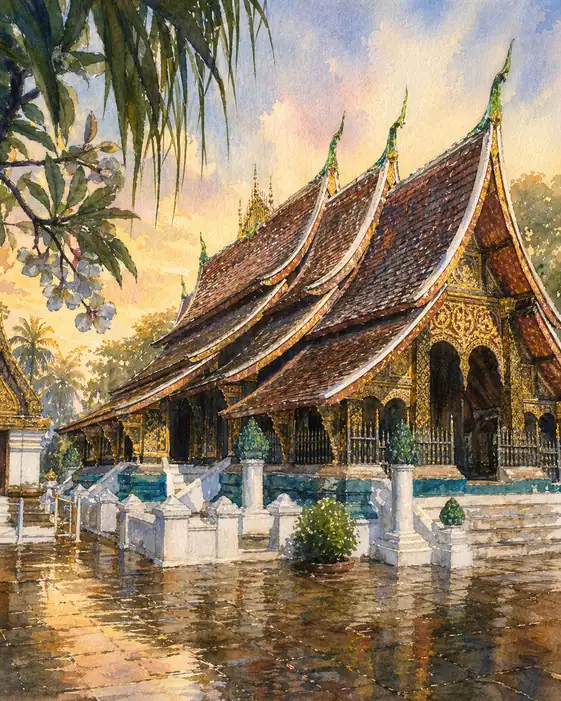 Reflections of a Glistening Soul
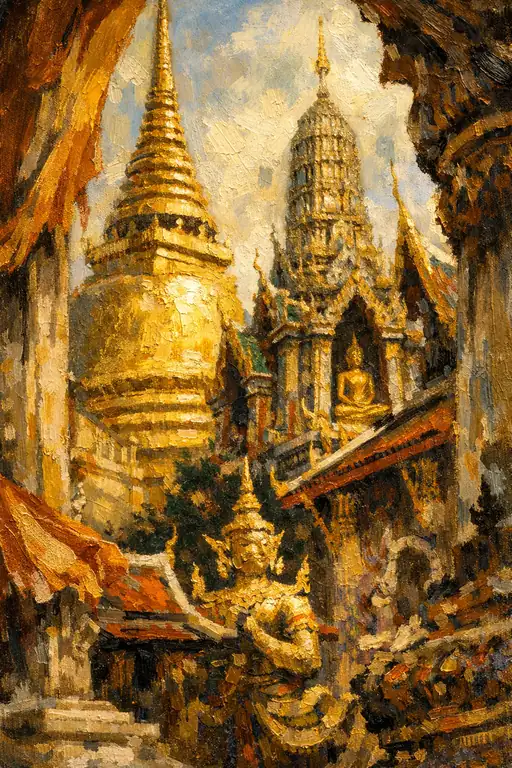 Golden Echoes of the Heavens
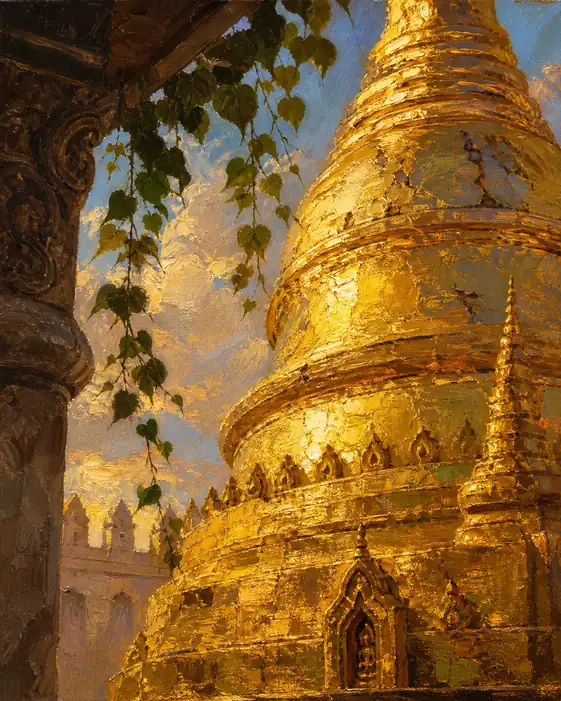 Golden Echoes of Devotion
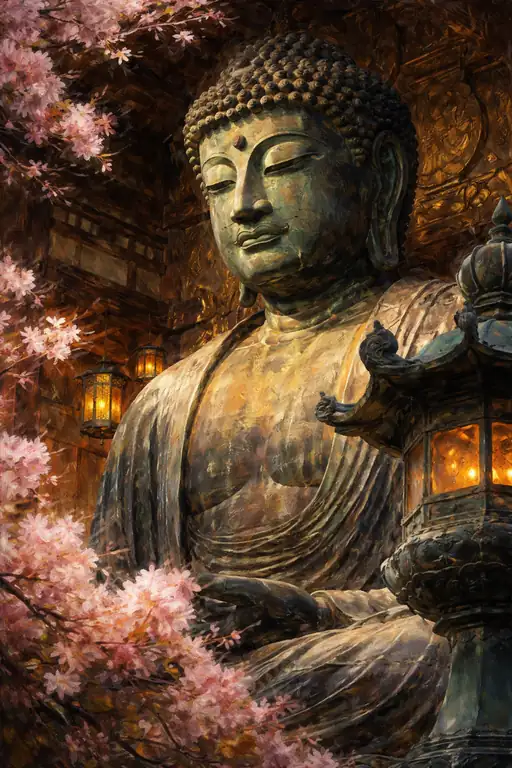 Golden Lanterns Blessing the Grand Bronze Buddha
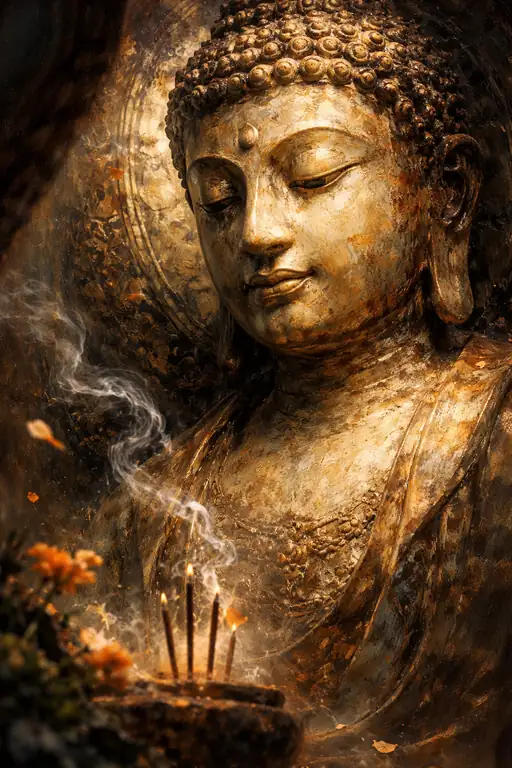 Whispers of the Golden Face