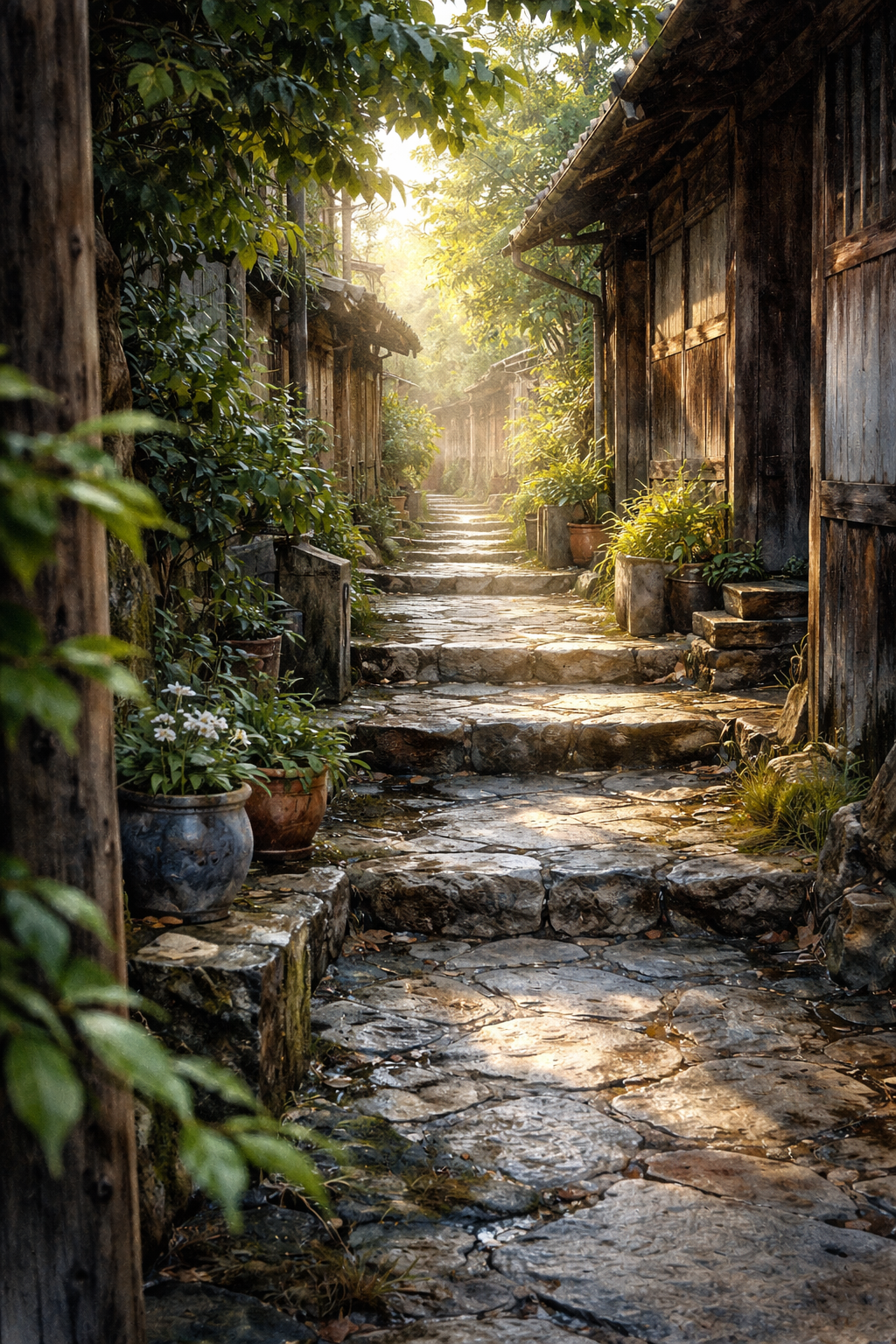
Morning Mist on the Stone Steps
Critique
1. Introduction This painting presents a tranquil narrow alleyway in a traditional Japanese village. Bathed in soft, ethereal light filtering through distant trees, the scene evokes a sense of quiet mystery and timelessness. It invites the viewer into a peaceful neighborhood where every stone and wooden plank appears to hold a story from the past. 2. Description The alleyway is composed of weathered stone steps that wind upward between rows of rustic wooden buildings with dark timber frames. Along the path, various potted plants and small flowers in ceramic containers add touches of green and white. At the far end, a brilliant light source illuminates the misty air, casting long shadows and highlighting the irregular textures of the cobblestones. 3. Analysis The artist uses a sophisticated range of browns, greys, and muted greens, punctuated by the glowing yellow-white of the sunlight. The composition centers on a perspective that pulls the gaze deep into the alley toward the light. Contrast between the dark foreground and bright, hazy background enhances the atmospheric depth and focuses attention on the destination. 4. Interpretation and Evaluation The work masterfully captures the "komorebi" effect, or sunlight filtering through leaves, which imbues the scene with a sacred and restorative quality. The technical skill in rendering the different textures of wet stone, aged wood, and delicate foliage is remarkable, providing a rich sensory experience. This piece successfully balances the architectural structure of the town with the organic growth of the plants, reflecting a harmonious coexistence. 5. Conclusion Initially a simple street scene, the painting evolves into a poetic meditation on light and time. The interplay between the solid stone path and the ephemeral morning mist leaves a lasting impression of serenity. This work beautifully captures the enduring allure of traditional Japanese landscapes, offering a profound sense of peace in a modern context.
Same Subcategory
Similar Artworks
 The Warmth of the Thatched Home
 Tears of Hydrangeas in the Sunlit Alley
 Sun-Drenched Memories of the Old Street
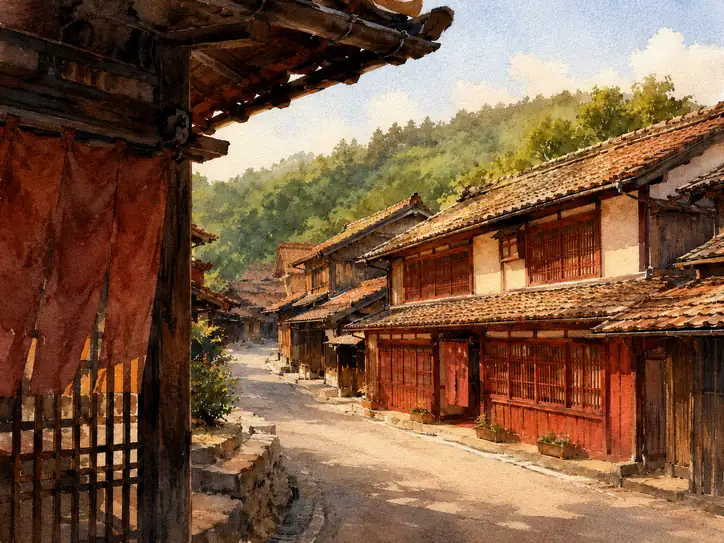 Golden Shadows on the Post Town
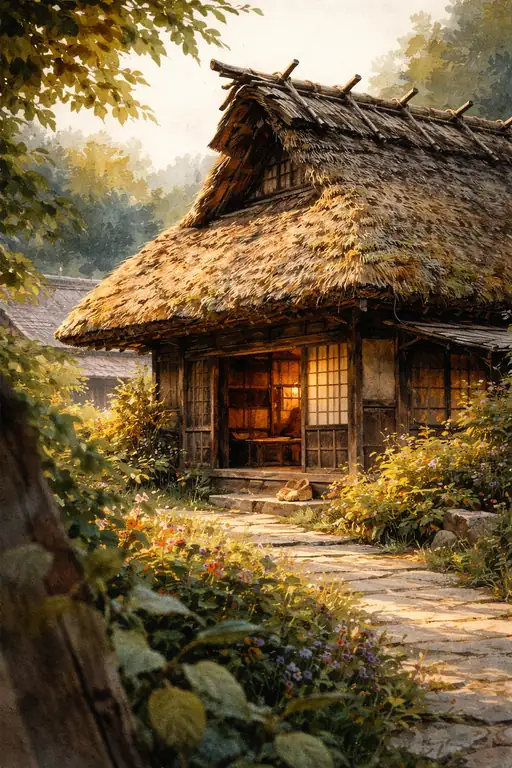 Whispers of the Evening Sun on the Stone Path
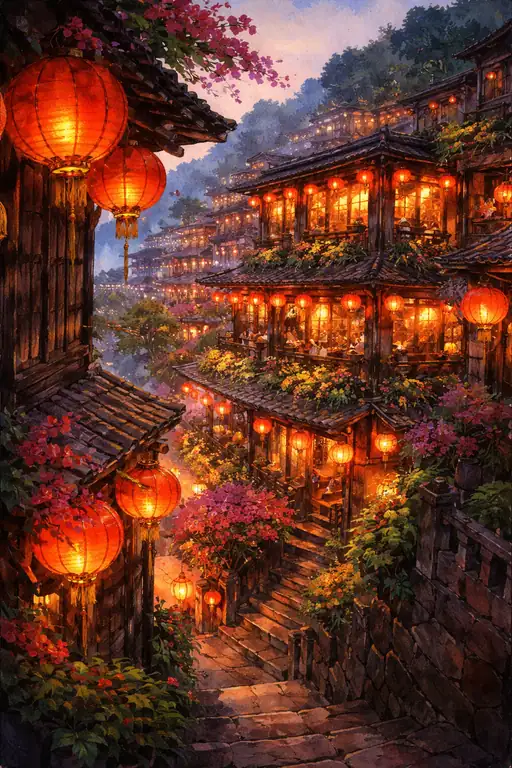 The Festive Glow of the Tiered Village
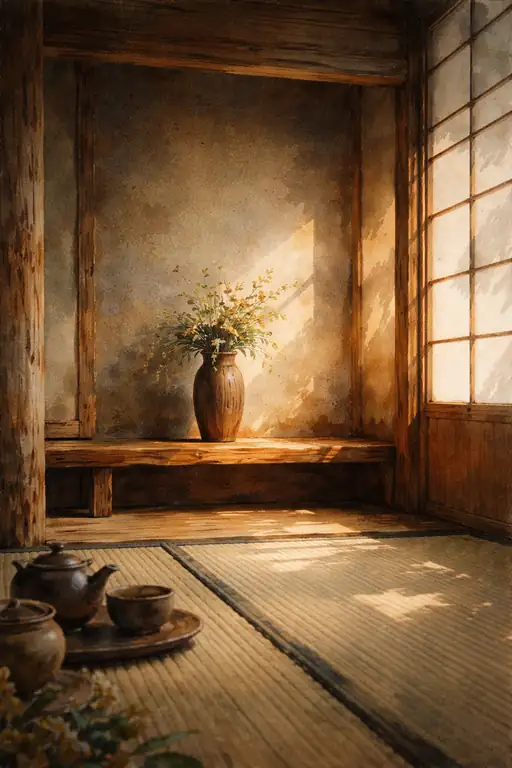 Morning Light Through Shoji
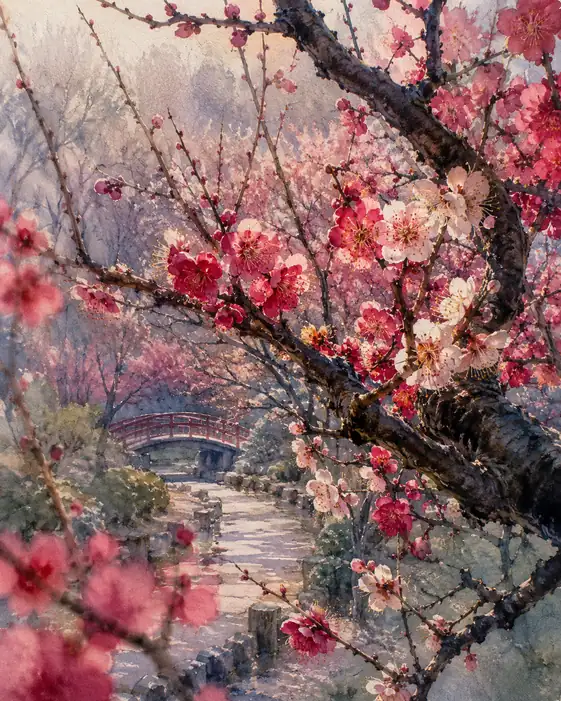 Bridge of Blossoming Dreams
 Island Time, Crimson Bloom
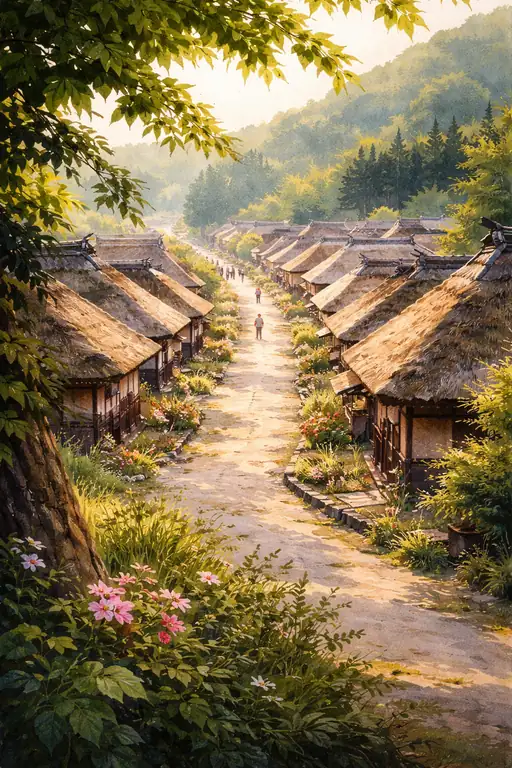 Tranquil Shadows Along the Thatched Village Road