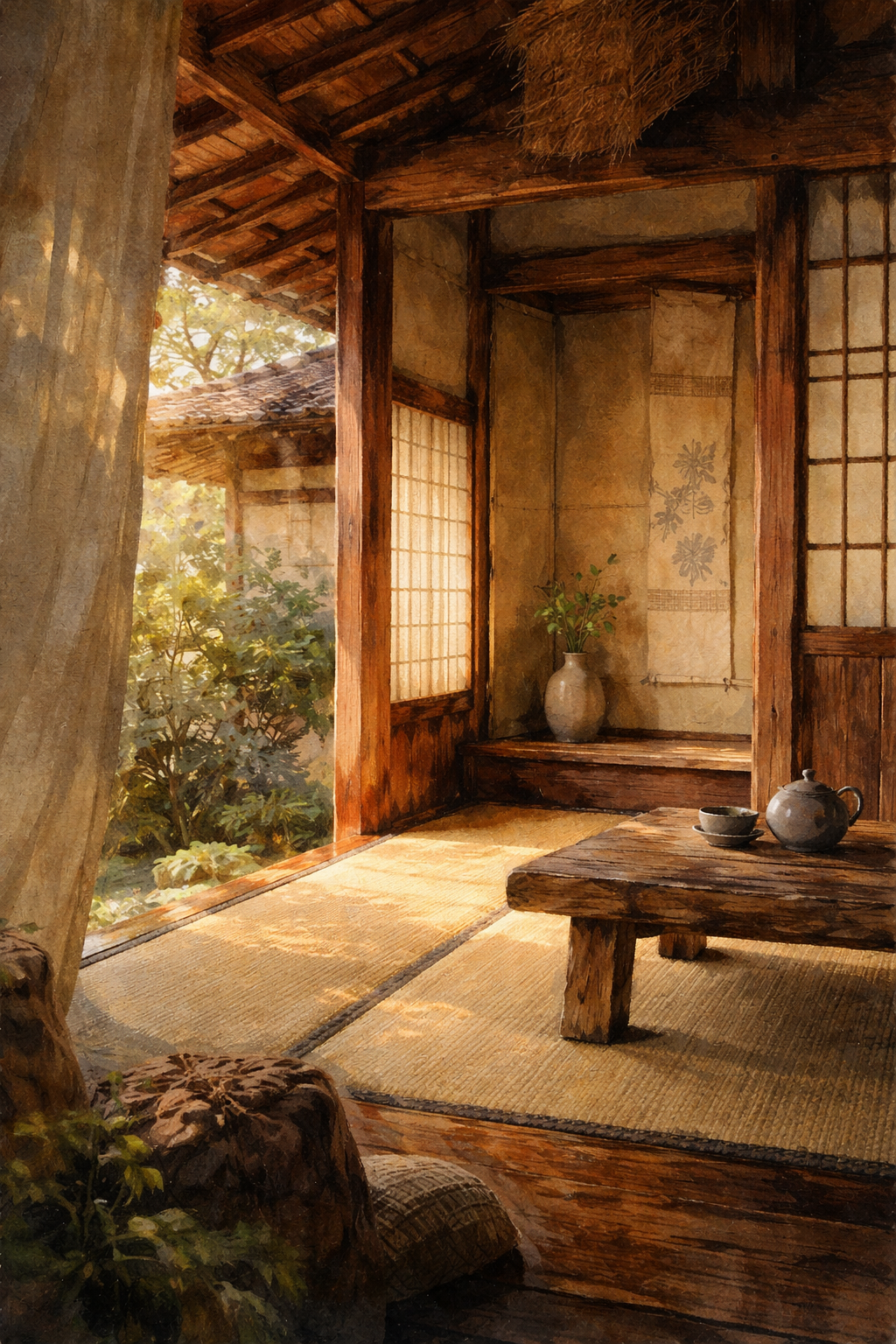
Afternoon Tea by the Garden
Critique
1. Introduction This painting depicts a serene traditional Japanese interior, specifically a washitsu room that opens onto a lush garden. The overall atmosphere is deeply rooted in a sense of tranquility and quietude, characteristic of classical East Asian aesthetics. It invites the viewer into a space where time seems to slow down, focusing on the simple beauty of a well-ordered living area. 2. Description In the foreground, a sturdy low wooden table holds a simple tea set consisting of a teapot and a small cup, placed on the woven surface of tatami mats. Beyond the wooden pillars and shoji screens, a sunlit garden with dense foliage is visible, creating a bright contrast with the shaded interior. A hanging scroll with a subtle floral motif and a single ceramic vase with a small plant decorate the earthen walls in the background. 3. Analysis The artist uses a warm, natural palette dominated by earthy ochres, browns, and the vibrant greens of the garden. Sunlight acts as the primary light source, filtering through the trees to create soft patterns of light and shadow on the tatami and wooden surfaces. The composition follows a layered approach, using the indoor elements to frame the view of the garden, which adds a sense of depth and openness to the scene. 4. Interpretation and Evaluation The work beautifully captures the essence of wabi-sabi, emphasizing the beauty of simple, natural materials and the harmony between indoor and outdoor spaces. The technical execution is exceptional, particularly in the rendering of wood textures and the delicate play of light that evokes a warm afternoon. The overall balance between the structured architecture and the wild garden is masterfully achieved, reflecting a sophisticated understanding of spatial harmony. 5. Conclusion Initially, the scene appears as a simple depiction of a room, but closer observation reveals a profound respect for the quiet moments of daily life. The interplay between the interior shadows and the garden's brilliance provides a lasting impression of peace and meditative stillness. This painting successfully transforms a familiar architectural setting into a powerful statement on the importance of finding serenity in one's immediate surroundings.
Same Subcategory
Similar Artworks
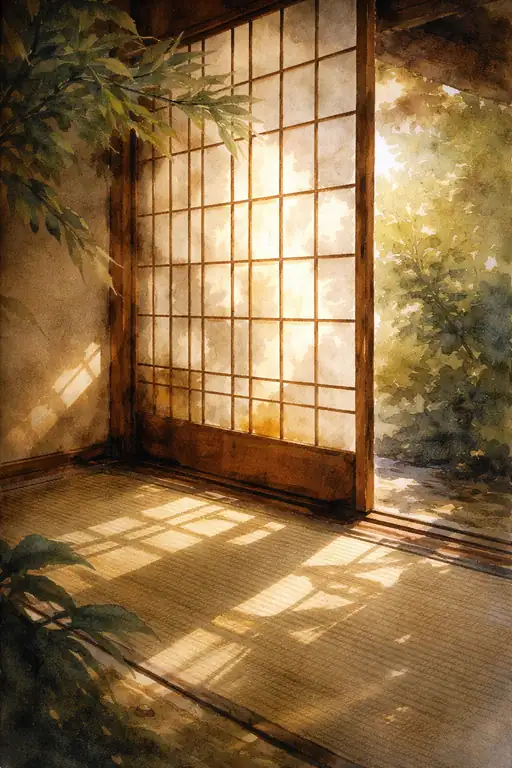 Sunlight Spilling Through Time
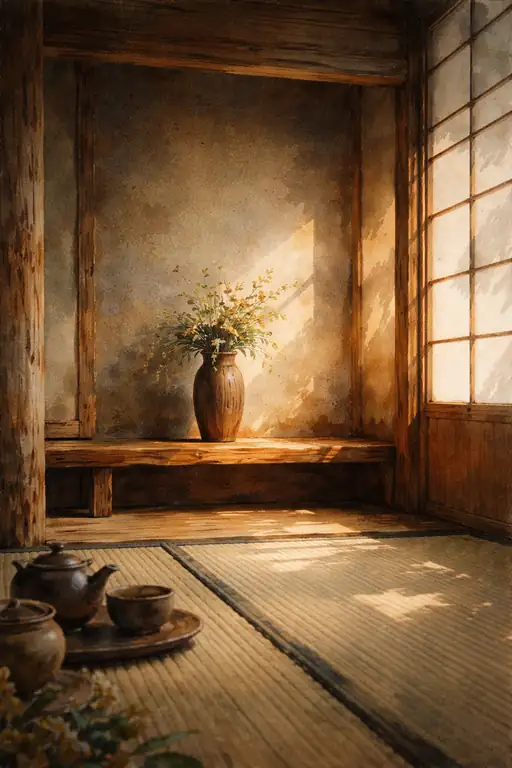 Morning Light Through Shoji
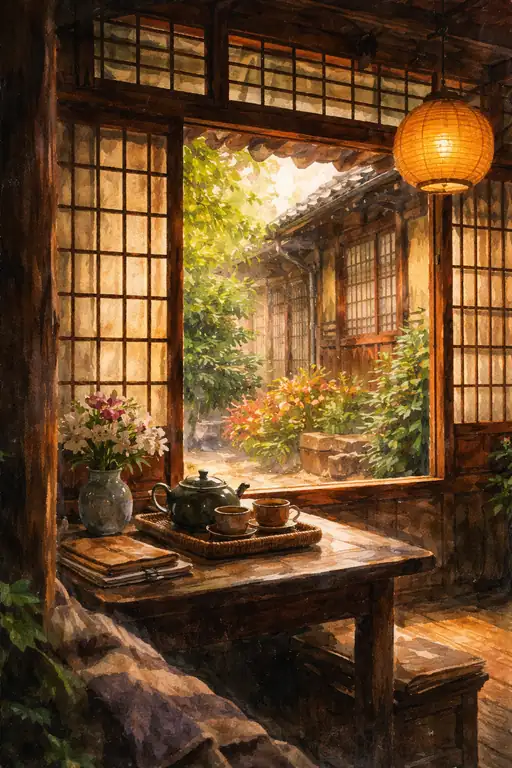 The Soft Glow of Peace in a Paper Lantern
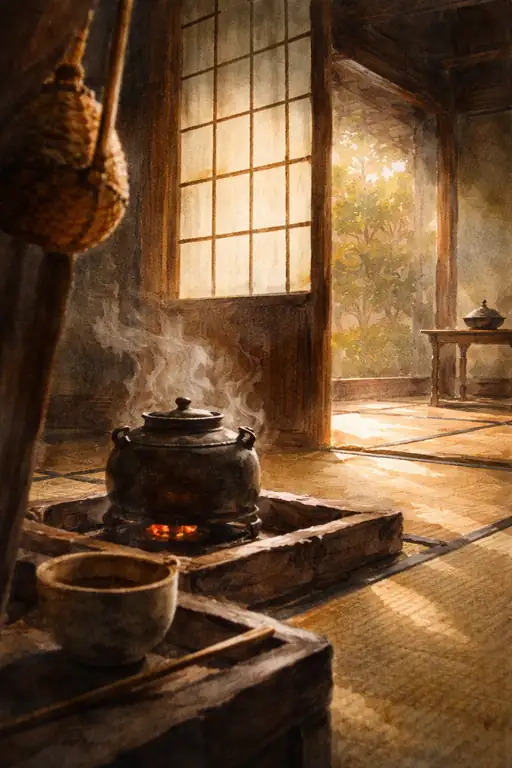 Warmth of the Irori Hearth
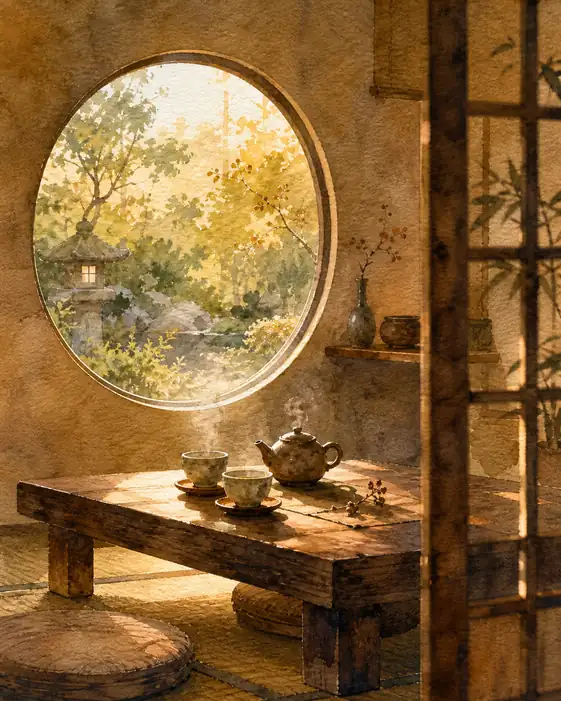 Whispers of the Golden Garden
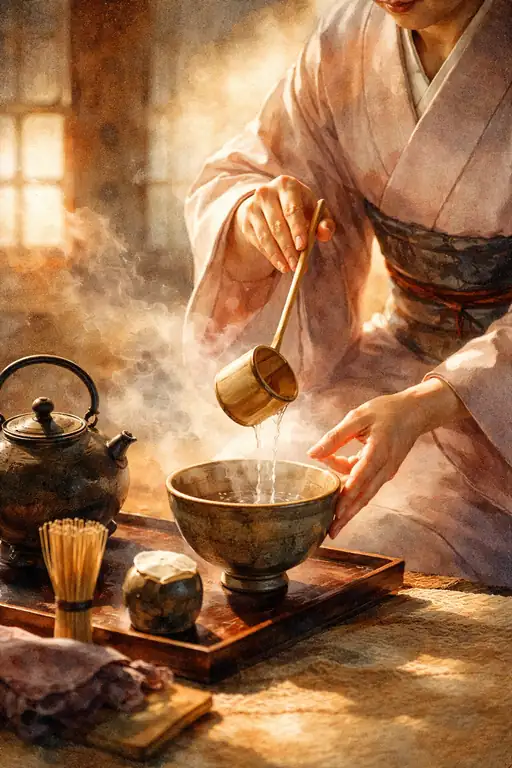 Fleeting Elegance: A Sip of Golden Serenity
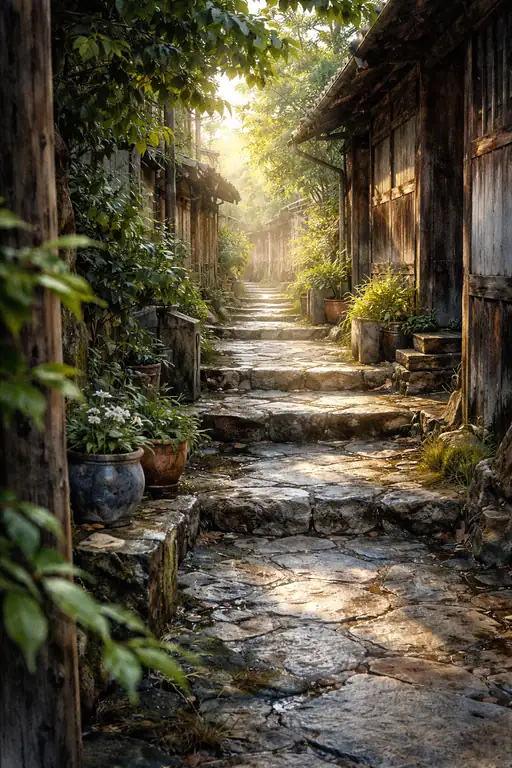 Morning Mist on the Stone Steps
 Crimson Reflections
 Kaleidoscope of the Forgotten Realm
 The Warmth of the Thatched Home