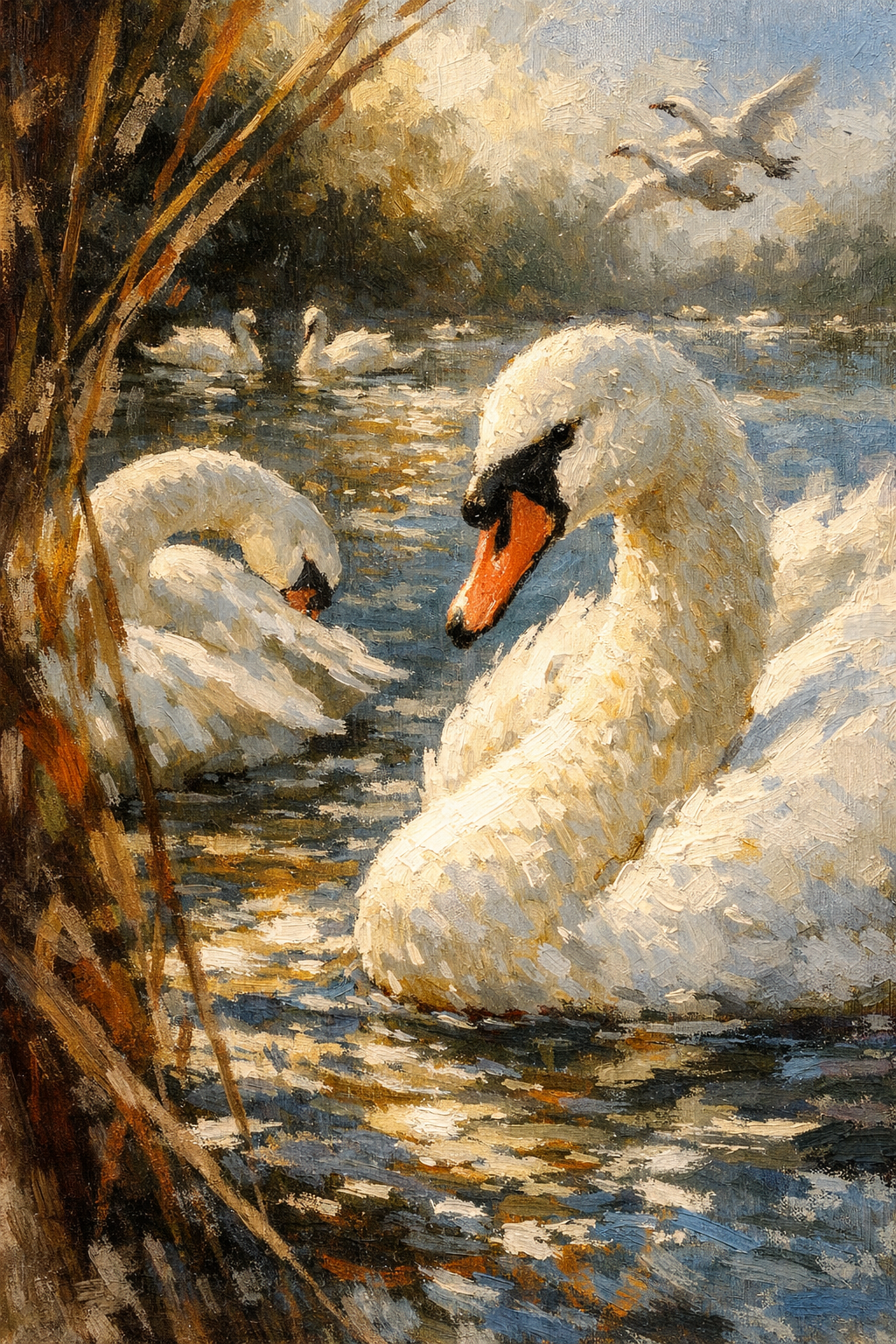
Swans on a Sunlit Lake
Critique
1. Introduction This impressionistic oil painting captures a serene yet dynamic group of swans on a sunlit lake. Characterized by a vigorous use of impasto and a keen sensitivity to the effects of light on water, the work elevates a traditional nature subject into a vibrant exploration of color and texture. The artist succeeds in conveying both the quiet elegance of the swimming birds and the energetic movement of those in flight, creating a multifaceted narrative within a single frame. 2. Description The foreground is dominated by a pair of large white swans; one gazes toward the right with a bright orange beak, while the other preens its feathers on the left. In the middle ground, two additional swans float calmly, their forms reflected in the shimmering blue and gold water. The upper right corner features two more swans in mid-flight, their wings spread against a hazy, sun-drenched backdrop of trees and sky. Vertical stalks of reeds or branches frame the left edge of the composition, adding a structural element to the organic scene. 3. Analysis Technically, the painting relies on thick, deliberate brushstrokes to create a sense of three-dimensional volume. The white feathers of the swans are rendered with heavy dabs of paint that catch actual light on the canvas surface, while the water is composed of rhythmic, horizontal strokes of blue, silver, and ochre. This heavy texture effectively simulates the chaotic yet beautiful reflections on a disturbed water surface. The contrast between the cool shadows in the reeds and the warm, incandescent highlights on the birds' backs creates a strong sense of spatial depth and atmospheric heat. 4. Interpretation and Evaluation The work can be interpreted as a celebration of the grace and resilience found in the natural world. The inclusion of swans in various states—floating, preening, and flying—suggests a complete cycle of activity and rest. The artist's focus on the fleeting qualities of light aligns the piece with the traditions of late 19th-century impressionism, yet the boldness of the impasto technique provides a modern, tactile immediacy. The composition is highly successful in its ability to balance the heavy materiality of the paint with the inherent lightness and fluidity of the subject matter. 5. Conclusion Ultimately, the painting offers a powerful visual and tactile experience that transcends simple representation. The initial impression of a peaceful pond gradually gives way to an appreciation for the artist's energetic and confident execution. This piece serves as a sophisticated example of how texture and light can be utilized to breathe life into a classical motif, resulting in a work that is both academically sound and emotionally resonant.
 The Silent Watcher of the Cascade
 Silent Gaze of the Wisdom
 Ethereal Dawn on the Silent Lake
 Where Swans Dream in Golden Dawn
 Eternal Vow upon the Water
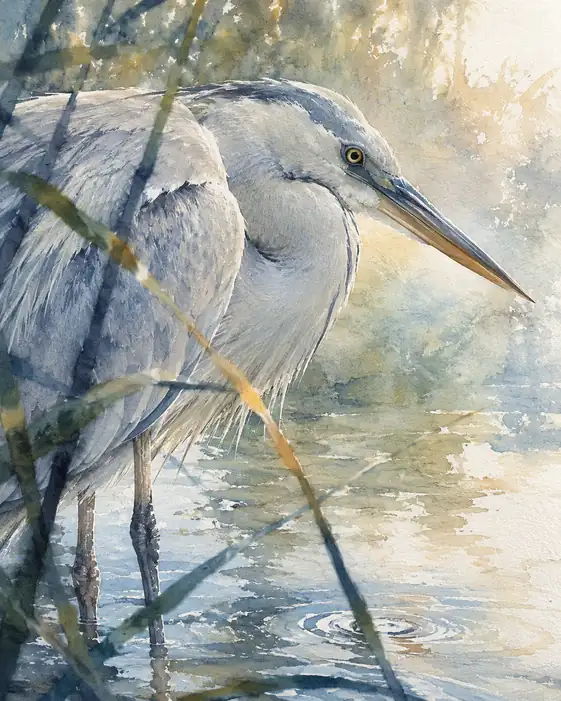 The Silent Watcher
 Harmony of the Morning Lake
 Solitude in the Whispering Shallows
 Grace Upon the Golden Mirror
 The Swan in the Rose-Colored Dawn
 Ripples of Silence