The Dignity of Dust: Unpolished Echoes of Labor
Critique
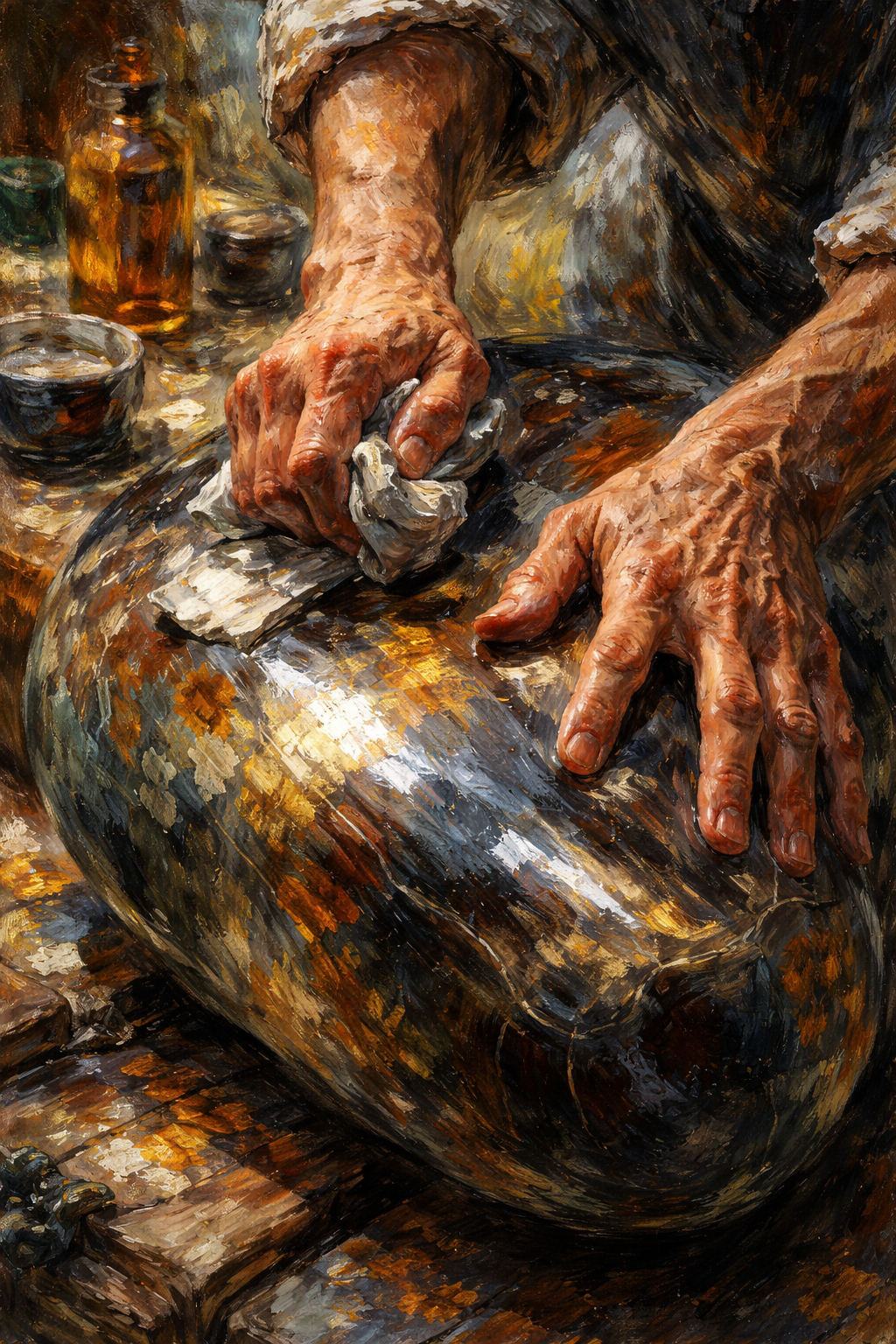
1. Introduction This composition centers on weathered hands engaged in meticulous physical labor. The hands firmly grip a cloth to wipe down a voluminous metallic object resting on a wooden surface. A sense of historical weight emerges from the visual arrangement. This depiction captures a moment of intense focus and physical engagement. 2. Description Wrinkled fingers stained with dark substances press against the reflective curve of the large central item. Golden and amber tones dominate the scene, echoing the contents of several small glass bottles situated in the background. The hands appear coarse and experienced. The softly blurred background draws attention to the gleaming surface. 3. Analysis The lighting highlights the textural contrast between rough human skin and the smooth curvature of the metallic vessel. Deep shadows settle into the crevices of the knuckles. The color palette relies heavily on warm browns and ochre shades to establish a cohesive visual unity. This deliberate focus creates an enclosed space. 4. Interpretation and Evaluation The image suggests a profound connection between a worker and their physical materials. Visible grime on the fingers serves as a testament to diligent effort and unwavering dedication. Like a silent dialogue between flesh and metal, the interaction feels laborious. The scene communicates the quiet dignity found in manual labor. 5. Conclusion Ultimately, the piece stands as a tribute to the tactile nature of material transformation. The intense focus on the hands removes any need for facial expressions. The viewer appreciates the unpolished reality of the human body maintaining the physical world. It remains a compelling study of texture and light.
Same Subcategory
 The Watchmaker's Infinite Patience
Similar Artworks
 The Silver Pride of a Fallen Era
 Polishing the Echoes of Time
 Carving Time with Weathered Hands
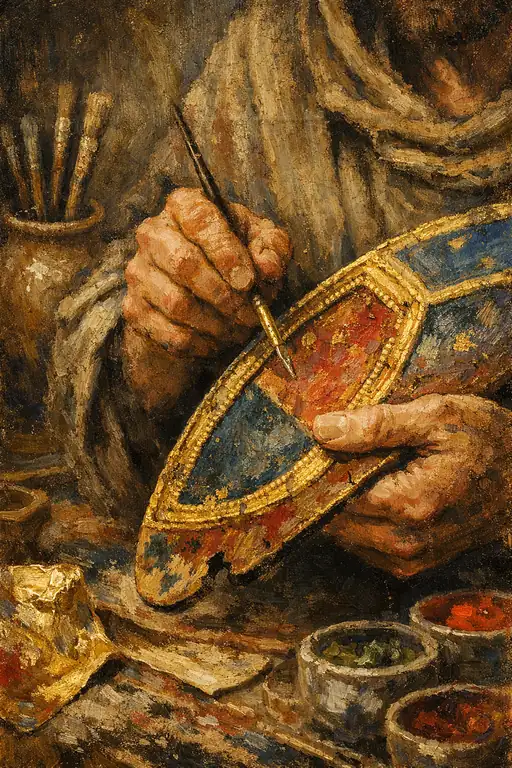 The Devotion of an Artisan's Touch
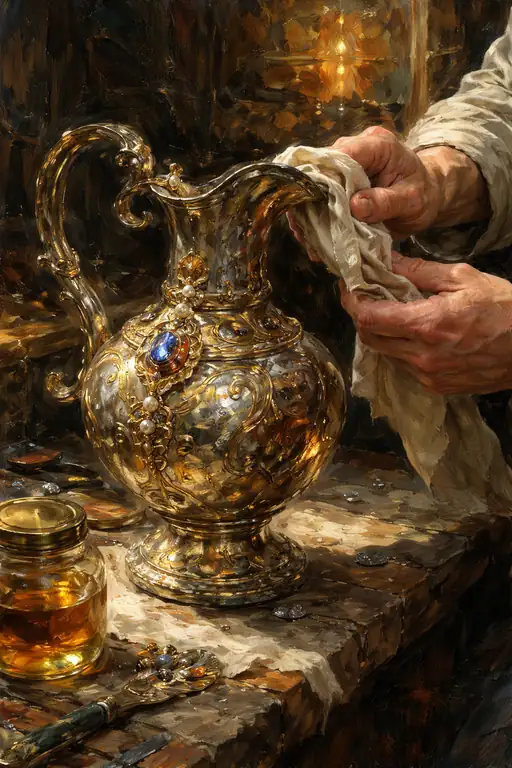 The Artisan's Devotion in Silver and Gold
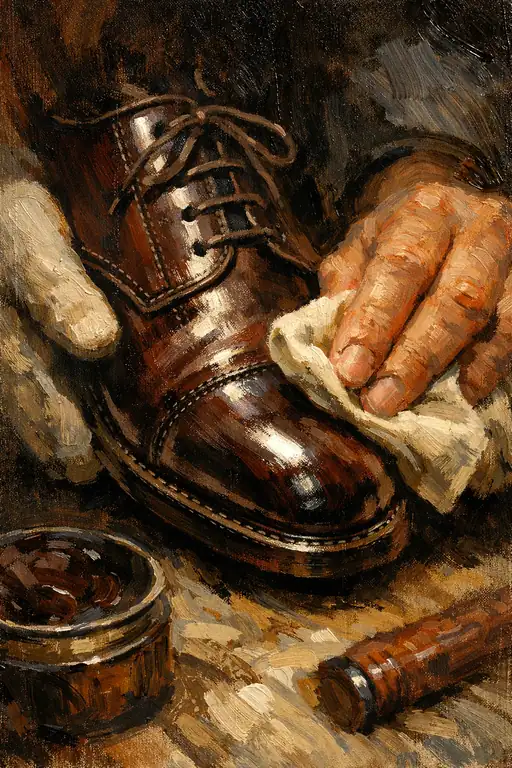 The Polished Pride: A Artisan's Touch
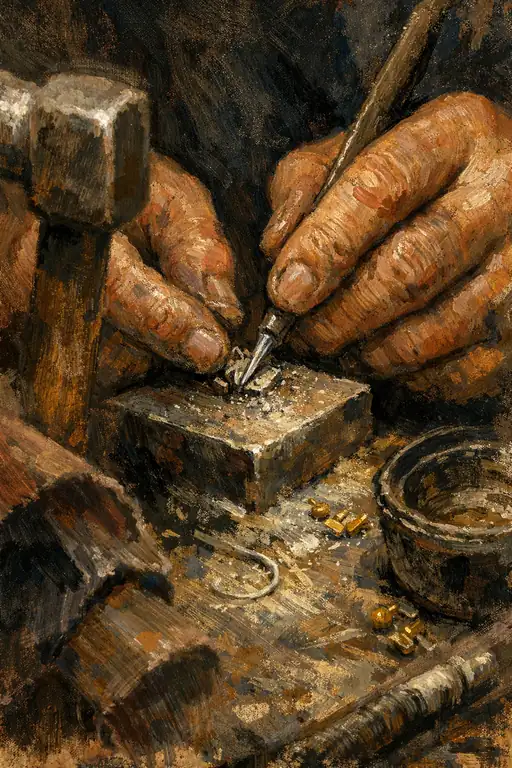 The Weight of Time in Calloused Hands
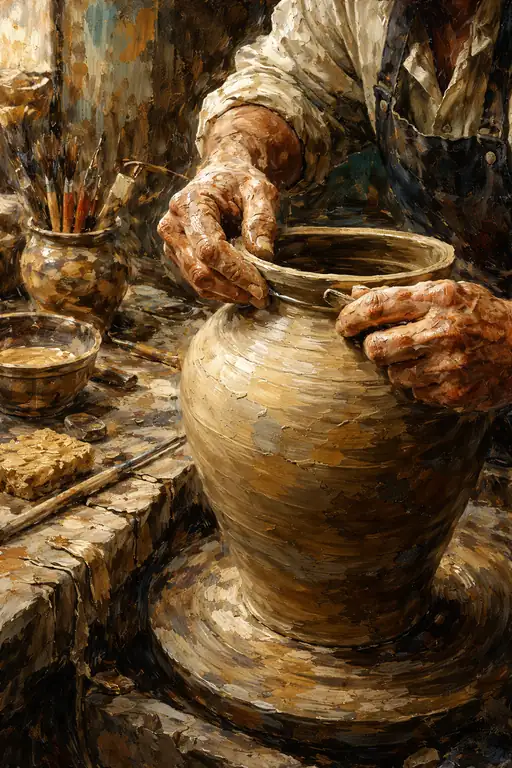 Hands of the Earth: A Silent Symphony of Clay
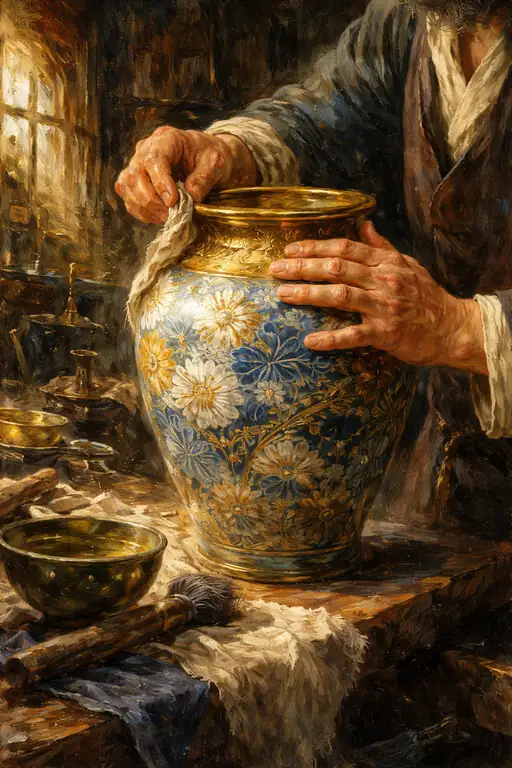 The Master's Touch: Awakening the Azure Bloom
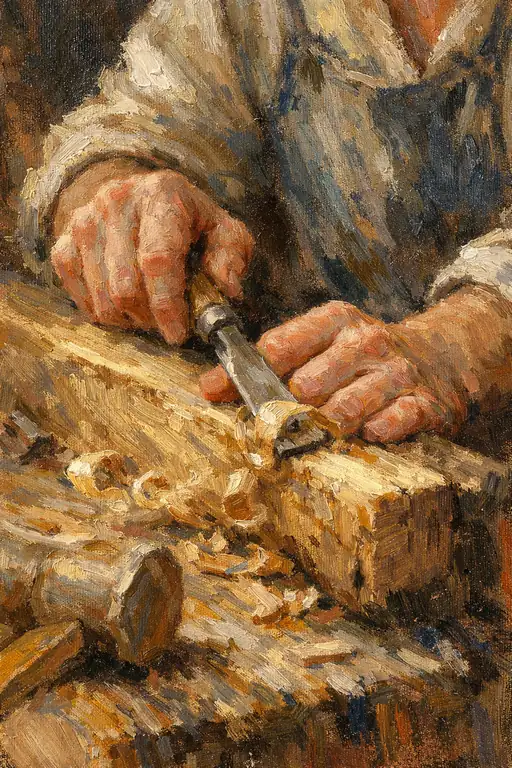 The Last Ember of Hope