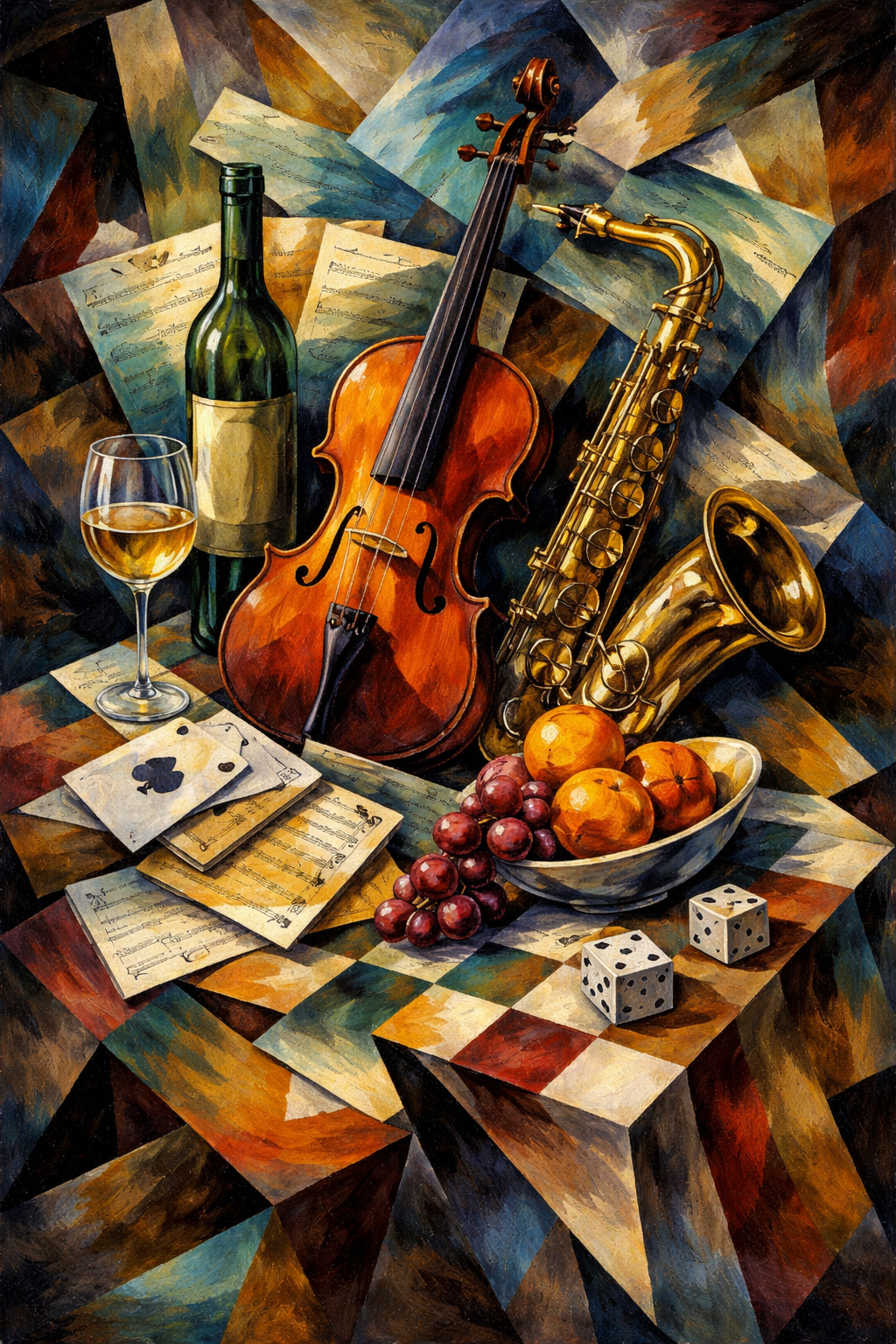
The Fragmented Melody of Leisure
Critique
1. Introduction This dynamic composition presents a complex still life arrangement featuring musical instruments alongside leisure objects. The subject matter incorporates a violin next to a saxophone while a wine bottle stands nearby. The visual space is fractured into geometric planes that intersect and overlap continuously. This fragmented approach creates a vibrant visual environment that captures immediate attention. 2. Description A brown violin rests near the center alongside a brass saxophone. A tall green bottle and a filled glass stand prominently on the left side. Scattered sheet music and playing cards join a white bowl filled with fresh grapes. Two dice rest on a checkered surface near the bottom right corner of the view. 3. Analysis The sharp geometric divisions effectively break the traditional perspective into multiple distinct viewpoints. Warm orange and brown tones contrast heavily with cooler blue and grey background segments. The gleaming metallic surface of the saxophone provides a distinct textural contrast against the smooth wooden violin. Angular shadows and bright highlights create a sense of three dimensional volume. 4. Interpretation and Evaluation The combination of musical instruments and games suggests themes of leisure and sensory enjoyment. The fractured composition visually mimics the complex rhythms and syncopations found in jazz music. This energetic visual structure invites the viewer to continuously explore the intersecting geometric forms. The successful integration of classic subjects with modern structural abstraction makes the scene visually engaging. 5. Conclusion This striking image effectively transforms a traditional still life through a bold geometric structure. The rhythmic arrangement of instruments and objects creates a compelling visual melody for the viewer. The vibrant colors and fractured planes maintain constant visual interest throughout the entire composition. The resulting scene successfully balances recognizable forms with dynamic structural abstraction.
 The Majestic White Equine's Thirst
 The Golden Melody: A Moment of Musical Devotion
 Melody of the Fragmented Soul
 A Broken Melody Lingers
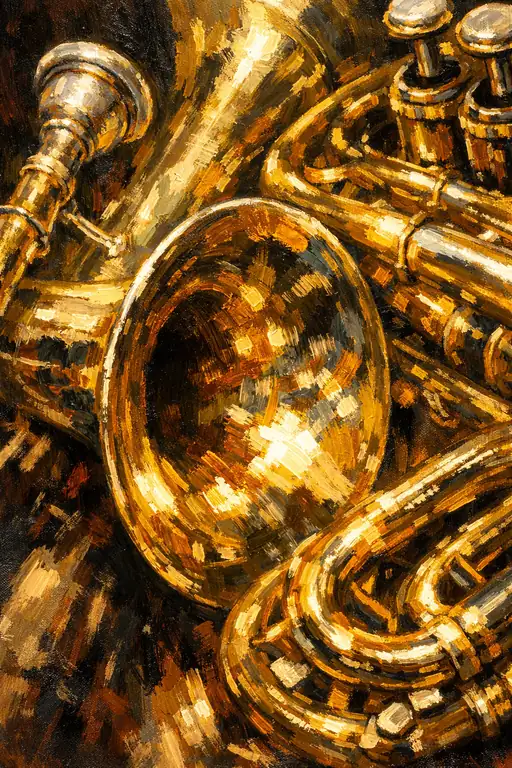 Resounding Symphony of Gold
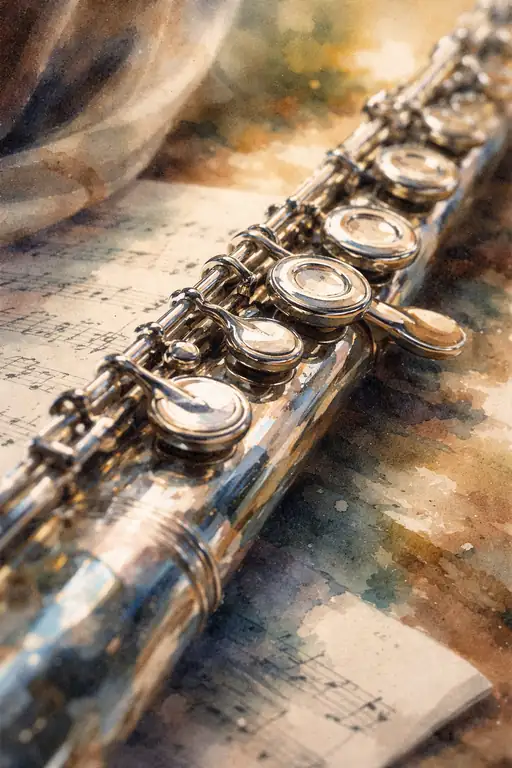 Sonata of the Silver Soul
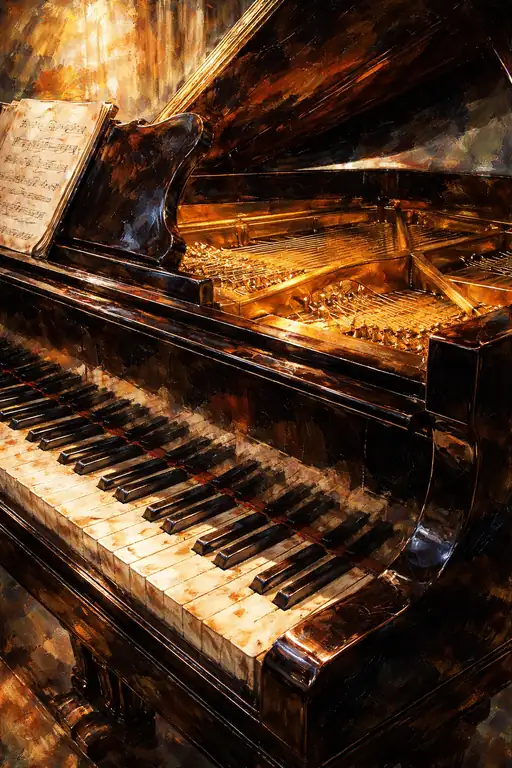 The Majestic Silence of the Keys
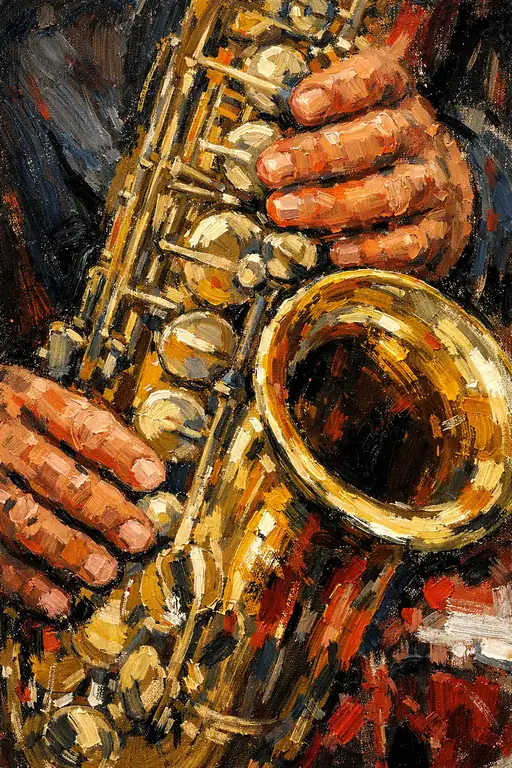 Soul of Brass
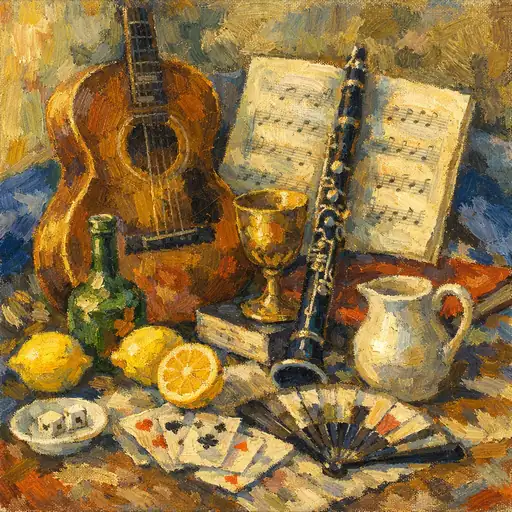 Echoes of a Forgotten Melody
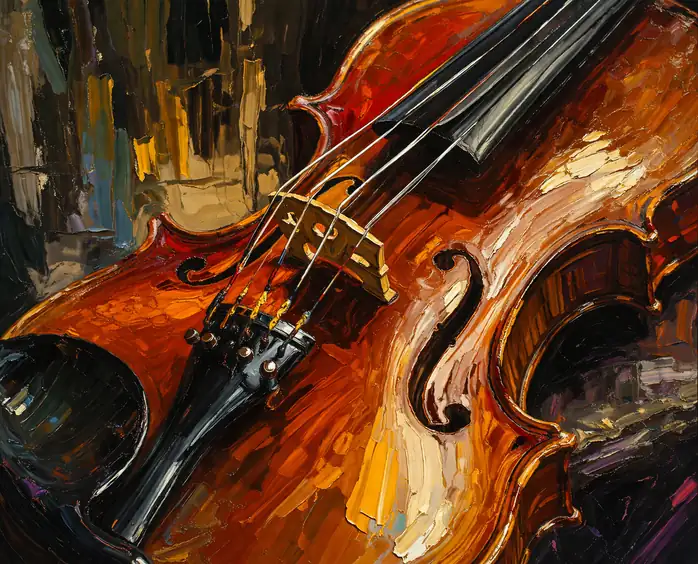 Resonance in Amber and Wood
 Echoes of a Golden Melody
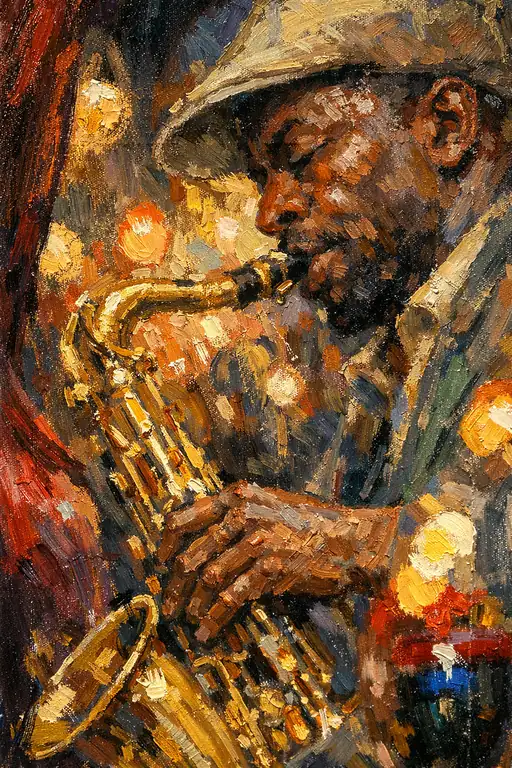 Golden Notes of the Soul