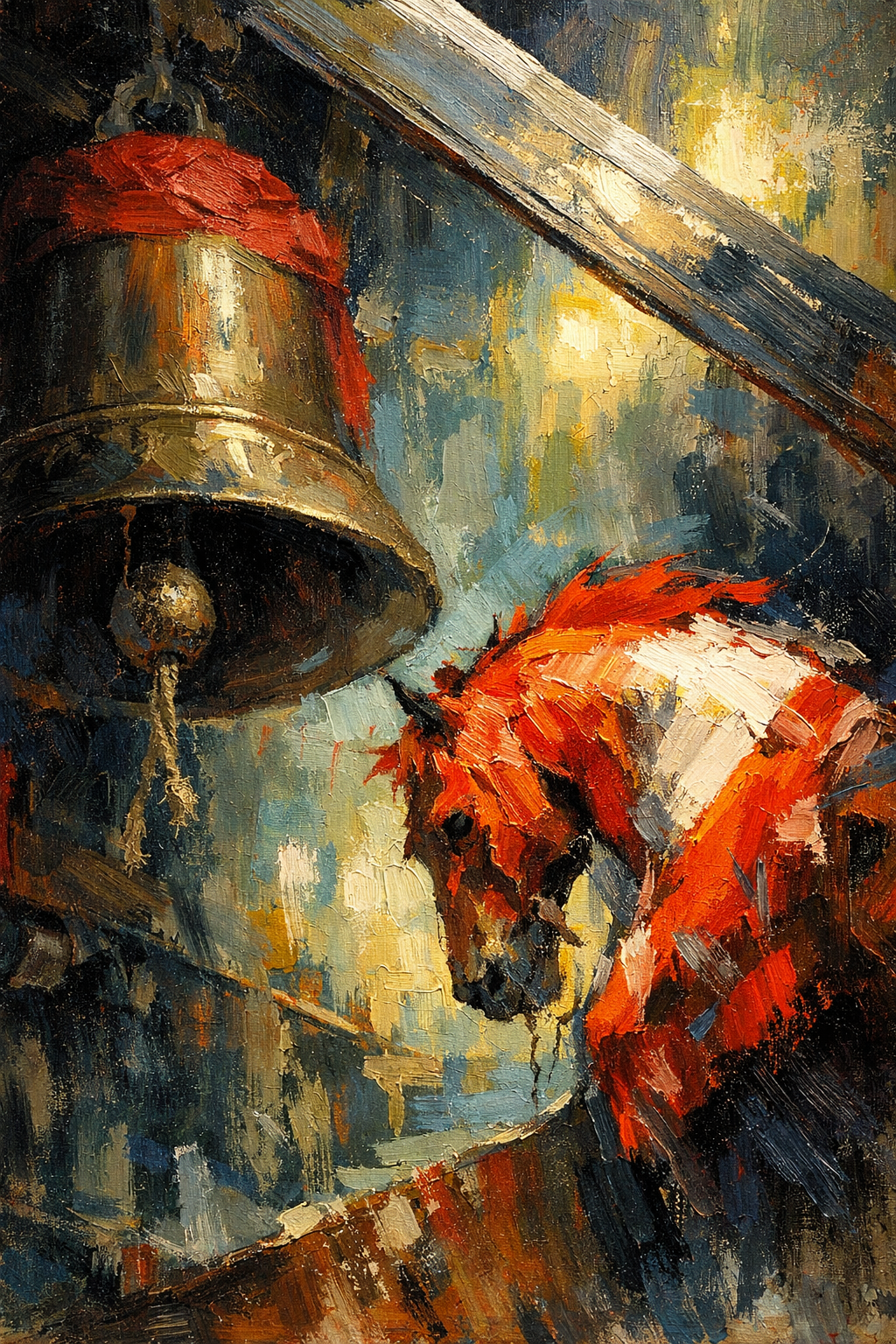
Echoes in the Rust
Critique
1. Introduction This expressive oil painting brings together two powerful symbols—a large, weathered bell and a vibrant, reddish-orange horse—within a highly textured, abstract environment. The work focuses on the themes of tradition, strength, and the passage of time, using a bold, painterly style to evoke a sense of rustic history. It serves as a compelling study in symbolic juxtaposition and the expressive potential of heavy impasto. 2. Description The composition features a large metal bell suspended from a diagonal beam in the upper left, its top wrapped in a striking red fabric. Below and to the right, the head and neck of a horse, rendered in fiery oranges and reds, emerge from a background of swirling blues, ochres, and grays. The entire surface is characterized by thick, energetic brushstrokes that create a rugged, tactile quality across the canvas. 3. Analysis The artist utilizes a palette of warm earth tones contrasted with cool, atmospheric blues. The diagonal orientation of the bell’s support beam creates a sense of dynamic movement, leading the eye across the composition. The brushwork is particularly aggressive on the horse’s mane and the bell’s surface, where the layering of paint suggests both the texture of animal hair and the weathered patina of old metal. 4. Interpretation and Evaluation The work is a successful exploration of the relationship between man-made objects and the natural world. The bell, often a symbol of community or warning, paired with the horse, a symbol of freedom and power, suggests a narrative of rural life or forgotten history. The technical execution of the impasto technique is masterful, giving the painting a physical presence that enhances its emotional resonance and structural integrity. 5. Conclusion While the initial impression is one of raw, unrefined energy, a closer examination reveals a careful balance of form and color. The artist has effectively captured the spirit of his subjects through the very physicality of the paint. Ultimately, this piece stands as a powerful example of modern expressionism, where the technique itself becomes as much a part of the subject as the objects depicted.
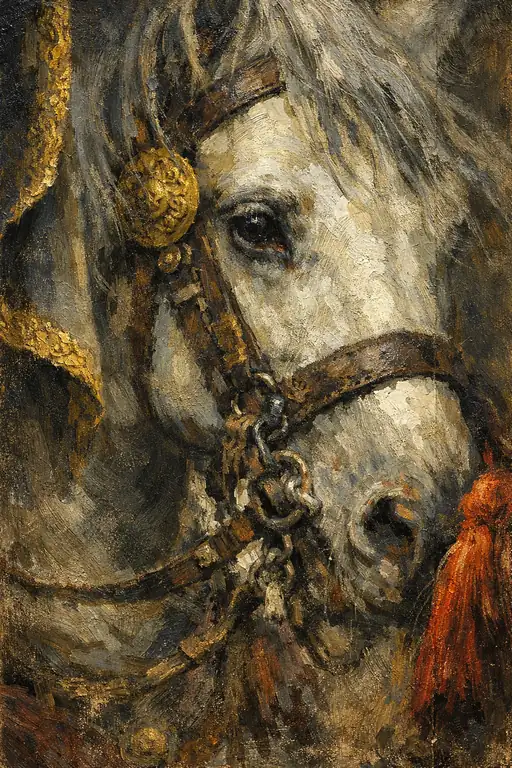 Beyond the Crimson Lips
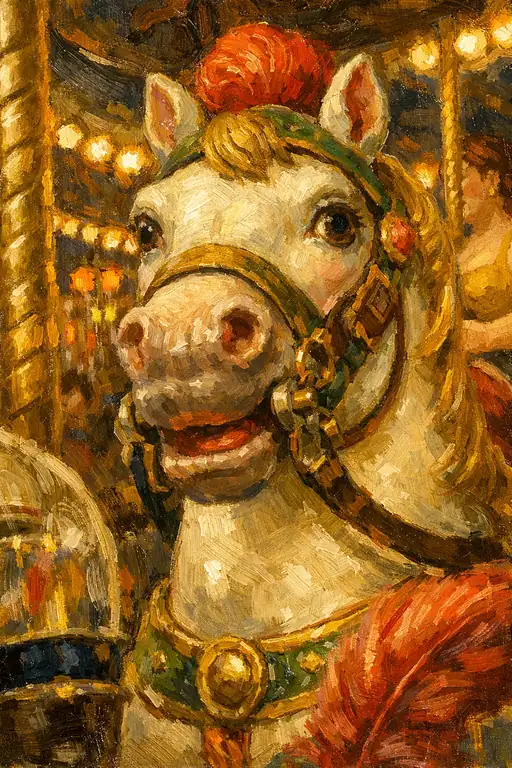 Midnight Ride on the Golden Steed
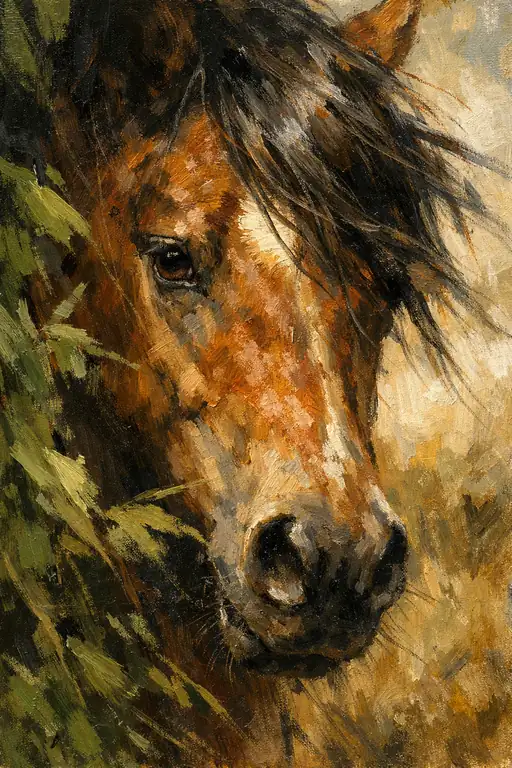 Echoes of the Wild
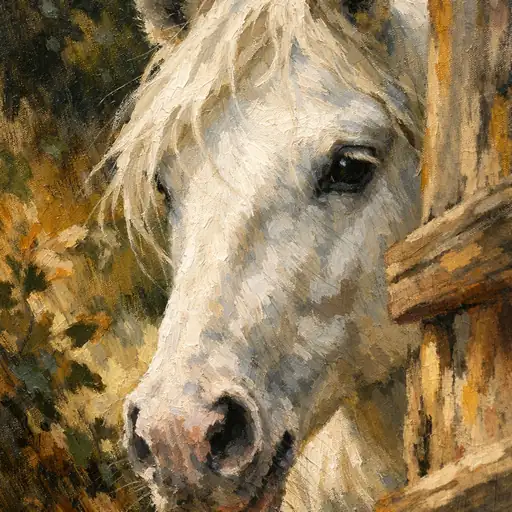 Quiet Curiosity
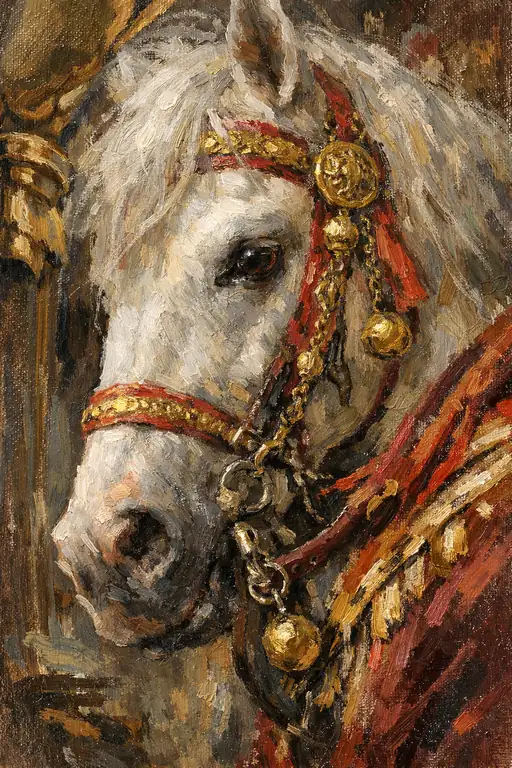 Noble Visage
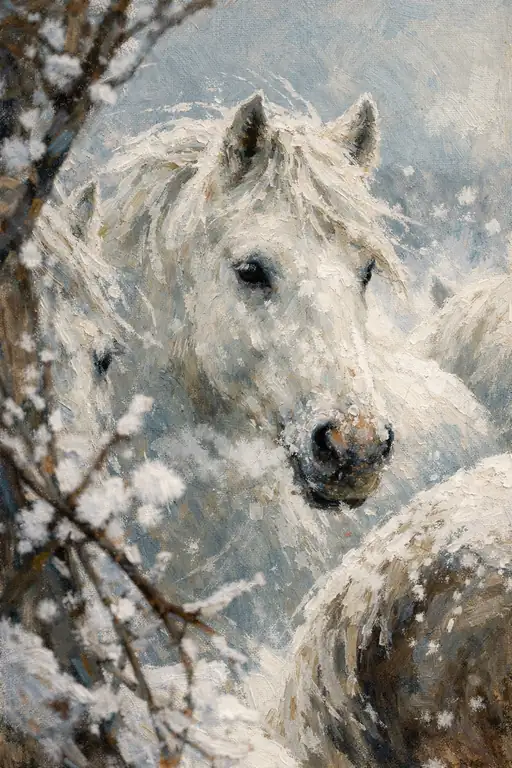 Breath of Frost on a Silent Steed
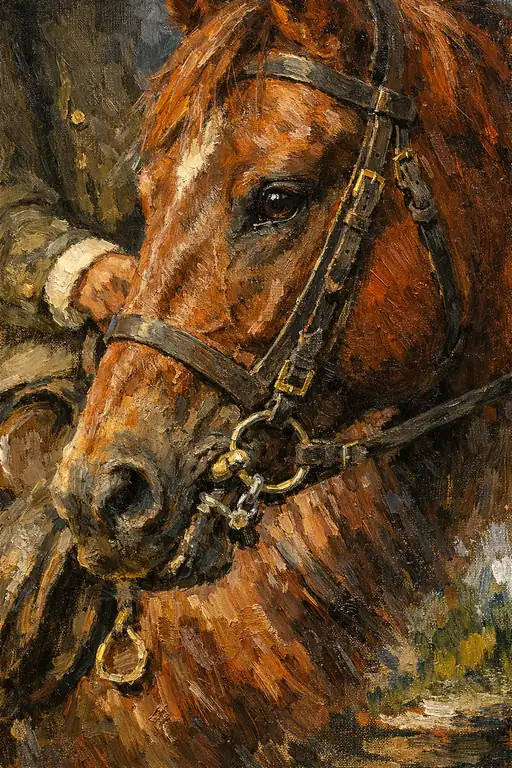 Noble Pulse of the Silent Steed
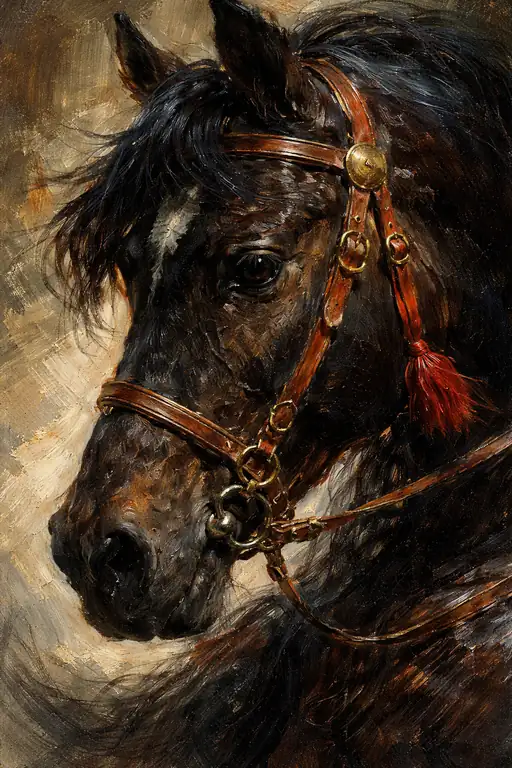 The Noble Profile of Silent Strength
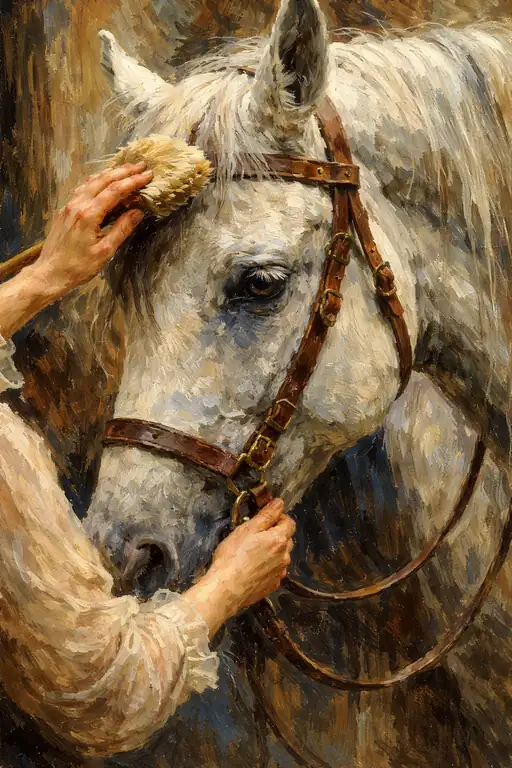 The Gentle Touch of Companionship
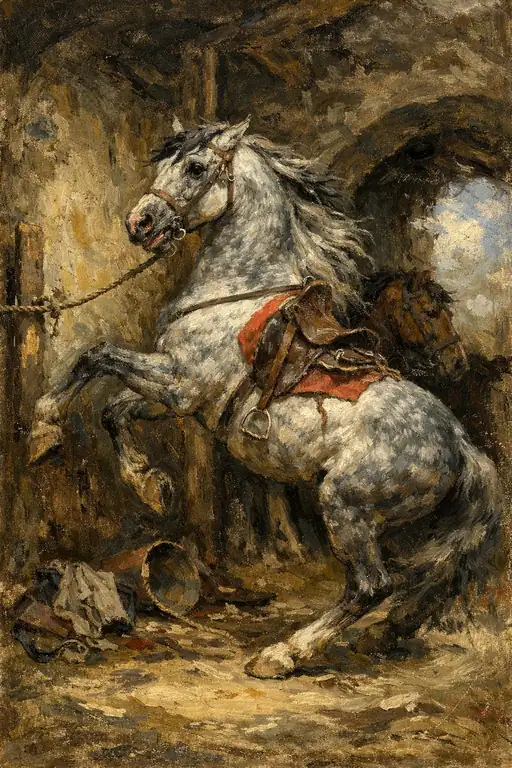 The Untamed Flame Dancing in the Shadows