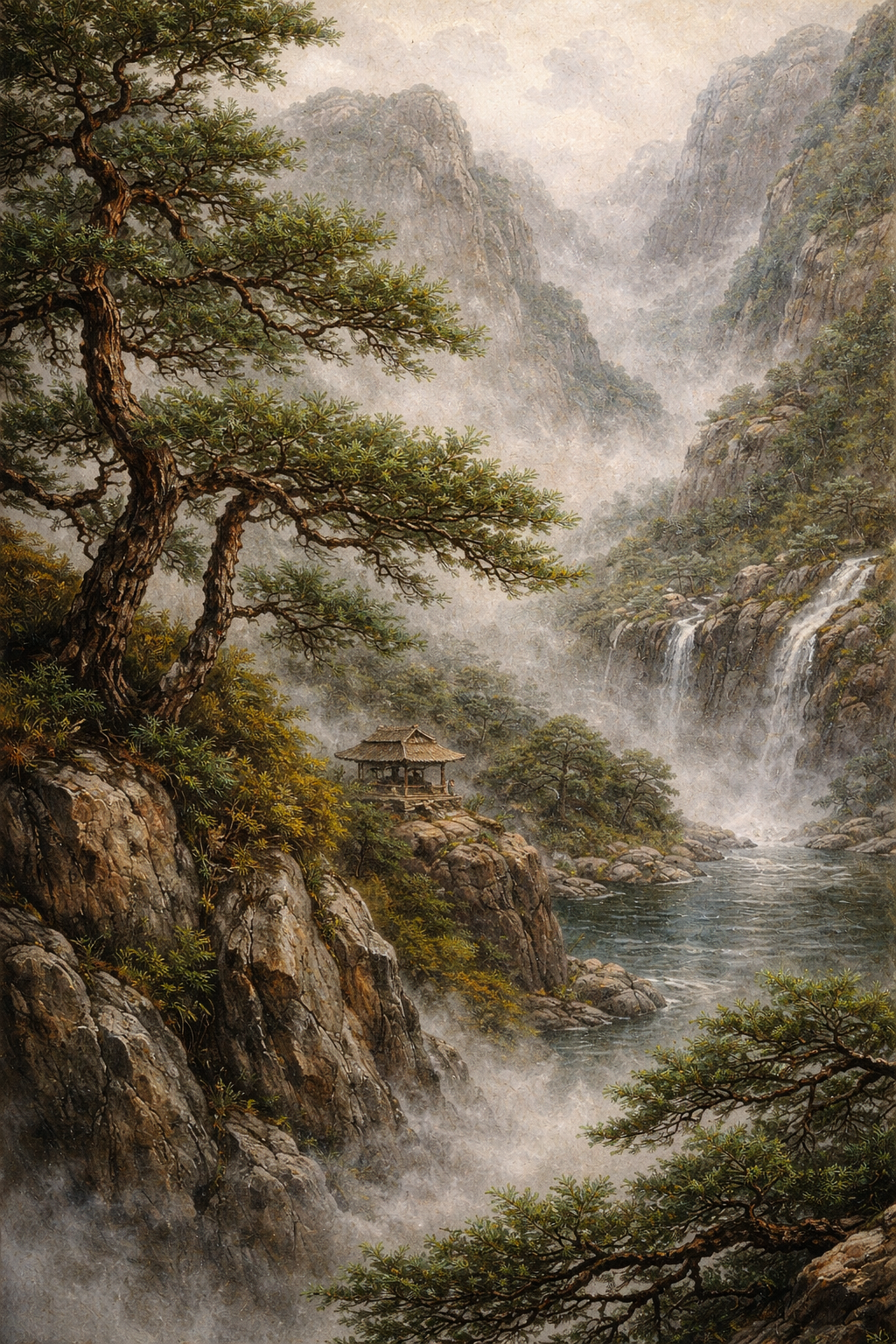
Mist over the Eternal Peaks
Critique
1. Introduction This vertical landscape painting presents a majestic view of high mountains and cascading waterfalls, evoking the spirit of classical East Asian nature worship. By integrating traditional compositional elements with oil-based textures, the work achieves a unique synthesis of Eastern and Western artistic sensibilities. It invites the viewer into a realm of sublime tranquility and atmospheric depth. 2. Description The foreground is dominated by a gnarled, ancient pine tree clinging to a rugged cliffside on the left. In the middle ground, a small, traditional pavilion sits precariously on a rocky outcrop overlooking a flowing river. To the right, multiple waterfalls descend from the craggy heights, disappearing into a thick veil of mist. The background consists of towering mountain peaks that gradually fade into the pale, clouded sky. 3. Analysis The artist utilizes a muted palette of earthy browns, deep greens, and soft greys to create a harmonious and grounded atmosphere. Tonal perspective is masterfully employed through the use of mist, which effectively separates the various planes of the landscape. The fine details of the pine needles and the rocky textures contrast with the soft, ethereal treatment of the fog. This balance of sharp detail and hazy atmosphere directs the gaze across the vast vertical space. 4. Interpretation and Evaluation The work functions as a meditation on the permanence of nature versus the smallness of human structures. The pavilion, though centrally located, is dwarfed by the immense scale of the cliffs and the power of the water. From a technical standpoint, the rendering of the turbulent water and the delicate transitions of the mist is exemplary. The painting successfully reinterprets the "Shan Shui" tradition with a tactile richness that only oil painting can provide. 5. Conclusion Through its grand scale and atmospheric precision, the piece effectively captures the awe-inspiring power of the natural world. The initial observation of the detailed foreground eventually gives way to a broader appreciation of the overall spatial harmony. This landscape serves as a testament to the enduring relevance of nature as a source of artistic inspiration and spiritual peace.
Same Subcategory
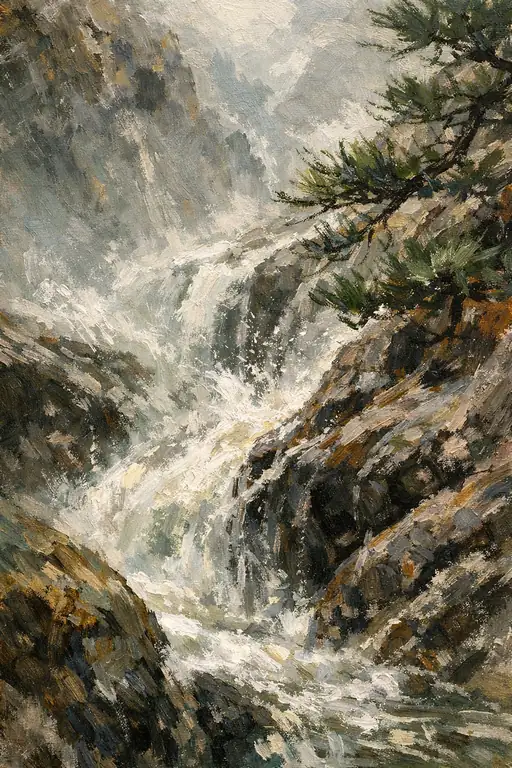 Roar of the Mountain's Heart
 Slumber of the Ancient Dragon
Similar Artworks
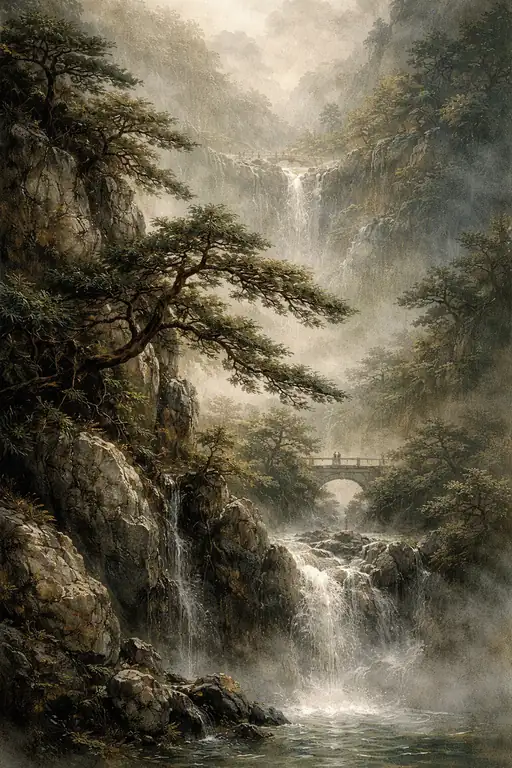 The Gilded Protector
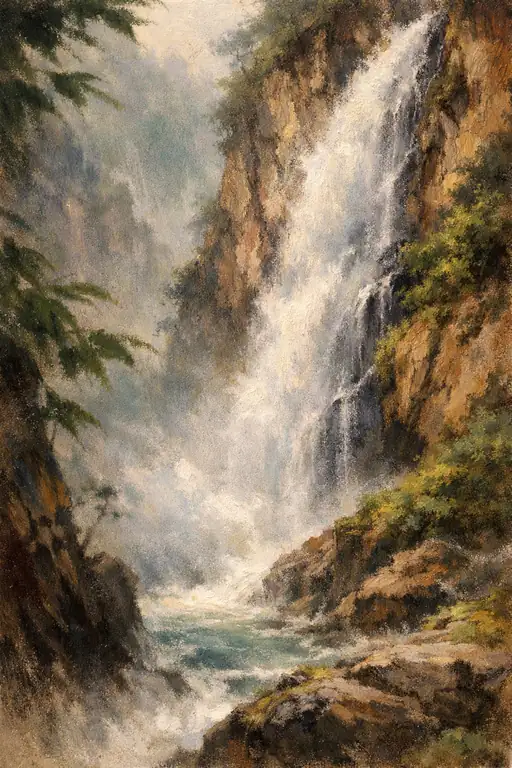 Thunderous Majesty in the Secluded Canyon
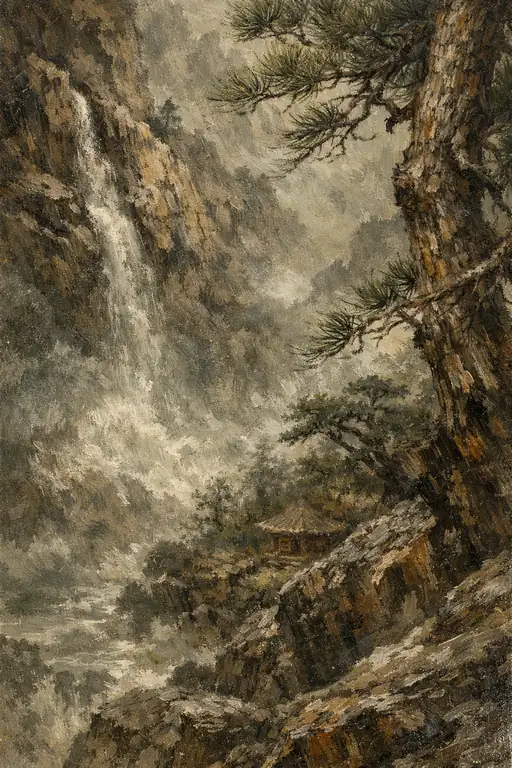 Solitude Above the Clouds
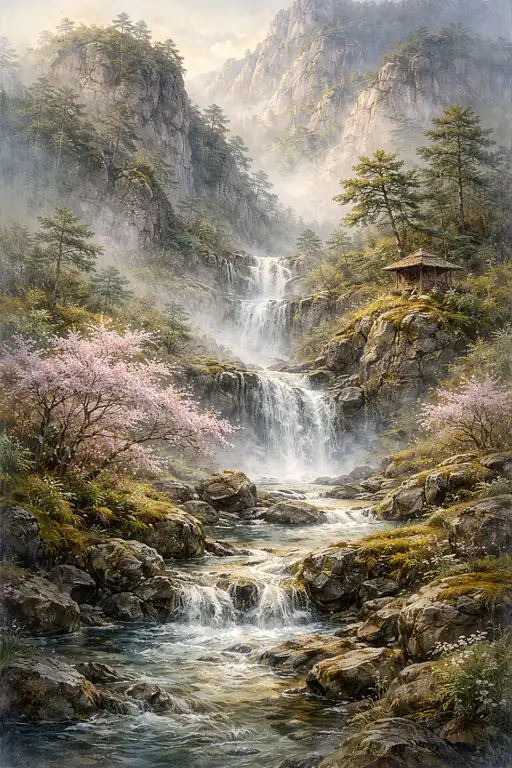 Echoes of the Blooming Gorge
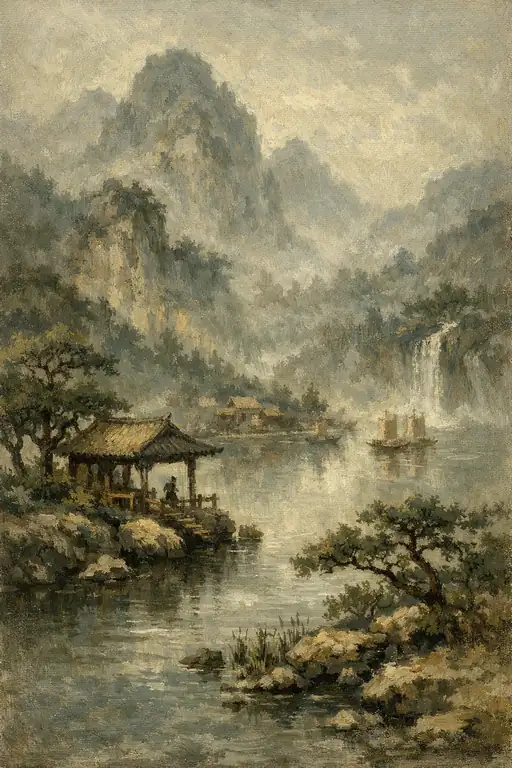 Heartbeat of the Ancient Crag
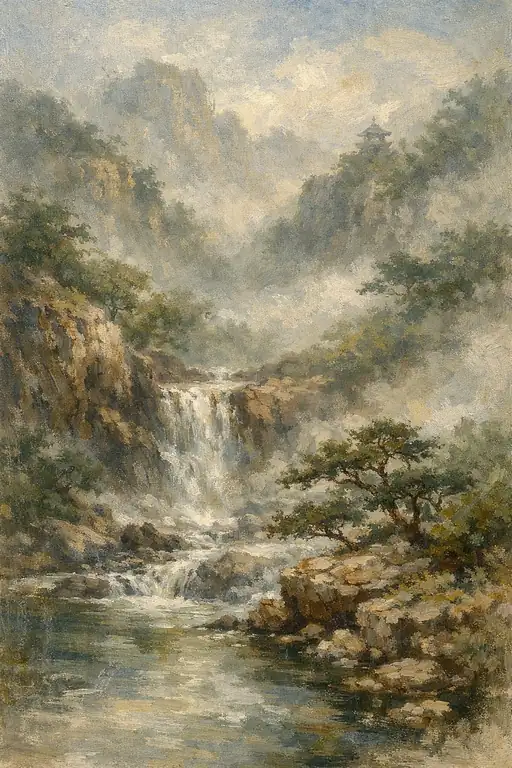 The Hidden Pagoda in the Mist
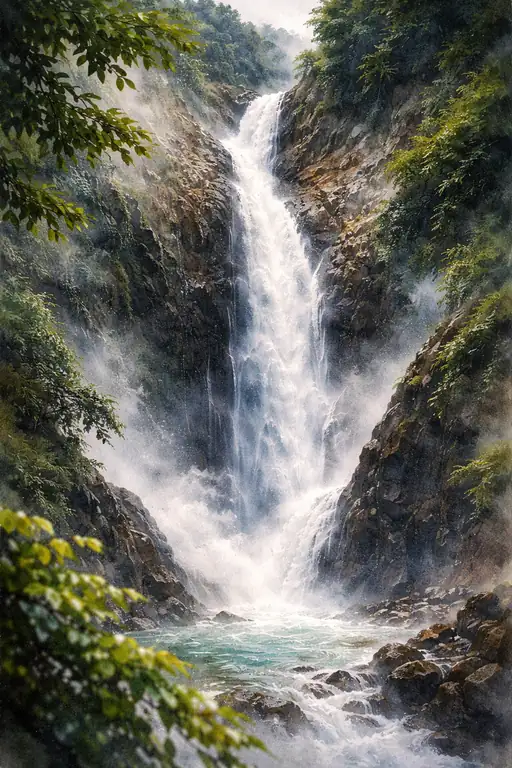 Cascading Veil: The Forest's Pulse
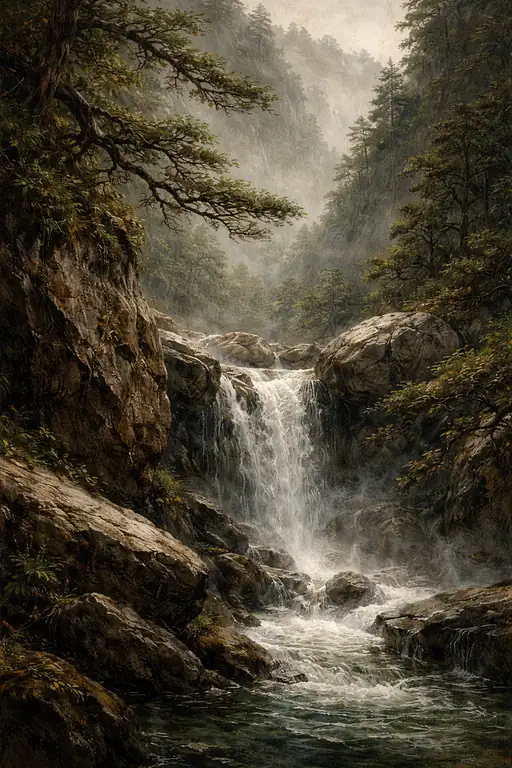 The Roar of Eternity Amidst Timeless Stones
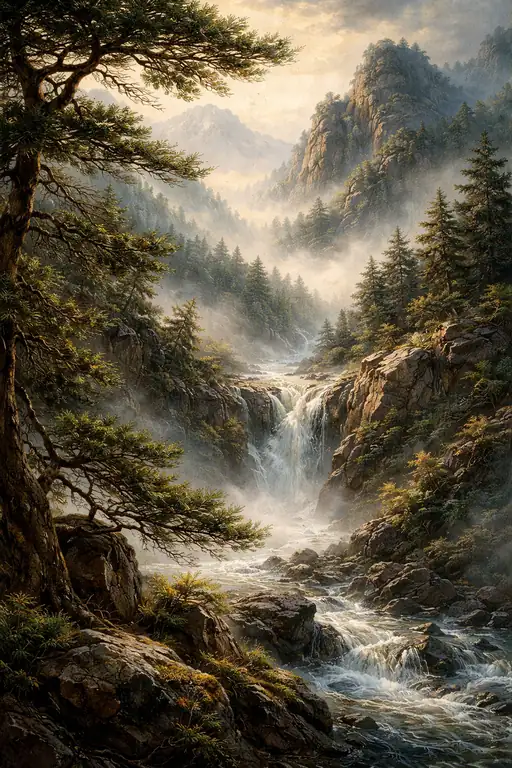 First Light Crowning the Majestic Peaks
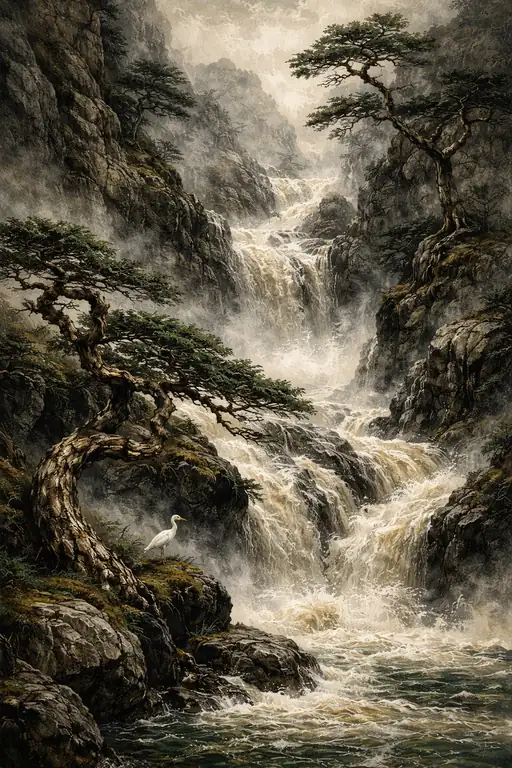 Echoes of the Eternal Peak