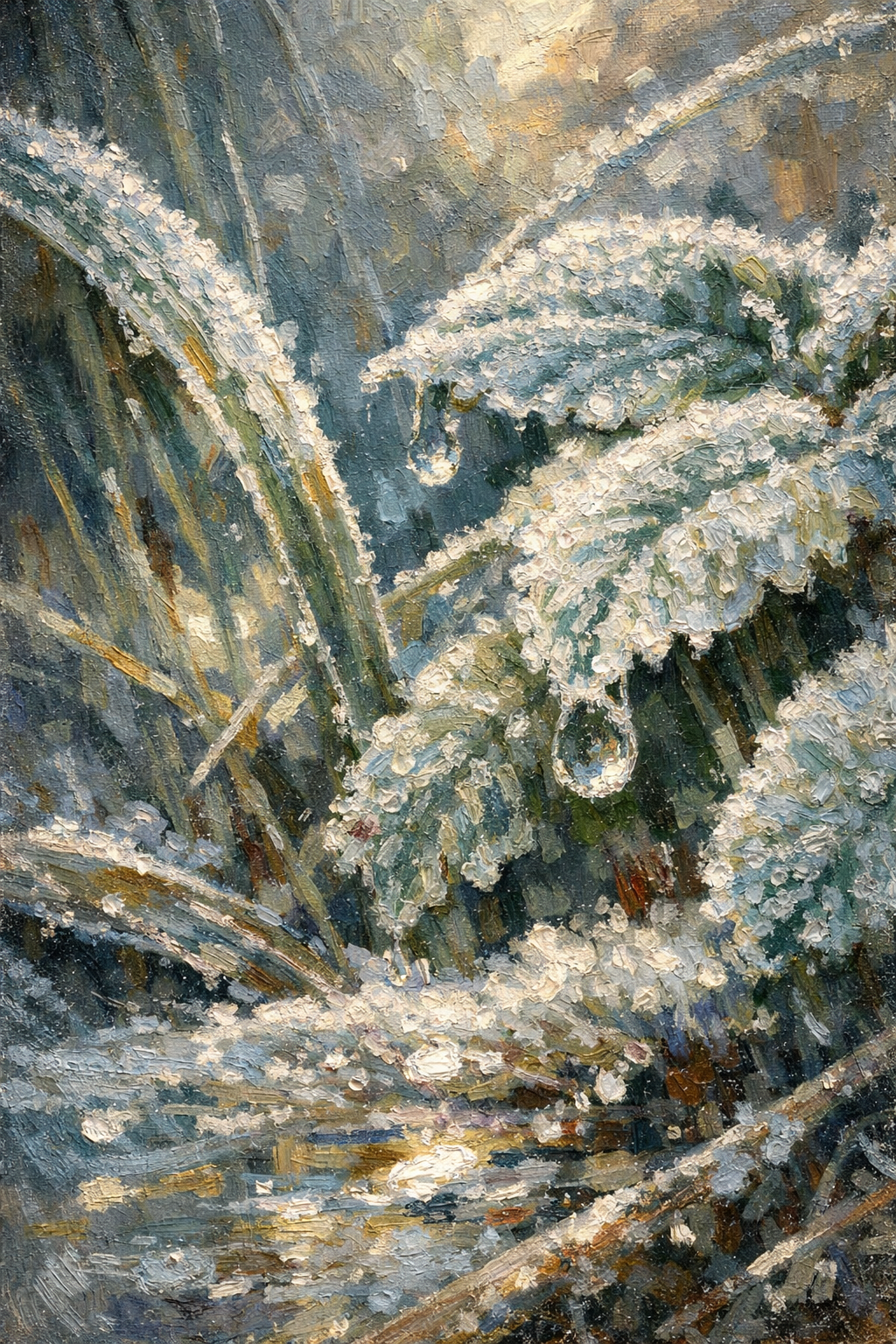
The Frozen Breath of Winter's Dawn
Critique
1. Introduction This oil painting is a remarkable study of winter texture, capturing the intense cold and crystalline beauty of frosted vegetation. The composition draws the viewer into a micro-world where ice and snow dominate the landscape. It serves as a powerful exploration of how light interacts with frozen surfaces, creating a scene that feels both physically tangible and poetically abstract in its execution. 2. Description The canvas is covered with thick, impasto applications of white and pale blue paint, representing a heavy layer of frost on tangled grass and leaves. In the center of the frame, several clear, spherical ice droplets hang from the frozen foliage, catching and refracting the available light. The background consists of dark, shadowy recesses that contrast sharply with the bright, illuminated frost in the upper sections of the work. 3. Analysis The artist uses a highly expressive technique, characterized by bold, visible brushstrokes that give the snow a crusty, three-dimensional quality. The color palette is primarily cool, utilizing various shades of cerulean, cobalt, and titanium white to evoke a freezing environment. However, subtle hints of golden yellow and ochre are visible in the highlights, suggesting a low winter sun or a distant light source. 4. Interpretation and Evaluation The work brilliantly interprets the resilience of nature under extreme conditions, showcasing the delicate beauty of ice as it clings to dormant life. The technical mastery of the impasto technique is particularly noteworthy, as it adds a sculptural dimension to the painting. The composition’s focus on small details creates a sense of intimacy, transforming a common winter sight into an extraordinary visual experience. 5. Conclusion Initially perceived as a dense collection of marks, the painting reveals itself as a meticulously observed fragment of the natural world. Its success lies in the artist's ability to convey the tactile sensation of cold through purely visual means. This piece stands as an exceptional example of atmospheric realism, demonstrating how technique can elevate a simple subject into a profound meditation on the season.
Same Subcategory
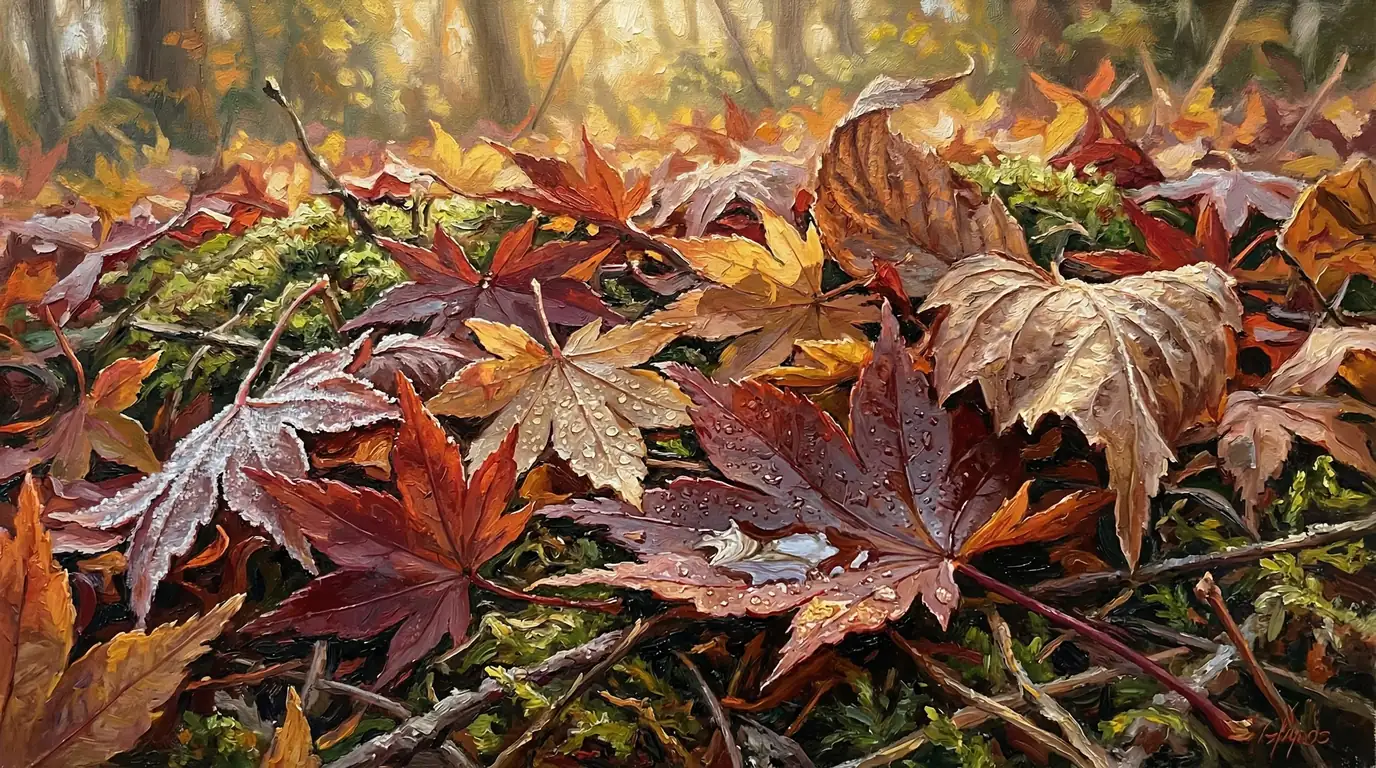 Whispers of the Slumbering Forest
Similar Artworks
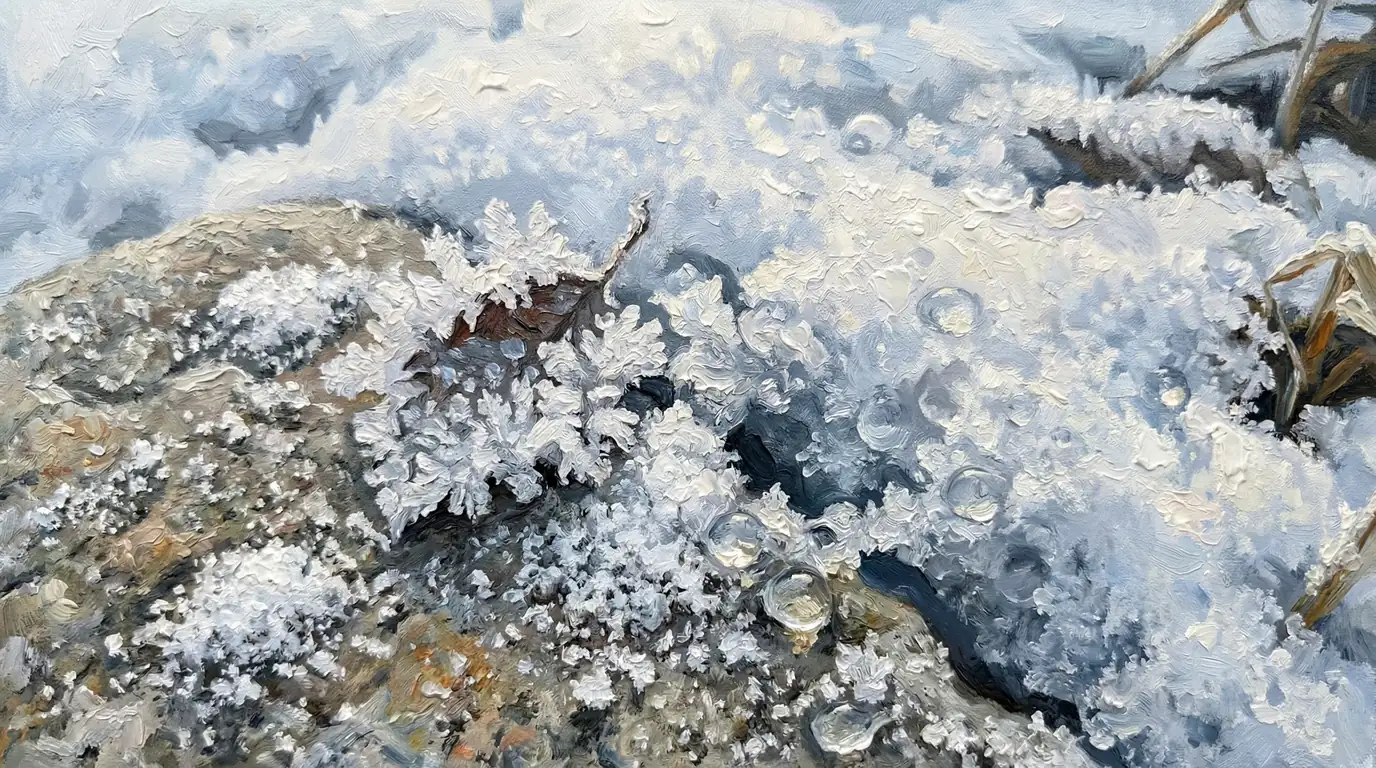 Slumber of the Frozen Leaf
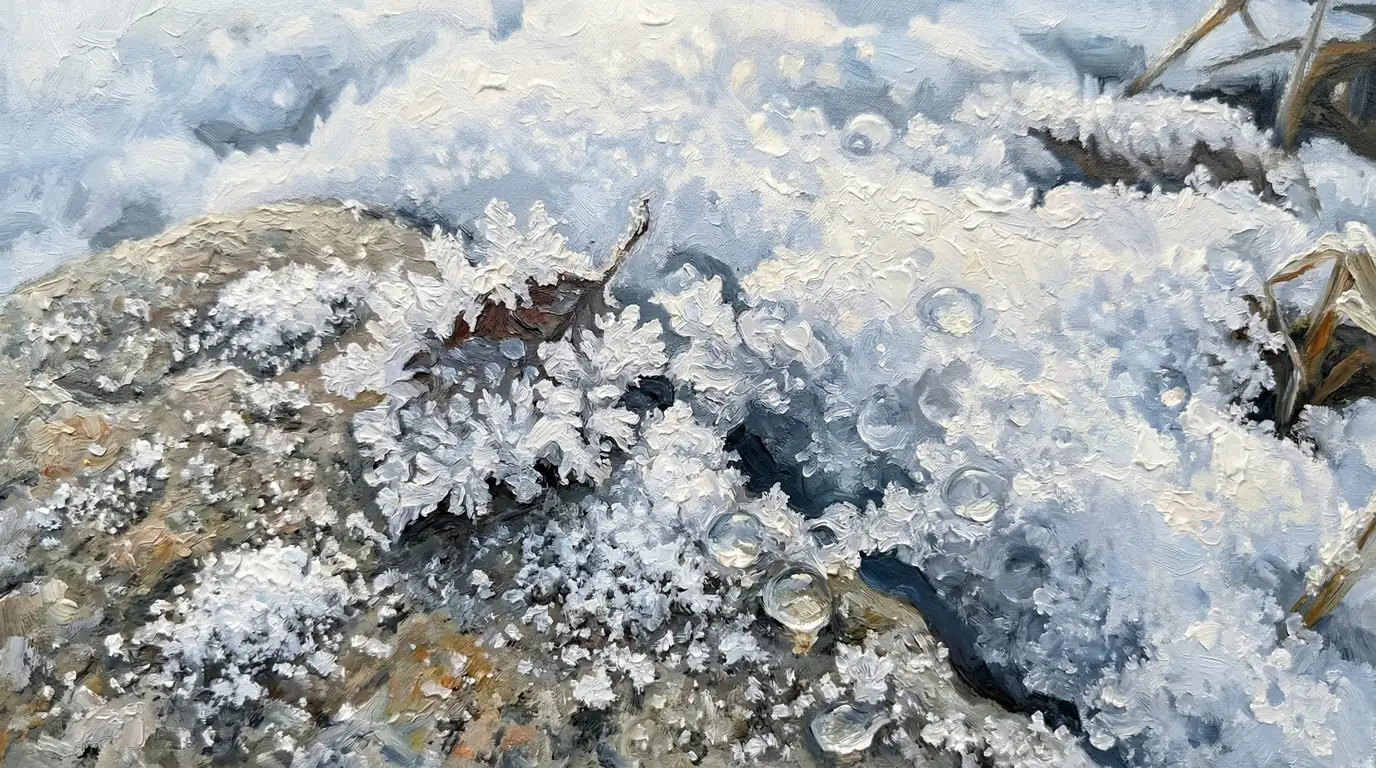 The Silent Breath of Winter's Kiss
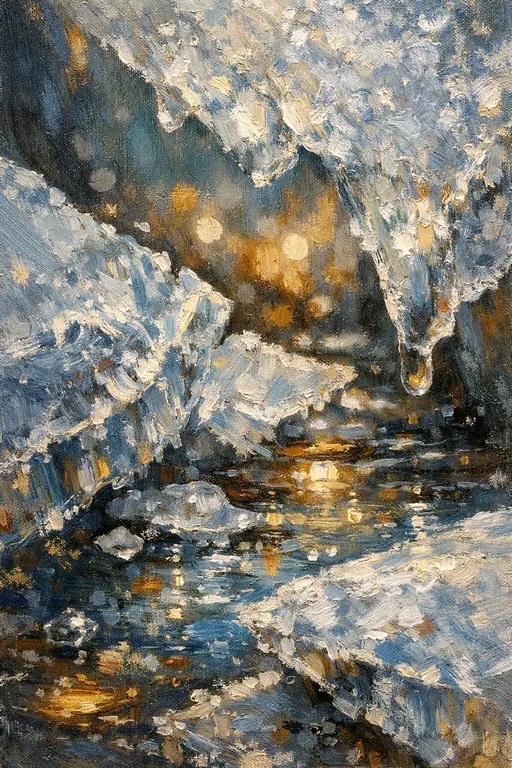 Golden Echoes in the Frost
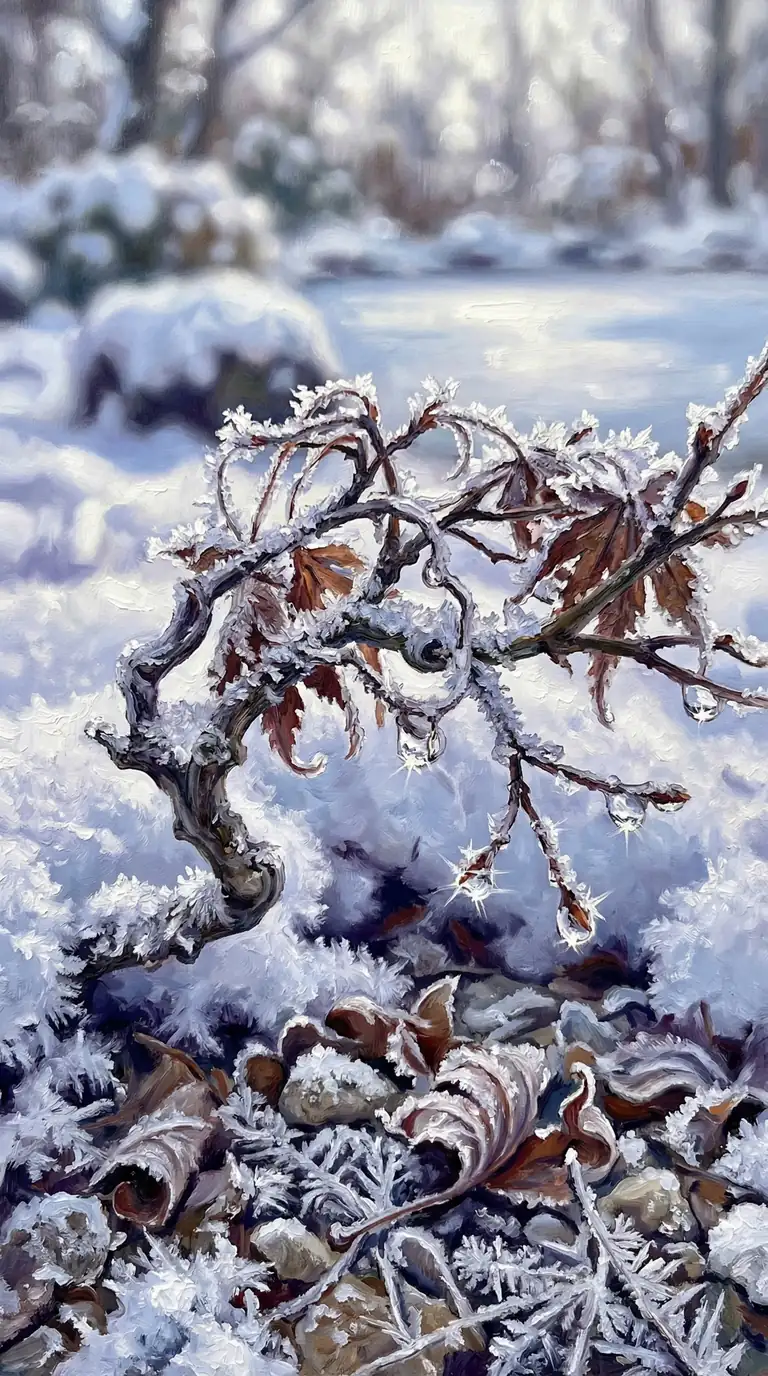 Fragile Elegance: The Microcosm of Frost
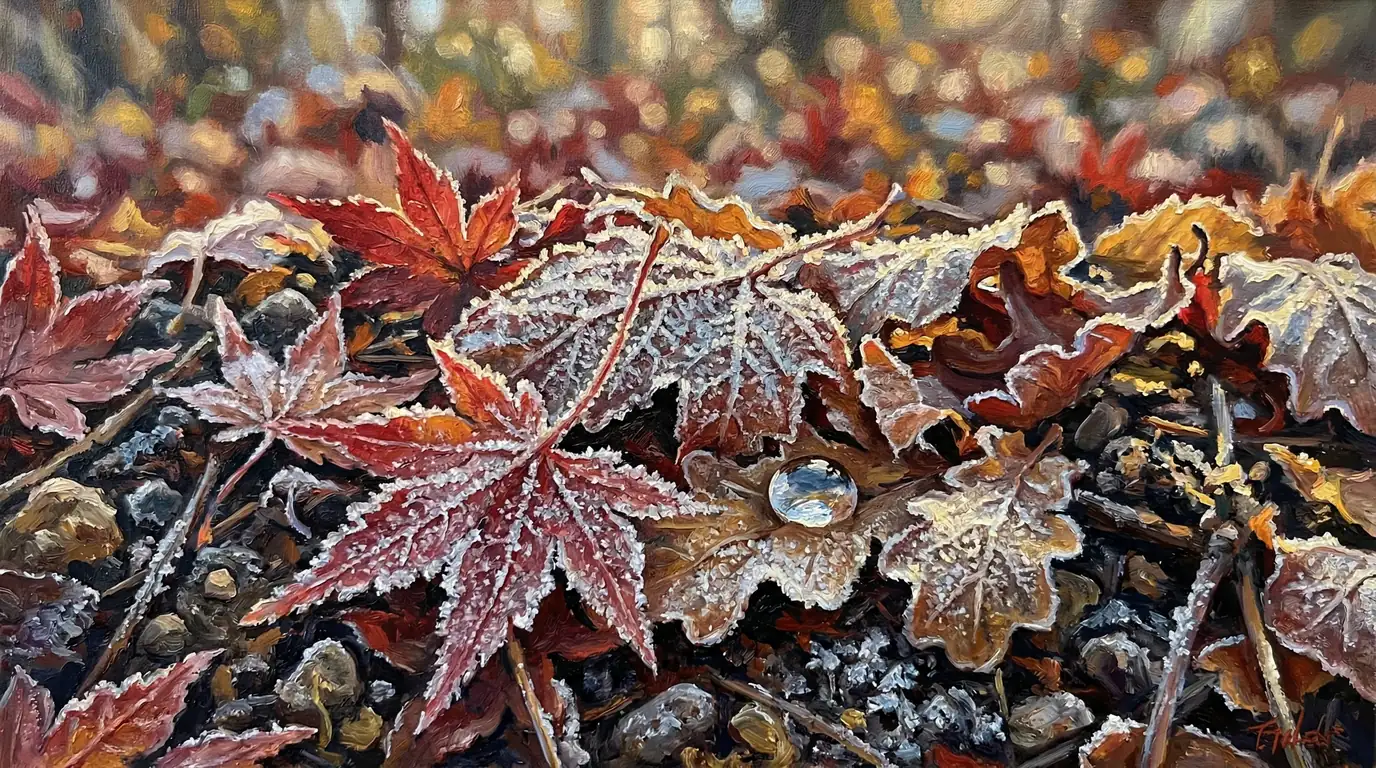 Frost's Cold Kiss on Autumn Fire
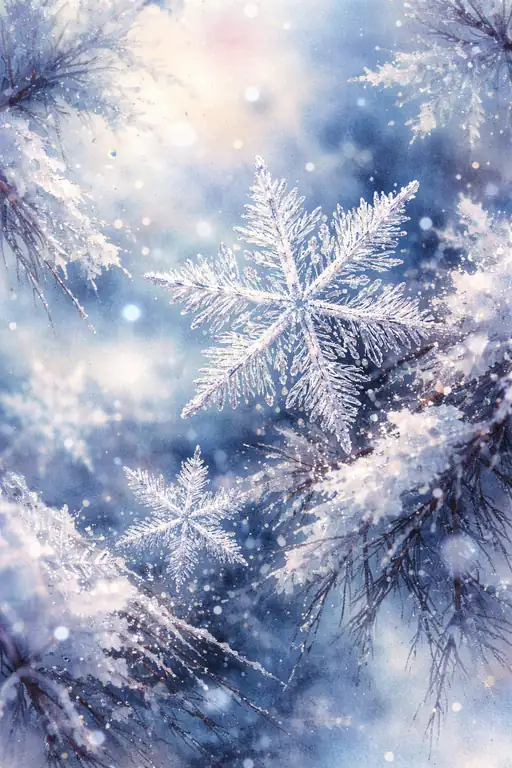 Intricate Perfection of the Winter's Breath
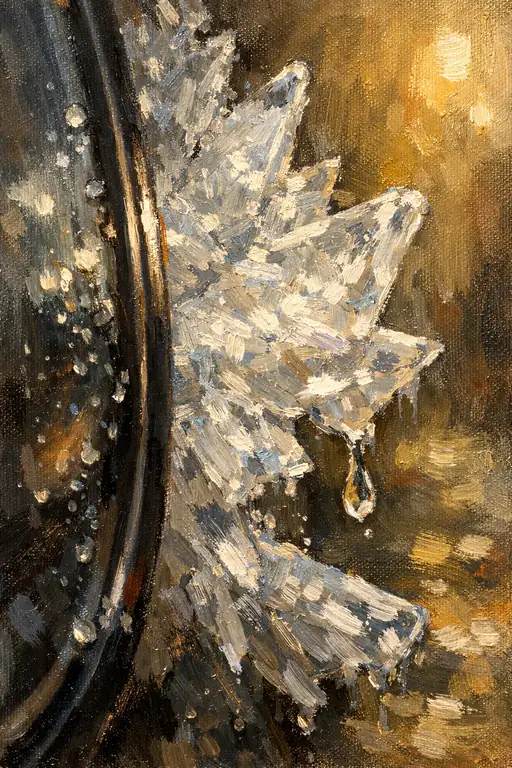 Tears of the Frozen Void
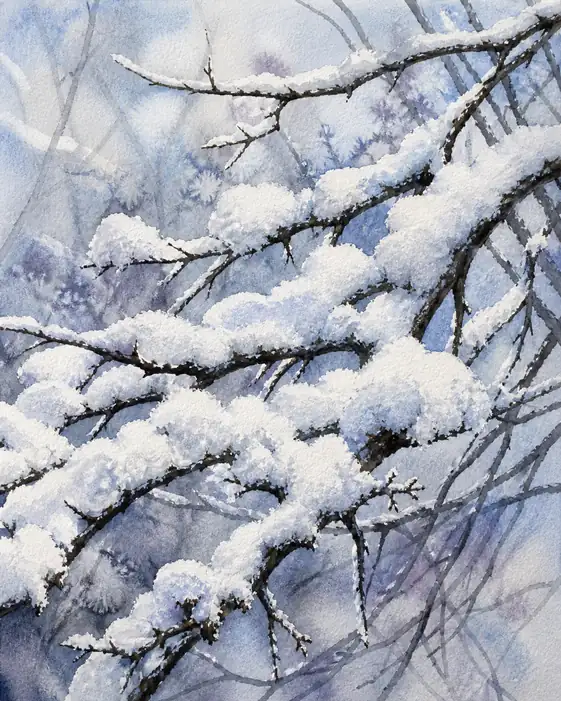 White Velvet: A Song of the Silent Morning
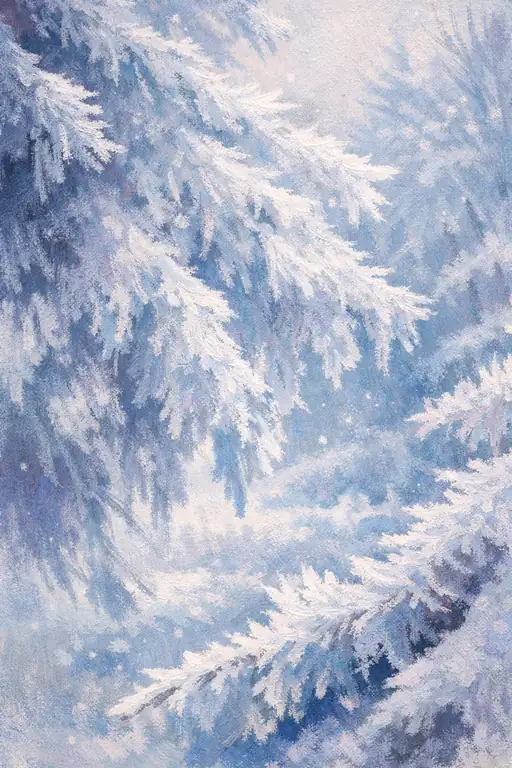 Serene Slumber Beneath the Frosted Canopy
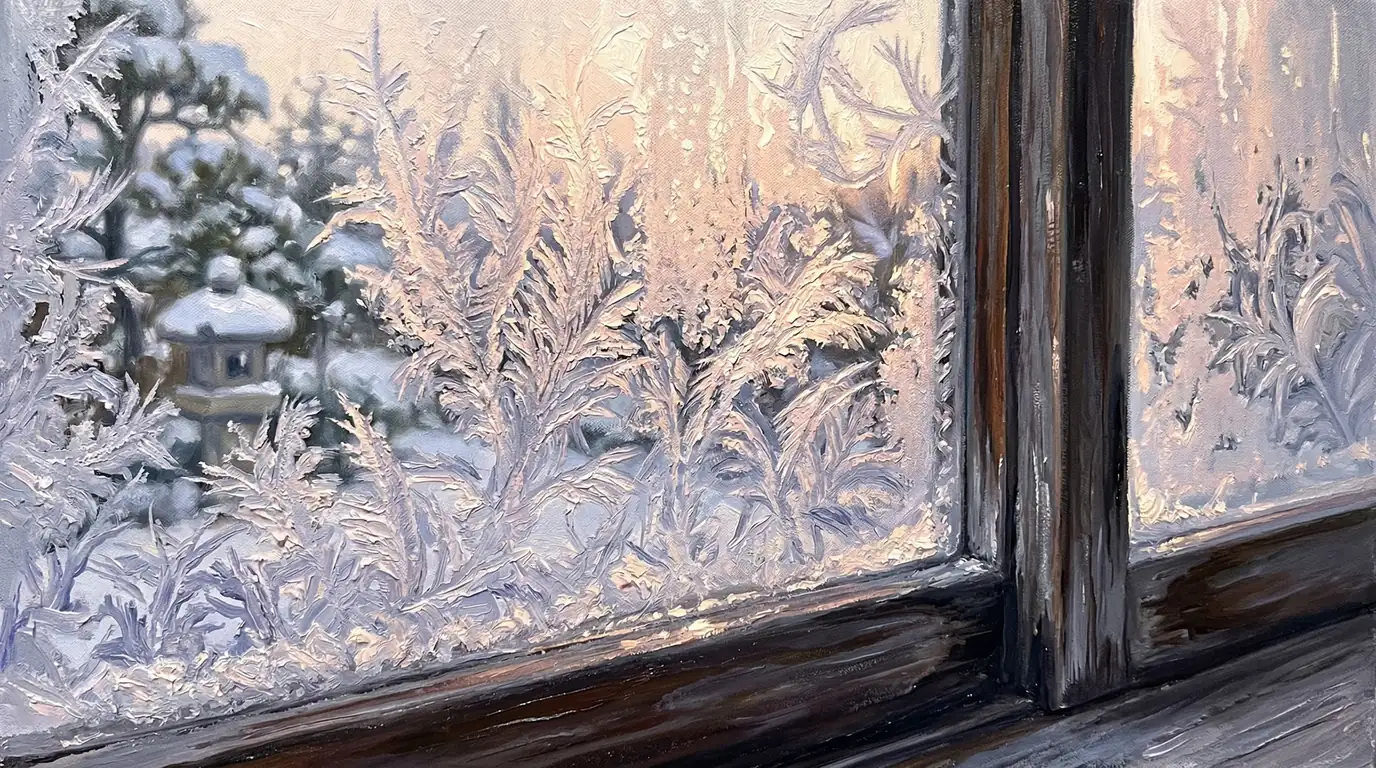 Frost Flowers on the Windowpane