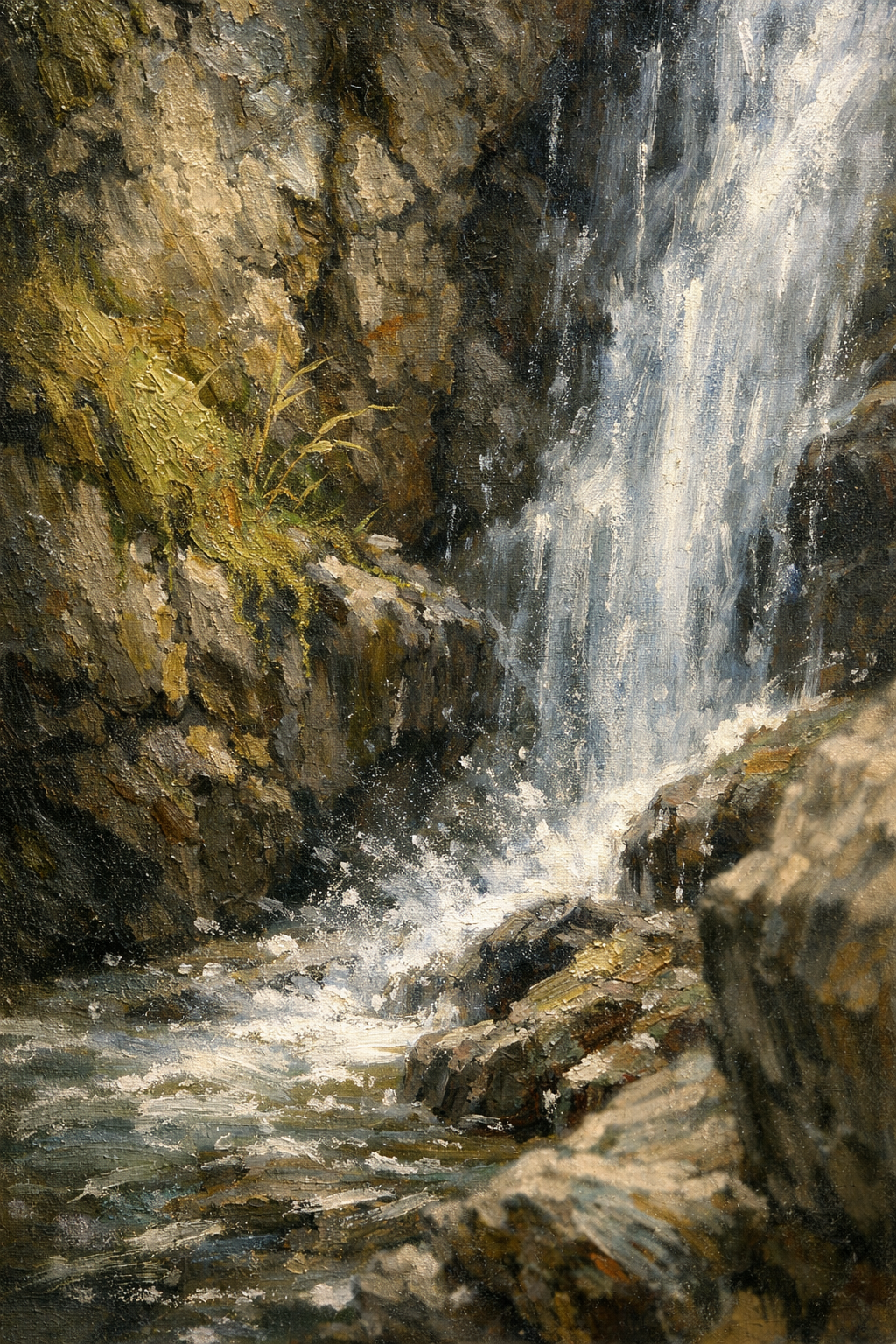
Eternity in a Waterfall's Embrace
Critique
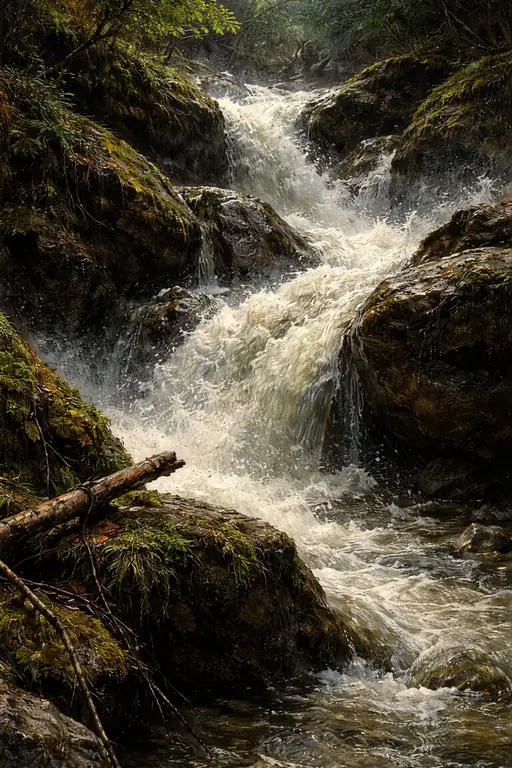
1. Introduction This vertical oil painting offers a visceral, close-up encounter with a mountain waterfall as it crashes against a rugged rock face. The artist ignores the broader panorama in favor of a focused study on the sensory qualities of moving water and weathered stone. The composition emphasizes the immediate power and tactile reality of the natural world, capturing a scene of raw energy that feels both intimate and expansive. 2. Description The primary subject is a dense cascade of white water that occupies the right half of the frame, falling vertically into a churning pool below. On the left, a steep, craggy rock wall is partially covered with patches of yellowish-green moss and thin blades of grass. The water hits the lower rocks with significant force, creating a lively spray of white droplets that dance across the central portion of the canvas. The light appears to originate from the upper left, casting deep shadows within the crevices of the stone and highlighting the crests of the water’s ripples. 3. Analysis The painting is characterized by its heavy use of impasto, with the paint applied in thick, expressive strokes that give the rocky surfaces a three-dimensional quality. The color palette is earthy and naturalistic, utilizing various shades of ochre, burnt umber, and deep grey, which are sharply contrasted by the brilliant, untempered whites of the waterfall. This tonal range, combined with the varied directions of the brushwork, creates a rhythmic tension between the unyielding stability of the cliffs and the fluid, chaotic motion of the water. 4. Interpretation and Evaluation This work succeeds in translating the auditory and tactile experience of a waterfall into a purely visual medium. The technical proficiency in depicting the different states of water—from the solid, heavy flow to the ephemeral mist of the spray—is highly impressive. By cropping the scene so tightly, the artist removes any sense of narrative, forcing the viewer to engage directly with the formal qualities of the landscape. The balance between the dark, shadowed rocks and the bright, reflective water creates a compelling visual drama that sustains interest across the entire canvas. 5. Conclusion Initially seen as a simple fragment of a larger landscape, the painting ultimately stands as a powerful meditation on the enduring conflict and cooperation between water and stone. The interplay of light on the turbulent surfaces conveys a sense of constant renewal and primeval force. It is a masterly exploration of texture and movement, demonstrating how a focused perspective can reveal the profound complexity and beauty of even the most common natural phenomena.
Same Subcategory
 Tears of the Ancient Pine
 Reflections in the Frozen Gold
Similar Artworks
 Turbulent Splash Against the Ancient Rock
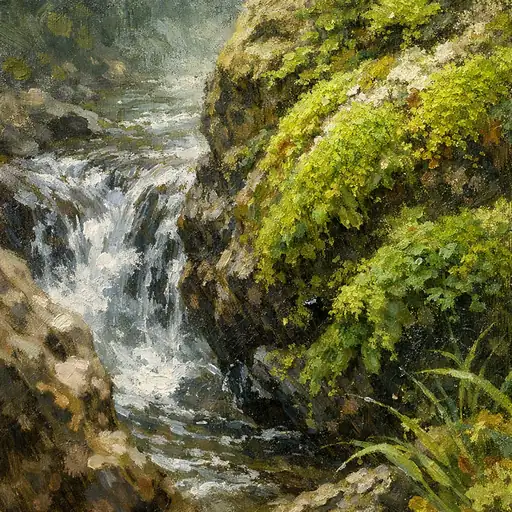 Veil of the Wild Waters
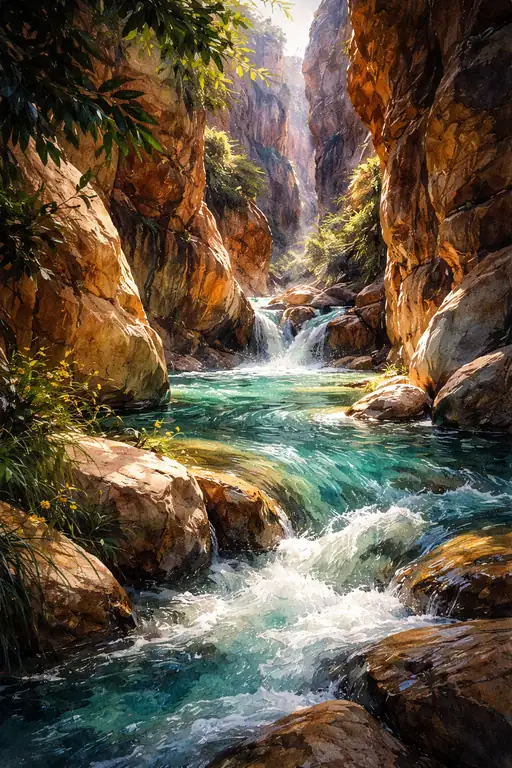 Rush of Turquoise: A Mountain Stream in the Gorge
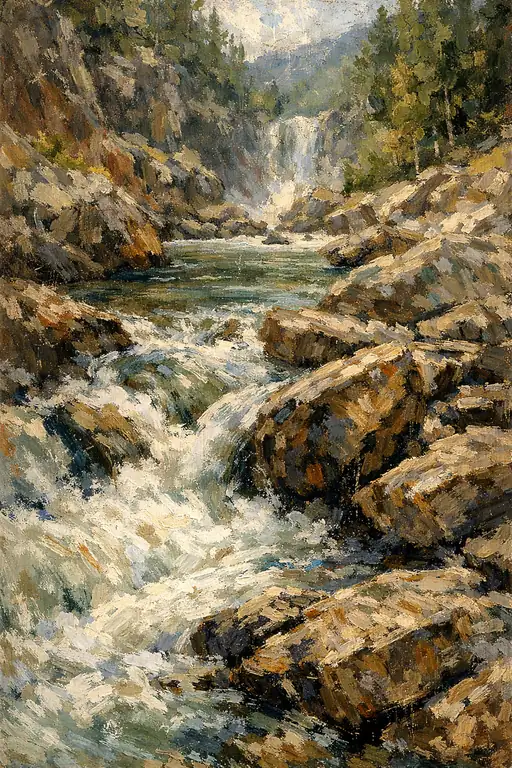 Roar of the Churning Abyss
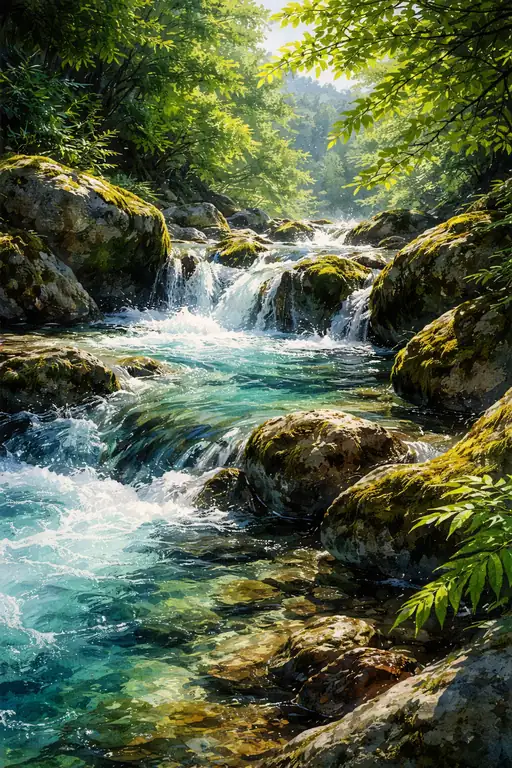 Rushing Waters: A River Cutting Through a Steep Moss-Covered Gorge
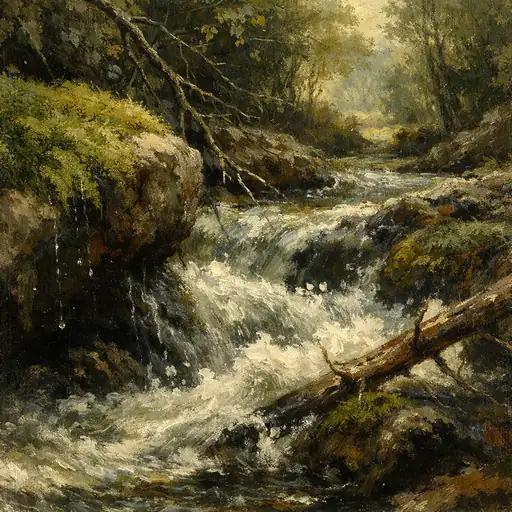 Pulse of the Untamed Waters
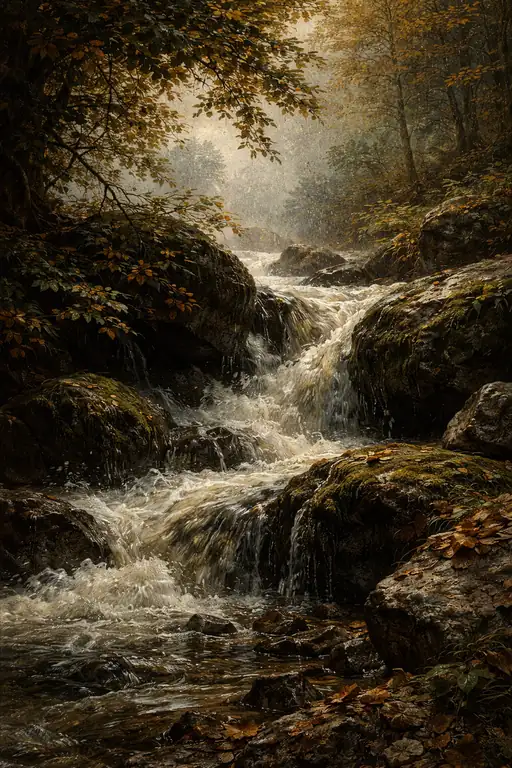 The Whispering Veils of Autumn
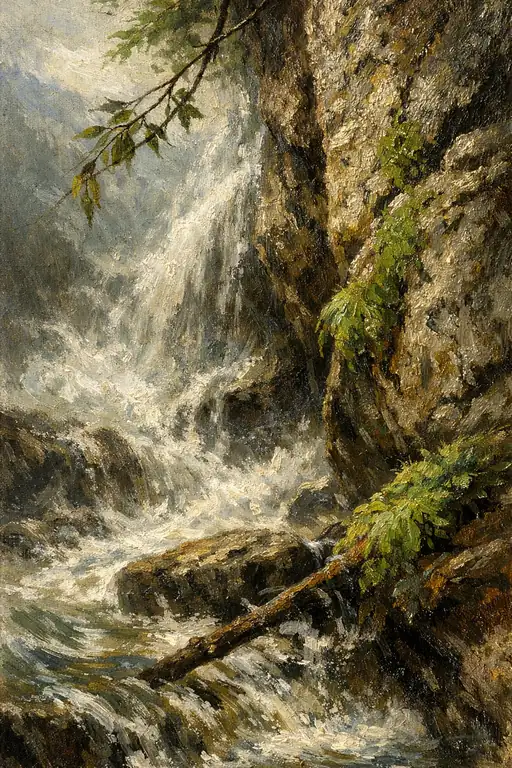 Turbulence Against the Fallen Wood
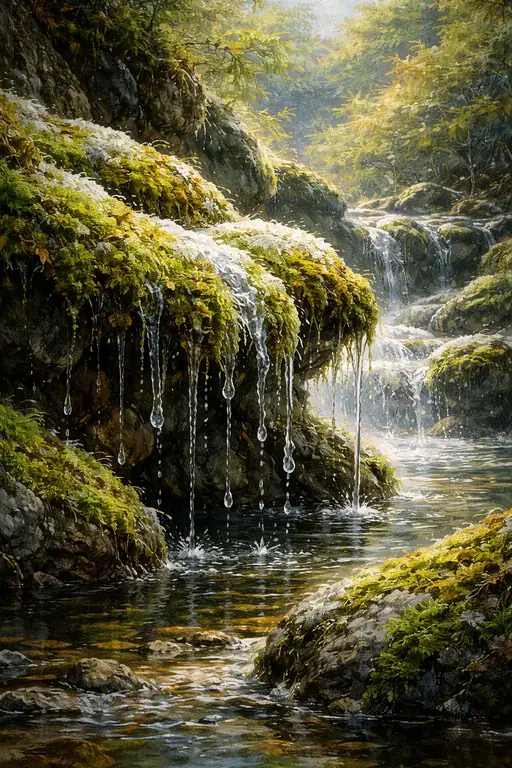 Symphony of the Forest Stream
 The Eternal Roar of the Forest Cascade