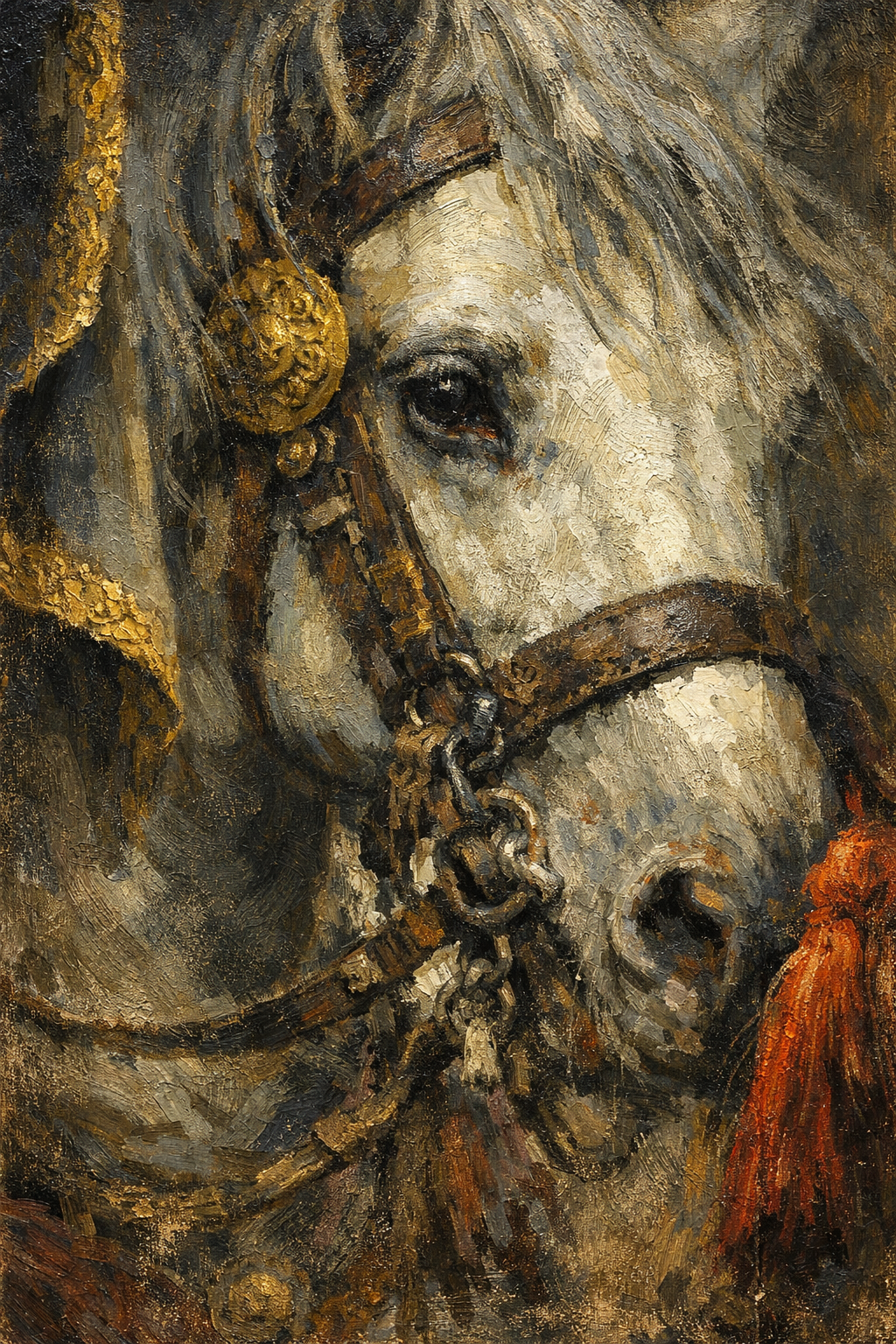
Beyond the Crimson Lips
Critique
1. Introduction This vertical oil painting presents a compelling close-up of a horse’s head, rendered with a remarkable degree of textural depth and dramatic lighting. The focus is tightly cropped, emphasizing the intricate details of the animal’s harness and the intensity of its gaze. The work evokes a sense of historical grandeur, reminiscent of Baroque equestrian portraiture, while maintaining a modern sensibility through its bold and expressive brushwork. 2. Description The horse, predominantly grey and white, occupies the central space of the composition, with its head turned slightly toward the viewer. It wears an elaborate bridle adorned with large, circular gold medallions and heavy metallic chains that reflect a warm, flickering light. A vibrant red tassel hangs from the lower right side of the harness, providing a sharp contrast to the muted tones of the animal’s coat. The background is dark and indistinct, which serves to push the subject forward and heighten the theatricality of the scene. 3. Analysis The artist utilizes an impasto technique, applying paint in thick, deliberate layers to create a tangible surface that mimics the coarseness of the horse’s hair and the metallic sheen of the ornaments. The color palette is restricted yet effective, relying on a sophisticated interplay of silvers, deep ochres, and siennas. Light source appears to come from the upper left, casting deep shadows that define the muscular structure of the horse’s face and the intricate engravings on the golden medallions. 4. Interpretation and Evaluation This painting succeeds in capturing both the physical strength and the quiet dignity of its subject. The choice of a close-up perspective forces the viewer to confront the horse as an individual character rather than a mere beast of burden. The technical skill evident in the rendering of varied materials—metal, leather, fabric, and flesh—is exceptional. The contrast between the rough, painterly background and the more defined details of the bridle creates a dynamic visual tension that keeps the eye engaged. 5. Conclusion Initially, the viewer may be drawn to the brilliance of the golden ornaments, but the true power of the piece lies in the soulful expression of the horse’s eye. The work transcends simple animal portraiture by imbuing the scene with a sense of narrative and historical weight. Ultimately, the painting stands as a masterly exploration of texture and light, celebrating the majestic presence of the equine subject through a lens of classical elegance.
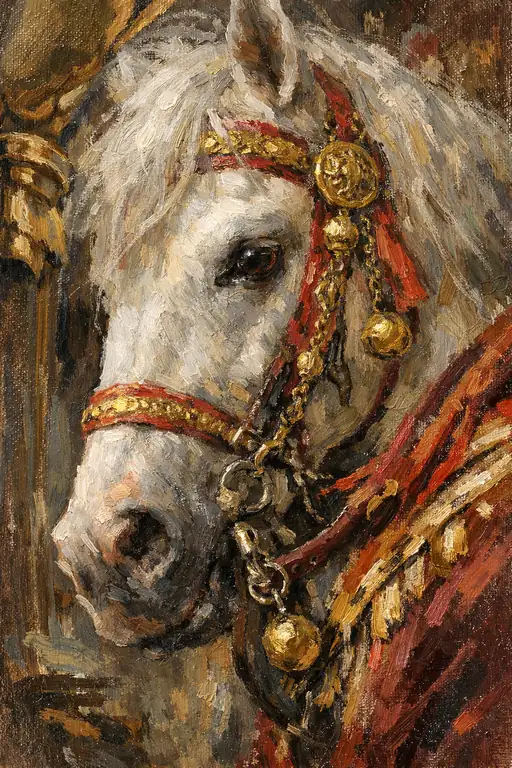 Noble Visage
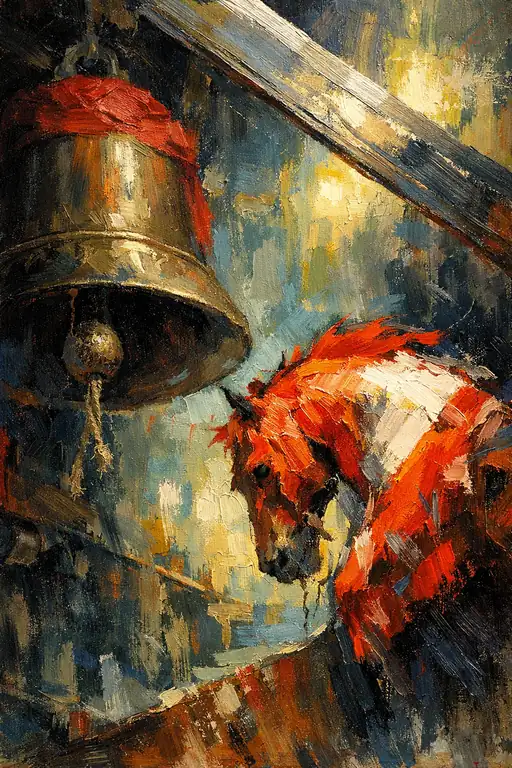 Echoes in the Rust
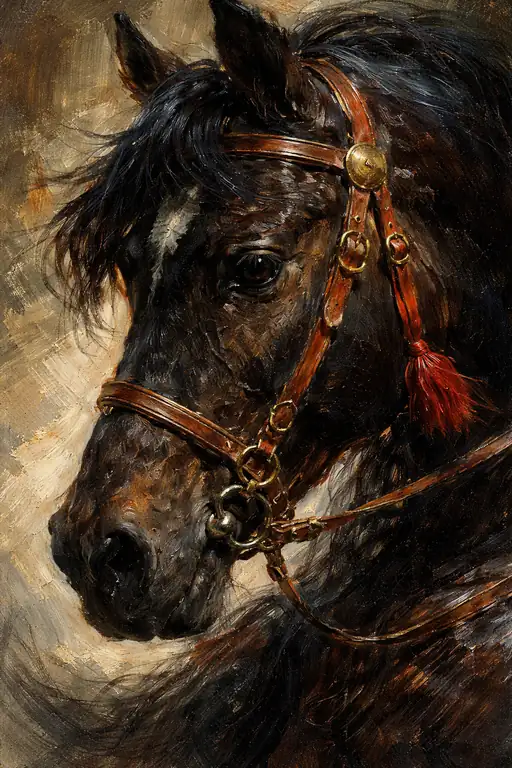 The Noble Profile of Silent Strength
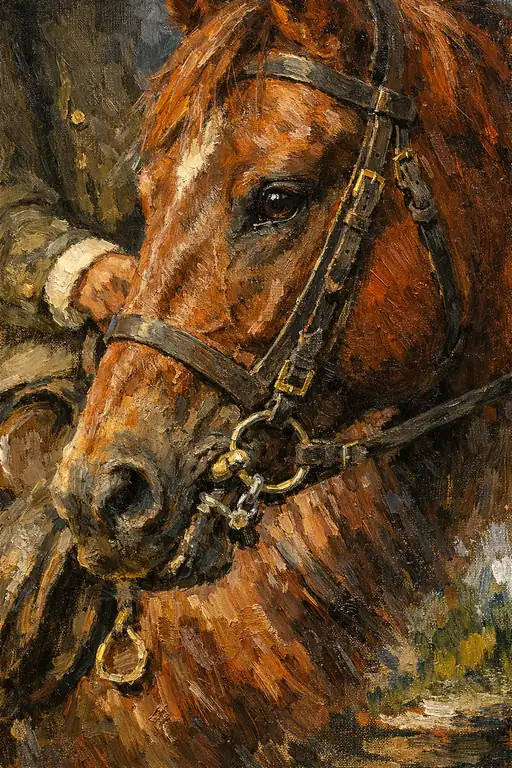 Noble Pulse of the Silent Steed
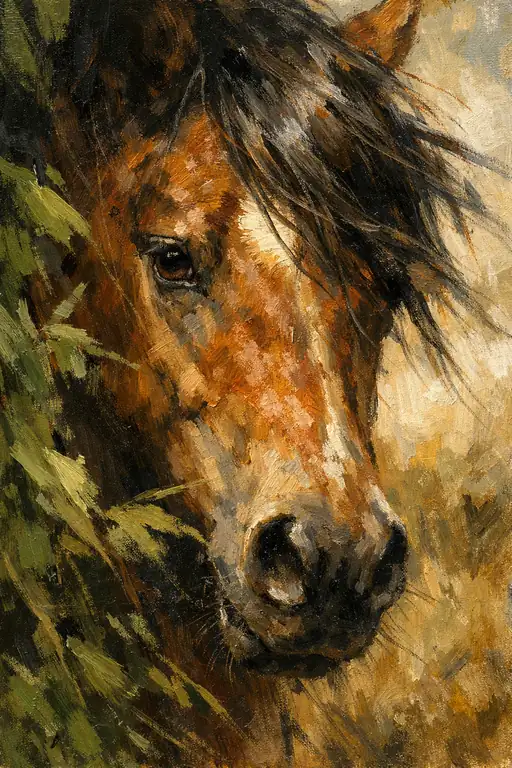 Echoes of the Wild
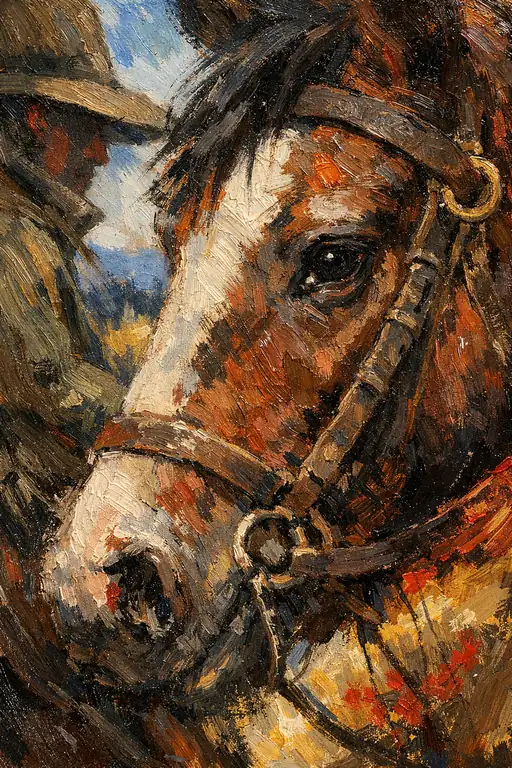 Silent Gaze of the Loyal
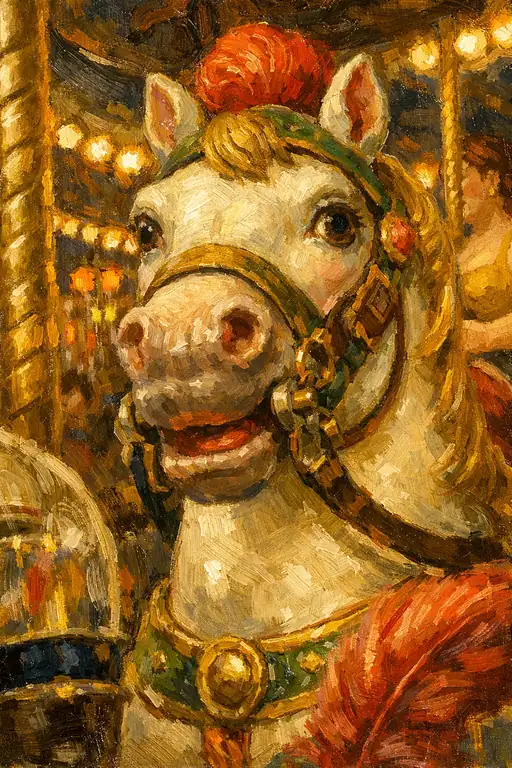 Midnight Ride on the Golden Steed
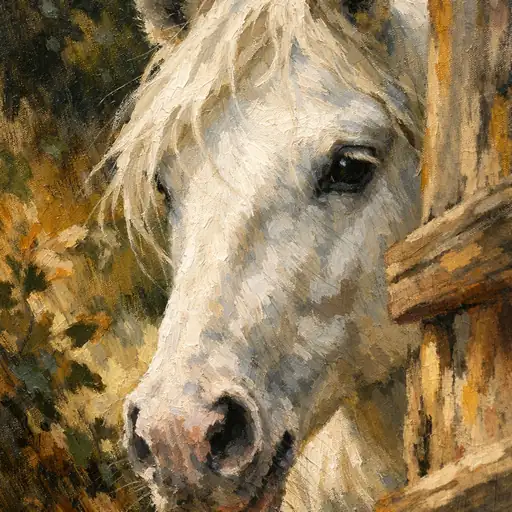 Quiet Curiosity
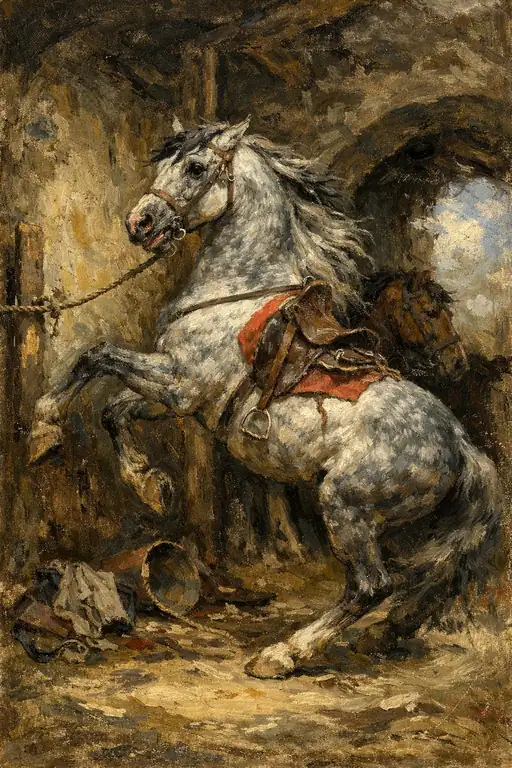 The Untamed Flame Dancing in the Shadows
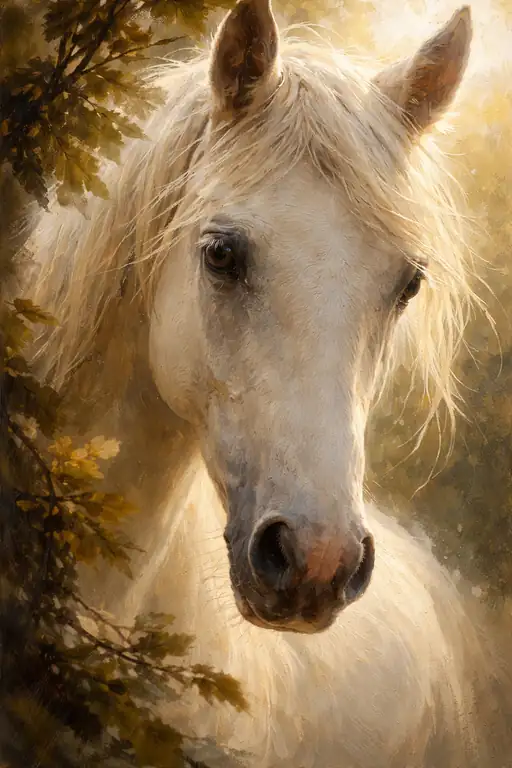 Mystery Held in Blue
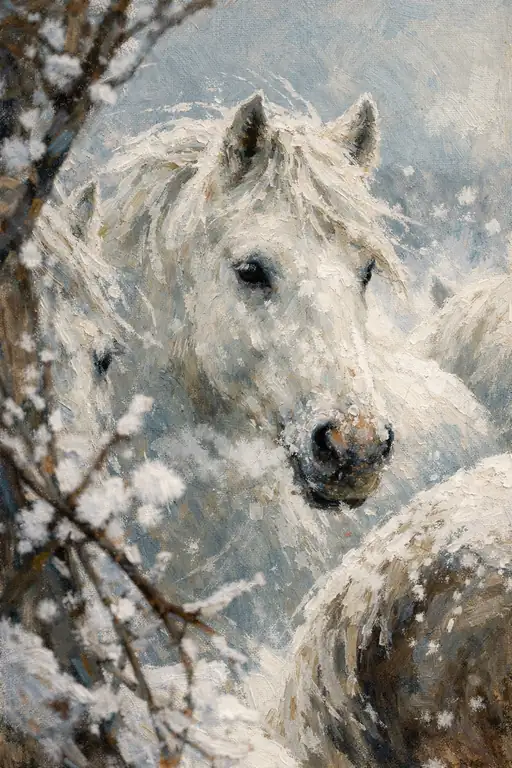 Breath of Frost on a Silent Steed