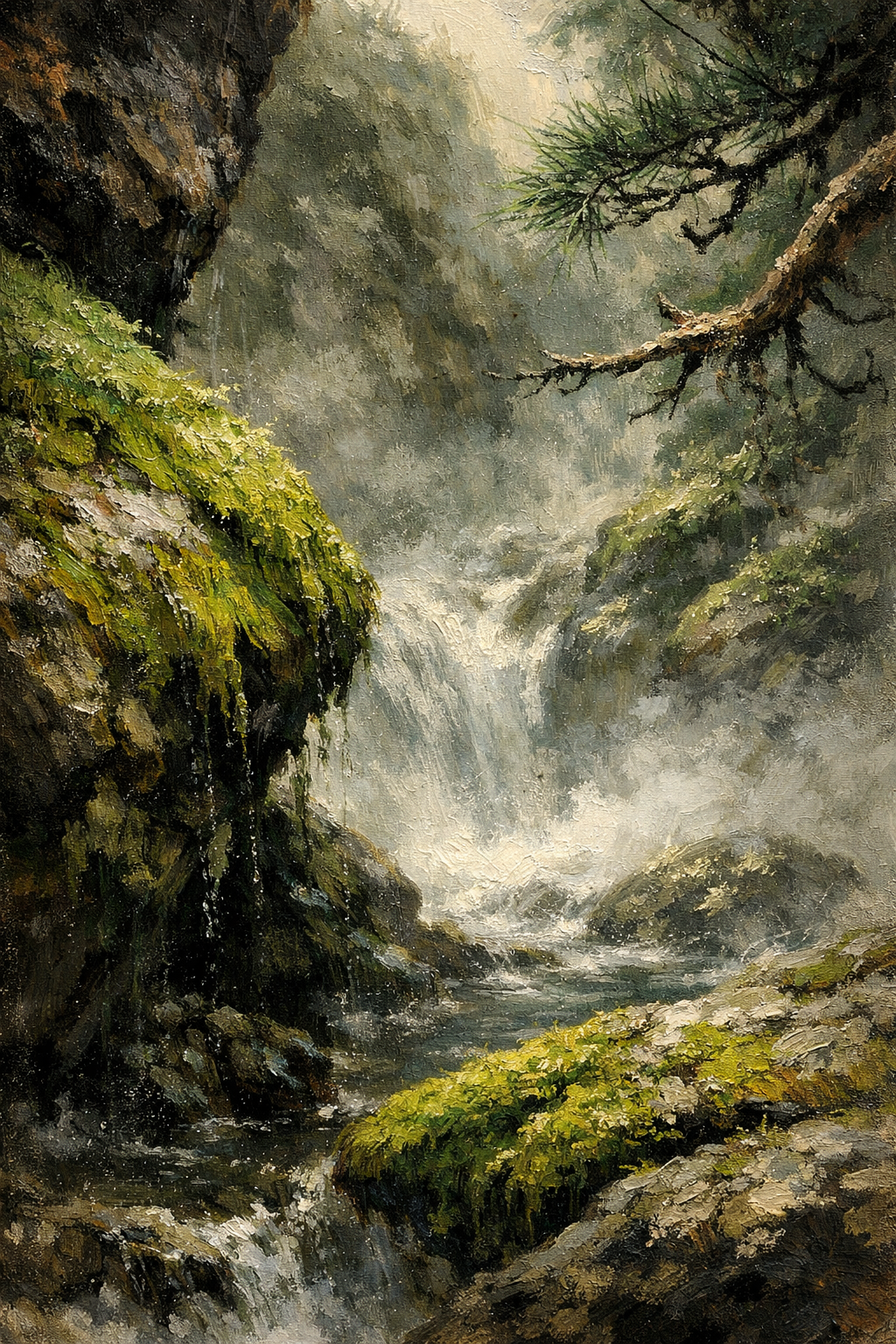
The Impasto of Souls
Critique
1. Introduction This vertical oil painting captures a dynamic landscape featuring a powerful waterfall cascading through a rugged, moss-covered canyon. The composition utilizes the height of the canvas to emphasize the scale of the natural formations and the descent of the water. The overall atmosphere is one of dampness and vitality, suggesting a deep mountain setting where the elements of stone, water, and flora converge. 2. Description On the left side of the frame, a massive rock face dominated by thick, vibrant green moss leans into the center. Droplets of water are depicted dripping from the mossy edges, adding a sense of immediate moisture. The central waterfall breaks into multiple streams as it hits the rocky outcrops, generating a dense white mist that fills the lower half of the painting. In the upper right corner, a gnarled pine branch reaches inward, its dark needles contrasting against the hazy, light-filled background of the upper canyon. 3. Analysis The artist employs an impasto-like technique, using thick, textured brushstrokes to convey the rugged surfaces of the rocks and the soft, organic volume of the moss. The color palette is grounded in earthy ochres and deep greens, which are dramatically punctuated by the brilliant whites and creams of the rushing water. This stark tonal contrast directs the viewer’s eye along the vertical flow of the falls, while the varied brushwork creates a rhythmic balance between the stillness of the stone and the motion of the water. 4. Interpretation and Evaluation This work is distinguished by its ability to synthesize raw natural power with a sense of contemplative stillness. The technical execution of the water’s translucency and the misty spray demonstrates a high level of descriptive skill and atmospheric control. By focusing on a close-up section of the canyon rather than a wide panorama, the painting creates an intimate encounter with the wilderness. The composition is balanced by the diagonal reach of the pine branch, which serves to frame the scene and provide a necessary anchor for the eye. 5. Conclusion While the painting initially presents a chaotic scene of crashing water and jagged stone, a closer inspection reveals a harmonious cycle of nature where every element supports the other. The interplay of light and shadow on the wet surfaces ultimately conveys a profound respect for the enduring vitality of the landscape. It stands as a compelling testament to the evocative power of traditional landscape painting techniques.
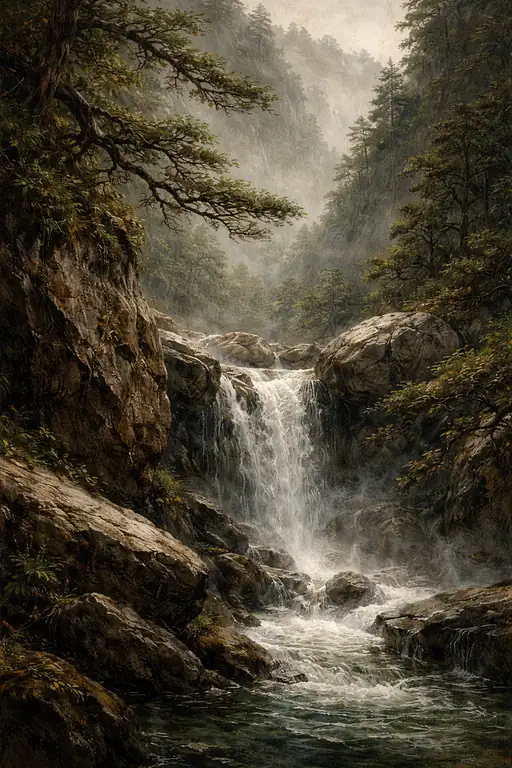 The Roar of Eternity Amidst Timeless Stones
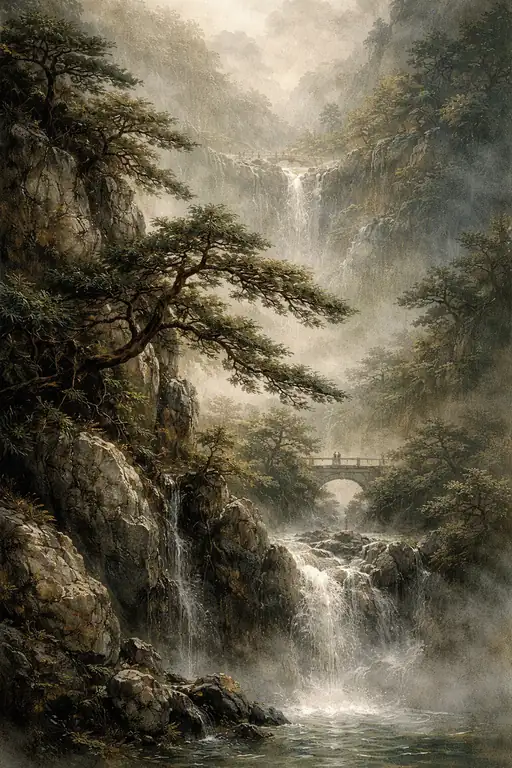 The Gilded Protector
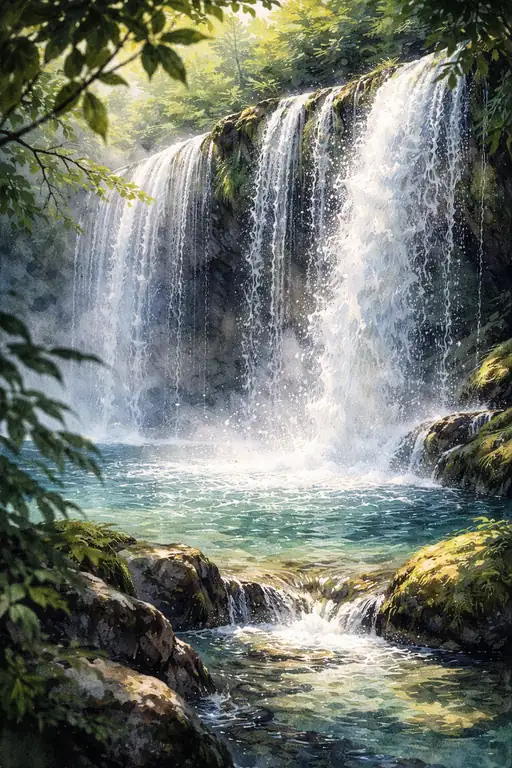 The Luminous Veil of the Forest Cascade
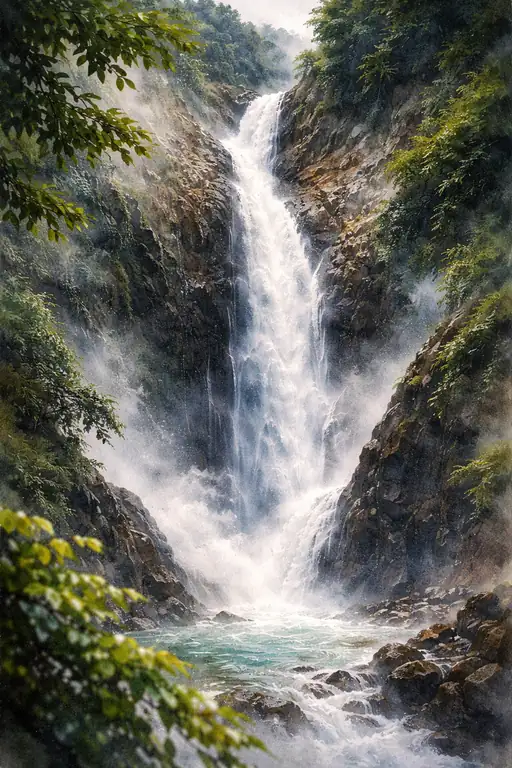 Cascading Veil: The Forest's Pulse
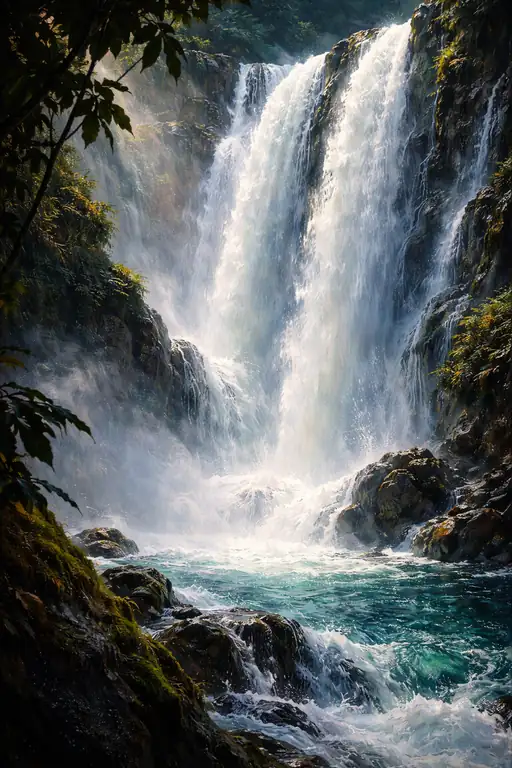 Echoes of the Vertical Roar
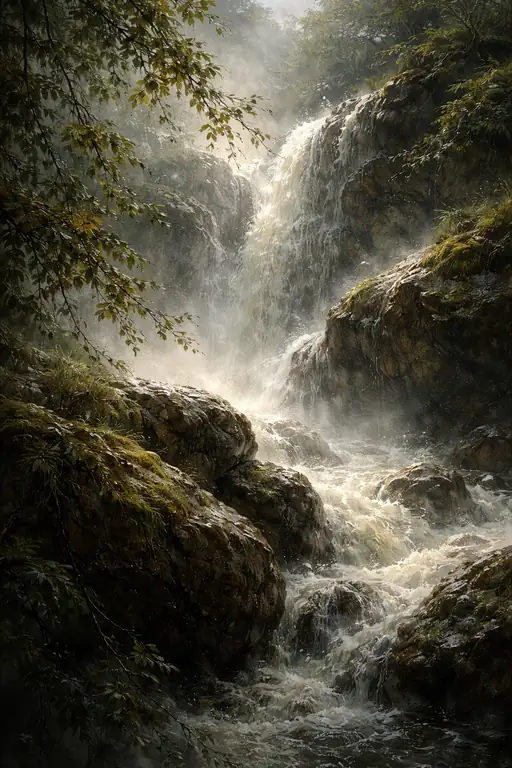 Breath of the Sunlit Mist
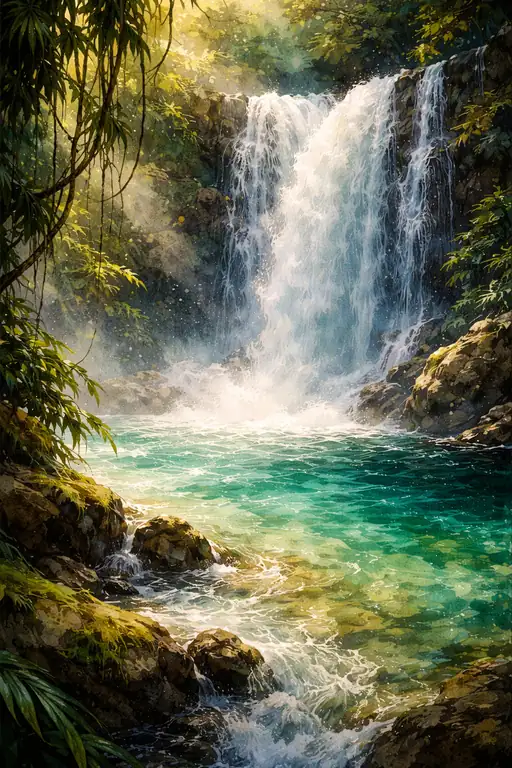 Echoes of the Emerald Cascade
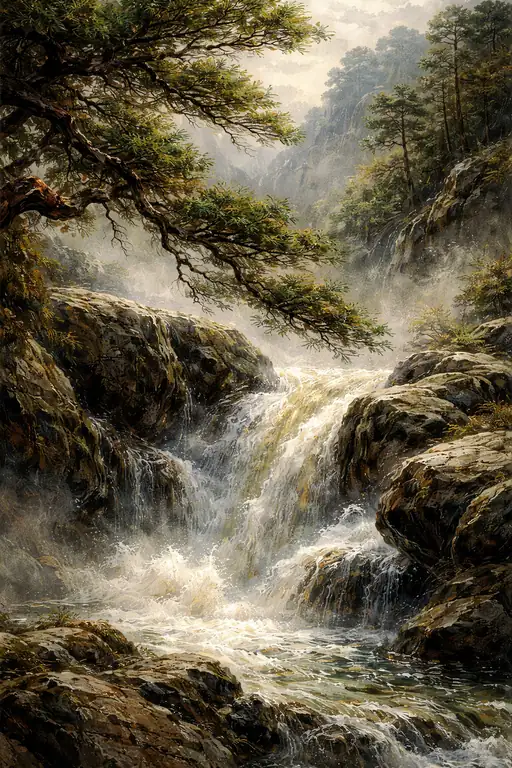 Heartbeat of the Untamed Gorge
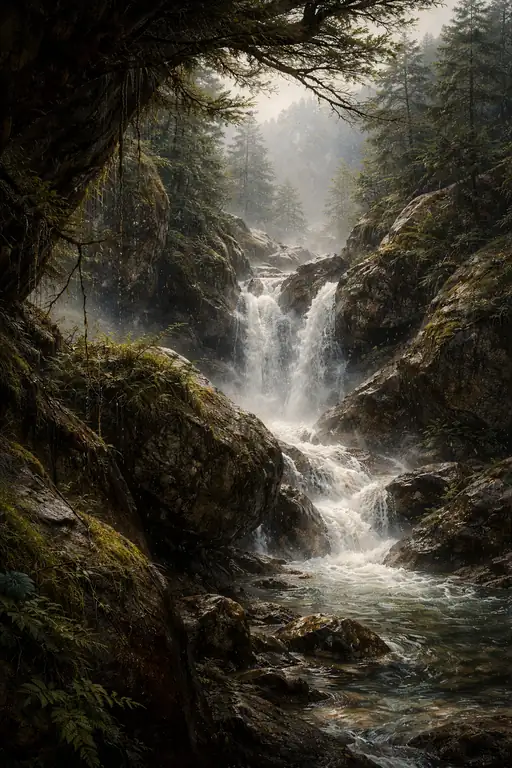 Roar of the Shadowed Gorge
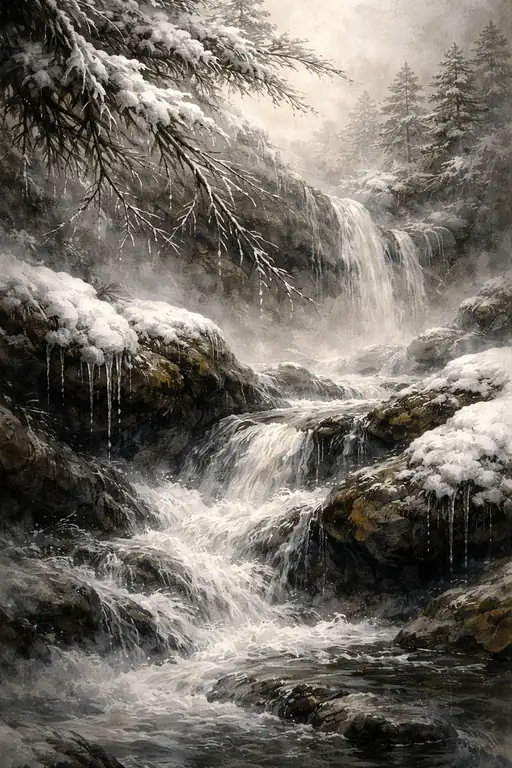 Shadows in the Mist
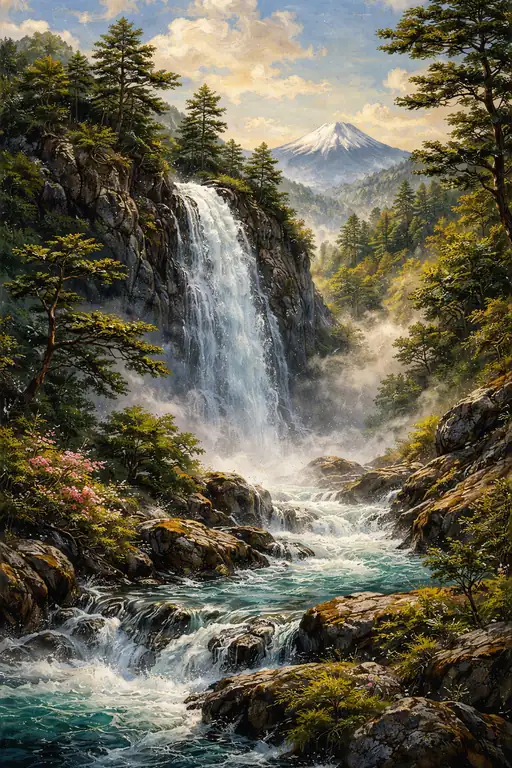 Echoes of the Eternal Peak