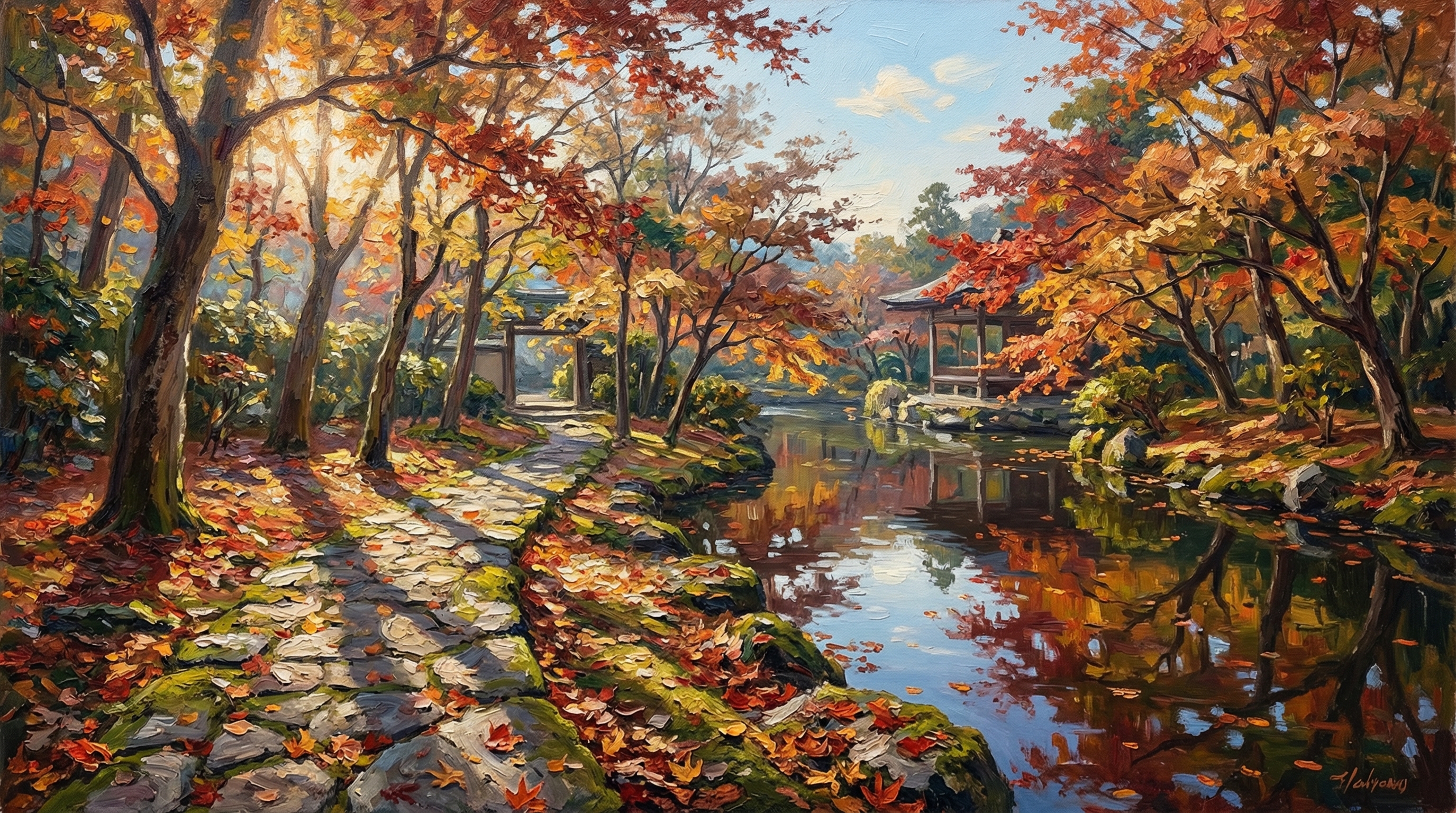
Crimson Canopy of Dreams
Critique
1. Introduction This evocative landscape painting captures the vibrant beauty of a Japanese garden at the height of autumn. The composition features a stone path covered in fallen leaves that leads the viewer’s eye toward a traditional gate and a peaceful pond. With its warm, saturated color palette, the artwork masterfully blends architectural elements with the brilliance of nature, creating a scene of profound tranquility and seasonal splendor. 2. Description The foreground is dominated by a textured stone path strewn with red and orange maple leaves, bordered by a calm body of water that reflects the surrounding foliage. On the far bank, a wooden pavilion stands gracefully, its form mirrored perfectly in the still surface of the pond. Trees ablaze with autumn colors—ranging from deep crimson to golden yellow—frame the scene, while soft sunlight filters through the canopy, illuminating the trunks and the path below. 3. Analysis Technically, the artist utilizes impressionistic brushwork to convey the flickering quality of light and the rustling texture of the leaves. The use of backlighting from the upper left corner enhances the translucency of the foliage, making the colors appear to glow from within. A sophisticated contrast between the cool blues of the water and the warm hues of the forest creates a visual tension that emphasizes the richness of the autumnal environment. 4. Interpretation and Evaluation The painting can be interpreted as a celebration of the fleeting nature of beauty, captured through a precise study of light and color. The inclusion of man-made structures like the pavilion and the gate suggests a harmonious relationship between human heritage and the natural world. The technical execution is superb, particularly in the handling of reflections and the dappled light effects, which lend the landscape a poetic and almost dreamlike quality. 5. Conclusion While the initial impression is one of overwhelming autumnal radiance, a closer inspection reveals the deliberate skill involved in balancing complex textures and lighting. The garden serves as a stage where the vitality of the season and traditional aesthetics converge in perfect harmony. Ultimately, the artwork invites the viewer to linger in this moment of seasonal transition, providing a deep sense of peace and an appreciation for the enduring beauty of the landscape.
Same Subcategory
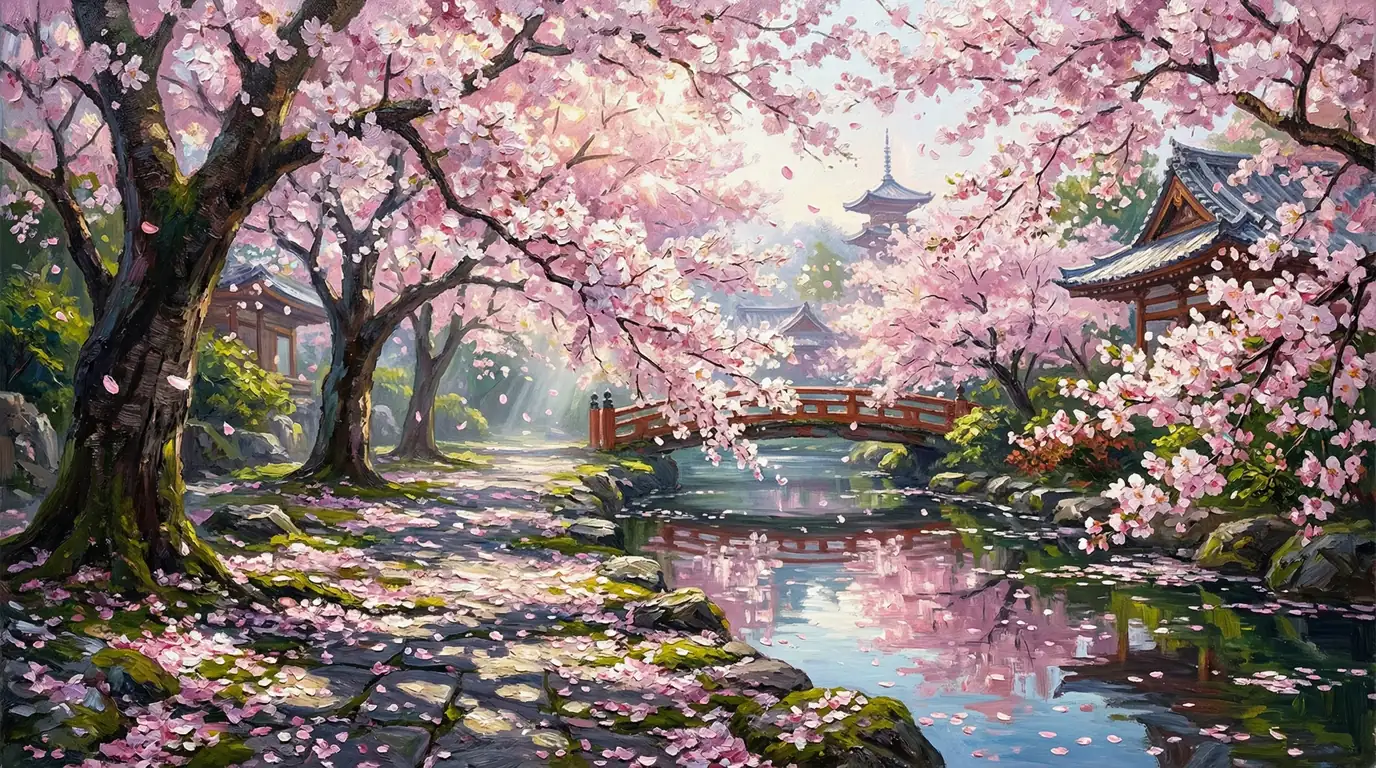 Eternal Bloom by the Silent River
Similar Artworks
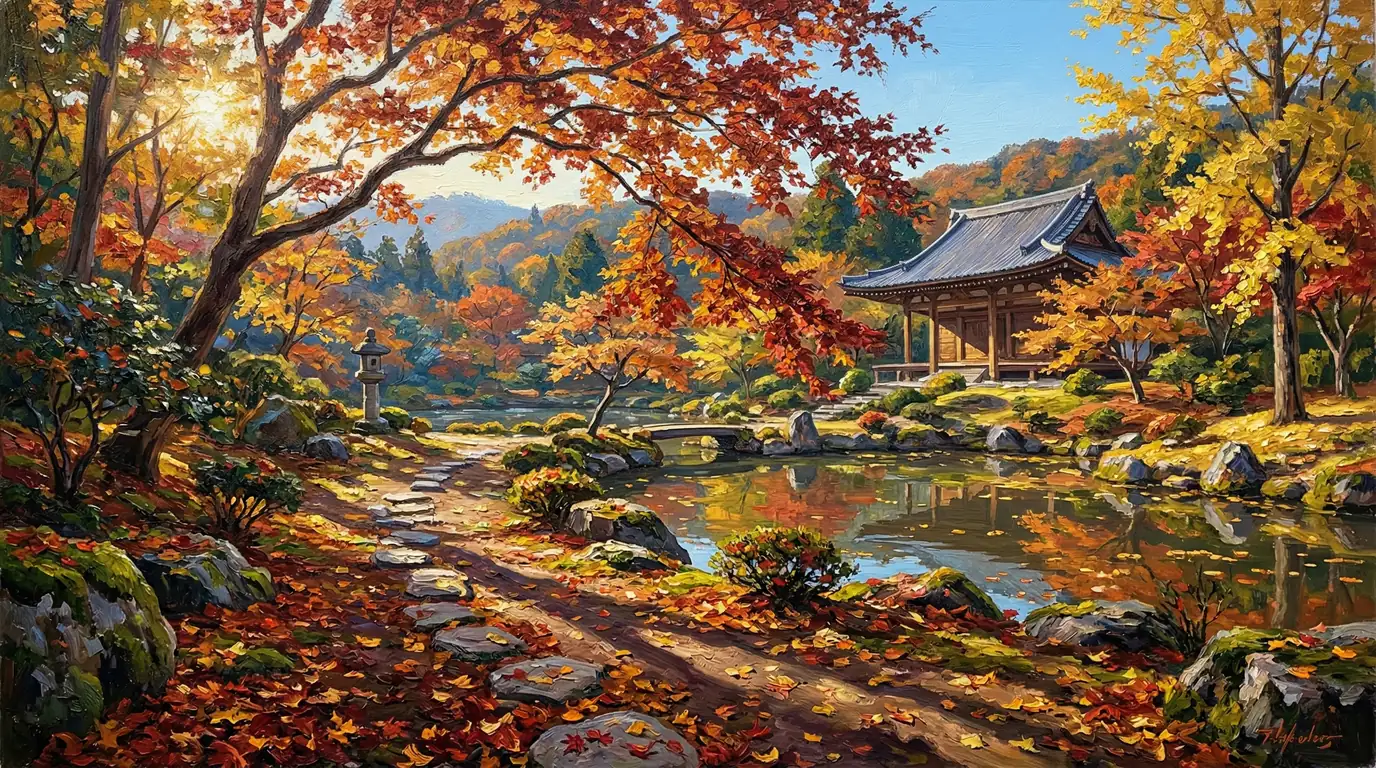 Echoes of Golden Leaves
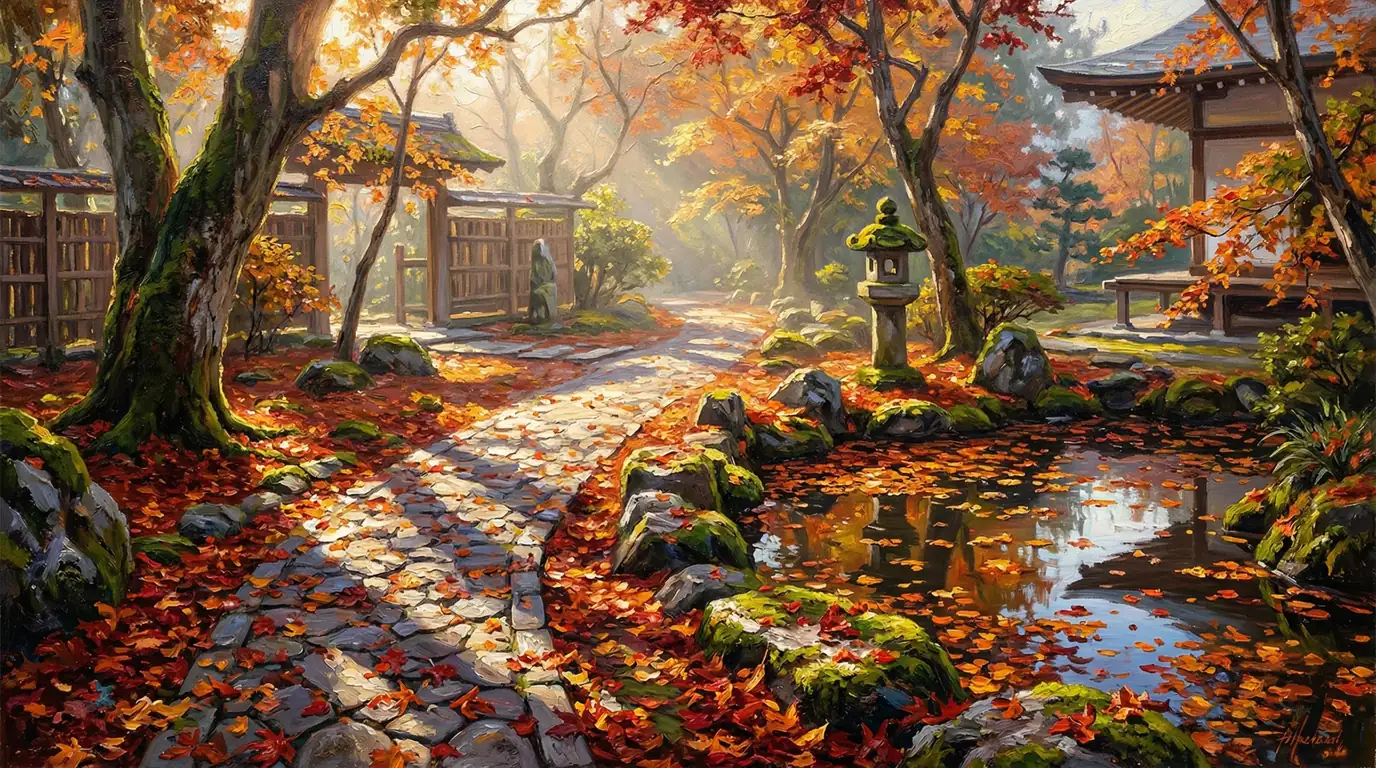 Golden Autumn in the Zen Garden
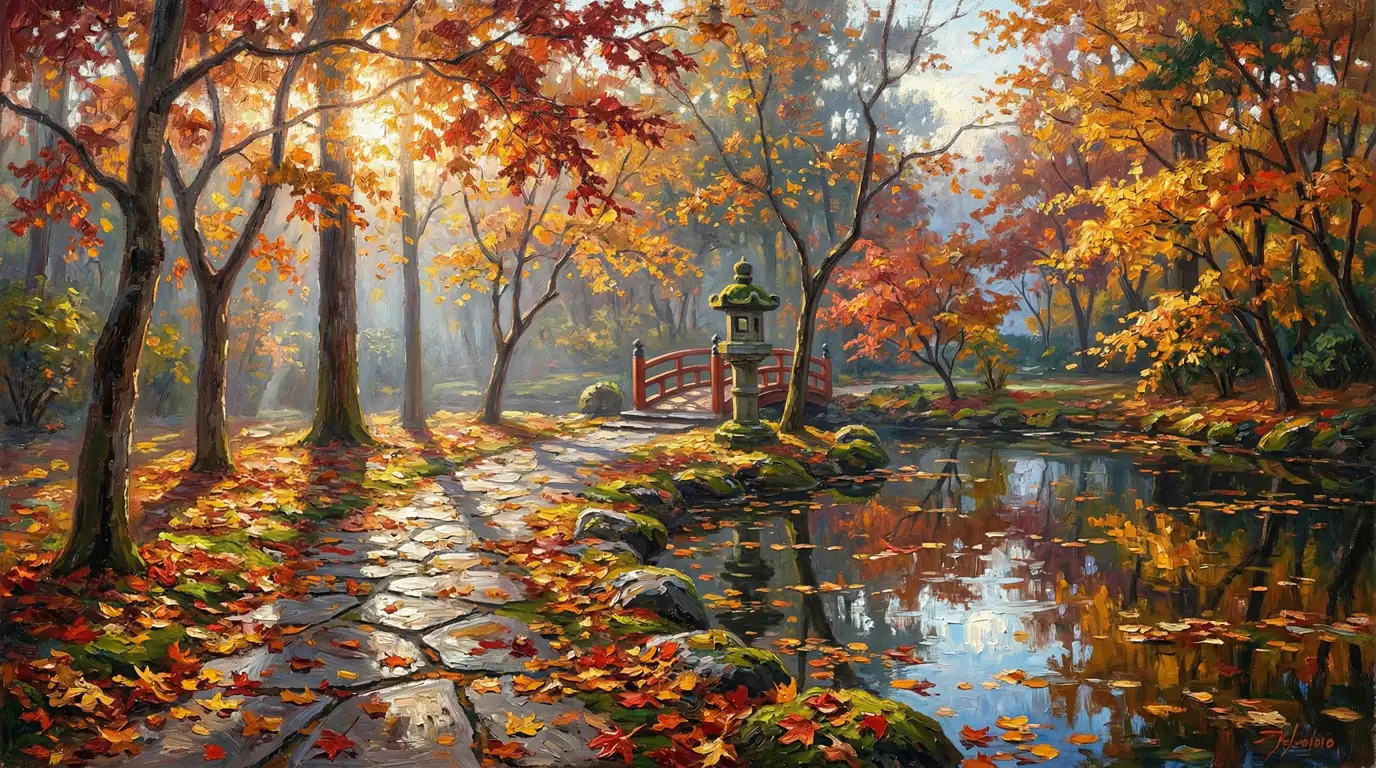 Echoes of the Crimson Bridge
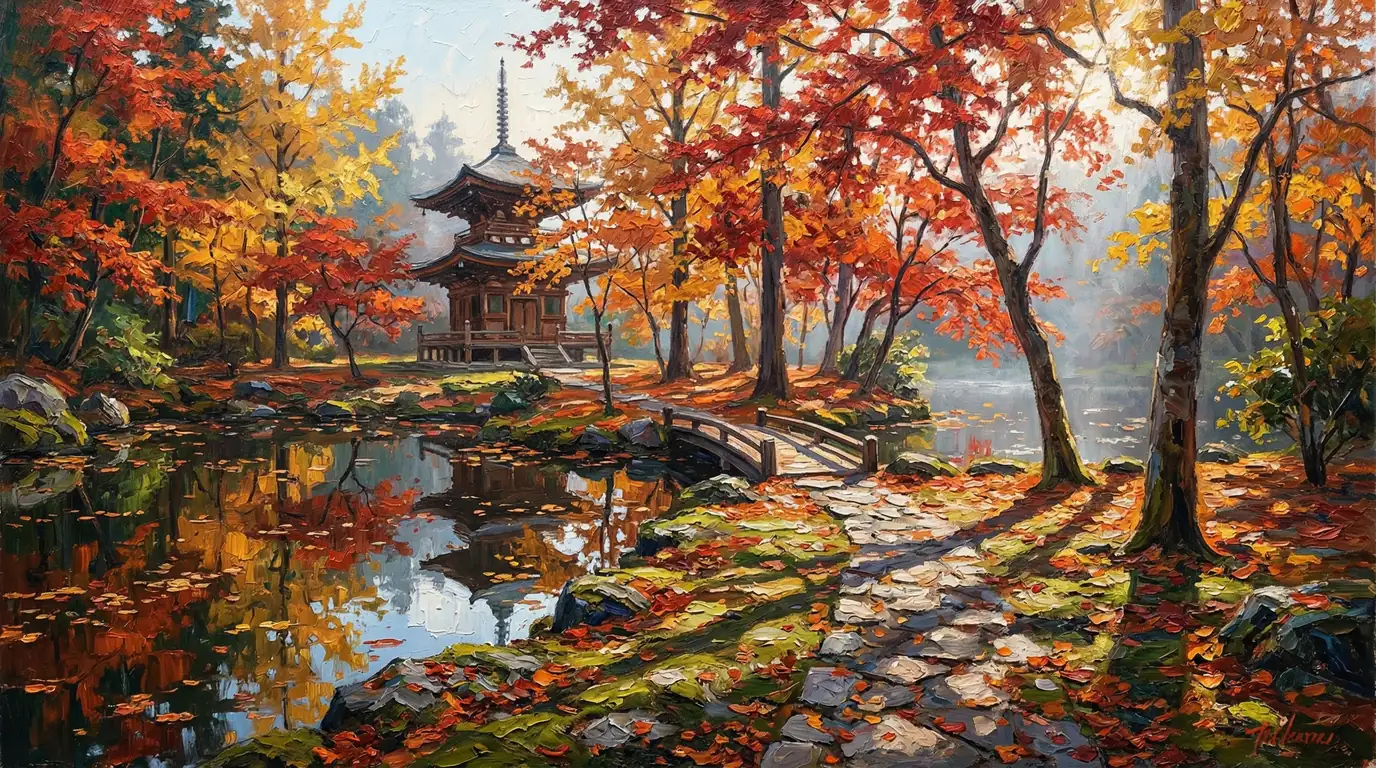 Symphony of Autumn Colors
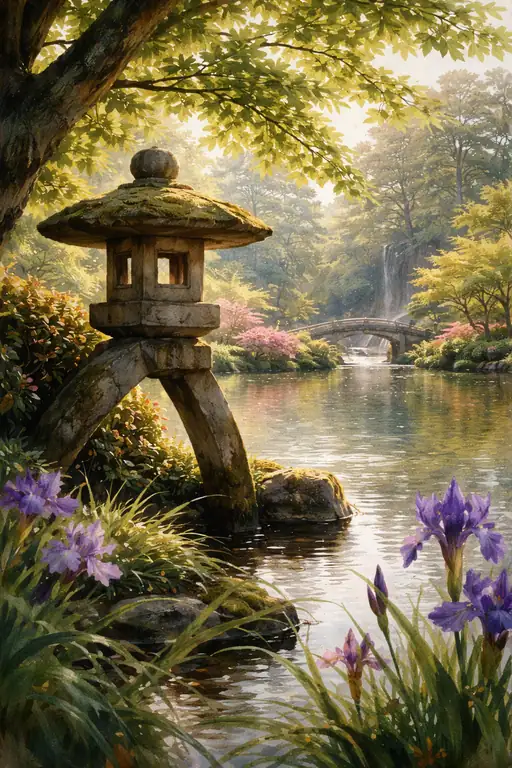 Serenity of the Whispering Waterfall
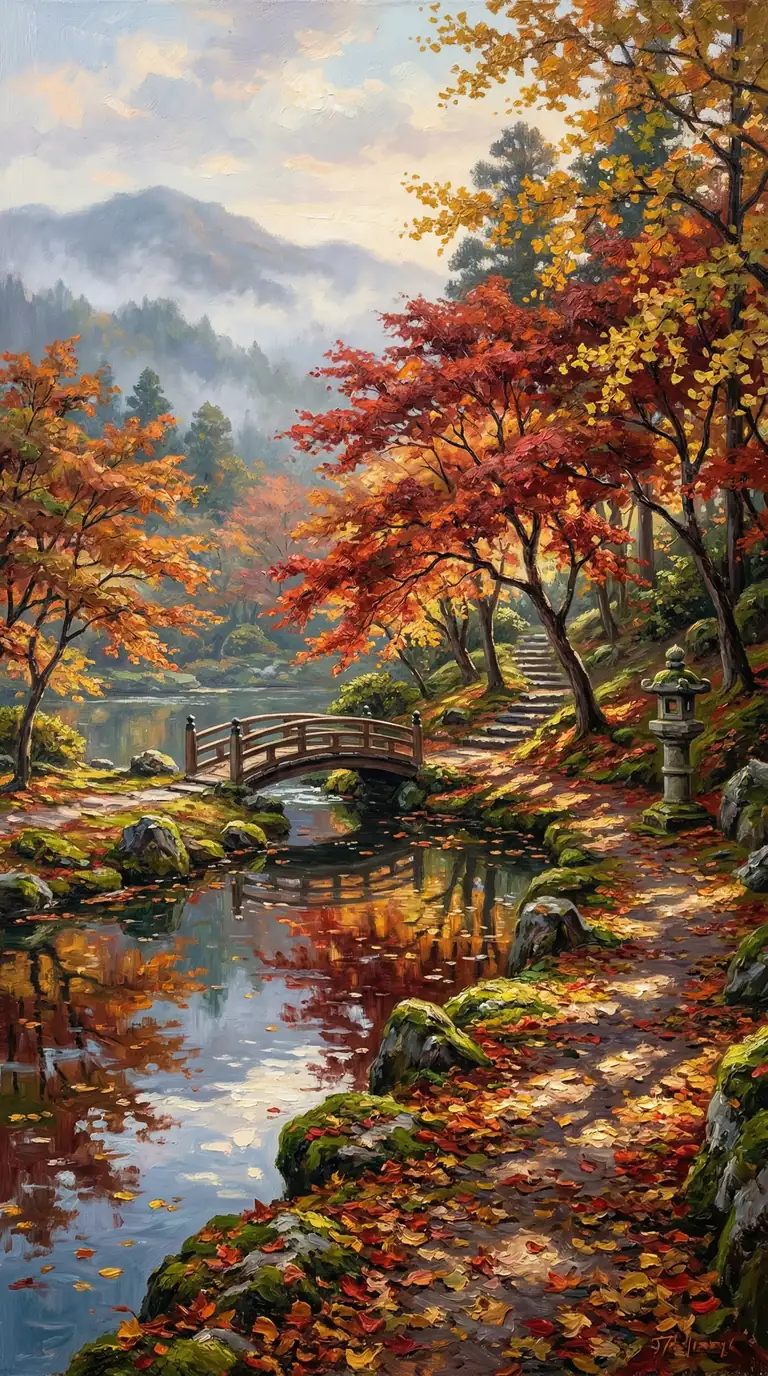 Whispering Crimson: Serenity in the Autumn Garden
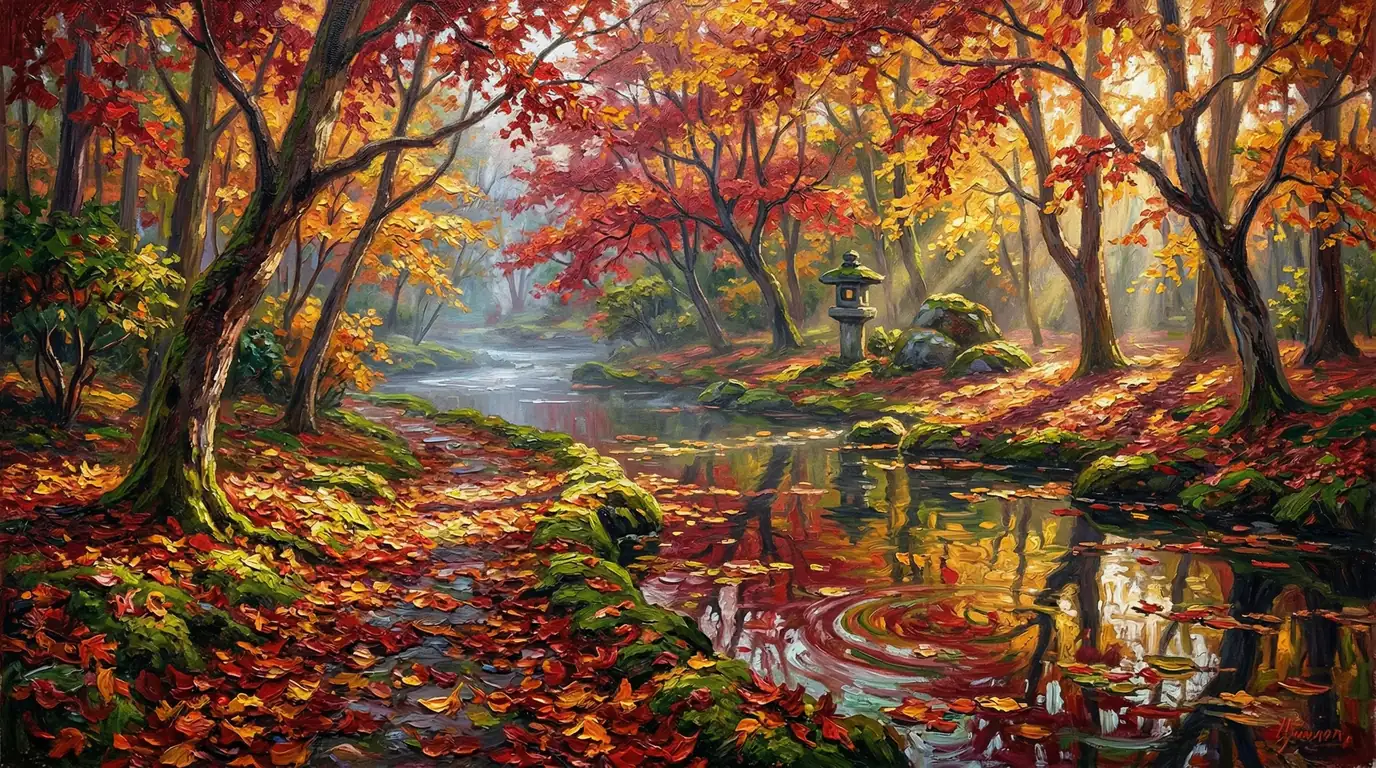 Autumn Glow along the Stream
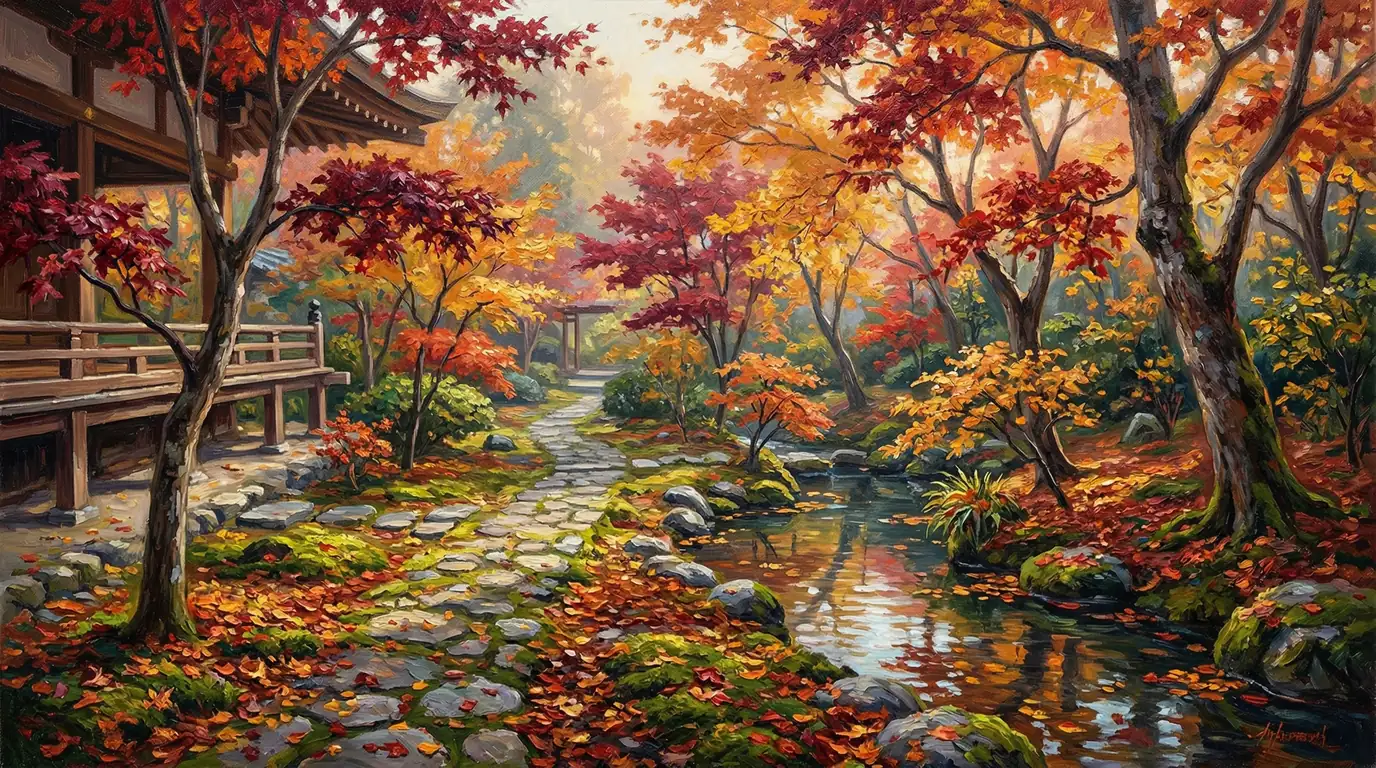 Golden Leaves by the Teahouse
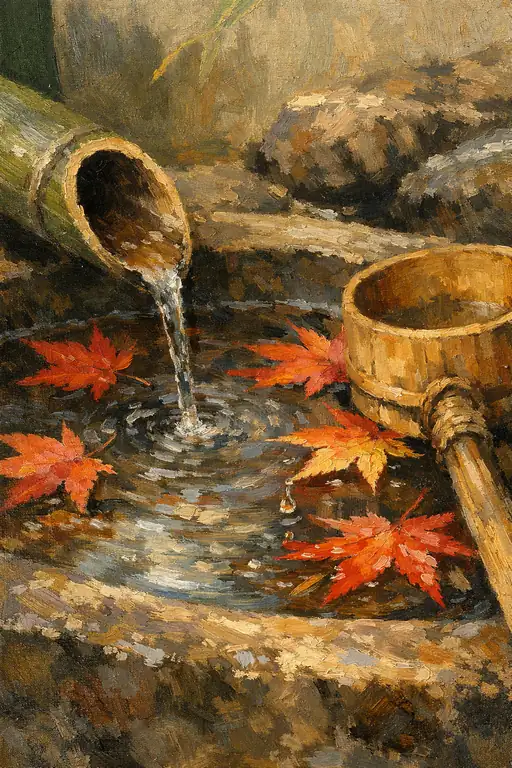 Echoes of Crimson Water
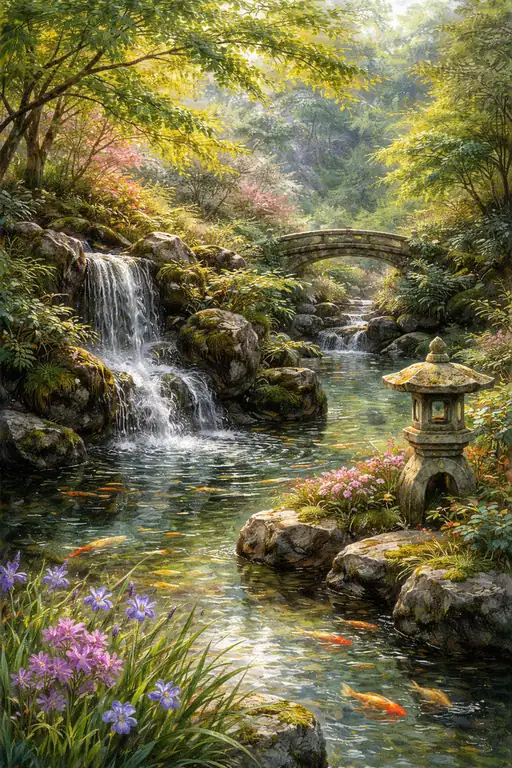 Serenity in the Flow